The battle cry “party like it’s 1999” weirdly hits home with me. Unless your mailing address was listed as “the jungles of Borneo,” or you had not made the trip through your mother’s birthing canal yet, chances are that you remember the anxiety (“insanity” actually) of the closing days of the 20th century. The computer software brain trust was loudly warning that a complete worldwide melt-down was imminent the moment the computer clocks displayed 00:01 of the year 2000. Power grids would disappear, Air Traffic Control facilities would go dark, hospitals would lose power, internet connections would be gone, and we would be forced to live as our great, great grandparents had. It was known as the “Y2K virus”, and it turned out to be a complete load of nonsense.
But we, as citizens of Mother Earth, had no idea what would happen, and that unknown could easily become a vicious enemy. It was a HUGE thing, and it affected yours truly in a big way. I was scheduled a rather serious medical procedure during that last month of the century, a biopsy was urgently needed for a tumor had been recently found by an incidental chest x-ray. The medical types rushed me into the hospital two days before Christmas 1999, fearing that if I waited past the calamity of “Y2K”, my needed procedure might be delayed indefinitely. The boatload of worry and stress was beyond description, and in the end, it was a total waste of a massive amount of anxiety.
(Pretty much says it all.)
(Side note #1: the results of the biopsy would eventually lead me onto the whirling dervish of a regime of chemotherapy and radiation treatments at the Mayo Clinic)
(Side note #2: the promise of a 1-day stay for the biopsy, turned into a 3-day stint … to include listening to the dude next to me expire on Christmas eve! The stay had me “enjoying” Christmas Day among the sights, smells, and sounds of a hospital bed. Saying it sucked does not do it justice).
Speaking of anxiety, the subject of this rant concerns one such version of that horrible human condition…that being a fear of flying. Finding oneself in an airline cabin a few miles above terra firma, sends some poor folks over the anxiety cliff. Not just a mild, “oh crap, I hate flying” thing due to the myriad annoying issues we associate with taking an airline trip, but real honest to God, debilitating fear. We all put up with the non-stop hassle of airline flying. Crowded airport terminals, massive lines at the ticket counter, TSA security portals manned by “angry elves”, nagging airline delays, airplanes filled to the gunnels, and the final headache of headaches; the fact that our culture has almost totally abandoned manners and common courtesy in our daily lives. The result is an unpleasant experience to say the least. A massive pain in the ass to be sure, but most certainly not filled with the horror of volumes of anxiety.
(Side note #3: The fact that we have become a population that is far too “large” to occupy the seats on the jets, adds more fuel to the fire that airline flying has become a generally horrible experience.)
We all have phobias and anxiety…anyone that proclaims otherwise is either a liar, or a fool. For instance, I am unnerved by heights. What is that you say? A person that spent their entire working life at 30 something thousand feet is afraid of heights? Had the likes of Cessna, or Boeing, or McDonnel Douglas, etc. installed windows on the floor of their cockpits, I would have spent my working life as something OTHER than a professional aviator. I despise being on an extension ladder, and the fact that my wonderful wife convinced me to take a hot air balloon ride, is the subject of an ongoing family mystery. This same woman, on the other hand, LOVES heights. She not only has flung herself out of an airplane skydiving, but when on a tall structure, is the first person to run and peer over the edge. Our time spent on the “viewing deck” of the Empire State Building was with my back firming pressed against the building. She however, logged quality time at the edge peering over the above mentioned edge. It seems that I was fine when looking out of the cockpit windshields, but not so fine if you would have asked me to look straight down. Nope, not going to happen.
Plenty of folks simply do not enjoy flying, but a select few fall into a different category altogether. Their time spent jammed in the metal tube at 30,000’ takes them to a dark place that is nothing short of prolonged cruelty. I’ve seen it many times over the years, and one of my earliest blog pieces mentioned it ( https://bubba757.com/2015/04/28/little-max/ ). It is a personal hell that I have no experience with, but I know it is a cruel monster and I have true empathy for those afflicted.
(It hurts my brain just looking at it.)
So, what is the answer for those afflicted with such a level of anxiety? The answer is obviously complex, but many years ago, we in the aviation world witnessed something bordering on the absurd. In stepped the organization that should not attempt to “do what they do” …and legislate away human suffering. Far too many answers for far too many issues start as a “good idea”, which then becomes stained by the interference of “Government”. The result invariably becomes an overpriced, over rated, ineffective program. The old saying, “the road to hell is paved with good intentions” seems to be an apt description of the Government’s answer for a litany of maladies.
In 1986 the Congress of the United States passed the Air Carrier Access Act which prohibited airlines from discriminating against passengers with disabilities. This was a superb idea, and since many disabled folks travel with a “service animal,” the airlines were now required to allow passengers to bring them onboard the aircraft. However, as with all things touched by the sledge hammer of legislation, it became more than it was intended to be. As the ACAA became more prominent, there began a move afoot to morph this into a broad-brush approach to cover those with the “disability” of high anxiety. With this, the “Emotional Support Animal” program was born. Folks were now allowed to bring their furry friends into the cabin, thus assuaging their nervous thoughts and lowering their “anxiety volume” down a notch (or twelve). You were now allowed (by law) to bring that adorable little kitten “Fluffy” onboard to calmly sit in your lap and softly purr your fears away.
(If you don’t love Fluffy, then you suck…)
That was all fine and dandy at first, but things changed, and the horror of September 11th would usher in those changes in a big way. Following that infamous day, everyone’s level of anxiety took a giant leap on the “sphincter Richter scale”. I saw this in spades for months following the attack, and for some people, it was worse than awful to find themselves on an airliner. There was, however, one small bright spot in all of this. A wonderful by-product of that event, seemed to be that people began to act in a way that seemed to be extinct within our airline cabins…they were actually “nice” to each other. It was good to see, but like most things involving humanity, after a few months it began to wane. Within a few short years, we were back on the roller coaster of cranky people being crammed into metal tubes and bouncing them through the atmosphere for the “low, low price” of hundreds (and sometimes thousands) of dollars. Where’s “Fluffy” when you need her? It makes me anxious just writing about it.
So, the question arises…was it a good idea to allow folks to bring their “comfort animals” (“Fluffy”?) into the cabin? In some cases, I am sure it was. However, not surprisingly, some passengers began to “massage the rules” to take advantage of the ACAA and the “ESA Program.” Not long after this newfound policy was adopted, Delta Airlines released a statistic that showed there had been an “over 80% increase in animal incidents within the cabin of the aircraft.” It seems that not all the animals that came through the boarding doors at Delta were indeed service animals, and it was immediately obvious that one person’s definition of an “emotional support animal” did not fit someone else’s.
(Side note #4: Due to the massive abuse that was occurring regarding the ESA Program, since December 2020, the U.S. Department of Transportation (DOT) no longer includes emotional support animals in the Air Carrier Access Act.)
As the ESA Program became official, it seems that the only people that could envision this being abused were none other than the folks that worked onboard the flying machines. We, the pilots and cabin attendants, predicted that a certain segment of the population would use this to their advantage, and we were right. Shortly after learning about this new government program, I found myself standing next to an American Airlines ticket agent in the Minneapolis/St. Paul airport. He and I were in line at a food vendor, and after striking up a conversation, I casually queried him about how this “ESA thing” was working at his airline. His answer left me speechless. With a perturbed look, he calmly relayed the level of insanity his line has dealt with since its inception. It seems that in the first week of the program, at ONLY the La Guardia airport in New York, their agents had passengers attempting to bring onboard the airplane the following “emotional support animals” (to include the normal creatures, aka “Fluffy”): a goat, a pig, a tarantula, a cockatoo, and (my favorite) a duck dressed in a tuxedo! We both looked at each other and shook our heads. I am not sure that one would need a degree in psychology to deduce that if a person needs “Monty”, the “duck formally adorned for an evening at the opera”, to feel “emotionally stable” at 30,000’, then maybe that person should consider an alternate from of travel (Greyhound, Uber, hitch-hiking, teleportation?) …just a thought.
(What duck doesn’t love to step out on the town in their tuxedo?)
With that said, I will relate but one of the many animal incidents dealt with during my career in an airline cockpit. During April of 2019 (roughly a year before my retirement), I was flying between Minneapolis/St. Paul and the sunbaked, concrete mess known as LAX. We were tasked with a simple flight from our domicile in Minnesota, to Los Angeles, and then return home. We call them “day turns” and they are typically the mark of an easy day. On this particular flight we were flying the stretched version of Mr. Boeing’s wonderful 757 (known as the 757-300…and truth be told, I did not enjoy flying this machine at all…it is ANOTHER example of a good idea going wrong…but that’s fodder for another blog).
All was proceeding as planned with a full load of folks, nice weather at both airports, and a generally smooth ride southwest across the heartland of America. As we neared the gambling capital of the world (” sin city”, “glitter gulch”, “the divorce capital of America”) …you know, Las Vegas, the chime sounded indicating that the Purser wished to speak to us. Typically, with just under an hour remaining in the flight, the cabin attendants will call to either; A) offer any food left over, or B) request certain items be available at the gate (wheel chairs, escorts of “unaccompanied minors,” etc.) …this was neither of those. As I answered the interphone, the Purser announced, “Well Captain, he did it. I knew he would, and he finally did!”
This of course, is NOT what I had expected to hear, and I was both curious as to “who did what”, and most importantly, how it affected the safety of the flight? Lots of things were now swirling around in my noggin; everything from an actual “security” event, to a drunk getting obnoxious and deciding to display his naked self to all in the cabin (I have had both). Again, this was neither.
Apparently, as the 220+ nice folks were boarding the jet in Minneapolis, a young man came into the cabin with his “comfort animal” …no harm, no foul. Except if you were unlucky enough to be seated in the row with “Spencer” and his version of “Fluffy” (not his real name of course…he just looked like a Spencer…my apologies to all the “Spencers” of the world). I was not aware that he had boarded with this animal, for keeping me informed of all the proclivities of the “comfort animals” at the departure gate would rank about “number last” on my list of “Preflight Duties”. I was now about to be fully informed.
(“Spencer’s” twin brother…why do all “yupsters” have the same look…again, sorry to all the “Spencers” of the world.)
My obvious first utterance to the Purser was; “Who is HE, and what did HE DO?” His answer was something on the order of, “He is a dog, and he took a dump in the middle of the isle! AND… (there is always an “and”) the owner is being an ass about cleaning it up!” Of course, my mind envisioned cute little “Spike” and his small, innocuous little pile of excrement that one can pick up with a single swoop of a paper towel, etc. This was not the case. As I was mentioning this to the Purser, he interrupted me with the words…” Hang on a second Captain, the dog is a HUGE GREAT DANE, and the dump looks like it came from a circus elephant! It stinks to high heaven, and many of the passengers for several isles are about to throw up just smelling it!” Lovely.
(Side note #6. I have said it before, and I’ll say it again, but when they hand you that coveted “fourth stripe” of Captaincy, they send you to a several day “Captain’s School”. They review all the rules, regulations, jargon, etc. that you have been studying for years…but it’s all rather useless. They NEVER mention how to act “Captain like” in this type of instance…OR when the dude decides to bare his “birthday suit” to everyone on the jet…just saying. Maybe they can use a syllabus change.)
(I truly have no desire to see what they’re leaving in their wake…)
My thoughts now turned to visions of a herd of elephants lazily strolling across the plains of Serengeti…and the huge piles they were depositing as fertilizer. My “Captain brain” kicked into gear, and I informed the Purser that we were about :30 from going “Sterile Cockpit” (last twenty minutes or so of the flight when we are far too busy to deal with things like this in the cabin), so he would have to deal with it and “get it done”. My offer was to inform “Spencer” that the Captain is ordering him to: A) corral “Marmaduke” and keep him out of the isle, B) get his ass out of his seat and clean up after his dog, and C) to speak to me at the gate in Los Angeles.
This seemed to put the Purser back into his happy place, and he said he would gladly provide the dude with all the needed cleaning supplies and make sure it gets done (we would also advise the cabin cleaners at LAX to give that section of the cabin an extra dose of sanitation). Within a few minutes, he called back to the cockpit to say that “Spencer” was not happy about my decision to have HIM clean up after “Marmaduke”, but that he did it anyway. I was now beginning to look forward to having a bit of a chat with “Spencer” at the deplaning gate.
(The real “Marmaduke”!)
The arrival into LAX went without further incident, and after securing the jet with the “Shutdown” and “Parking” checklists, I unstrapped to proceed to the deplaning door to finally have a chance to meet “Marmaduke” (by now he was beginning to be a legend in our feeble pilot minds…lol). Sadly, he and “Spencer” dashed out the door as I walked down the isle to door 2L, and I was only able to grab a quick shot of “Marmaduke” and give his owner “Spencer” my best “I knew what you were doing bringing this huge dog onboard the jet! You look as normal as the next guy, and you were simply getting around the shipping fees to move this horse/dog across the country.” He sheepishly looked away as I visually bored a hole in the back of his head.
(Side note #7. Many times, over the years, I have looked into the eyes of those that have a true fear of flying. They have “the look”, and it’s not the sad, shell-shocked gaze known as the “thousand-yard stare”, it’s more of a look gazing inward at a demon that could easily become them. I once had a lady come to the cockpit at the gate in Orlando to speak to me about her fear of flying. She sat down on the jumpseat behind my seat, and promptly vomited all over me! Now, SHE had “the look.” Yep, the “glamor of aviation” cannot be measured in dollars and cents…lol. Trust me, “Spencer” did not have that look. )
The upside? My picture of the dog came out great, and what a beautiful canine indeed! “Marmaduke” was big…and I mean big…. standing about belt-high, and marked with a stunning array of black and white “Appaloosa” spots. He seemed very friendly, super happy, and was probably a wonderful pet and companion. The downside is I seemed to have lost the photo of he and “Spencer” fleeing the scene of the crime. I do, however, have a bit of a warm feeling knowing that for the rest of his days, “Marmaduke” will be leaving his owner some rather large “piles of love” for him to deal with. I can only hope that “Spencer” someday becomes a better/smarter human and pet owner, because from what I could quickly deduce, “Marmaduke” seemed to be the brains of the outfit.
(A beautiful canine to be sure …”have a good life Marmduke!”)
It has been said that “those who cannot do…teach.,” but I reject that sentiment wholeheartedly. Some of the most influential adults in my life were teachers from my early days in our public-school system. They not only fed me knowledge; but they heavily influenced the person that I became. In my sixth year of school (my first year back in America after living abroad for a few years), Mrs. Turner from South Hills Elementary taught me everything from math to metaphors, civics to science, and always with a happy heart. Later, at Southwest High, Mrs. Chadwick introduced me to the worlds of Shakespear and Beowulf, and that led to a life-long love of literature and the arts. In my World History Class, Mr. Copeland fanned the embers for a love and fascination with the past that burns to this day.
One administrator changed the direction of my life, and unfortunately, I do not remember her name. If not for a guidance counselor at Southwest, I may never have lived a career amongst the clouds. She knew of my desire to become a teacher (preferably of History), but she was also aware that I possessed a Private Pilot’s License. She offered the following question to this clueless 17-year-old: “Have you ever considered being a pilot as your vocation, and keeping your love of history and teaching as an avocation?” She flipped a switch in my young brain, and the rest is (wait for it…) history. I will offer that displaying a chart highlighting the large disparity in salaries (at many airlines, pilots earned several times that of a teacher), MAY have influenced my decision. Yes, educators and school administrators can be a wonderful force in a child’s life…sadly, they can also be the opposite.
So why this rant about the state of our education system? I’m guessing that most of us agree that public schooling in America is a huge mess. It seems that in far too many cases we have diverged from learning useful things that our daily lives require (reading, math, science, history, civics skills, even yes, physical education), and have somehow grasped the mantel of teaching our children to become experts in the art of “feeling” their way through their time spent as a human. We slant our teachings to school them in the nebulous fields of “equity”, “inclusion”, “racism”, “sexism”, “gender bias” etc., the list is almost endless.
A few years ago, the University of Southern California conducted a study that should shock every parent in America. They found that the United States far outspends the 11 countries also cited in the study ($7743.00 annually per child), but ranks near the bottom in both Science and Math (9th and 10th respectively). America spends almost 1/3 more than the leader of most of the categories (Finland), but falls dismally short of being “average”, much less “excellent”. Our education system seems to have lost its “educational compass,” and, truth be told, it did not happen overnight…it has been creeping this direction for years.
I give you the following example from my personal experience.
A few days ago, while organizing for a pending garage sale, my wife happened across a bin containing many photographs and assorted items from the early days of our three amazing children. This treasure trove of memories fostered the end of the “organizing” part of the day, and began an hours-long journey down that wonderful path we know as “reminiscing.” The smiles, the “awwws” and the utterances of “I remember that day…” were many, and left us with a warmth that only those cherished memories can bring. It was wonderful. (Side note: Those feelings strengthen in both number and intensity as your total trips around the sun increase…just a fact.)
But she found something else. Something that brought back a slew of rather ugly thoughts and memories. Something that was the seed that spawned this rant. She found two letters from almost a decade past; one from our youngest daughter’s high school “Dean of Students” and my reply to that letter. His was a rather strong reproach of our parenting skills in regards to our daughter’s education, and mine our response to this (in my opinion) mis-guided administrator.
Some background is needed.
In the Fall of 2014, an amazing opportunity for travel presented itself. Our two older children where now firmly in the post-college world of adulthood, but our youngest daughter was beginning her final year of high school. Through circumstances related to her mother’s gift of a love of “all things horse related” (our youngest is now her in mid-20’s and works as a professional equestrian trainer), we had the opportunity to attend the 2014 FEI World Equestrian Games in the city of Caen, France. This would certainly fall into the “chance of a lifetime” category, and when I heard the word “Normandy,” I perked up and began plotting a tour for us through that history-infused region of Europe. Having spent a few of my formative years as a youngster in Nuremburg and Munich (where my fascination with the conflagration known as World War II was given birth), the list of historically significant sights began to whirl in my head.
Knowing that she would essentially be absent the first few weeks of her senior year, we began the process of informing those in the school system of our intentions, and of course, digesting their responses. Her schedule for that Fall semester was a scant three classes (two “AP college” classes as prep for a trip into the university system, and one to include something called “Clay II”). My wife spent an afternoon discussing the trip (and the resultant absences) with her principal, with the result being an official “thumbs up” for the journey.
We now began to craft an itinerary for the few weeks that we would be overseas. Our list of destinations would not only include the FEI Games, but also those that would come under the heading of “furthering our educations.” We offered Debora’s mother a chance to accompany us on what was shaping up to be an epic adventure, and she readily accepted.
We arrived in Paris under beautiful Fall skies, and began our journey. We eschewed the rail system, surmising that to really experience the trip, we should travel the highways and byways of France and Belgium by automobile (a worthy story unto itself).
The following is a brief list of our destinations to include many of the wonders we experienced (in order of travel):
– Paris. A scant list of sights we visited: the Eiffel Tower, the Louve, Cathedral Notre Dame, the Arc de Triomphe, the Sacred Heart Basilica of Montmartre, the famous avenue Champs-Elysees, the river Seine, and the many of the literally thousands of restaurants, cafés, etc. that make up the “City of Lights.” (Paris alone beckons for MONTHS of exploration.)
– Bastogne, Belgium. The site of the famous stand against the Wehrmacht during the horrific fighting that became known as “The Battle of the Bulge.” Our visit to the 101st Airborne’s Museum was one of the high points of the trip for the WWII historians in us. Fascinating and haunting at the same time. I promise to do a blog piece on that visit alone…you will not be disappointed.
– The city of Honfleur, France. An artist rich town on the Seine estuary across from le Havre. Shops and art galleries galore.
– Our “Air B &B” in the Normandy region.
A few miles south of the town of Percy is the location of a small farmhouse that would serve as our “base of operations” for most of our stay. It was owned and operated by a couple from the U.K., and their insight into this section of France was invaluable (they lived on the property in an out-building they were renovating). This small dwelling in the Calvados region of Normandy came with a very rich history, for among other things, it was occupied by a Wehrmacht officer during the German occupation of WWII.
The towns within an hour drive of Percy read like a “who’s who” of battles from D-Day and the bloody weeks that followed: the Omaha/Utah/Sword/Juno/Gold beaches, the towns of Sainte-Mere-Eglise, Carentan, Falaise, and Villers-Bocage, the cities of Bayeaux (home of the incredible Bayeaux Cathedral), the city of St. Lo (beautiful now, but completely destroyed by the fighting following D-Day), and the wonderful city of Caen (another city devastated by the brutal fighting of the war, but now beautifully rebuilt).
We logged many miles within this area, and almost without exception, every city, town, and small hamlet had a museum dedicated to the liberation of France by the Allies. Seemingly everywhere one would see signs extolling “Thank you!” to America, the U.K., and Canada for the sacrifices they made to drive out the Germans and secure their freedoms. Virtually every small farm along the spiderweb of small highways had several flagpoles proudly flying the tri-color of France AND the “Stars and Stripes” of the United States. It was very moving indeed.
– The cathedral at Mont-St.-Michel. The awe-inspiring 6th century island monastery on the northwest coast of France. Home of the breath-taking 230’ long “Bayeux Tapestry” which depicts the Norman conquest of England in 1066.
– And finally, Paris once again for a few days as our incredible journey neared its finish.
To suggest that the two weeks we spent in France was a whirlwind of awe and amazement would be a massive understatement. We stood at locations that left us breathless with incredible beauty and at spots that sickened us with the horror and inhumanity of war. The time spent at the invasion beaches elicited emotions that will follow me to the grave (more on that in a moment). We met folks that ignored our language barriers, warmly welcomed us, and opened their cultural doors to us. They will not soon be forgotten. It was the definition of a “bucket list” journey, and I would offer that each of us would make it again in a nano-second.
Sadly, once home (and still riding the “high” of our trip) we received the letter referenced above. Again, it originated from the desk of the “Dean of Students” from our daughter’s school. In no uncertain terms it admonished us for being part and parcel to our daughter’s two-week absence from her three classes.
Two quotes from said letter:
“A quality high school education can ONLY HAPPEN if a student is an active participant in his or her high school courses.” (Emphasis mine)
“School policy requires that going forward we need you to call me personally for all absences that XXXX may have for the rest of the school year. My number is XXX-XXX-XXXX. Any absence deemed unexcused will result in a Truancy Ticket with the XXXX Municipal Court System. The hope is that together, we can get XXXX in school more consistently, and get her the education that she needs to be a PRODUCTIVE MEMBER OF OUR SOCIETY.” (Emphasis mine)
Deb and I both saw red after reading this nonsense (again, if you recall, she had previously discussed our plans for the absences with the principal of this educational facility). The keyboard beckoned, and the following examples are but a few quotes from my response:
“We feel that without dispute, one’s class attendance is important, but we also strongly feel that (under certain circumstances) the “quality” of an education can be vastly increased through travel and study abroad. XXXX’s absences during the opening weeks of this school year were discussed with administrators at the close of the last year, and both parties agreed that there would be no issue with her missing the days in question.’
(This was followed by a lengthy list of the historical sites we visited…much like the list above)
“I submit to you that 1 in 100 of your typical high school students would comprehend the significance of the town of Bastogne, Belgium, and the role it played defeating the Nazi war machine in the closing days of World War II. I promise you sir, if you queried XXXX on the same subject, you might consider pouring yourself a cup of coffee, for you would be in for a lengthy explanation. We were very fortunate last Fall that an opportunity arose to acquaint XXXX with a modicum of the French and Belgian culture (and history) first hand, and we chose not to ignore it.
As you can see, this trip was not simply a “family vacation” to some beach or Disneyland style destination, but also educational in its makeup. The amount of research she undertook before (and during the trip) would rival that of any undergraduate History Major at our universities. I would hazard a guess that this young woman knows more about the relationship between France and America during those troubled years of the Second World War, then the vast majority of American teenagers.”
(Side note not in my response letter, as preparation for the “WWII” part of the trip, she insisted that we re-watch the HBO mini-series “Band of Brothers” …with the caveat that I would refrain from offering my commentary…unless she asked for it of course, lol.)
“If you took the time, you would no doubt notice that she is, in fact, an exemplary student (A average), VERY motivated (she works an after-school job), incredibly talented and articulate (coincidentally, you display her art work on your school’s Twitter page), has a grasp of the written word that few her age have mastered (her writing skills are outstanding…I offer her ACT scores a proof), and comes from a long lineage of “productive members of society.” Her grandfather was a combat-decorated Korean War medic and Vietnam War helicopter pilot, her grandmother and mother were highly successful business woman, her brother is a decorated Army Officer with two combat tours of Afghanistan, and her sister graduated at the top of her Business class at Montana State University.
Debora and I have ALWAYS understood that the gatekeepers to our child’s education lies not with teachers, not with bureaucrats, not with legislators, but with the parents of said child. We have never believed that quantity is the yardstick in which to measure quality.
I must confess a small degree of confusion regarding your letter. Am I to assume that YOUR OFFICE will be making the sole determination as to whether any further absences are “excused” or otherwise? Am I to understand that you are attempting to remove that determination from Debora and I? School policy may dictate such, but rest assured that WE (XXXX’s parents) will be making those judgement calls, and not your office. In the event of any further absence, either Debora or I will contact the appropriate XXX Office to pass along the information, NOT to ask permission.
Again, we are extremely committed to a high quality of education for XXXXX (as we were with her two siblings), and we will make EVERY effort to keep her absences to a minimum, but we will (State Statue 118.15(3) notwithstanding) continue to reserve the parental right to educate her where and when we see appropriate. If this attitude finds us afoul of a state statute, with the resultant financial penalty, then that will surely fall into our category of the “cost of a quality education.”
Again, thank you for your concern.
Sincerely,
Captain William S. Ball
Delta Airlines”
———————————-
After re-reading these letters (and through the prism of almost a decade removed), I confess that, once again, the feelings of concern regarding the state of our schools rose to the surface…thus the resultant rant.
Again, we both admire and highly respect the teaching profession, and MANY of the teachers themselves. None other than Socrates himself intoned, “Education is the kindling of a flame, not the filling of a vessel.” In my opinion, we desperately need our schools’ employing more teachers that will “kindle the flames.” We feel they need to embrace the basic subjects that every child must have to exist in the modern world. Subjects that are germane to a profession whereby a person can indeed become that “productive member of our society.” As I ponder, not many professions come to mind that require an in depth understanding regarding one’s “feelings.” Let us teach children to “think” their way through life and not “feel” their way.
Of course, there will always be exceptions…a professor waxing poetic in an “Humanities” class is as it should be. But we seem to have gone far off the rails in many of our schools. Almost daily we read stories of teachers spending precious time preaching to students’ topics such as; “the virtues of multi-culturalism”, or actively robbing kindergarteners of their childhoods with events like “Drag Queen Story Hour”. (Just to be clear, the “Libertarian” in me feels compelled to say that I am not opposed to an adult man dressing as a woman and gyrating on stage, but ONLY in an appropriate venue, NOT in front of innocent school children.)
In my opinion, to neglect the gifts of Shakespear, Descartes and Beowulf, and forget the bounties of E=mc2, and “I before E, except after C”, in order to slant a child’s view of our Republic as a “racist, socially unjust, misogynistic” society is black-hearted, ill intentioned, and without value in a young person’s life.
——————————————————-
Omaha Beach, where “feelings” matter.
As mentioned, a destination that fell into the “must see” category of our journey, were the invasion beaches along the Normandy coastline. When thinking back to the hours we spent at those hallowed shorelines, the memoirs of a deeply emotional day return. Within minutes of our arrival at Omaha Beach, all in our group began to feel the weight of history tearing at our humanity. As the day wore on, we began to deal with it in our own very private, very personal ways.
At the American Memorial Cemetery (as we began to walk among the gravesites) we separated as if to insulate ourselves within our thoughts and feelings. My wife and mother-in-law sat together on a bench, as our daughter and I began to wander alone among the 9000+ white crosses. I watched as she would pause to read the inscriptions, and snap the occasional photo (she has an amazing gift of an “eye” with the lens…many of her photos of that day are mesmerizing).
At one point, I joined her and we slowly walked together among the graves. We softly read the names, and I can only guess that she (like yours truly) was attempting to picture what the young man lying at our feet may have looked like. Was he tall, short, thin or not so thin? Red hair and freckles, or blond crew cut. So many crosses…so many letters to shattered parents.
A macabre by-product of many years spent reading of that day, was my ability to point to approximately where many of them fell. Upon reading the information etched on the cross (Name, Birth Date, Unit Designation, day of death), I could point to the beach where that young man probably took his last breath. Be it “Easy Red”, “Fox Green” or another stretch of sand within our view, I attempted to make those inscriptions become more than just words on a white cross. As I would point in the direction of their last moments alive, I also remarked that many of them were young…very young… her age in fact…eighteen.
I started to feel the need to be alone, but before I left, I offered her this thought, “I would guess that most of these young men, when pressed, could not find Normandy on a map. Yet by the thousands they readily came. And here, by the thousands they died violent deaths. Why? For one reason…to fight evil and free the world of tyranny. I have to believe that God has a special place in Heaven for them.”
The lapping waves, the peaceful green grass, and the ocean of white crosses began to be overwhelming. Feelings of their fear, their pain and their sacrifice swept over me. I excused myself and turned toward the channel, crossing the cement path, I slowly walked down the grassed embankment, and just sat in the warm sand. In my mind’s eye I could see the ominous post-dawn leaden clouds, the roiling whitecaps of the waves, and the landing craft filled with wet figures slowly moving toward the beaches. Closer they came, and soon the sand was filled with all those terrified young men, running amongst the blinding flashes and deafening explosions…and dying…dying by the thousands, and the tears began to flow down my face…
I wondered if my daughter felt it, if she connected the dots like my father taught me to do. I thought back to that cold day, those many years ago standing at the coliseum in Nuremburg. He quietly brought me there and patiently explained to me that three decades earlier, an evil man named Hitler stood precisely where we stood, and used his horrible words to plant the seeds of hatred that would consume the planet in world war. I thought about what he was telling me, and I began to feel the burden of that moment in time, when hatred reigned supreme. I would feel it again (within the year) standing in front of the gas chambers and ovens of Dachau. I wondered; did she feel that same “burden of history”? Did she sense the immense weight of it all, and did she comprehend the significance of where she was standing.
Later, as we all walked along the beach, I felt myself becoming agitated. I was not sure what was bothering me, but something just did not SEEM RIGHT. I was acting like the proverbial “cranky old dude” as I was bloviating about the folks happily frolicking along the beaches, eating picnic lunches, and enjoying a beautiful afternoon… and all seemingly oblivious to the hallowed ground in which they frolicked! She cut me short with the following laser-clear statement, “Dad, don’t you get it? Those guys died here EXACTLY so these people could do this!” It hit me…she did understand. She was that proverbial 11-year-old standing where evil stood, only she was eighteen and was standing where courage and goodness ran toward death. She grasped that she was walking on sand that was stained with the blood of free men who gave their lives so that evil would be crushed.
Just to be clear, Debora and I are 100% pro-teacher, and 100% pro-school. But maybe, even more than that, we are firmly “pro-education” …wherever that learning presents itself. We are terribly concerned that many of our institutions of learning are not teaching things that matter to young minds, and it worries us.
We were under no illusions that once our older children left for the university, we would be squarely in the fight to keep them grounded in sanity (and concentrating on their education). But that was YEARS before the letter, and again, we were shocked to receive such correspondence from a High School. It left us to draw one simple conclusion; our “small-town, middle America” high school was staffed with bureaucrats that were attempting to wrest control and “Truancy Ticket threaten” us out of the role of being active participants in our child’s education. We could not let this stand
The choice for today’s parents seems to be crystal clear. Get involved in your children’s education. If you leave it up to others, realize that some folks (yes, even those we call “teachers”) may have a different idea of what your children should be learning. If that leaves you no pause, then don’t be shocked when you find that you may now be parenting a child that does not share your love for our country (and the freedoms that allowed them to become so mis-guided). Also, do not be surprised if they have changed their opinions about the two people that were responsible for their birth.
I am forever haunted by the following quotes:
– “Let me control the textbooks, and I will control the State.” – attributed to Adolph Hitler.
(side note: It is currently illegal to “home school” in today’s Germany, a troubling thing IMHO.)
– “Give me four years to teach the children, and the seed that I have sewn will never be uprooted.” – attributed to Vladimir Lenin.
Addendum; The day after tomorrow we will celebrate another Veteran’s Day here in America. I will proudly display my flag, remember, salute, and honor the men and women who gave their lives for me. I will feel a pride in my country and strength in my soul that only free men and women can feel. The ghosts of Omaha beach (and Saipan, Salerno, Iwo Jima, etc.) should live within the grateful hearts of all Americans…we owe them at least that much. They indeed, sacrificed their futures, so we could have ours.
I must ask…would those young men approve of (or even recognize) the present state of our school systems? What would they think of the topics taught and the “moral compass” of the teachings directed toward the very lives they died for? Can we honestly say that they would approve of how we have used the years they gave us…the years that they never had?
(an example of my youngest daughter’s amazing “eye for the lens”…simple, yet powerful)
It saddens my soul, but I believe that some of the blame for our mis-guided, “confused” education system in America lies at the feet of some of those we call teachers. I stand tall however, knowing that our saviors will come in the form of many heroic teachers… be they in, or out of the classroom.
“Nancy, do you read me? Nancy, can you hear me?” Nothing but silence. I could clearly see her in the tiny blue and white Cessna, for the Fall evening sky (in the closing months of 1977), was a soft blue, with calm winds giving way to unlimited visibility. She was in a left turn, rolling wings level on what looked to be a perfect heading for a downwind leg in the traffic pattern at our home airfield. Her altitude seemed good, her airspeed looked spot on; everything seemed to be normal, save one rather important thing. This landing approach would be her third, with the first two ending in an “abort”, with her climbing away from the ground at the last second.
A ”go-around”, as it’s known in the aviation world, is not an uncommon occurrence. I’ve done them in everything from small planes (like the Cessna 150 trainer that Nancy was piloting), to widebody behemoths like the Boeing 747 and the McDonnell Douglas DC-10. I’ve done hundreds over the years, and on every airline simulator check-ride, I’ve had to demonstrate proficiency in the art of abandoning a landing attempt (safely) and maneuvering yourself for another one. It’s a skill that every pilot must have in their bag of tricks.
A Northwest Airlines Boeing 757.
But this was something far different than just a “go around” (or two in a row in her case), for she was alone in an airplane for the first time. A few minutes earlier, after several circuits of the airport doing “touch and go’s”, I deemed that she was ready to fly this machine by herself, and no longer needed the jaundiced eye of her flight instructor. She had landed, and after exiting the runway at the mid-field taxiway, I told her to set the parking brake (quizzical look on her face). I announced that I felt she was “ready to solo”, instructed her to do 3 take-offs and landings, and after the third arrival, taxi to the ramp fueling station, shut down the engine, and I would meet her there.
Her wide-eyed grin met my best nod of “you’re ready, you can do it” look as I exited the airplane. She taxied to the departure runway, and I ran to an inert machine, flipped the battery switch to “ON”, and brought the #1 Comm radio to life just in time to hear her announce her departure as per our “no control tower” procedures dictated. Off she went (literally) into the wild blue yonder, flew a picture-perfect traffic pattern, and made all the required radio transmissions…she was doing great. It all seemed to be progressing normally until on short final approach, she executed a “go around”. I could hear her push the throttle forward, as I watched her raise the nose, and climb away from the runway pavement. “OK”, I thought to myself, it looked fine, but clearly there was something she didn’t like, and she decided to abort that landing and try again. No harm, no foul.
Again, great looking traffic pattern, good radio calls, and again, on short final, she abandoned the approach and climbed away. That’s when the waves of thoughts began to crash against the shores of my brain. Was she having some sort of mechanical issue? Was she so nervous that she had forgotten her training? Had she become so afraid of crashing that she may end up doing exactly that? All of these thoughts were racing through my mind as I attempted to contact her on the radio of the parked Cessna trainer I was sitting in.
The date was October 13th, 1977, and I had been a CFI (Certified Flight Instructor) for a grand total of two and a half months. I was in my junior year at the aviation university where I was studying to obtain my Bachelor of Science degree, majoring in Aerospace Technology. I knew that my path to an airline cockpit would travel through such an institution, and that journey would include more than a few hurdles. One such “fence to clear” would be to become a flight instructor; preferably employed by the university itself. This would allow me to turn the corner in my flying world in two very significant ways.
My college aviation “center of the universe”.
First, I would go from the “I’m paying for the plane/fuel/instructor” mode to the “I’m getting paid” to be here mode, and second, the more students I could log time in a cockpit with, the more flight time I would accumulate, and the closer I would get to that “magic number” of 1500 flight hours (the number needed to obtain the pinnacle of all aviation licenses…the coveted Airline Transport Pilot License…don’t even think about applying to a major airline until you had one). It would truly be a “win/win” situation for me.
One of the most time-honored responsibilities that a CFI shoulders, is to determine at what point in a fledgling pilots training, they are ready to fly the airplane by themselves. Again, it’s known as flying “solo”, and as everyone that’s ever piloted an airship by themselves will attest to, the first time you do it by yourself, it’s a special day indeed (it’s a memory that you’ll take to your grave). It’s a weight that no flight instructor takes lightly, for the consequences of using bad judgment when the matter is literally life or death, can obviously be rather dire indeed.
A Cessna “152”…the next generation version of our college “150s”.
After what seemed like an eternity, Nancy acknowledged my radio transmissions with a rather calm, almost cheerful, “Yes Bill, I hear you, go ahead.” I immediately asked her if she was O.K., and if anything was wrong with the airplane. She nonchalantly replied, “No, everything is fine.” I was more than just a bit perplexed (and curious), and offered her what seemed to be the obvious question, “So why have you done two go-arounds?” Her answer was as simple as it was perfect, “Well, you always said that if I didn’t like what I was seeing on short final, or just didn’t feel comfortable with the approach, to just “go around” and try it again…so I did.”
I chuckled a little, relaxed more than a little, and replied something to the effect of, “Well, have fun and I’ll see you when you taxi in.” Within the next half hour, we were standing in front of the little trainer, as I listened to her (excitement and adrenaline-infused) tale of just how it all went. She mentioned just how light the airplane felt as it seemed to literally jump into the sky on takeoff (I distinctly remember that being one of the first things I noticed four years earlier when I had soloed for the first time), and how hard it was to get it to descend at that much lighter weight. She rambled on and on, and I just listened and smiled as the light began to fade into dusk. She was on cloud 9, I was on cloud 10.
We were now faced with a dilemma of epic proportions. In the world of aviation, when a student completes their initial solo flight, a time-honored event takes place. The instructor “clips” a piece of the student’s shirt tail, inscribes it with the date of the solo flight, and then proudly displays it somewhere in the Operations area of the flight school. Eventually, the student takes possession of said clipped garment and attaches it to their logbook (as I did…see picture). We, however, had an ”issue”, for Nancy wasn’t wearing a shirt (or blouse as it were). Her attire for the day consisted of a pair of shorts and a halter top (it was, after all, the 1970s). As I stood in the office pondering the situation, she arrived at the answer, smiled, and excused herself for a few minutes. The next day as the Operations Office for the Southeastern Oklahoma State University flight school opened, on the “Solo Board”, amongst all the shirt-tail clippings, was pinned a pair of rather frilly “unmentionables” with her name, date, and “First Solo” printed across the derriere. Problem solved.
Apparently, I was wearing a blue-jean shirt the day I soloed…
Two addendums to this tale. One involves Nancy, and the other concerns yours truly.
Cessna on short final approach.
Nancy was to continue in her flight training, and eventually work for one of the premier airlines in the United States. Braniff International was a force to be reckoned with after the Airline Deregulation Act of 1978, for it grew from a rather small “Mom and Pop” hometown Dallas airline to a worldwide jewel in the airline crown (a terrific book titled “Flying Colors” chronicles it’s rise, and unfortunately, it’s fall into bankruptcy). Sadly, Nancy would not live more than a few years past her college days, and truth be told, I know very little about her demise, other than its occurrence.
The last piece of this puzzle concerns the fact that on that calm, peaceful October evening, those many years ago, a young woman in her early twenties flew an air machine by herself for the very first time, while a young Flight Instructor (also in his early twenties) was suffering through more than a few anxious moments. You see, he was watching the first student he had ever “signed off” to solo prove that his judgment of her abilities was correct. She made five circuits around an Oklahoma airport that ended in three landings, and by doing so, became a life-long member of a rather exclusive club. She also produced a few dozen (future) grey hairs on this young man’s head.
I would go on to send dozens of other young men and women into the sky for their initial solo flights, but their stories are blurred in my memory while her story remains crystal clear.
So, what does that tale have to do with the moronic nonsense of “wokeness” that we find ourselves being force-fed daily? Exactly everything. I give you the titles of two recent “news” pieces that may “feel” all warm and wonderful to a certain segment of humanity, but in reality, they display monumental idiocy and a complete lack of knowledge with regard to aviation:
New York Times article: “The End of the All-Male, All-White Cockpit”.
From United Airlines: “50% of our pilots will be women of color over the next decade.”
One of these is patently false, and the other is patently stupid.
Since the infant days of my personal aviation journey, I’ve had the pleasure of sharing cockpits with pilots of all shapes and sizes….AND RACES AND SEXES. The vast majority of those pilots have not only been amazing aviators, but they’ve also been just downright good people.
Let me start by making the following comment on the first of the above “woke” statements… there is no such thing as an “All-Male, All-White Cockpit” …. let me say that again, there is no such thing as an “All-Male, All-White Cockpit”.
I’ll concede the fact that in the years following that fateful morning, in the third year of an infant century, when two bicycle mechanics coaxed a powered aircraft a few hundred feet into the air (and the world began this crazy experiment known as “aviation”), the majority of cockpits were populated with 1) men and 2) Caucasian men…but so what? I’ll say it again…so what?
Not what one would call a “long haul flight”.
If we are to comment on a by-gone slice of history, then we owe it to that very history to use a thing called “perspective”. The world of the early 20th century was (mostly) owned, operated, governed, and ruled by men. It’s not a political statement, it’s most certainly not a “judgment”, it is simply just a truth.
So, the fact that a scant 8 years later, Harriet Quimby became the first licensed woman pilot in the United States, was nothing short of amazing. The very accomplishment was as unusual as it was important. A year later, she continued to shock the world when she successfully crossed the English Channel from Dover to Hardolot, France. Did she fight to overcome the prejudices of her time? Of course, she did. However, using that horrible thing known as “perspective” (again, required when gazing into the rear-view mirror of time), we would find ourselves in a world we simply would not recognize. This place would be so radically different than our current existence, that I’m sure few of us would have the power to comprehend it. Measuring that parcel of time with the yardstick of our current world, displays a gross lack of intellectual honesty, and is a fool’s errand to be sure.
As noted, women have contributed to the success of aviation almost since its inception. After Ms. Quimby, history gives us many examples of women altering the course of human flight. Amelia Earhart is clearly the most famous, but the list goes on…a scant two dozen are listed here:
The legend herself: Amelia Earhart.America’s first black female pilot: Willa Brown, an inspiring story to be sure.
One notable name that caught my eye on that list, is indeed a legend in American aviation. I would hazard a guess that 90% of the pilots of my generation (I soloed in 1973) are familiar with her and her incredible accomplishments. In the year 1929, (before she became the first woman to break the sound barrier …and throughout her flying career, shatter almost every altitude, speed, and distance record), Jacqueline “Jackie” Cochran and 98 other female pilots formed a group that is as strong today, as they’ve ever been. They are called “The 99’s”, and most of the women I’ve flown with throughout my life as a pilot have belonged to this amazing organization. To quote their website ( https://www.ninety-nines.org/ ): “Today Ninety-Nines are professional pilots for airlines, industry and government; we are pilots who teach and pilots who fly for pleasure; we are pilots who are technicians and mechanics. But first and foremost, we are women who love to fly!”
The amazing “Jackie Cochran”.
A few years after forming the “99’s”, Ms. Cochranhelped form a group of women pilots that history paints with immense importance. Most scholars of the Second World War agree that without this group, our victory, and hence, the future of the free world, would have been in dire jeopardy. They came from all corners of the country and banded together to form a collection of women pilots that specialized in ferrying, training, and testing the most advanced war-fighting aircraft the world had ever seen. They became known as the “Women Airforce Service Pilots” (or simply “WASPs”), and they were nothing short of incredible.
They sacrificed their worldly life for a life in the clouds. They worked long hours in the blazing-hot skies over Texas, training to fly those complicated and (in some cases) dangerous machines, and become proficient enough to teach others to fly them. When their training was complete, they would log many long hours flying them to distant corners of the world, and when stateside, they would teach their male counterparts to safely operate those very types of machines.
Four members of the WASPs after a flight in the Boeing B-17. These ladies were incredible aviators. Ever try just taxiing a four-engined tail-wheel airplane? It’s a difficult thing to do I assure you.The Germans called the P-38 Lightning the “Gabelschwanz-Teufel” which means Fork Tailed Devil, the Japanese said it was “two airplanes, one pilot”, and they feared them greatly. It was a radically new design and when it was first put into service, more than a few pilots perished flying it. Here we see “Jackie” Cochran reading for a flight in a “recon” model of the P-38L.
From the cover of a July 1943 LIFE magazine. Shirley Slade as a WASP trainee.
Between the years 1942 to 1944, the 1,078 members of the “WASPs” substantially contributed to the war effort by ferrying more than 12,000 aircraft over 1 million miles. Sadly, thirty-eight of these incredible young women did not survive to see the victory that they had dedicated their lives to achieve. They perished on dark stormy nights, and they died under bright blue skies; they risked everything because they loved their country and because they simply loved to fly.
History was to finally give them the status they so richly deserved, for, in 1977, Public Law 95-202 bestowed them official “veteran” status. Thirty-two years later they were awarded Congressional Gold Medals, one of the highest civilian honors that can be awarded by Congress. Without question, they blazed a path that many young women have followed, not only in the world of civilian aviation but in the cockpits of military aircraft of all branches.
President Obama signs the document bestowing the Congressional Gold Medal to the ladies of the Women’s Airforce Service Pilots.The official caption for the photo: “Capt. Danielle Parton, a pilot in the 123rd Airlift Wing, shares flying stories with Florence Shutsy Reynolds on the flight deck of a C-130 aircraft at the Kentucky Air National Guard Base in Louisville, Ky., March 22, 2014. Reynolds, a former pilot in the Women Airforce Service Pilots corps during World War II, was visiting the base as part of National Women’s History Month.” (U.S. Air National Guard photo by Staff Sgt. Vicky Spesard)
Thankfully, their accomplishments have been etched permanently into the cloth of history with the 2005 opening of the “National WASP WWII Museum” in Sweetwater, Texas. I’ve been a contributor since its early days, and someday I hope to cross it off my “bucket list” of places to stand in reverence and feebly attempt to connect with the past and understand what it must’ve been like to be that brave.
So, the absurd title, “The End of the All Male, All White Cockpit”, is pure nonsense to be sure. The “woke” are nothing if they’re not full of ignorance of the past. And, shamefully, they are chock full of insults toward people undeserving of their misbegotten ignorance.
As for the second example of “wokeness”, I shuddered when it was flashed across my television screen.
From United Airlines: “50% of our pilots will be women of color over the next decade.”
Sounds wonderful, right? It’s malfeasance, bordering on criminality…let me explain.
The level of idiocy with regards to this statement, (almost) left me speechless. A litany of reasons caused this feeling of shock, not least of which is that it was uttered by people that absolutely should know better. They are executive leaders in the very industry I spent 37 years of my life attempting to excel within, and to make such a blatantly stupid statement is almost beyond belief. Do they feel the pressure of bending the knee to the woke crowd of morons so intently, that they can readily sacrifice their integrity to placate a group bent on social engineering? Has their pledge of safety to the customer been subjugated to a fear of being canceled? If so, then hell has a very special place for that ilk of executive. If they are indeed serious about that nonsense, then remind me to never ride on that line again…ever. Several of my good friends at the regional airline took a job with that (once) proud airline, and I can assure you that they recoiled as much as I did when they heard of this nonsense.
Why not utter, “50% of our pilots will be left-handed, red haired, near-sighted, professional bowlers over the next decade.” It makes just as much sense as their nonsensical drivel …
As mentioned earlier, I’ve shared cockpits of countless air machines with folks of virtually ALL racial and ethnic backgrounds; both women and men. I’ve had the pleasure to know them as both aviators, and also, as just plain people. They’ve run the gamut of skill with an air vehicle from excellent to lacking, and they’ve been folks that I considered a joy and an honor to know, and a scant few were just not my cup of tea. The one constant among all of them was one thing…they were human. They came with all the strengths (and weaknesses) that we as a species possess. A very important (in this context, THE most important) sub-sect of that human constant was the following: their skill as a pilot had nothing…I’ll say it again…nothing to do with their gender and/or their race. Nadda, zip, zilch…they could either fly the machine competently, or they could not…it’s really that simple.
In 1981, the little “mom and pop” airline I worked for, gained national fame on the cover of “Professional Pilot” magazine.
Sinatra O.
One of my favorite First Officers at the regional airline (and a stellar aviator to boot) was a young man from the southside of Chicago. He grew up in poverty but realized that to succeed in life, he needed to educate himself, so he made sacrifices in his personal life, studied hard, became a member of the Chicago Police Department; and eventually, he became a pilot. When his name would appear with mine on the day’s crew assignment sheet, I knew two things were about to happen. One, we would have a great day together, for our personalities fit as a hand and glove, and two, I would be sharing the cockpit with a very accomplished aviator. The airplane didn’t care that he and I had skin colors that were not the same…and neither did I. He became a personal friend, and we spent time together living life as two young, single men would do. Shortly before I left for a job with Northwest Orient Airlines, he left the regional airline to take a job flying large jets for a competitor. Our paths diverged at that point, and I sincerely hope he went on to have a happy life and a long and wonderful career at his chosen airline.
Debbie H.
She was short of stature but tall in character, and I liked flying with her very much. The skill in which she flew the big Boeings was fun to watch, and her “large and in charge” (when needed) personality was just as enjoyable to witness. One story stands out among many.
On this particular morning, we had a gentleman from the FAA riding our cockpit jump-seat giving us a Line Check from Anchorage back to our home base of Minneapolis/St. Paul. Some pilots bristle when having the “Feds” peer over your shoulder, hawking your every move while flying a segment, but truth be told, I can’t recall ever having an issue when they were in my cockpit. The fact that they did possess the power to clip your wings and ground you, intimidated some, but I just saw them as a person doing their job, and I tried to be as cordial to them as I could, and fly the machine exactly like I did every other day at the airline.
When “Mr. FAA” entered the cockpit and introduced himself (displaying his credentials and FAA badge), I gladly shook his hand and gave him my version of a proper salutation. She, however, possessed a different opinion of his chosen profession, and refused to shake his hand with the statement, “I’m sorry, but I don’t like the FAA…it’s not personal, but I won’t shake your hand.” LOL! She turned back to immerse herself in her pre-takeoff duties, and his look toward me was a mixture of shock and disbelief. I simply smiled, shrugged my shoulders, and turned back to the duties that needed my attention before we left the gate.
“O’dark thirty” in the morning as we readied the big bird to leave Palau bound for Tokyo’s Narita Airport.
Later in the flight, when he was out of the cockpit (in the restroom), she looked at me and asked, “Are you mad at me because I wouldn’t shake his hand?” I assured her that I could care less if she shook his hand or not, as long as she did her job as she was trained to do (which she did very well I might add). Her retort was, “I just don’t like the FAA.” I offered that this was America, and she could dislike anything she chose…I for one disliked peaches. No slight against the peach industry, I just don’t care for them. Within a few minutes, he returned to the cockpit, and we had an uneventful (albeit a bit quiet) flight into the Twin Cities.
We would go on to crew many flights together over the next several years (mostly in Asia). Side note: she was raised in Japan to missionary parents and spoke fluent Japanese. Thus, I always felt like I had a personal interpreter as my cockpit contemporary. This came in quite handy many times explaining an issue to a ticket agent or one of our maintenance staff. More than once, when we were having a problem with one of the systems on the Boeing, I would explain the problem in detail to the mechanic and they would acknowledge with a rather stern nod, but I could tell they were not truly grasping the issue. She would step in, launch into a litany of her best Japanese, and smiles would break out all around. The (now smiling) vigorous head nodding would begin, and we would ALL be back in our happy place. The “language of aviation” is absolute, the ability to communicate it across verbal barriers is most certainly not.
We logged time in sunny skies over vast oceans and on dark, stormy nights amongst the many typhoons that live in Asia during the late summer and Fall months. She will stand out as one of the best pilots I’ve had the joy to share a cockpit with, but I will offer this: I never heard (nor did I ask) about what may have happened in her piloting career that soured her on the FAA. I guess some things are best left unsaid.
One last tale.
Many years ago, I shared a cockpit with a young lady named Tammy. She had graduated from the Air Force Academy, and flown transport aircraft in the military. We had a great four-day trip together, but it began, on a rather interesting note.
Tammy was blessed with lots of hair, and I mean lots. Not sure if she let it loose because in the Air Force, she was required to pin it back, or tie it in a ponytail…I have no idea, and quite frankly, I didn’t care. Picture the 80’s big hair band “Vixen”, OK, maybe somewhere just shy of that was Tammy. While sitting at the gate in Minneapolis making the jet ready for our first departure on the first day of the trip, we had a visitor to the cockpit. It seems a lady boarded the jet, looked into the cockpit, and became quite excited. After getting permission from the Purser, she entered the cockpit, and proceeded to shake Tammy’s hand profusely, and congratulate her on being a pilot…you’d have thought Tammy had just invented the longer-lasting light bulb or something.
The 80s band “Vixen”, complete with the big-haired look. Tammy was not quite on par with them, but not far from it…lol.
As the lady left the cockpit, I could tell that Tammy was miffed…well, more than miffed, she was genuinely pissed off. Paint me confused. When I inquired as to why she was so upset, Tammy let loose with a tirade of “I’m sick and tired of people only seeing a woman pilot in the cockpit…I’m a PILOT damn it…. not a WOMAN pilot.” She ranted and raved a bit more, and when she was done, I gave her my .02 cents worth of opinion. I offered that the lady genuinely meant all the praise thrown her way and that she was indeed a semi-rare species; being a woman in a predominantly male thought of profession. But mostly that she should take the lady’s comments and praise in the flavor in which they were offered.
I guess I actually didn’t give Tammy’s concerns too much thought, but through the prism of time, I’ve grown to agree with her 100%. Are women a rare thing in aviation? To a certain extent, yes…but not nearly as rare as most that are not aviators believe, for as mentioned above, I’ve flown with literally hundreds of women in my career.
A proud moment for Captain Wendy R. to be sure…a “mother and daughter” day to the extreme. I had the pleasure to share a cockpit with Wendy (before she upgraded to Captain), and if her daughter is 1/2 the aviator that she is, then her future passengers are in very good hands.
So, in retrospect, Tammy was spot on, we need to stop looking at the folks in the pointy-end with gender/race tinted goggles, and start seeing them as the one thing that they see themselves as: a pilot. From my own experience, I will promise you that in every single case, each one of them has sacrificed thousands of hours working, studying, training, staying in shape (we take an FAA physical every 6 months), and dedicating their lives to (hopefully) one day occupy that seat in the front end of the jet.
The point of the above yarns is this; (again) the air vehicle could care less what race or gender, or any other category the person hanging on to the controls might be pigeon-holed into…that matters NOT ONE SINGLE IOTA. What matters is that the person is competent to safely operate the machine. Tall, short, large, small, left-handed, blond, brunette, brown-eyed, black, white, man, woman, …it simply does not matter, and any sane person understands such.
I’ll say it one last time, the ONLY THING that matters is this: can the person do the job? I’ll offer you this; you better hope they can. If I’m sitting in seat 22A as a passenger on that proverbial dark, stormy night, as the pilots are struggling to land a crippled jet on a snow-covered runway, in the mountains with a blistering crosswind, I assure you I will not give a rat’s ass if United has lived up to their nonsensical claim that “50% of our pilots will be women of color over the next decade”, but I WILL BE VERY CONCERNED if the folks they have hired are competent aviators. I’m going to hazard a guess, that if you’re sitting in seat 22B on that jet, YOU will be too.
So, let’s all wake up and end this woke idiocy…it only makes you look foolish and sound even worse. Granted, you may feel all warm and fuzzy when you’re talking about gender/race quotas with respect to your accountant, or baker, or barista, but in the life and death world of aviation, there’s no room for this insanity. If, however, you continue to cling to the importance of gender and race when it comes to piloting flying machines, then I’m afraid the miracle of aviation is lost on you. The next time you need to get from New York to Paris, I humbly suggest you take an Uber…it’s probably more your gig.
Roughly a year earlier, I was diagnosed with a rare tumor located in my upper chest. After consulting with our family physician, my union chief medical officer, and my FAA doctor (and he with his FAA medical brain trust), it was decided that a resection was the preferred plan of action. The surgery went well (although a sternotomy is not a very pleasant thing), and a follow-on treatment regime was advised. It would consist of a course of daily radiation for six weeks, monthly chemotherapy for six months, and since the world-famous Mayo Clinic in Rochester, MN was located a scant hour or so from my front door, I decided that they would have a new patient.
Thus, I began a several-month journey down the “long, dark tunnel” of cancer treatments. The ravages to my body were intense, but the love from my family and friends soothed the pain and anguish. The daily commute for the radiation bombardments allowed for hours of introspection behind the wheel of my Ford F-150. Would I heal in body and spirit enough to return to my life? Would I heal to the point of an FAA-sanctioned return to the sky? As luck (and prayer) would have it, I obviously did on both accounts and spent the next 20 years in low Earth orbit doing what I’ve always felt I was born to do. The disease sparked many written words during and after that “dark journey”.
Oh, and the gift? The combined gifts of scalpels, radiation, chemotherapy, the healing love of family, friends, and the good Lord… gifted me the rest of my life.
The following piece I penned in the Spring of 2000. I give you, “You Want Me To Do What?”
(The Main Entrance to the world-famous Mayo Clinic in Rochester, Minnesota.)
As I was sitting in the waiting room on the 12th floor of the Mayo Clinic Building a few weeks ago, awaiting an appointment with my oncologist (sounds really strange…MY oncologist), some vivid memories from my experience at the same facility, almost eighteen years earlier, started to seep in.
The date was September 28, 1983, and the preceding month or so of my life had been a HUGE swirl of good news/bad news happenings. I was in Rochester to attend a two-day “pre-employment” physical for Northwest Orient Airlines, which was the good news (unless I was rejected of course). The bad news was that the company I was currently working for as turbo-prop Metroliner Captain was on the brink of self-destruction. The 100 or so pilots employed by this small airline were embroiled in a very bitter battle with the company to vote a labor union on to the property. (the Air Line Pilots Association). For years, we had been dealing with some very serious work-rule and safety issues. I had actually been fired (and subsequently re-hired on the spot) for refusing to fly an aircraft I deemed unsafe. Life at work was pretty depressing, and the thought of “getting out” and working for a major airline was like a dream come true. First, however, I’d have to jump through the interview hurdles…and this little medical adventure was to be the final one.
In the four-week stretch leading up to this event, I had been through the preliminary interview screening and the simulator check-ride, and both of those went well. I showed up at the airport for the short flight to Rochester and found myself among a group of eleven other “pilot candidates” on their way to do exactly the same thing. Interestingly enough, not all pilot applicants at Northwest Orient were required to visit the Mayo Clinic, for some interviewees simply went across the street to the Minneapolis Airport Clinic for a two-hour exam. Why were we chosen to fly down to the Mayo Clinic and be probed and poked within an inch of our lives? Not a clue, just “lucky” I guess. The group of guys (and one young lady) chosen for this adventure, were in many ways (professionally) a mirror image of myself. We were all in our mid to late twenties, we had all been flying for several years, and were evenly mixed between ex-civilian and ex-military types. They all seem like a great bunch of folks and were (I’m sure) sharing the same emotions as myself concerning all of this.
So exactly what medical hurdles were we required to jump through at this Mayo Clinic “circus of the damned”? As it turned out, a plethora of medical hurdles, and in all manner of categories. Before we arrived, we were given explicit orders to “fast” for the twelve hours preceding the initial testing planned for the first morning. That day would begin with an extensive amount of blood work; hence the instructions regarding starving ourselves. The flight down was uneventful, and after checking in to the hotel, we decided to meet for dinner. We sat around the dining table and mixed small talk with rumors of what lay ahead, but mostly we verbally pondered our collective fates. Dinner was essentially non-existent due to our “fasting” orders, so we broke up our little party for a shared night of horrible sleep.
Shortly after our arrival at the massive Mayo complex the next morning (famished I might add), we were marched into a sterile room to await the “vampires nurses” coming for our blood. A short time later, they arrived and separated each of us from a few pints of our crimson life’s fluid. We were then handed our itineraries, broken into two-person teams, and sent down into the maze of underground tunnels and the ensuing craziness. The first appointment for my partner and me was to be with the folks who administered the dreaded treadmill test. I had heard through the pilot grapevine that the treadmill would almost certainly be part of this experience, so before this entire mess had begun weeks prior, I decided to be proactive and had hit the pre-dawn streets jogging. Not that I was in bad shape mind you, I just didn’t want to drop dead in the middle of the test. As I changed into my running attire, I began to wonder just what I had gotten myself into.
(This is EXACTLY what I looked like running the treadmill test…well, maybe not.)
The technician-lady began by attaching dozens of wires onto me, and then onto some macabre-looking machine. She then led me up onto the flat, belted monster and began her briefing as I started a slow walk. She was very explicit about informing her when I thought I had had enough. This was to be done through a series of numbers that I would provide when she asked how I was doing. For instance; 1 through 5 meant I was doing great, 6-7-8 meant I’m hanging in there, but working hard. If I gave her a 9 or 10, she would press the big red “stop” button and get my ass off the angry contraption before I actually DID drop-dead…seemed reasonable to me. As I started down my “mental path of Zen tranquility” for this trip to nowhere, an official-looking guy in a white lad-coat (toting the required clipboard) entered the room. He seemed fascinated that I was an aspiring airline pilot, and launched into a litany of questions about airplanes and flying in general, and the airlines in particular. It seems he was writing some sort of thesis on the subject, and he now had the perfect (read captive) victim to interview. The more I ran tethered to the machine, the more he asked questions, and the more out of breath I became. Finally, I cut him off at the knees with this breathless comment; “Hey buddy, can you see I’m trying to run a treadmill program here?”. He got the message loud and clear and disappeared shortly thereafter. I often wondered if his thesis included data concerning “cranky” airline pilot-wannabes jogging on treadmills. I continued pounding the belted track and was feeling pretty damned glad that I logged time on the pre-dawn streets of Fayetteville anticipating this abuse. I was working my ass off, but I was hanging in there.
At this point, the tech lady came back in to inquire how I was doing. “Oh, about a 5 or so.” She seemed pretty pleased with that answer. About ten minutes later, the same question, “hanging in there with a 7” …cool. Several more minutes passed, I hit her with an “oh, about an 8 or so”, and she looked like I had just screamed “MEDIC!”. She hit the big “that’s enough” button, and the beast began to wind down. I vehemently protested telling her that I could go longer and didn’t see the need to stop this torture (thinking of course, that the longer I went, the more I would be demonstrating just how “in shape” I was). She ignored me as she was pouring over the long sheet with all the black squiggly lines. Side note: As I dismounted (huffing and puffing), I nonchalantly asked how long my partner (the young lady candidate) had run on her treadmill test. Her comment stopped me in my tracks, “Oh her, well we don’t have enough data on females running the treadmill for an airline screening, so she didn’t have to do it.” What? You have to be kidding me! I walked out mumbling something about “Don’t you think it’s high time you start tobuild a database? She would be as good a place to start as any!” Glass ceiling? The term didn’t exist in 1983, and if it did, I’m not sure I would’ve bought into the idea right about then…
Meeting up with my partner (who looked quite rested and refreshed I might add), we headed off through the maze of hallways in search of the building housing the Eye Clinic. Next on the hit parade was the “uber important” eye exam. The airlines required your vision to be 20/20, and my eyes have always been measured at that value; well, that’s not exactly true. My far vision has always been great, even testing at better than 20/20…20/13 to be exact. This means that I can clearly see things at 20 feet that other people see at 13 feet. Accounting for those stronger than normal far-vision muscles, the near-vision ones have been a bit weak (enough to keep me from an Air Force ROTC scholarship). As she and I sat in the waiting room, those thoughts started to rattle around in my head and that gave birth to a tidal wave of anxiety. In those days, ocular corrections were not allowed by any airline, and legions of pilots were discounted from a career because of vision problems. I desperately did not want to become one of them. I had read that an influx of sugar into the bloodstream would actually increase your visual acuity for a short period of time, so I dashed out to grab a candy bar before my name was to be called. Lo and behold, when I came running back, they had called my name…and were a bit unhappy that I was absent. What’s worse; when asked where I had gone, my partner ratted me out and explained to them my entire plan! I could’ve spat nails about then… she and I were not “grooving” on the camaraderie thing. First, she skates on the treadmill torture, and now she throws me under the bus to the eye-doctor folks…not good. It was shaping up to be a long two days. On a good note, the sugar must’ve worked because I passed the vision test (including the near vision section) with flying colors.
(One of the many underground hallways that make up the Mayo Clinic complex.)
The end of the first day could not have come soon enough, and I seemed to be holding my own in this crazy medical merry-go-round. They had indeed spent the day probing, poking, and peering into any and all bodily orifices. They had taken readings and measurements that would’ve made Dr. Frankenstein proud, and as I was attempting to leave, they hit me with a kick to the proverbial family jewels. Following the last appointment, a nurse called me into her office and calmly informed me that my blood numbers were “way out of whack”. She said that either there was “something very wrong with me” (and actually asked me if I had suffered a massive heart attack recently!), or their machine calibrations were incorrect and needed some attention. She left me dumbfounded with this, “We think it’s the machine, but you never know. Go ahead and fast again this evening and tonight, and we’ll redo it tomorrow.” Wonderful! I’m either dying (and don’t know it), or their machine needs to be tweaked, and I’m not dying. To say that I enjoyed less than a wonderfully restful slumber that night would have been a huge understatement. Side note; all of my prospective future classmates had normal blood numbers, had no need to continue to fast, and enjoyed a steak dinner while I sat staring at an empty plate.
(What my new friends were having for dinner.)(What my dinner looked like…I was not having a great time.)
Day two promised to be another very long day, for it would be spent shuttling between the doctors and/or technicians that inhabited the “rubber rooms” floor …you know, the Psych Ward. Yep, we were to spend the entire day being sized up in terms of our collective sanities. Of course, my day started a bit differently than the rest of the “lab monkeys”, for I had an appointment at the “vampire nurse’s” office. I spent the previous night watching my dreams of an airline career float away, and was pretty damned anxious as I waited for the results of their latest attack with the needles. Within a few minutes I found out two things; I had not recently suffered a major heart attack, which was great news (but not surprising), and, as it turned out, their machine calibration was indeed wonky, and required some attention. After that lovely news, I hurried to catch up with my classmates, but in the meantime, I had a phone call to make.
A friend, who had interviewed at Northwest Orient a few months prior, had briefed me concerning some of the tests that I would be taking during the day spent with the “nut doctors” (his reference, not mine). He relayed to me some of the questions he was bombarded with, and I was truly grateful that he had given me a peek into their plan of attack. I had written down the questions he recalled, researched the answers as best as I could, but one question remained unanswered….and it was nagging at my psyche. This doosie was the culprit, ” Who wrote Faust?” I was having a difficult time finding the answer to this one (not surprisingly none of my pilot friends seemed to know…lol), so I decided to call the Rochester Public Library for help ( Al Gore had yet to invent the Internet, so I was left with the “old school” way of gaining knowledge). Much to my relief, the nice lady on the other end of the phone put me on hold for a few minutes and returned with the answer. I was all set… I guess I would show them now, right? I didn’t think of this as cheating per se, just being as “prepared” as I could possibly be (after all, if you didn’t show up prepared, that’s your own fault…right?). There’s an old adage in aviation, “if you’re not cheating, you’re not trying”. I was certainly “trying” my hardest, and hoping for the best.
Armed with my newfound “prepared” brain, I proceeded to the first office housing the army of doctors tasked with determining my level of; A) intelligence, and B) sanity. First up to bat was a devilish little gem known as the MMPI, or “Minnesota Multiphasic Personality Indexer” (whatever the hell that means), and I was told it was concocted some years earlier to test prison convicts (seemed appropriate for our little group I guess). I recall that it was a “true/false” type exercise, which left exactly no leeway on any of the questions. Most of them seemed blatantly obvious with regards to the “correct” answer, but when discussing it afterward, we all had the same thought… “Exactly what were they looking for from us?” At the hotel room that evening, I wrote down as many as I could remember, and here are a few samples: “Someone is following me.” (how did they know?), “When I’m on a tall skyscraper, I often feel like jumping off.” (no way in hell, I’m afraid of heights), “I should burn in hell for my sins.” (well, maybe not burn in hell for them.), and my favorite question of all time: “Peculiar odors escape from my body frequently.” (it happens to them too?) IMHO, it’s pretty easy to see a pattern here…for the key seemed to be to not overthink the answer. I marked each of them rather quickly and went on to the next one.
The second written exam they gave us was a monster, for whoever dreamt it up should (probably) indeed “burn in hell for their sins”. I don’t remember the clinical name of this test, but it seemed to go on forever. It was not a true/false type of affair at all, in fact, the answer sheet left you with five possible responses. They were: “I strongly disagree, I somewhat disagree, I have no opinion, I somewhat agree, and finally, I strongly agree”. The person administering the test gave us very specific instructions that, if at all possible, one should not answer with the “I have no opinion” choice. They offered that one must take their time, formulate an opinion, and mark it accordingly. Strangely enough, I can honestly remember but a single question from this exercise, and I think it demonstrates the subtle brand of torture we were all enjoying. In fact, if you didn’t find yourself massively over-thinking each question, then you probably did not fully understand what was happening. Here is the question (remember, you’re not allowed to have “no opinion”): “I admire the beauty of a rose as much as I admire the beauty of a finely crafted gun.” What? Let the over-thinking begin! “Well, let’s see here, if I answer in the negative, then I have no appreciation for beauty (flower or firearm), but if I answer in the affirmative…then I must be some gun-loving, kill em all and let God sort em out kind of freak”. Needless to say, this was a very long, very uncomfortable test involving an inordinate amount of head-scratching.
The last few tests that were thrown at us before the lunch break included a mountain of questions (far too many) about sex, both with and without a partner. If that wasn’t weird enough, they also gave us a test that featured questions filled with the following type of psychiatric nonsense, “You’re in a liferaft, your mother and father are overboard, and you can save only one…which one is it going to be?” After a couple of hours of this stuff, I was starting the think that the folks that dreamed up with these tests should be the ones locked away in a rubber room somewhere.
(Couldn’t I simply have a raft big enough for EVERYONE? Clearly, that would be too sane.)
After lunch, we had the pleasure of conversing with two actual human beings for the next round of tests. The first person was a lady that showed us various “almost identical” pictures in which we had to tell her what was different in the second picture as compared to the first (“the stirrups on the horse’s saddle”, “the snow on the logs next to the cabin”, etc.), she then had us put together a collection of fairly simple puzzles. It all seemed fairly innocuous, and it was except for the fact that she was timing us with a stopwatch, and making frantic notations in a large notebook! To add to the fun, she had one whale of a head cold and had her beak buried into a snotty handkerchief the entire time. Through the hanky came the following refrain more than once while stuck with her in that little cubicle of horrors, “don’t take too long…. ahhhhchooooo!”. Lovely experience she was.
Human number two was a nice enough guy that sat me down in his cubicle and was “just going to ask you a few general information questions” (oh, so this was the “who wrote Faust?” guy). Alrighty, seems fair enough, go ahead “Mr. Know-it-all”, ask away. He began with “What’s the approximate distance from New York to Paris?” What? I thought he was going to ask something like; “When was the war of 1812?” (That one I knew) But nope, many of his questions were most assuredly not on the list my friend had shown me, so I was indeed left to my (unprepared it seemed) brain. Here are a few more of his “general information” questions; “Who was Louis Armstrong?”, “If you left Miami traveling to Caracas, what general direction would you be going?”, “What are the colors in the electromagnetic spectrum”, “What’s the approximate distance from Los Angeles to Tokyo?” (This guy must’ve been a navigator in an earlier life, for he loved the “approximate distance” questions). I was holding my own, feeling like my knowledge was pretty “general”, and then it happened… I hit pay-dirt! He paused a bit, then asked…” Who wrote Faust?” … I spewed the answer out post-haste…“Why Bob, that was, of course, Johann Wolfgang Von Goethe!” He suddenly stopped taking notes and looked up at me. The entire time he had been rapid-fire mugging me with the litany of questions, he had been furiously scribbling in a notebook…but now he just stopped and was staring at me. I froze and it finally hit me! “Oh, oh, I’m notsupposed to know that one.” After a couple of seconds, he went back to his scribbling and kept up the barrage of questions. I walked out of that test thinking that I may have screwed the old pooch.
(Everyone knows who wrote Faust…right?)
Finally, after what was turning into another very long day, we were to be interviewed by the numero uno, Ichiban, el hefe, “head” Psychiatrist (sorry, bad pun). We were to individually talk to him for a few minutes, and after a short break, were then to report to the main Mayo Clinic building for the meeting that would wrap up this entire bizarre two-day experience. I was escorted into his spacious office, and as I sat across the desk from him, I was fully expecting him to start grilling me with Freudian questions about why I hated my mother, etc.. As I fumbled through my answers, he was to then lean back in his big leather chair, stroke his goatee and mutter….” Hmmm, interesting”. Quite the contrary, I barely got a word in edgewise! He rambled on and on about how great it was to see more women getting involved in the airlines (he had just interviewed my female partner prior to me), etc., etc. I listened to him blather on and on, nodding in agreement the entire time, and fifteen minutes later walked out shaking my head. When my interviewee contemporaries that were waiting to see him asked how it went, and (most importantly) what they should say to him, I had only one piece of advice. “Tell him you like girl pilots.” As I walked toward the last interview, I was left thinking, “Wow, I hope that guy isn’t one of those 500 hundred dollar and hour guys. I’d be asking for a refund!”
So they had done their best to crack open my cranium, peek into my psyche, and come to a conclusion as to whether I could be trusted with the lives of hundreds of souls, zipping around 5 miles above Mother Earth at 450 miles an hour. All I knew is I had ONE LAST interview with the “Big Kahoona” type doctor (Dr. Carter…everyone at Northwest knew about “Doc Carter”), and then I could wrap up this craziness and get on with my life. I was beginning to wonder about this major airline stuff. Was it worth this kind of torture? All of this crazy, medical, “down the rabbit hole” type junk, and I don’t even know if I have the job yet! I navigated the maze of tunnels one last time, found the correct office, and checked in with the receptionist. A few minutes later, a stern-looking nurse called my name and coldly instructed me to follow her. I was not getting much of a warm and fuzzy feeling from her, in fact, I felt that she should be loudly proclaiming, “Dead man walking”! Several turns down long hallways later, she ushered me into the “inner sanctum” of Dr. Carter’s office. Again, he was known around the Northwest Orient circles as the guy that would “make or break you” in terms of an offer of employment. Apparently, if he didn’t give you the “thumbs up”, then it didn’t matter how healthy and/or sane you were, you weren’t going to work for Northwest. He was the guy that held all the cards, and quite frankly I was a bit nervous when I sat down in front of him. I was out of his office in under five minutes…. it went something like this.
I sat dead silent for four of those five minutes as he looked over my physical, and psychiatric test results…only then did he speak. “So, you want to work for Northwest?”, “Yes sir” I stammered. “How do you think you did on all of this?” My weak-ass reply was: “Well sir, I don’t really know, I guess you’re the guy that decides all that, right?” He shuffled back and forth through a ream of paperwork until he got to some graph he was looking for. Then he did something completely unexpected, he started chuckling and shaking his head. He said, “You pilots are all alike…. your K factor is way up the scale here.” (Having not one iota of an idea of what he was talking about, I just sat with a world-class “doe in the headlights” expression on my mug.) Next, he made the following prolific statement, “You guys are just like doctors. I’m not going to call you a bunch of liars…let me just say, you’re constantly trying to put your best foot forward…hehe.” With that, he smiled, shook my hand, and said that I could go.
(He must’ve just found my “K Factor” graph…)
I numbly walked through the waiting room, out the door, and down the hall toward the elevator thinking to myself, “What the hell just happened? He just called me a liar…but wait, he seemed to like it somehow…he compared pilots with doctors, so it can’t be all that bad…can it?” I was more confused than ever, and when asked by the other “candidates” how it went, I really didn’t know what to say. I guess after all, no matter what I told them, according to the esteemed Dr. Carter, I would be lying, right?
Till next time,
Addendum: All twelve of us that went through those two crazy days at the Mayo Clinic, found ourselves in class 11-14 roughly five weeks later. The date was 14th, November, the year of 1983, and it would change our lives forever. One person didn’t make it through the training and was let go, and that’s a bit of a sad story, for I was his “simulator partner” the night he was fired, and privy to the “why” and “how” of the event. To come through all that, and then not make the grade…wow. Mike was a very nice fellow, and I often wonder what happened to him…I hope he found what he was looking for. The young lady that was my partner through the Mayo Clinic madness, medically retired from the airline a few years ago, and I lost track of her.
Where are the rest of the “lab rats”? Most are wide-body Captains plying their trade over the world’s oceans, some (like me) have decided to slog it out on the domestic routes for a few more years, and a couple are working in the NWA Training Department as instructors (I worked a few years there myself as an instructor). We all became good friends during our infant days with the airline, and those friendships will last long after we have finished being what that “funny army” of Mayo Clinic doctors allowed us to become…
…airline pilots.
(A picture at the gate in Minneapolis. It was taken almost 16 years to the day after my 2-day Mayo Clinic interview physical. November, 1999.)(My “office” for the last 22 years of my airline career…the Boeing 757/767. Thanks again to Erik Simonsen for the use of his beautiful photographs.)
Epilog: As many of you know, after 37 years with the major airlines, I’ve recently retired from aviation, albeit still very active in the “virtual world” of flying machines. As the prologue mentions, I logged many more hours haunting the hallways and tunnels of the Mayo Clinic during my journey with cancer. The doctors, nurses, technicians, and everyone else I met during that journey left me speechless in their passion, dedication, and knowledge in the world of medicine. As I learned more about the specific malady that became part of my story, I found out that the survival rate (and length) wasn’t that great. With that said, the great folks at Mayo, the good Lord, and the love of my dear friends and family saved my life, and for that, I’ll be eternally grateful. The big jet-airliners I flew took me on a journey full of adventure and excitement that is truly beyond description. Seems that an elevated “K factor” isn’t a bad thing after all…thank you, Dr. Carter…
As parents to three wonderful children (now three amazing adults), one of our mantras attempting to guide them through the teenage jungle, were three simple words, “find a balance”. Too many extra-curricular activities meant too little time spent with the family. Too much time spent in the company of friends meant not enough time learning to be comfortable being by oneself. Too much schoolwork meant not enough time spent just being a happy teen. ….balance. It’s an easy thing to say, it’s a very difficult thing to accomplish.
The science of piloting a flying machine, much like life itself, is best accomplished in the realm of stability…its the aviation version of finding a balance. There’s an age-old saying in the world of flying, “a good landing begins with a stable approach”. At my first job flying for a “major” airline, Northwest Orient, I found out that their brand of flying was unlike anything I had experienced before. At first blush, it seemed very rigid, very complicated; almost draconian in its implementation. However, I discovered, after spending copious amounts of brain-power to decipher, learn, and finally embrace their methods…it turned out to be brilliant.
In the year 1983, Northwest Orient’s 3-phase employment interview process was common for the airlines, and it was nothing short of grueling. Phase 1 began the torture, and it consisted of being interviewed by a trio of upper echelon management types. The first was an “HR” person (in my case, the TOP Human Resources person…Ms.Eva E…I’ll never forget her, but that’s a story unto itself), followed by the Assistant Chief Pilot for the Minneapolis base (a rather intimidating person), and lastly, by a third management-type person. The first two interviews seemed to go fine, but the third was a bit strange, for this dude seemed to be a random mid-level, manager and was in charge of something called “pilot flying assignments”. I had the distinct impression that the “real” third person in the rotation wasn’t available, so they simply chose this worker-bee type dude and dumped me in his lap. They marched me into his cramped, little office (during his lunch break no less), plopped my paperwork in front of him, and instructed him to interview me. The look on his face showed that he was as a bit shocked at all of this, but in the end, we just had a nice chat and he sent me on my way. That entire day was pretty awful, and truth be told, it deserves to be the subject of an entire “Logbook” story in itself, but I’ll shelve that yarn for another day.
(A Northwest Orient Airlines Boeing 747-251 landing “on speed, on glidepath” at the Minneapolis/St. Paul airport. I was fortunate to fly this amazing machine for four years in the early phase of my career as an airline pilot. This beautiful photo is courtesy of Erik Simonsen.)
If you made it through “Round 1”, the next phase was to report to the NWA Training Center in Minneapolis/St. Paul (their corporate home base), and essentially demonstrate your piloting skills. You would be tasked with taking a flight test in one of their multi-million dollar, full-motion simulators (in the aviation world, it’s known as a “check ride”). I was a bit concerned, for of the roughly 5000+ flight hours I had logged by this time in my career, exactly none of it had been spent in jet aircraft. The vast majority of my flight time was spent flying turbo-prop airplanes, with the rest being in your run-of-the-mill aviation gasoline-engine type airplanes. The rumor was that all pilot interviewees would be doing their “sim check” in one of the airline’s Boeing 747 simulators, and this added greatly to my consternation. I would not only be flying a jet for the first time (albeit in a simulator), but I would be doing it in one of the world’s largest airplanes! Walking down the hallway at the Training Center, I knew that any chance of having a career at a “real” airline would hinge on the next few hours of my life; it was a bit of a pressure cooker. If I gave less than a stellar performance, I would not be called back for the third, and final, phase of the interview process…the extensive medical exam at the Mayo Clinic.
The Check Airman was a very nice guy, and as we did our small-talk thing, he quickly put me at ease, He knew two things; first, I was a nervous 27-year old that probably had little (or in my case no) experience flying a jet airliner and was brutally aware that the next few hours of my life would go a long way toward writing the story of said life, and second, (as I mentioned above) their entire program of how they expected their pilots to fly, would be something I was not familiar with. I would be in fact, hearing for the very first time. He was very patient, thoroughly explaining (and diagramming on the whiteboard) all the different things he would need to see me demonstrate during the check ride. It would basically be the airline version of an “Instrument Check Ride” (of which I had taken many times in many different propeller aircraft over the years). He then began to break down the language of their flying philosophy. They called it: “SOPA” and “SMAC” (Standard Operating Procedures-Amplified”, and “Standard Maneuvers and Configurations”). His dizzying explanation of their procedures was akin to taking a drink from a raging fire hydrant. After a few a few minutes, just enough had began to seep into my brain that it started to make a modicum of sense. The briefing was proceeding nicely, and he casually mentioned that we would not be using the 747, but one of the “smaller” Boeing 727 simulators. For some reason, this seemed to put me a bit more at ease. So far, so good.
(A Boeing 727-100…the original “short” version of the venerable tri-jet. I flew the simulator representation of this machine for my interview check ride, and I was to find out later that the real airplane was a joy to fly. Photo courtesy of Erik Simonsen.)
So, “SOPA”? “SMAC”? What the hell was this alphabet soup all about? The first (“SOPA”) outlined essentially, “who did what, and when”, and it was very rigid in its implementation. The Captains did their “things” (such as asking for the engines to be started, turning on the exterior lighting, etc) only at a certain time, and only THEY did these things. The First Officers did their “things” only at a certain time in the flight, and again, only HE/SHE accomplished these items. It was a very strict division of duties as it were, and it resulted in a superbly choreographed flow of how the cockpit operated during each and every flight. To outline what this looked like in the cockpit, I as the Captain, would walk into the cockpit, stow my suitcase, etc., position my flight bag (nowadays all that we carried in the familiar black bag is loaded into an iPad device), sit down and begin my first “flow pattern”. This would be the “Pre-flight Flow” and is a very rigid sequence of setting up switches, checking systems, inputting data, etc., and would start at a specific spot on my part of the cockpit, and “flow” around to end at a specific spot (on the 757 Captains “Pre-flight Flow”, I would begin at my left knee area by checking my oxygen mask system, “flow” through to the overhead panel to my assigned switches and dials, head down to move right to left across the Mode Control Panel, “flow” down to the front instrument panel, to the engine gauges, then head down the center pedestal ending at the Rudder/Aileron knobs at the aft end of the panel). Once you accomplished your flows, then (when ready) you would call for the appropriate checklist. In this case the “Pre-flight Cecklist”.
Side note: while riding on other airlines’ jumpseats (TWA, American, United, USAir, FedEx and Southwest), I had the opportunity to witness their particular flavor of cockpit duties and how they were handled. I was surprised to find that the duties that each pilot was responsible for (again, things like starting the engines), might change on each leg. For instance, at TWA when the Captain was flying the leg, he started the engines, but when the F/O would be flying the next segment, the roles would “reverse”, and he then would start the motors. This was VERY contrary to the philosophy at Northwest Orient, for again, each pilot only did “his/her” duties, and it never reversed, it never changed. The beauty of this rigid way of doing things is that I could literally fly with several different Captains in one day (or First Officers later when I became the Boss), and every one of them did exactly the same thing, at exactly the same moment in each flight. “Standardization” in the realm of flight is a wonderful thing (one NEVER wants to wonder what the other pilot is doing, and when they might do it…lol).
The second piece of the puzzle (“SMAC”) was just as rigid in its application and just as brilliant in its philosophy. It outlined the WHEN and the HOW in terms of the actual operation of the big airliners. The following examples might be a good way to explain how this works; on each and every flight, the flaps were configured for take-off (or landing) at the same time in the flight, or the landing gear was raised at the same time (or in the case of extending the wheels, at the same distance from the landing runway). Essentially, the rigidity of how the cockpit interactions flowed, was paralleled by the operation of the systems on this large, complicated piece of flying machinery. Every airline has a version of “SMAC”, but (as I’ve seen in the cockpits of other airlines, and later in my career after the merger with another carrier) this philosophy of physically flying the jet is allowed to be “massaged” without consequences. The very idea of not adamantly adhering to SOPA and SMAC at Northwest Orient was the highest form of blasphemy. When both of these programs were learned and followed, our cockpits were in sync, were flown “stabilized”…in essence, we found our “balance” as aviators.
The third leg of this incredible 3-legged stool of aviation brilliance, is how we break down our actual “pilot duties” during the flight. The person flying the machine (called the “PF” or Pilot Flying) does just that…fly the machine. If they would like something accomplished with the computerized part of the machine (the Flight Director system, the FMC or Flight Management Computer system), they simply ask the other pilot to do that for them. That is, until the “PF” engages the autoflight system…then they now run the “whizbang” stuff themselves (the autopilot essentially) from the MCP (mode control panel…located on the forward glare-shield on most jets). At this point the “PM” (Pilot Monitoring) does that…monitors what’s going on with the jet (and runs the radios, makes inputs into the FMC, and takes care of the paperwork like entries on the flight plan, in the Maintenance Logbook, etc. needless to say, sometimes the “PM” job can get VERY busy). Realize those last 100 or so words are but a grain of sand in the vast beach of explaining the intricacies of what happens between two pilots in a modern jet aircraft. Volumes have been written about such, and each and every airline pilot has logged countless hours learning (and teaching) such. Now couple that with our NWA world of “SOPA” and “SMAC”, and you have one amazing aerial ballet to be sure.
The simulator testing during the interview went quite well. Again, these were maneuvers I had performed many times in the past, but never in a jet aircraft. Here’s a laundry list of the things he required me to execute; 1) a “normal” take-off, 2) a demonstration of rudimentary hand flying skills (turns, climbs, descents, straight and level flight, etc), 3) how to correctly enter and exit a holding pattern, 4) a “normal landing”, 5) a take-off with an engine failure, followed by, 6) a landing after an engine failure. He was very helpful as he essentially talked me through most of the maneuvers, giving me lots of suggestions and advice. However, no matter how many suggestions he offered, I knew that sometime during this test, I would have to complete that one task that all pilots are judged by (at least in the eyes of the traveling public)…the landing.
(A modern airline full-motion simulator. The one I flew for my interview in 1983 was the “grandfather” version of this technology. Not as many “bells and whistles”, but it still got the job done.)
I had learned years before from some outstanding Instructors Pilots that a great landing ALWAYS begins with a great (read STABLE) approach to that landing. (side note: I’ve mentioned two of them in previous “Logbook” pieces…my first flight instructor; John Dittmeyer, and one of my college I.P.’s; Gordon Shattles…both, sadly deceased) In the world of large airplanes, this means that one must be established at the correct speed, at the correct altitude, in the correct landing configuration, and finally, at the correct distance from the runway to keep this “stable” flight profile active long enough to end in a nice, smooth touchdown on the (you guessed it…lol) correct spot on the runway itself. During the simulator check ride, this Check Airman preached the very same thing, and as I was to learn in the next 37 years flying a transport category airplane, the idea of flying a “stable approach” is a mantra that all airlines live by (well, most…one notable exception comes to mind…more on that in a bit).
(A diagram of the FAA markings used on a runway with a “precision instrument” approach…called an “ILS”. I circled the spot where the “touchdown zone” begins…it’s the spot on the runway where we would like to introduce the wheels on the jet to the pavement of the runway.)
He talked me through the landings, and both were quite acceptable. We exited the simulator, did our de-brief, and after he mentioned that I “had done a nice job”, he shook my hand, wished me luck and bid me farewell. The next few weeks were a blur of anxiety awaiting the notice of my status in the interview process. Eventually, it happened, I was called back for the third phase of the program, and within a week, I would find myself spending a few “interesting days” under the medical microscopes (to include psychiatric) of the Mayo Clinic professionals. Actually, I penned a piece about that very event (titled, “You Want Me to Do What?”), and it might serve as a nice follow-up piece to this entry.
Back to the subject of stability in the realm of flight. Allow me to relate a tale to suggest how it looks (or in our case, sounds) when an aircraft is not flown in that condition. One bright, sunny day, the First Officer and I found ourselves just a few minutes before landing in Las Vegas, thus calling an end to our workday. The flight from Detroit was completely uneventful, sans dodging a few thunderstorms over Kansas, but all in all, it had been a smooth journey across the heartland of America. The weather in “Sin City” was exceptionally nice, with clear skies and calm winds, and the air traffic control system was functioning well, with a “westerly operation” working at the airport. The two parallel east/west runways (25L and 25R) are pretty much the normal “go-to” swaths of pavement, with typically the right runway being used for departures and the left for arrivals.
We knew from the ATIS broadcast (Automatic Terminal Information Service…basically a recording of the hourly weather, that also lets you know pertinent things like which runways are in use) that we could expect to be assigned a specific STAR (Standard Terminal Arrivals) as we descended out of our cruising altitude of 38,000’and transitioned to conduct a visual approach to RWY 25L. This was all pretty “boilerplate” type stuff for Las Vegas, something we had done many times in our airline pilot lives. As mentioned above, our SOPA/SMAC program (and the ATC system) required us to be at certain altitudes and airspeeds at particular points along the route while slowing the jet making it ready for landing. Again, we learned and preached flying a “stable” approach profile, and we practiced what we preached.
This particular story begins for us at what is known as the Outer Marker for RWY 25L (or “Final Approach Fix” or FAF…essentially 5 miles from the approach end of the runway). I was flying the jet, and as we slowed past certain computed airspeeds, I commanded the F/O to extend our wing flaps (and the leading edge devices called “slats”) as per our SMAC procedures. As we passed over the FAF, I commanded him to extend the landing gear, and to position the flaps (and slats) to their landing positions. As per our procedures, I did my “Landing Flow” (not much when flying the jet, basically just arming the Speed Brakes …the panels on the top of the wings that extend after touchdown), and called for the “Landing Checklist”. We were now in a stabilized approach profile, flying the electronic beam of the centerline of the runway, and descending on the sloping electronic path toward the spot known as the “aiming point in the touchdown zone”. In pilot-speak, we were “on speed, on glidepath”…the recipe for a nice landing.
(This “ILS” diagram shows the electronic path that we used on 99% of our landings in the big jets.)
During our descent, as we monitored the ATC radio frequencies, we were able to build a “mental picture” in terms of which other airlines were either ahead (or behind) us on this arrival routing…it’s something pilots do on every flight and the fancy term for it is “situational awareness”. It’s a great thing to have (not only in aviation but in everyday life), for it tends to keep surprises to a minimum. In aviation, “S.A.” allows you a bit of peek into the future of your flight as it were. Here are some examples; if the flight ahead of you reports turbulence at your altitude, you can anticipate feeling it also and slow down if you need to, or if ATC slows down the aircraft in front, the odds are that you’ll be getting the same clearance soon and plan accordingly. In the realm of flight safety, having good “S.A.” plays a huge role. I’ve actually abandoned landing approaches due to the proceeding aircraft reporting wind shear during their landing attempt. We call them “PIREPS” (Pilot Reports), and they enhance your S.A. by about a million percent.
On this day, the flight directly behind us was a Boeing 737 that belonged to an airline that is universally known by airline pilots to fly (and taxi) faster than the rest of the airline industry. Why do they do this? I’m not exactly sure, but it’s been a part of their culture for a long time. Each time I’ve ridden on their cockpit jumpseat, I’ve marveled at just how much of a hurry they always seem to be in… and this day was no different. Several minutes earlier, as we were descending through 20,000′, the ATC folks had given this flight a clearance to slow down the airspeed they were flying. In fact, it happened more than once. The folks staring at the big radar screens are required to have a certain amount of horizontal (and vertical) separation between flights, and at their blistering airspeed, they were obviously gaining on us, thus encroaching on that distance. Each time they were instructed to slow down, they calmly acknowledged the clearance, and the happy little parade of jetliners continued inbound toward Las Vegas.
(When following a “wide-body” like the DC-10 [ATC terms them “Heavies”], the distance allowed behind increases due to the possibility of encountering their wake turbulence. I was fortunate to fly as a First Officer on this beautiful machine for five years in the early ’90s. Photo courtesy of Erik Simonsen.)
We were now just a few minutes from landing, just inside of that magical 5 nautical mile spot on the approach for RWY 25L, sitting in our big, shiny Boeing 757, “on speed and on glidepath”, but shortly after clearing us to land, the ATC Tower controller transmitted the following statement to the “Love Airline” jet directly behind us: “LoveAirline 1234, slow to your approach speed, you have a 90 knot overtake on the Northwest aircraft ahead of you.” Allow me to help build this picture; that flight is essentially 5 miles behind us and is flying over 100 miles per hour faster than we are! At a normal landing weight on that length of flight, our computed approach speed would typically be about 135 knots (meaning roughly 155 miles per hour). So again, they were approximately 10 miles from the runway flying at somewhere around 250 miles per hour! Wow….talk about being in a hurry! They must’ve been feeling the call of a cheap buffet, or the craps table in a big way!
I will offer that in the 40 some odd years I’ve spent in various cockpits, I’ve heard the Control Tower folks issue clearances regarding the speed of an aircraft relative to the speed of the aircraft it’s following (or preceding), but I’ll admit it’s never been more than a dozen knots. Wow…90 knots? That was one I had never heard before…might even be a “personal best” for that crew! After the F/O and I exchanged the expected “WTF?” glances, we waited to hear that flight respond with something to the effect of, “Roger, we’re slowing to our approach speed at this time.”, however, that is most certainly NOT what we heard. What came across our headsets a few seconds later was the following statement (delivered with a voice booming one of THE BEST “good ‘ol boy name Billy Bob right off the ranch” type Texas drawls): “Why those Northwest boys sure do fly slow…don’t they?” This elicited our second “WTF?” glances at each other, and a “what the hell did he say?” comment from the First Officer. The sound of silence from the Control Tower was deafening.
(A Boeing 737 landing [NOT the airline in the story..lol]).
What was my response? Nothing…not a thing. The F/O grabbed his microphone and looked at me for approval to make some sort of snarky comment on the radio, but I just shook my head. As my dear father used to say, “It’s better to keep your mouth shut and have people wonder if you’re an idiot, than to open your mouth and remove all doubt.” LOL… Did I increase my speed to keep this plane from maybe having to execute a missed approach behind us? Nope…I was “stabilized” (read balanced), and was not about to change such. If they approached too close to us, and the Control Tower made them execute a “go-around” due to their lack of flying a stabilized approach profile; well that would be their issue, not mine. I guess the craps table would have to wait.
In the end, they somehow “wrangled and hog-tied” their little 737 into slowing down enough to maintain the required distance behind us, and I can only imagine what that “airshow” must’ve looked and/or felt like from the passenger cabin. I naturally looked behind us as we exited the runway, and could see that they were pretty much at the minimum distance from us that the Control Tower would allow. They put the little jet firmly on the pavement, slammed on the brakes (they’re known for that too), and turned off the runway at an exit far sooner than the one we used. I’ve often said that I’d love to be reincarnated as the tire and brakes salesperson to this particular airline…I’m sure they purchase a lot of both.
Our workday was now complete, and as we climbed aboard the hotel van headed for a hot dinner and a cold beer, we were still chuckling about the comment “Captain Billy Bob” made to the Tower Controller. To this day, I wonder what went through that controller’s head when he was asked that infamous question. I’m guessing it was something on the order of; “What’s the right answer? Yes, No, I don’t know! DO they fly slow?” LOL. In our world, we didn’t “fly slow” …we had flown our jet that day as required by our Flight Operations standardization policies. We adhered to our “SOPA/SMAC” program, and we did it stabilized (and in “balance”). In the end, the airliner that came smoking in like the proverbial bat outta hell behind us, did not have to circle the field and attempt another landing, so I guess it was truly a “no harm, no foul” result.
One last comment. As we sped along on the highway headed toward our layover hotel on The Vegas Strip, I found myself squirming in the seat wondering if I should ask the driver to slow down a bit. To my trained eye, it looked like he had about a 3 mile per hour “overtake” on the van in front of us…I wonder what his “SOPA/SMAC” said about such?
Today is the 11th day of the month of September, and virtually every person on the planet acknowledges this particular day as an anniversary.
We’ve now taken the big circle around the Sun twenty times since THAT DAY…a day that literally changed the world. It hardly seems…wait that’s not the correct word….it hardly FEELS like it can be true. Was it really two decades ago that we all found ourselves recoiling in horror? We sat motionless as we watched thousands of fellow humans perish in real time before our very eyes, and we were shocked to the depth of our souls. Yes, it’s been that long. Has the march of time lessened the pain?
No, it most certainly has not.
We all have those large “signposts” in our personal histories, where you can instantly tell someone where you were and what you were doing when ………… (fill in the blank). Mine include the following events: the day JFK was assassinated, the moment Neil Armstrong stepped onto the Moon, the day Elvis died, and the day John Lennon was killed. They all come under the heading of “earth shattering”, and even “shocking”, and excel in not only importance, but in some cases even excitement and/or certainly sadness. But that second Tuesday, in the month of September those two decades ago was different…it was all of those things, but infused with a massive dose of steroids (obviously, sans the excitement).
I’m ashamed to say that on each anniversary of this horrific event, I hear those that utter nonsense to the effect of, “How long are we going to do this? How many more years are we going to “memorialize” this? Should we even be doing this? Is it healthy to keep re-living this each year?” To them I offer the simple answer…” We should remember the horror and bravery of this day until evil crawls back into its hole, and leaves innocents to live their lives.” Each year, as we remember this event, we acknowledge the horror of this evil act, but (more importantly) in our remembrance, we CELEBRATE the lives of those so tragically taken on that day.
We celebrate the bravery, the selflessness, the sacrifice, and the love we saw beating back the horror and the evil. The television screen brutally showed it to each of us, and in those horrible hours of confusion and pain, the world changed. In the months that followed, we all became one huge, humanity-linked “family”. The horror, the pain and the anguish changed us. We left our differences, our prejudices, and our pettiness aside, and people actually became something I had not seen in many years…they became kind. I saw it at the airport, I lived it on the airplane, and I felt it in my soul. When we finally took to the skies again, as each and every passenger I flew deplaned, they looked me deep in the eyes, said “thank you”, and I knew they meant it. We airline crews were NOT the incredibly brave firefighters, or the police or the EMTs, but it took a certain level of “bravery” to step back onto those flying machines and do our jobs. We pilot-types sat behind newly hardened doors, but our incredible cabin crews had no such “armor”. They had their professionalism, the love of their work, they had each other, and they had the (in some cases) newfound respect and gratitude of the folks they were there to serve. That morning changed the airline world forever…in some ways long overdue. Aviation has a time-honored saying, “All big changes in aviation are written in blood.” It’s was true with Orville and Wilbur, and it remains true today.
We were ALL of one tribe on that day.
My “day of days” was special only in the realm of a five-year-old. We had celebrated her fifth birthday just over a week prior, and that Tuesday morning was her second day of school. I had dropped her off, and moments after I had walked through my front door, a friend (non-pilot) called to ask if I knew anything about the “plane crash in New York”. My first question was concerning the weather in the Big Apple, for my initial thought was an IFR day with low clouds, poor visibility, and an errant private jet accidentally impacting one of the many towering structures of Manhattan. I switched on the television moments before the second big Boeing slammed into the South Tower of the World Trade Center. I saw it happen, I recoiled in horror, and moments later, my “pilot brain” kicked into gear.
Heroism took many forms that day.
I was holding the phone, and spoke something to the effect of, “Olie, this is not accidental, this is terrorism, I’ll call you back…”. I hung up and almost immediately my dear wife called from a business training conference. We spoke briefly, I offered her the same thoughts I had given my friend, along with the comment…”I think this is the work of a guy named Osama bin Laden”. Our recurrent training at the airline always spent time on “security issues”, and this monster’s name had been discussed many times. I spent the rest of the day glued to the television (like most of humanity), on and off the phone with concerned friends and relatives, doing the “Dad thing” with my three wonderful kids (two of which were old enough to grasp most of what all this meant), and living in the dull ache of a worldly nightmare. The nightmare continued for what seemed like weeks.
As an airline pilot, I was living in a daze as the government grounding of the entire United States civilian aviation fleet began to effect my very professional existence. It was a whirlwind of emotions, to include the collective realization that evil had once again, heinously killed a vast amount of innocent people (to include many children). As I’ve mentioned before, this event caused a tsunami of changes in our airline cockpits. As the days progressed, we received emails from the company and/or the pilot’s union on an (almost) hourly basis. It was a paradigm shift of epic proportions. We weren’t actually making it up as we went along, but we weren’t far from it. How do we “harden” the cockpit door? How do we change our communications with the cabin crew? If an attack occurs, do we do things like aggressively maneuver the jet to bounce the attackers off the ceiling? What about weapons in the cockpit? Where 99% of the threats against the machine used to come from the outside of the jet (thunderstorms, windshear, ice, crosswinds, mid-air collisions, etc), we were now facing the prospect of deadly threats from WITHIN our vessel. Hijackings had occurred in aviation prior to 9-11, but those were of the “take me to _____________ (fill in the blank)” type occurrences. This was something far deadlier, this was unprecedented.
About a month later, as I began to recover from the shock of this horrific day, I looked to the keyboard to express myself. My dear parents had been gone for over 8 years (and a sibling roughly ten years before that), and inwardly I yearned for their thoughts, their love and their guidance. I penned a piece in the form of a letter to my father, it helped immensely, and I posted it up to the website I was writing for a the time. Fourteen years later, after another series of disgusting, gruesome, abhorrent acts of terror (the Paris and the San Bernadino attacks in late 2015), where hundreds of innocent people woke up not knowing that day would be their last on this Earth, I re-blogged my original piece here with a rather lengthy pre-amble.
In my humble opinion, they are both relevant on this anniversary date, so I decided to re-blog it in its entirety.
I (once again, with a pre-amble) give you, “Dear Dad”…
(this originally posted in December of 2015)
The sun remains an hour below the eastern horizon, and I should be sound asleep, but I’m not. I’m wide awake, and in front of this lousy keyboard.
That’s actually quite a statement from me, for one of the better traits that the good Lord has bestowed upon this body, is (was) the ability to sleep soundly in almost any time zone. Unfortunately, that seems to have changed in recent times, and it’s less than great. So the question becomes why? Why the insomnia of the last few months? Truly, it’s been a puzzle that was as troubling as it was annoying; however, a few hours ago (lying in the dark), the answer finally came. You see I, my soul, my heart, my “humanity” is in mourning. I have the feeling of being in the long, dark hallway that we’ve all seen in our childhood nightmares, but worse than that, I know that I’ve been here before, and I know not where it will end.
The following piece I penned shortly after the horrific attacks of September 11, 2001. It was in the form of a letter to my most trusted advisor, my mentor and a dear departed friend. I’m speaking, of course, of my father (hence the title “Dear Dad”). Like most of the world, I was still in a state of shock by the recent events, and I felt like I had to talk to him. It was as if I had to get the words out or I would burst. He and I shared a lifetime of love and joy with our flying machines, and these monsters had used their graceful beauty to kill and maim innocent people on a scale previously unheard of.
I now find myself at that same place. My soul and the very essence of what it is to be a human being, is greatly troubled…sickened really. Not for me, but for my children, their children and what lies ahead for my wonderful country (and the world). Birds must fly, fish must swim, and writers must write. Hence my insomnia coupled to a keyboard.
The world has seen Islamic terror for years, but recently on a scale of horror that’s almost unimaginable. A few weeks ago, it spread death on the streets of Paris, and less than forty-eight hours ago, it once again came to the shores of America, and it came hard. In Paris, it left several hundred murdered and maimed, and in California, over a dozen innocent people dead, almost two dozen wounded, and truth be told, we were lucky. The demons (in this case, a radicalized man and his equally demented wife), were of the “sleeper” category, and only their ineptitude with explosive devices kept the carnage from being much worse.
At the risk of being labeled a political piece, I offer you the following thought. These innocent Americans were killed as much by the current culture in my homeland, as they were by Islamic jihadist. There exists a faction of the population of my country that simply cannot (WILL NOT is more accurate) acknowledge that true evil exits. This segment of our citizenry shares a view of the world that is so out of touch with reality, so “childlike” in their view of the world, that they exist in a bubble that is not only foolish, but also very dangerous. The true evil that I speak of is, of course, radical Islamic terror, and its wish to kill those of us that don’t believe as they do. Part of America simply refuses to see this, and crimson pools of blood run cold because of it.
The simple fact that days after the attack here, with EVERY shred of evidence pointing to Islamic terror, many in our government (and media) simply refuse to call this heinous act by its true name. This is shameful beyond words, for it cheapens the bravery and heroism of the men and women that rushed toward it and killed this evil. It’s like watching famed journalist Edward R. Murrow sheltering in the London subway during the Blitz of 1940, and hearing him say, “Well, we can see and feel the bombs falling, and Herr Hitler has indeed declared war on England, but since its dark, we can’t FOR CERTAIN tell if it’s the Luftwaffe doing the bombing.” What in the world has become of journalistic integrity? Has truth and honor given way to agenda and politics? Wake up America! The wolf is at the door, and it’s OK to call it a wolf, just as it was OK to call them Nazis and Fascists.
What makes YOU so smart Mr. BBall? How do YOU have all the answers? Simply put, I don’t. I will offer however, that even though six decades of heartbeats has taken its toll on this body, it has also given me (and many of my age) one thing in return…and that is clarity. Clarity in thought and deed. That we may no longer be young is offset by the fact that we are blessed with the knowing of certain things. We know that the majority of the world wants peace, prosperity, and to be simply left alone to live and love our children as God intended us to. But we know something else. We know that, beyond a shadow of a doubt, real evil lives and walks among us. We know that there exits an evil so horrible that we shudder at its thought…and it takes many forms. The form it took a few days ago cannot be ignored, cannot be wished away, and no form of “political correctness” will stop it from coming back.
Just as important as this knowledge, is this difficult truth; we know that we must face it, that we must fight it, and that we must prevail. This simple thought is the ideological crossroads where the aforementioned segment of my culture and I diverge. They are simply wrong, and the consequences of their folly are dire. Their most erroneous (read dangerous) construct is the following: since they refuse to face TRUE evil, they manufacture their own version of a Boogey man… a “straw man of evil” if you will. This begs the question…why do they do this? It’s actually very simple, and it’s where history will paint them with a cruel brush. If they acknowledge evil, then by their own human sense of morality, they are obliged to fight against it.
But this cannot be for them, for they believe that ANY type of fighting or war is worse than a war to vanquish evil. They believe that global warming (or “climate change”…or whatever the “nom du jour” currently might be for this) is THE BIGGEST THREAT to humanity. I have offered to those of this ilk, the following question. What do you think our climate would look like if these demons detonate a nuclear device in New York, London and Tel Aviv simultaneously? In my opinion, that monumental change in the atmospherics of this planet, would do far more harm than the carbon footprint of my F-150. Strangely, they never seem to have an answer to this query. Usually at this point in the conversation, the focused shifts to how horrible a person I must be…and again, the question that begs an answer (deserves one really), is left an orphan.
They also believe that second-hand smoke is evil, that sugared “big gulp” soft drinks pose a huge threat, that income and gender “inequality” is a horror beyond words, and that legally owning a firearm is worse than wrong. But, in my opinion, the most damaging idea of all, is that they believe that I, myself, must be somehow horrible, bad, even evil, because I don’t believe that these things are. Where I believe that they are wrong, mis-guided and foolish; they believe I’m the worst kind of despicable human one can imagine. Remember the word “clarity”? The collective conscious of the free world had it 70 plus years ago on the beaches of Normandy, the jungles of New Guinea, and on the streets of America, London and Paris, but unfortunately, many of us seem to have lost it. I fear that radical Islamic terror will force us to pay for our lack of this clarity…and that scares the hell out of me.
A certain leader of this country had it in spades a few years ago, but I was in my 20s/30s and mostly ignored him (and politics in general), to my shame. He once spoke these insightful words:
“Freedom is never more than one generation away from extinction. We didn’t pass it to our children in the bloodstream. It must be fought for, protected, and handed on for them to do the same, or one day we will spend our sunset years telling our children and our children’s children what it was once like in the United States where men were free.”
His name was Ronald Reagan, and he was beyond right. EVERY generation faces it’s own existential threat and is tested. My parents generation was tested in the fields of Europe, and on the seas (and islands) of the Pacific. Mine in the jungles of Vietnam and the sands of the Middle East. My children now find themselves in the midst of their test, and it will be in the cities and towns of America (and Paris, and London, and Sydney), and on every street corner where freedom and liberty call home.
A certain group of people have been fighting this evil monster for years…long before they were an actual country. The people that surround them, that hate them, and wish their demise have slogans such as, “We love death more than the Jews love life.” They live with this horror daily, and have for generations. So now we must do the same. My heart weeps for them, it weeps for us, and it weeps for the world.
In a few days, my wonderful wife (my dearest friend and confidant) and I will take that next step in this war against actual evil. We will engage in weapons training (over the years, I’ve had many hours of formal weapons training, this will be her first time), and enter the world of the “sheepdog”. After becoming licensed, we will be legally armed while in public (truth be told, at home, I’m never more than just a few feet from a weapon). The circumstances that now have us thinking, acting and LIVING tactically sadden me, but the thought that evil Islamic terror lives in my beloved (free) America angers me past that sadness. America is at war…in the streets, the workplaces, the malls, the playgrounds, and yes, even our houses of worship. Regardless of the fact that the leaders of this country (and a certain segment of the population) can’t see it, simply doesn’t change the truth. I once had a person in my cockpit from the “other side” of the political isle than myself, speak these troubling words, “the truth is relative”. I recoiled at the comment, but he believed it to his soul. The blood of history has left this gory message; the truth is most certainly NOT relative. The unsettling truth is that we are in a fight for our very lives.
Several years ago, while in training to carry a firearm in the cockpit, my training class and I were subjected to a talk from a gentleman that lived his life amongst this evil. His former job was in the service of the IDF (Israeli Defense Force), and he was currently acting as an advisor to our group. He told us that America must suffer two more 9-11’s “before you will wake up to the kind of evil you are facing”. We all were a bit shocked, but his words ring true. Was the most recent attack by Islamic radical monsters our second “9-11”? I honestly don’t know. Do we need to “wake up” as a country, look this monster squarely in its bloodshot eyes, and send it back to the hell it most surely came from? The answer is obvious…at least to me. Maybe a few days ago, on a bright sunny day in California stained with the blood of innocent people, was the day everyone in America became an IDF fighter.
Do I love life (and liberty) more than the Islamic terrorists love death? Ask that question to the Jewish nation, then ask me again. I fear the next few decades will test America and the free world. I only hope and pray we have the clarity, courage and faith of our brothers and sisters across the globe from us. God bless them, and God bless the free people of the world
With that, I give you…
“Dear Dad”
(originally penned in October, 2011)
Dear Dad,
I know it’s been several years since I’ve written, but surely know that I think about you every day. How are you doing? I have many, many questions to ask you. Someday I hope that we can meander some distant golf course together under sunny skies, and just chat like we used to. How are Mom and Teresa? Please tell them that I am doing O.K., and that I love and miss them very much.
You must be wondering why I’m writing. I know that you received word about my health experiences of the last couple of years. Yeah, at times it was pretty rough. I was subjected to some rather ugly stuff, but through it all, I somehow knew that I would be strong enough to weather it. I watched you very closely as a young man, and when times got tough in your life, you did just what I hoped I could do. You toughed it out, and you shifted the focus away from you and directed it toward others. Last winter, I lay awake many nights and “talked” to you (and the Big Guy) while times were at their worst, and it helped immensely. Just the thought that you might be listening really eased my mind…you were right, there are truly no atheists in a foxhole.
The reason that I’m writing is to open my heart to you. You see, a cancer has returned, and I need your help. To be clear, it’s not my personal cancer cells trying to kill only me; it’s something far bigger, and far more evil. Please don’t be shocked, for you’ve seen it before, and you showed me how to handle it then, as I’m sure you will now. There is but one cure for this type of disease, and I’m not sure that I won’t see the cure without many, many days of pain and suffering.
Right now my heart is heavy, and I get by with thinking of the wonderful things in my life. I’ve been truly blessed with a loving wife and family. They are my pillars of strength, and my anchors in every storm. Plus, I’ve also been given the gift of many really wonderful people that I can call “friend”, and they too are what keeps me going. They’ve seen me through many bad times in my life, and I know they will be there for me again. And then, of course I have my airplanes.
I’ll never forget the morning that I made that momentous decision (as momentous as any 17 year old can make) that I wished to become a professional pilot like you. We were working on one of the many cars in our life at the time, and when I broached you with the subject, your response was, “you better go talk to your Mom about that” (I’m pretty sure I could see you grin as I walked into the house). Her answer was a roll of the eyes, and something on the order of, “oh great, another pilot”.
You and I began that wonderful journey together many years before that day, when you would take me with you out to the Army airfields. You were planting the seeds then, and now those seeds are towering oaks. I remember the time I asked you about taking the night freight job flying the Piper Navajo out of Albuquerque. This was to be my first “real” flying job out of college, and I needed your expert guidance. Your response was, “it’ll be great experience if you live through it, and if you don’t, it won’t matter will it?” (hehe, I loved the pragmatism) It was the perfect answer. Since that first “command”, I’ve had many wonderful experiences. The last 18 years with Northwest have given me so many wonderful aviating memories, that sometimes I feel a bit guilty. The flying machine in my life now is truly an incredible combination of grace, beauty, and raw power. I wish you could feel her in your grasp just once…you’d fall in love in an instant…just like I did.
But Dad, something terrible has happened. Something so incredibly bad that I can hardly understand it even now, many days later. I know you don’t get the news where you are, but you’d better sit down, this is truly a sad story. It’s almost impossible for me to understand this, but unspeakable evil has seeped into our daily lives. Evil that almost none of us can comprehend. The mongers of this curse, just a few days ago, unleashed death on such an unspeakable scale that it tears my soul just to think about it…and Dad, they used our beautiful, peaceful flying machines to do it. I know you’ve seen death on the battlefield, honorable death. But that was not this. This was no Gettysburg, no Normandy, no Dien Bien Phu…it was in the skies, and on the streets of America.
An armed group of terrorists hijacked four airliners (I can’t even use the word hijacked, for that speaks of commandeering an airplane to go to a different destination…what they did was murder the crews and take command of the jets), and then plunged three of them into prominent structures in New York and Washington D.C. In the process, they took many, many innocent civilian lives. Apparently, on the fourth jet, the passengers knew their fate and fought back. They died in their attempt to re-capture the machine, but they did what I know you (and I) would have done…they fought the bastards. They fought like their lives depended on it, as well they did. No matter what the outcome, they won…just by fighting back, they won.
I cringe when I imagine what happened on those jets…I just can’t understand it. I will NEVER be able to look to the skies, at one of those lovely machines again, and not think of those brave people. In a very real sense, something died in all of us that fateful day. Was it our sense of security in our respective worlds? I don’t know, but I do know that humanity lost something; something very precious. I remember writing in my journal about how, after losing you and Mom, I now viewed the world as if through a veil of tears. Maybe we all do now.
This is my new cancer Dad, and it’s spread throughout the world. ALL of humanity has it, and ALL of us will have to find a way to fight it. It’s a disease of hate, death and destruction. We are in for a very long fight, one that I’m afraid will take some of the best of us from this world, but I know what you would say to that. You would say, “Anything in life that’s worth having, is worth fighting for”, and you would be very, very right. Our peace and freedom most certainly fit into that category, right?
I know that you would tell me that this kind of scum has risen its ugly head before, and descent, peace-loving people of the world have fought it back to the hell it surely comes from. They fought it from the shelters of London, the streets of Stalingrad, and the caves of Okinawa, and they won. They won with the cost of much blood, pain and heartache…but in the end they prevailed. I know that you understand why we must do what will be done, and not just as Americans, but as a collective group of people sharing the same rock in space. We want only to live our lives and raise our families, in a world that doesn’t include in-discriminant killing of innocent men, women and children in the name of (religion, government, land, etc) ___________ (fill in the blank). The cancer of hate and vileness that these people spread, just simply can’t be stronger than our love for peace and freedom. It can’t be, it WON’T be.
I know you understand where my heart is now. The pain, the confusion, and the anguish I’m feeling…I’m sure you would be feeling it too. You are in a place that knows not of such things…and for this I am truly thankful. You live in a world were peace and love are the only things that prosper, where cancer under any name is unheard of. Someday, maybe we can have that here too.
Please take care of Mom, Teresa, yourself, and all of our loved ones. Also, please know that we here are trying our best day in and day out to be what you (and the other wonderful parents) have taught us to be. When you feel the gentle wind blow, and feel the warm sun on your face, please send some of that peace our way. Oh, and Dad, you’ve probably seen a lot of new faces about since a few days ago. Give them a hug, hold their hands, show them around, and realize that they’ve been through a very, very tough time.
Save the field of sports, aviation seems to stir the imagination of heroes more than most other endeavors. History gives us the heroic likes of Charles Lindberg, Amelia Earhart, St. Exupery, Chuck Yeager, and Colonel Robin Olds. More recent headlines have given us the name “Sully”, which we all know to mean USAir Capt. Chesley “Sully” Sullenberger. I would guess that, in this era of the 24/7 “fire hose” world of news reports, there might actually be a few folks that don’t know he was the Captain that pulled off the famous “Miracle in the Hudson” ditching…few, but not many. He (and First Officer Jeffrey Skiles…who rode my cockpit jumpseat from Minneapolis/St. Paul to Milwaukee a few months before the accident), “landed” the Airbus 320 in the river after both engines were destroyed by a flock of God’s “feathered aviators”. The entire crew did an outstanding job.
(US Airways flight 1549…I attempted to replicate this in the Boeing 757 simulator about 6 months after the accident. It was at night, and the simulator picture froze at our touchdown…so I have no idea if I was successful or not.)
The business of coaxing machines to defy gravity has produced many heroes throughout the last 100 years. One usually thinks of the steely-eyed military pilot battling the crippled war machine when the phrase “heroic effort” is mentioned, but as the names above prove, this isn’t always the case. Over the last several decades, I’ve witnessed the feats of brother (and sister) pilots, who far from being famous, had but one thing in common…they were all true heroes.
The following Logbook piece, “The Right Stuff”, I originally published several years ago, but I took it out of the ol’ vault, dusted it off a bit, and put it here. Given the current state of the world we find ourselves mired within, I thought a few yarns about an aspect of the human condition that doesn’t leave us nauseous might be in order. I hope you enjoy it…
======
“The Right Stuff”
While watching a national news program a few evenings ago, I was presented with the story of a helicopter crash that occurred while covering the annual Hollywood “love-fest” known as The Academy Awards. While in a high hover to allow the cameraman to have a more stable filming platform, the hydraulic system suddenly failed on the FOX 11 news chopper. As most would surmise, having issues with the engine in any flying machine is cause for concern, however many times it sounds worse than it actually happens to be. With enough altitude (and airspeed) an airplane, and yes, even a helicopter has the ability to glide down to a uneventful arrival. But when things like the hydraulic system quits working, thus severely degrading the ability to actually CONTROL the craft, it doesn’t matter how much engine thrust or airspeed you have available, things are deadly serious. If the correct actions aren’t taken with subsequent haste, and aren’t accomplished correctly, chances are very good that the flight won’t have a happy ending. This was the situation the pilot of the Aerospatiale AS350B helicopter, (tail ID “N500WC”), found herself dealing with on that cool March evening.
(N500WC…the actual machine involved in the crash.)
By all accounts (see NTSB report below), she kept her wits about her, kept the aircraft under control, maneuvered it away from the populated areas, wrestled it back to her airport of departure, and conducted an emergency landing within the boundaries of the airfield. Complicating the aforementioned occurrences, were three very important facts. First of all, it seems that controlling this machine after the failure of the hydraulic system is, by all accounts, like driving a fully loaded dump truck without the power steering! Secondly, (according to the NTSB report) the diminutive stature of this 33-year-old young lady (her height 5’1”, weight 108 lbs.) meant that merely moving any of the four controls required to keep it in the air (right hand on the cyclic stick that sits between your legs, left hand on the collective control lever on the floor left of your seat, and right and left feet on the anti-torque pedals) was going to require a huge amount of effort, and it was going to be needed for an agonizingly long ten minutes. And lastly, the sun had set an hour or so earlier, so all of this had to be done in the dark of night. As I can attest to, daytime emergencies are one thing, but nocturnal “Maydays” are another animal altogether.
(A view from within the Aerospatiale A350B. In an airplane, the pilot flies from the left seat, in a helo they fly from the right.)
According to the NTSB report, she struggled to keep the machine in the air while over many busy neighborhoods. Summoning hidden reservoirs of strength, she was able to return to her departure airport at Van Nuys, but during the maneuver to land the machine, the accumulator (emergency) pressure depleted and the helicopter became uncontrollable. Although she kept many innocent lives out of harm’s way that night, her heroic actions came with an expensive cost. Both her and the cameraman were seriously injured in the accident. Their trauma was cause for alarm, but thankfully, not life threatening.
(The NTSB report…click to enlarge.)
(An Aerospatiale A350B in flight.)
To yours truly, it sounds as if another “everyday pilot” stepped up to the plate, and delivered a heroic performance when the situation demanded such.
Here are three more from my vault of “heroes”. Two I witnessed, and one the world watched with me.
The first feat of heroism we all know about, but I would like to share some of my thoughts regarding the event. A few years ago, a United Airlines DC-10 crew found themselves in a very crippled wide-body airplane, and they accomplished the impossible … they flew an aircraft that was essentially un-flyable to a crash landing that many walked away from. At that point in my career, I was semi-seasoned First Officer assigned to the very same machine for Northwest Airlines (the McDonnel Douglas DC-10), so this accident hit home rather hard for me.
While enroute from Denver to Chicago, they suffered the catastrophic failure of the number two engine while at cruise altitude. On the DC-10, this is the engine at the rear of the aircraft that seems to be embedded in the vertical stabilizer. In most cases, the loss of one engine on a transport category aircraft is nowhere near a disaster, but in this case, it was much worse than just the loss of a single source of thrust. The fact that the hydraulic lines (that power the flight controls for the aircraft) run through the area adjacent to the engine mounting for number two, made it a deadly serious event. When the engine failed, the shrapnel from the failure severed all the hydraulic power to the controls…not good, not good at all. (BTW, all DC-10s have now been fitted with a shut-off valve to preclude this type of situation from ever happening again.)
(United Airlines McDonnel Douglas DC-10. As I’ve mentioned before, this big jet was one of my all-time favorites to pilot. It flew like a dream.)
The Captain of the flight (a gentleman by the name of Al Haynes, now retired) found himself piloting a 500,000-pound collection of metal and humans, with an engine inoperative, and the loss of all hydraulic power to the ailerons, elevators, and rudder. Was this emergency covered in the Operations Manual? You can be sure that separately they are all covered, but does the manual speak to these failures happening ALL AT ONCE? Not a chance. Take a second to ponder that. He had an engine that had violently failed (essentially exploded), he had a complete failure of the hydraulic systems that allow you to control the machine, and just to make matters a bit worse, this is the same system that actuates important things like the wing flaps and the landing gear. Captain Haynes and his crew had a few things to think about; the stricken flying machine; the upcoming attempt at a landing; and of course, the 250+ souls that were sitting on the other side of the cockpit door. Most pilots have a litany of mechanical “issues” to deal with during their career, the vast majority are rather mundane with the occasional serious problem. These folks had a deadly laundry list of very serious issues to overcome; and the clock was ticking. This was a deadly list that the airline industry had never seen played out all at once.
(A picture of the stricken flight…UAL 232 moments before the landing attempt at Sioux City, Iowa.)
Captain Haynes did precisely what his years of training and experience had taught him to do. First of all, he remained calm and controlled the aircraft to the best of his abilities. He found that by using the two remaining engines (the ones on the wings) he was able to gain a modicum of control. To counteract the yaw, he used them asymmetrically, adding thrust on one side, while reducing it on the other. Also, because they are mounted on the wings forward of the center of gravity, he found that adding thrust would raise the nose of the jet, and reducing it would to lower the nose. With the help of the other pilots (the First Officer, the Second Officer, and a “dead heading” instructor pilot he called forward to the cockpit), their contrived “dance of the throttles” kept them in the air. He then briefed the cabin crew about what had taken place (he gave them the simple “thumbnail version” …the details could wait until later) and more importantly what he expected them to do when they were attempting to land the stricken jet. He talked extensively to the United Airlines maintenance wizards on the radio, and he used the folks in the Denver ATC facility to determine where the closest available (and “usable”) airport might be when it came time to bring this vessel back to Earth. And of course, he talked to the folks whose very lives he had professionally sworn to keep safe. According to reports after the fact from the passengers, his words and his tone were perfect. His strong voice over the P.A. system gave them knowledge, comfort and confidence.
Oh; one last “small” detail …. Due to the damage to the control surfaces after the center engine failed, they were finding that they had success turning the aircraft in only ONE direction…to the right. About the only thing working in their favor so far was the weather. Mother Nature was giving them clear skies and calm winds. They would need both.
(The ground track of United Flight 232…they accomplished a single left turn, but lots of turns to the right.)
Even with all of the adversity and deadly tasks to accomplish, he and his crew maneuvered the stricken aircraft to a crash landing at the airport in Sioux City, Iowa. Unfortunately, there were fatalities (including, I think, the “deadheading” pilot), but many survived….and are alive today due to Capt. Haynes and his crews’ heroic efforts. To say that their performance is legendary within my industry, is a gross understatement.
(God bless folks like Al Haynes (and his crew), they leave very large shoes for those like me to fill. IMHO, it’s a miracle that anyone survived…but, due to the heroics of folks like Capt. Haynes and his crew, they did.)
Side Note: Within a few months following the accident, I found myself in the Northwest Airlines DC-10 simulator doing my annual check ride. After the “testing” part was finished, the instructor asked the Capt. and myself if we would like to see what the airplane was like to fly without hydraulic power to the flight controls. Of course, we said yes! Using his instructor control panel in the back of the simulator, he turned off all hydraulic power, allowed us to use all three engines (instead of just the two that Captain Haynes and his crew had), and positioned us on about a twenty-mile final approach to runway 30L in Minneapolis. He hit the “un-pause” button on his panel, and turned us loose to see if we could reproduce what they pulled off in Sioux City. I’m not ashamed to say that neither one of us could get anywhere near the runway on several attempts (I did manage to land the aircraft once on the big interstate highway that runs adjacent to the airport property)! To say it was unbelievably hard wouldn’t begin to describe it…and we weren’t faced with the prospect of the “ultimate failure”. Heroic indeed.
====
The next tale of heroism takes place over the North Atlantic on a routine crossing from North America to Europe. I was still a First Officer flying the DC-10, and this trip started out just as hundreds of others had. We were busy for the first hour or so, then the boredom of accomplishing routine tasks (done countless times) set in. The weather across the “the pond” this night was benign at our cruising altitude of 33,000 feet. We were far above a solid deck of clouds, the moon was big and bright, and the air mass over the Atlantic was producing a mostly smooth ride.
One of the “routine tasks” that take place during the hours over the water is making radio position reports to ATC folks back in Gander or ahead in Shannon. This can (at times) be a rather large pain in the posterior. (Side note: nowadays, most of these reports are made automatically with the electronic ACARS equipment) The task of communicating by radio while flying over the ocean is quite different from a journey over most landmasses. Since VHF radios are rather limited in their reach, and operate within “line of sight” parameters, they cannot be used to talk to ATC over the vast distances of water. For that we use old-style, “old technology” High Frequency radios. These HF contraptions are a throwback to an earlier time…the frequencies are static filled, hard to understand, and distorted by many things (including sunspots). Think of the old black and white movies showing the “museum piece” propeller plane, over the jungle, with the pilot uttering phrases like, “Come in Rangoon, come in Rangoon…do you hear me Rangoon?” Without question, due to their limitations, there is a bit of an “art” to be mastered to get these things to work correctly. It does take some practice with the help of a person that’s actually used them before, but in the end, they get the ATC job of traffic separation accomplished.
(A photo of the North Atlantic “Tracks”…or NAT Tracks as we call them. They are the “highways in the sky” as it were, and they change daily according to winds/weather/turbulence.)
This leaves the airline crew with two VHF radios not being used for ATC communications. According to ICAO (International Civil Airline Organization) regulations, one radio is tuned with the universal emergency frequency of 121.5 MHz, and the other is tuned to a common “chatter” frequency. On most crossings you’ll hear other air carriers on the “chatter” frequency. relaying their turbulence reports; which route their flying (or track as it’s called), their altitude and position, etc. It’s actually very useful information, for occasionally the oceanic weather forecasts can resemble the work of a deranged mystic reading tea leaves. Very rare is the flight where the emergency frequency is not silent for the entire flight (either over land or water). On this night… that would change.
We were bound for Glasgow from Boston, and as we neared the coast of Ireland, we began to hear aircraft ahead of us, talking on frequency 121.5 (again, used for emergencies only). This took all three of us a bit by surprise, so we sat up straight and began to listen in earnest. We were only hearing the airliners transmissions toward an unknown aviator, and not the responses. Even with only half of the story unfolding, we could tell that something was very wrong. The more we listened, the more we began to put the pieces of the picture together. They were talking to a young man that was ferrying a Piper Seneca (small, twin engine aircraft) across the ocean from North America to Europe; and he was in serious trouble. He was at much lower in altitude than we were (meaning he was down in the clouds), and he was having trouble staying airborne. One of his engines was running rough, and the cold/wet clouds that he was flying through were producing ice accumulations on the wings and the propellors. This was causing him two rather large, rather serious problems. Ice accumulating on the props drastically reduces their efficiency as does an ice buildup on the wing surfaces. Without speed and lift, gravity begins to win the battle to stay in the air.
More than one catastrophic airline accident has been attributed to ice on the wings and engines…most notably the crash of Air Florida Flight 90 into the Potomac River shortly after departing the airport in Washington D.C., on a cold/snowing day back in January, 1982. (Side note: I was flying that same day for the small regional airline, and took a rather lengthy delay in Ft. Smith, AR to have the airplane de-iced [seems the entire eastern half of the United States was blanketed in bad weather]. During the delay, a businessman-type passenger decided to take 5 minutes of his life and rip the young Captain [yours truly] a new orifice because of the delay. He took up a position “in my face”, yelled a lot, wildly gesticulating his arms, and all because he was going to be late due to my “needless delay” to have the ice removed from the machine. I’ve often wondered if he turned on the TV later that day, witnessed the carnage of the Air Florida crash, and had any misgivings about giving me such a rotten time for saving his/my life that day…probably not…lol.)
(The aftermath of Air Florida Flight 90…the industry changed MANY things about operations in icing conditions following this accident.)
So, our young pilot in the Piper was losing power and losing lift, and again that meant one thing…the machine was going to descend whether you wanted it to or not. He was still a few hundred miles from Irish landfall, so descending was not in his plans. If things didn’t change quickly, his flight would end in a night “ditching” in the frigged North Atlantic. If he survived the “water landing” (not very likely), then nature would take its course; the cold water would rob the heat from his body, he would become hypothermic and he would tragically perish…not a nice ending to the story. I can assure you that every flight crewmember that either talked to this young man (or like us, were merely voyeuristically listening), knew the consequences of what was taking place, and we all pictured ourselves in his dark, cramped, lonely cockpit feeling what he must’ve been feeling.
(Piper Seneca II…a beautiful machine to be sure.)
Each air carrier that passed over him fielded a voice of reassurance and compassion, with the occasional technical suggestion offered up. And with that, the young man was aware that others knew of his plight, but this wasn’t getting the job done. As we closed our distance on him, and started to pick up his terse replies, we could tell that fear was beginning to take hold, and we knew that the next step in the evolution could spell his death. If panic followed…as it many times does, his chances of surviving this night was somewhere on the order of nil.
Then we heard the voice of an angel. What happened? Were we all hearing something imaginary? The cockpit crew of another flight near us (a USAir flight) did something that most probably saved this young man’s life. They called one of their cabin attendants up to the cockpit, put her on the radio, and she began to talk to him. She sounded like she was from somewhere in the south, with that beautiful, slow “homespun” accent of hers. We all pictured her as young and beautiful, for her voice was from out of a dream. It certainly didn’t matter if that description was accurate, it only mattered that our brain told us it was. She started with the mundane…” What’s you name sugar? Where ya’ll from?” Within a few short minutes she had calmed him down, and she slowly started to steer the conversation in the correct direction. “Honey, have you leaned out the mixtures on those little engines of yours? How ‘bout those little de-ice boots on the wings…are they working?” (I’m fairly sure the pilot-types in the cockpit were feeding her the questions and/or the suggestions that followed, but maybe she had flying experience…it sure sounded like she knew her stuff.) “Have ya’ll tried descending just a wee bit to find warmer air?”
Within a few minutes she had him thinking clearly again. They talked of many things…home, family, etc. and her calm demeanor was just what was called for. His thinking cleared, he started to become proactive with his situation, and we knew this because his tone sounded far different than it had just a few minutes before. The fact that this young lady promised to meet him for a drink in Shannon when he landed may have had something to do with his attitude. I don’t recall everything that was said, but she “spiced” up the conversation just enough to make him (and all of us listening) want to thank her.
So, on a very cold, very dark night over the North Atlantic, two pilots and one young lady did a heroic thing; they brought hope to what may have become a hopeless predicament. (Side note: I checked all the news reports the next day from my hotel room in Glasgow searching for information on his flight; but nothing. I guess I’ll never know if that young man in the sick Piper made it to Shannon for that drink with an angel…. I sure hope he did.)
======
The last story involves heroism, and what I think many times is its close cousin…Lady Luck. I was in my last year of college, and was building my flight time by riding with my dear friend Rick on his night freight runs out of Dallas’s Love Field. We were landing about sunrise one morning, when this tale unfolded before us. I was still fairly new to aviation with just a few hundred flight hours, so the thought of staying up all night slugging it out in the weather in a light twin-engine airplane was WAY cool. “And they actually pay you for this?” My, how times have changed…lol.
As we checked in on the radio with the ATC Approach Controller inbound to Love Field that morning, his reply to us was a rather cryptic, “Stand by, we have an emergency in progress.”. We were both “bone tired”, but hearing these words acted like a jolt of caffeine, and we immediately sat up and listened intently. The controller was working two different frequencies (quite common when the air traffic is low…like right after dawn), so we were only hearing him talk to the emergency aircraft on the other frequency, and not their replies. We heard him say, “Understand, you’re going down…. the emergency equipment is on the way.” Not good words to hear no matter what the situation. We were not only concerned for the safety of the pilot and/or passengers, but we were monumentally curious as to what the heck just happened?
At about that time in the flight, the “cryptic” controller handed us off to the ATC folks in the Control Tower, and they directed us to enter a visual pattern for runway 13L and cleared us to land. They weren’t saying anything about the emergency, and we weren’t about to ask. After we landed, we taxied to our home base freight ramp, and shut the machine down. We quickly went through the steps to “put the airplane to bed”, and approached the first ramp worker we could to get the word on what happened.
(Runway 13 Left at Dallas Love Field. Picture about two miles off the other end of the runway and a bit to the right…that’s about where we found the airplane.)
This was what they knew of the event, and passed along to us. A Piper Navajo was inadvertently filled up with jet fuel instead of normal Avgas (aviation gasoline). And since a non-jet, reciprocating engine can’t run on the equivalent of kerosene (jet fuel), the obvious happened shortly after the airplane took off. On departure, at about 1000’ above the ground, both engines suddenly stopped…as in quit, stone cold dead! The airplane was now a glider, and it went down somewhere in a nearby neighborhood. Rick and I looked at each other with wide eyes of shock, and muttered a somber “no sh*t”. We quickly found out which local neighborhood, got in his truck, and raced right over there.
(A Piper Navajo Pa-31-350 “Cheiftain”. A “cabin class”, reciprocating engine, light twin aircraft…. seats two pilots, eight passengers…as my previous blogs have told, it was my first “mount” out of college on a night freight run. This one apparently had issues with it’s landing gear…looks like this pilot also did a great job of keeping it in one piece.)
We arrived at the scene roughly forty-five minutes after the accident had happened. Turning the corner, what we saw caused both of our mouths to drop wide open. We expected to see the twisted parts of what used to be an airplane, all smoldering in the ashes of a past conflagration. But no, that’s not what we witnessed. There, in the middle of an elementary school playground, was the Piper Navajo….and it was all in one piece! It was flat on its belly at the end of a rather ugly looking gash in the schoolyard grass, but (sans the bent props), it didn’t look bad at all. Talking to the police officer on the scene, he told us that no one had been injured, but all four of the passengers had been taken to a local hospital to be checked out. Wow! OK, we learned of the aftermath, but what about the “crash”? We naturally started pumping him for information, and as he stood there, still shaking his head with disbelief, and he relayed the story given to him by the pilot.
After both engines quit, he spotted the schoolyard at his 1 o’clock position. He quickly came to the conclusion that it was his only hope of a “dead-stick” landing, but as they got closer (and lower) he realized that they were going not going to make it…they were going to hit short. He decided to purposefully impact on the roof of the house across the street in an attempt to get some “bounce” from the impact. What he did next was either the “ballsy-ist” pilot move I’ve ever heard of, or just plain old “dumb-assed luck” (I’ve been thinking about this one for over forty years…. And I’m still not sure). He positioned the airplane to impact on the down slope of the house (the impact caught the roof on fire), and it somehow propelled them just enough to clear the chain-linked fence at the boundary of the playground, and the machine “pancaked” into the schoolyard. So far so good, but at the end of the playground stood the most menacing, huge, set of super-badassed (made of railway ties) monkey-bars in the history of the world! If they slid into that contraption, it would’ve been all over…lights out…fini….” thanks for playing”. His luck held, and they stopped roughly 50’ short of it all.
(Picture this playground setup, only the apparatus was MUCH bigger, and built far more ruggedly.)
So, was it a supreme case of good luck? Was it an unbelievable feat of aviation skill and heroics? I guess I would have to say it was a bit of both. Without a doubt many bad things could have happened; had they hit the upslope of the roof across the street…or had he attempted this an hour later, the schoolyard would have been full of kids, and definitely had they slid another fifty feet…. again, “stick a fork in em, they’re done”. But nope, none of that happened. They all walked away.
Oh, and when we quired the policeman as to what happened to the pilot…. he just smiled and pointed to an all-night bar that was a block down the street. We were tempted to head over there and buy him a whiskey (or three), but thought better of it. He had been vividly shown his mortality on a bright blue, sunny Texas morning, and he needed to be left alone with his thoughts. What I may not have understood then, that morning in Dallas those many years ago, I clearly understand now. He was a hero yes, but in his eyes…he was something else, something far more important than that…he was just plain alive.
(This is not the “open all night/dive bar/beer joint” that the pilot checked in to…but it does have the same curb appeal…lol.)
====
So those are but a scant few of the heroes (and heroic actions) I’ve witnessed in my life in the clouds. I hope you enjoyed them. Never lose sight of the fact that in reality true “heroes” surround us each day of our lives. Some wear badges, some wear scrubs, some wear helmets, some wear the title of “teacher”, and sometimes they simply wear jeans and the faded t-shirt of a parent while hugging on their 5-year old little angel.
God bless the humans (pilots and otherwise) that step up daily and do heroic things for the rest of us, they truly have “the right stuff”.
I always thought that “being a Steve” is probably one of the coolest things to be. Just think of all the REALLY cool guys over the years named “Steve”. I give you likes of: Steve Jobs who gave the entire world a laptop, Steve Perry, lead vocalist for the band Journey, “Stone Cold” Steve Austin from the world of WWF, Steve(n) Segal, the super kick-ass dude from the realm of B movies, Steve Young, NFL Hall of Fame quarterback for the SFO “49ers”, Aussie environmentalist Steve Irwin and his howl of “Crikey!”, comedian Steve Martin…the list is almost endless. Of course, the coolest person to ever appear on a birth certificate as “Steve” is the one and only king of awesome, Steve McQueen. During the 1960s and 1970s, the big screen (and the real world of “cool”) had but one superstar action hero, and that was none other than Mr. McQueen.
(Steve McQueen in the Oscar-nominated film, “The Great Escape”.)
The two Steves in this yarn are also very cool. They are, to be sure, very different types of human beings, mind you, but totally cool nonetheless. One was an acquaintance, and the other became more like a brother in my life than simply a friend. One was tall, muscular, of broad stature, and could play middle linebacker on anyone’s football team. The other was of average height, slightly slump-shouldered, and a bit soft in the middle, and would have looked far more natural sitting on a bar stool than engaged in a goal-line stand. One was stamped from a gregarious mold, the other a bit reserved and prone to deep pondering. However, in one very important arena, they were both cut from the same piece of cloth; they were both exceptionally gifted pilots.
“Acquaintance Steve” (Steve M.) was trained in the crucible of Marine Corps Aviation, while the “dear friend” Steve (Steve B.) took his aviating baby steps with yours truly in sunbaked skies over Oklahoma. Steve M. and I never actually shared a cockpit, for he and I were domiciled in different cities with the small regional airline in the early 1980s. Still, we frequently crossed paths on the line or at an overnight layover. As with most groups of people that are tied together by trade, some folks seem to have their own brand of lore, and his lore mostly involved flying fast jets for Uncle Sam. He was “that guy” at most gatherings, and held court with fantastic yarns of exploits flying in the yank and bank world of military aviation. We were not at all sure if he actually DID all the amazing things that he SAID he did, but regardless of that fact, his stories were exciting and quite fun to listen to.
Steve B. was the exact opposite. He would enter my life as a college friend (and later roommate), become an aviation buddy, and through the years grow to become a trusted confidant and best friend. We spent countless hours sharing various cockpits and found that we shared many things in common (see Logbook titled “Laughter and Heartache” https://bubba757.com/2015/01/06/laughter-and-heartache/ ). We engaged in regular discussions regarding current and past events, often comparing our similar upbringings in an effort to share our opinionated conclusions. We discovered that both our fathers had introduced us to the wonderful sport of golf early in our lives, and hence, we logged years abusing golf courses across the world. As many of us know, after you’ve spent an untold number of hours in close proximity with another person, you will eventually see their true “self” rise to the surface. Again, he and I would become fast friends, and I would grow to know him as I do myself.
(Acquaintance Steve)
Steve M. was a force to be reckoned with. As mentioned above, his physical presence was impressive… think of the wrestler/actor John Cena, only taller. With that said, his personality was the magnet that drew folks to him, and although being something of a giant among men, he seemed to have the inner voice of a restless third grader. He was perpetually up to something: a prank to play on someone, or a joke to spring on the next unsuspecting fool. However, from what I had gleaned from his pilot contemporaries in the Little Rock base, he was able to rein in the “Jokester” when it came time to get serious in the flying machine (probably due to his training in the world of military aviation). One thing I will say about every single Marine I’ve shared a cockpit with over the last 4 decades, they’ve all been mountains of fun to work with, for they seemed to have an innate ability NOT to take themselves too seriously. However, when it was time to put on their game face…in other words, time to do “some of that pilot sh*t Mav”, there are few equals. For my tax dollars, I would have to say that “the Corps” turns out good…no, strike that… excellent…pilots.
Point of fact. If you want to piss off a Marine, do the following; pronounce their beloved “Corps” incorrectly (as a former occupant of the White House so infamously did a few years ago). It is “Corps” as in “Core”, not “Corps” as in “Corpse”! Take it from me, do not do it. (BTW, there is no such thing as an EX-Marine. As the saying goes, “Once a Marine, always a Marine”. President Ronald Reagan so famously once remarked, “Some people spend an entire lifetime wondering if they made a difference in the world, but the Marines don’t have that problem.”) “Semper Fidelis” to my Marine friends, you guys (and ladies) are a special breed to be sure.
(Marine Corps F-4 Phantoms loaded for an air-to-ground mission.)
(The following tale was related to yours truly by “acquaintance” Steve M. himself.)
The year was 1982, and Steve and his Captain (Tom) were on the second leg of a 3-leg day at my old regional airline, Scheduled Skyways. Their mission for the day included a dawn launch from that mecca of country and western music (Nashville), and they were to wing themselves a few hundred miles southwest to the city of Little Rock, Arkansas (their home domicile…mine was Fayetteville, Arkansas). After a small break, they were to do a flight down to Dallas, turn, and be back in Little Rock in time to enjoy the freeway tango known as the evening rush hour. The morning dawned clear and calm, and the first segment went off without a hitch. One down, two to go.
(Top picture: A Scheduled Skyways SA-226TC Metroliner at DFW. Bottom picture: the early route structure of my little airline.
Side note: A short bit of history.
Way back in the stone ages (say, the 1970s) the little commuter airlines had a damn good thing going. At my line, we flew to a few large cities, but our bread-and-butter routes were the little backwater towns of America. Raise your hand if you’ve ever heard of El Dorado, Arkansas? Fort Leonard Wood, Missouri? How about Jackson, Tennessee? Harrison or Jonesboro, Arkansas? (I don’t see ANY hands in the air…lol.) Well, neither had I…at least until I signed on to fly for Skyways in the Fall of 1979. We had the small-town commercial passenger business locked up pretty tight, not a total monopoly, mind you, but pretty close. We enplaned many nice, small-town folks to shuttle them to a “real” city, such as Tulsa, Memphis, Little Rock, or Dallas, so they could catch a “real” airplane (like the ones with Boeing on the control yoke) to continue their journey. We didn’t ally ourselves with the major airlines, but flew in direct competition against them. Very different from what you see these days. For example, tomorrow’s “Delta” flight out of Eugene, Oregon, to Salt Lake City is not operated by Delta Air Lines; it’s operated by a “Delta Connection” line that is contracted to fly to smaller towns for the parent company headquartered in Atlanta. In this case, it’s probably a company by the name of SkyWest Airlines. It’s a great little airline, with superb agents, flight attendants, and pilots. In fact, I have ridden on their cockpit jump seat a few times, have always been impressed by their employees, and many of the new hires I flew with at “big brother” Delta during the last few years of my career were hired from SkyWest. But again, back in the dark ages post deregulation, ticket prices were low, the airlines (big and small) flew darn near everywhere, and the little aerial circus I worked for was going “mano e mano” with the big boys in some of our markets. One of those happened to be the Little Rock to Dallas/Ft. Worth market, and that’s where we pick up our hero Steve again in the yarn.
They arrived from their morning launch from Nashville on time and unscathed. Next on the hit parade was a flight down to the sunbaked plains of North Texas and the Dallas-Fort Worth Metroplex (or as we called it when I was growing up in Ft. Worth…the “Metro-mess”). The one saving grace for this next mission was that Steve and his erstwhile captain were not bound for the huge conflagration of runways, taxiways, ramps, and terminals known as DFW; no, they were headed toward that “other” busy airline destination…Dallas’s Love Field. This little jewel of an airport sits southeast of the “Texas-tall” skyscrapers of downtown Dallas, and after the birth of DFW (and the closure of the Greater Southwest Airport), was relegated to become two equally important things. One was a very busy general aviation center, serving everything from small Cessnas to large business jets, and the other was to shine as the epicenter of that famous “Love Airline.” You know the one that originally painted their planes with a mixture of red, orange, and (for lack of a better description) a shade of brown reminiscent of baby diapers. Its name is, of course, Southwest Airlines, and it’s the father (and most successful) of all “low-cost” airlines. They invented the concept back in the early 1970s, flooding the skies between three Texas cities with their little Boeing 737s. Their dirt-cheap fares and friendly stewardesses in “hot pants” were a huge hit, and they have not looked back since.
(The dawn of low-cost air travel, circa 1972. A Boeing 737-200 in the red/orange/baby-poop yellow livery, two “suits” and those famous “hot pants” and white knee boots. The concept was a hit from the beginning.)
So, as Steve and Captain Tom prepared to depart from Little Rock for Dallas, they noticed something that was not at all unheard of in those days. Their entire passenger load consisted of but a single passenger. Again, this was back in the days before that incestuous thing we call “code sharing” with another airline (Delta/SkyWest, etc.), so on several routes, we would launch for a destination in our little “weed-whacker” turbo-prop machine behind a “real” airline bound for the same destination. Those United (or Delta or American or TWA) Boeing 727s, replete with standing room cabins, comfortable seats, toilets and stewardesses…we had none of that…would be our direct competition on those routes. Our little aerial tube had seats designed by the Marquis de Sade, no bathroom facilities, and no flight attendants (with a maximum of only 19 customers, we were not required by the FAA to have any). Unless one was shorter than, say, Tom Cruise (5’6”), you were forced to walk down the aisle doing your best “hunchback of Notre Dame” impression. Comfort was not our calling card… in fact, I’m not sure why anyone would choose us over the big jet airlines (I’m guessing lower fares). We flew many times with a handful of passengers, sometimes with a single daredevil, and occasionally, we were empty (more on that later). So off they climbed, Steve and his erstwhile commander Tom, into the clear morning sky, winging their way toward Dallas with their lone occupant in the passenger cabin. We know that, from my earlier description of him, Steve was “that guy,” and Tom was definitely not. In fact, Tom was the opposite of “that guy”. Picture the guy at the party that, well, actually Tom would not have gone to the party (to tell the truth, I’m not sure he would’ve been invited…lol). The little exposure I had with Tom left me with the following impression: he was a “nice enough” guy, but as dry as a mouthful of the Sahara Desert, boring as a lecture on interest rates. His proclivities were so damned straight arrow that an exclamation of “heck” or “darn” might illicit a scouring recrimination. I’m sure that a cold beer had never touched those lips, and equally sure that if a pretty girl smiled his way, he’d squirm like the proverbial “cat on a hot tin roof”. The First Officers even had a nickname for him…” the Boy Scout” (my apologies to all the BSA types out there). With all that said, every now and then in a pilot’s career, the person sitting next to you is your opposite …it just happens. It’s really not too much of an issue on the flight deck, and one can learn to be socially “creative” on the layovers, so it’s not like you’re required to become “besties”. Given all of that, I would guess that he and Steve did not have the most scintillating conversations on the Metroliner flight deck. Again, just a guess on my part.
(Two of Skyways Metroliners on the ramp at Little Rock.)
Speaking of the Metro flight deck, it had lots of one thing, and none of something else. It was awash in the noise from the screaming Garrett TPE 331 engines, hanging barely 10 feet aft of your seat, and we all wore the ubiquitous green David Clarke “noise-cancelling” headsets, which helped a little. At my Northwest Orient Airlines job interview in 1983, one of the hurdles to pass was a 2-day medical flight exam conducted through the hallowed halls of the Mayo Clinic in Rochester, Minnesota. (That’s a subject for an entire Logbook yarn — it had to be experienced to be believed.) During my testing at the Audio Department, the white-coated doctor lady looked at my chart with a slight grimace. She had noticed a pronounced dip at a certain decibel range and looked at me, asking… “Garrett engines?” My answer, “Yep”. She chuckled and said that all pilots of the Metro had the same dip at the same frequency… lovely. So, we spent hours/days/months wearing these green headset monsters in the cockpits, and at the end of the day, we all had a big, sweaty flat spot across the top of our heads. We termed it “helmet head,” and we wore it proudly —albeit less than attractively.
(The object of my audio frequency “dip”…The howling Garrett TPE331 engine as seen from my seat.)
The one thing our Skyways “Metro” flight decks did not have was automation. We had no Flight Directors on the ADIs (attitude direction indicators, also known as the “artificial horizon”). These little magic indicators help a pilot by providing a “target” to use when flying the machine solely by the instruments. It makes things like conducting an instrument approach much easier by providing you with a yellow cross (or “V bars”) on the attitude indicator, indicating where you need to point the aircraft. You fly the little airplane symbol on the instrument into the crosshairs (or the “V bars”), and it makes a difficult thing much easier. Maintaining a steady, concentrated instrument scan after being airborne for 10 hours, including a dozen takeoffs and landings, can be a challenge. A Flight Director can become your best friend on the midnight instrument approach into a rain-swept airport in “Po-Dunk, Arkansas”. So, no Flight Director system…check.
It also didn’t have another wonderful thing — an autopilot. We “hand flew” the airplane all day, every day. (I know, I know, you friggen pilots have it soooooo easy that you just “push a button” and the plane flies itself…actually, it’s not quite that easy.) Whereby the big jets ALL have sophisticated autoflight systems (try hand flying the Boeing 767 for 14 hours from Seattle to Beijing…can’t be done), many of the smaller machines “back in the day” required you to hang on to the yoke and actually fly the thing 100% of the time. I recall many a day, cruising along at 15 to 16000’, with a jumbo Cola between my legs while I wolfed down a ketchup and mustard bathed hot dog from some “choke and puke” food stand at a backwater airport. Our schedules were pretty tight, and we routinely flew long days with no breaks for a meal. Usually, the most you would get is a 30-minute break about halfway through your day, so you became quite adept at flying the machine and stuffing your face at the same time.
(A typical flight deck of the SA226TC Metroliner. The small brown or blue instruments on either side are the ADIs, or Attitude Indicators.
One of the byproducts of constantly hand-flying the machine is that you become quite adept at noticing when the plane is doing something other than what you intended. We became experts at trimming the machine to hold the altitude we wanted, and whenever one of the passengers moved around in the cabin, we could tell by how the machine responded to the shifting weight. Again, there were no bathrooms, no galleys, and no stewardesses, so the only time they moved was when someone was coming forward to talk to us (we had a curtain between the cockpit and cabin…imagine that nowadays, right?). The person flying the ship could feel the nose wanting to drop as a passenger came forward, within a few seconds they would open the curtain, the pilot not flying the plane would move an earphone off of one ear, shout “Can I help you?”, and the passenger would launch into whatever question, comment, or tirade was on their agenda at that moment.
(N501SS on the company ramp in Fayetteville, Arkansas…It was one of our oldest Metros, and I saw many an hour in the clouds in this machine.)
Back to Steve’s flight. Tom was piloting the machine, straight and level at 16000’, on a vector for the navigation station that defined the arrival corridor from the northeast into the Dallas terminal airspace. They were roughly at the midpoint of the flight when Tom started to feel the nose beginning to get heavy, and he applied the appropriate amount of nose-up trim. He looked at Steve and mentioned through the “hot mike” interphone system that the lone passenger was coming toward the cockpit. Steve shifted in his seat, moved the earphone off of his left ear, and waited for the curtain to open…when it did, he was NOT prepared for what awaited him (his comment to me as he relayed the story). Upon pulling the cockpit curtain open, there stood a young lady, completely naked (or as we Texans say it…”buck ass nekked!”), covered in baby oil, and smoking a joint! She loudly exclaimed, “Anyone want to come in the back and share some of this (holding up the weed), and then share some of ‘this’ (gesturing to her nakedness)?”
According to Steve, a giant smile spread across his face, and he began the process of unbuckling himself from the First Officer’s seat. Again, from the man himself, he was NOT interested in the weed, but his sense of duty drove him to seriously ponder the idea of helping this young lady check yet another box on her “bucket list” of life. To quote him, “Hey, if she had some sort of wish to become a card-carrying member of the ‘Mile High Club’, who was I to deprive her of that?” It was not to be, for roughly the same moment that Steve began the maneuver to release his seat belt and/or harness, Captain (“Boy Scout”) Tom turned to see what was happening over his right shoulder. It seems that “shocked and surprised” doesn’t begin to describe his reaction to the proceedings. Steve relayed that at the realization that his little aerial world of law and order was about to resemble a scene from Sodom and Gomorrah, Captain Tom essentially came unglued!
(Skyways Metro inflight. The guy in the left seat is a friend by the name of Gil M.)
Immediately ripping the headset from his now enraged brow, Tom angrily pointed a recriminating index finger at the young aerial strumpet and exclaimed at the top of his lungs, “Young lady, you put your clothes back on, put out that illegal instrument, and we WILL have the authorities waiting on you when we land!” (His choice of “illegal instrument” still gives me a giggle) When I asked Steve what her reaction to such a fire-branded scolding was, he (shaking his head) said rather forlornly, “Well, her eyes got large, and she looked shocked, and mortified. She started to cry and ran toward the back of the airplane!” Tom pulled the curtain closed, then turned his wrath upon Steve. He ordered him to buckle himself back into the First Officer’s seat and begin the process of tilting the scales of justice toward a harsh reality in this young lady’s life. Steve meekly (still hard to picture this huge dude meekly doing anything) did as he was told, and on they flew toward Love Field.
I’m sorry to say that the story of “Mile High Steve” ends there. For whatever reason, I never heard the rest of the tale, and I don’t remember the circumstances surrounding his retelling of this yarn to yours truly, so hence, I can’t with total honesty say why I never heard how it all turned out. Within a fairly short period, I was to be snatched up in the big hiring wave of the early 1980s at the major airlines, and our paths never crossed following that. I did hear that he, too, had left the small airline for the “big leagues”, and the last I heard of his journey, he was occupying the captain’s seat of a Boeing 747 for one of the large freight companies. Funny thing, since they don’t carry passengers, I feel pretty certain that his morning over northeast Texas with Captain (Boy Scout) Tom was probably the last time he was confronted on the flight deck by a naked girl and her “illegal instrument”.
(Boeing makes THE most beautiful flying machines in the world.)
(Dear friend Steve)
My next tale of a Steve begins in college, circa 1977. I was a full year ahead of Steve B. in the aviation program, and he was rooming with a young man who would soon become one of my flying students. He and I were casual acquaintances until we realized that our childhoods were strangely identical. He, too, was a military “brat” and the offspring of an aviator. He, too, had spent the majority of his early years either living overseas or moving from one military base to the next. He, too, had grown up in and around flying machines and felt the tug of the clouds at an early age.
Our differences were both significant and trivial; his father flew jet bombers for the Air Force, and my dad flew helicopters for the Army. He spent several of his “formative years” in the green, steamy Philippines, and I spent those same years in the postcard world of southern Germany. We found the differences in our shared upbringings vastly overshadowed by the similarities of our lives as the children of a military pilot. A major one, of course, being that our fathers seemed to be perpetually gone. They were either deployed, in the throes of some training, or TDY [Temporary Duty] to some exotic place that our young minds could barely register.
In both of our lives, the true boss of the home was our mother. She was “large and in charge”, and although she often resembled the carnival juggler (bowling ball, egg, and running chainsaw…we’ve all seen the show), she somehow made it work. She ruled the household with the iron will of a monarch, and pretty much single-handedly raised the brood of children (in my case, 5 of us, and his case 2). She was all things to all people; she metered out stern discipline and gentle love in equal amounts, and somehow kept a marriage together with a man who was almost never there. I know from conversations with Steve that the phrase “my dad is gone” was quite common, but the year both of our fathers went to war was something very different. They spent over a year in the war-torn skies of Vietnam (one at 25,000’ and the other at tree-top level), and returned to their loving families in one piece (and mostly unchanged). My bond with Steve was initially formed from our shared past, and grew stronger with our shared likes (airplanes, history, and sports). Within a short period, we became fast friends.
When I met Steve’s Mom and Dad, it was like I’d known them all my life…for in a strange way, I had. Just like my father, Steve’s dad was tall, strong, and met you with the handshake of a bear. He was lightning quick with a laugh, and seemed to have a never-ending repertoire of flying stories. His tales were fantastic and mesmerizing in delivery, and I instantly took a liking to him. It was like being in the same room with a combination of Errol Flynn and Steve Canyon (more Google homework for the younger crowd). Steve’s mother was very much the other side of the coin. Like my own dear mother, she was soft-spoken, prone to maternal kindness, and exuded a quiet strength born of loving a man that she shared with the sky. It was obvious that she loved him with all her heart, and that deep well of love spilled down toward Steve and his younger brother Dan. They were a family strongly bonded in the shared knowledge that their next destination (read Air Force base), their next town, their next school, their next set of friends, quite literally their next everything would be changing (and probably sooner rather than later). They were a tightly-knit tribe (like my family), for it was (and is) how a military family survives. With that said, they warmly welcomed me into their home with open arms.
(“Hero” Steve Canyon of 1960s TV fame. He is standing in front of an F-100 Super Sabre. Another example of a cool dude named “Steve”.)
After college, Steve and I went our separate ways professionally. I continued in the world of flight instruction, then off to do the “night freight” gig (see blog entry “Night Warriors…or My Life as a Freight Dog” https://bubba757.com/2019/01/06/night-warriorsor-my-life-as-a-freight-dog/ ), four years in the regional airlines, and eventually ended up with a set of wings engraved with the logo of a proud, world-renowned, airline. Steve heard the siren call of a different tune and chose to stay in the world of smaller machines, for the bright lights of exotic destinations, and the thrill of piloting the “heavy iron” mattered not to him. He worked at the regional airline where I was employed for a few years, and that was truly a special time in my life. We flew many flights together (I as the Captain, and he as the First Officer), hung out together on our days off, played tons of golf/tennis, etc., tipped one (or a million) beers together, and generally did what good friends do. He became like a brother to me, for he watched my first marriage crumble, he helped me through the death of a beloved sibling, and was one of my most important “go-to” people in a decade of my life that needed that brand of friendship and support.
(Yours truly and Steve on a golf course in Winnipeg circa 1987.)
The following is but one of MANY adventures we shared in a cockpit during our time at the regional airline…
By day 3 of the trip, Steve and I were bone tired. The date was the 13th of September 1981, and although this day looked to be an easy duty, the previous 2 days were anything but. In the last 48 hours, we had flown a total of 14 legs. The following is a list of the flights we accomplished in the previous couple of days. The first day had us “enjoying” a pre-dawn launch from Fayetteville (Arkansas, our home domicile) bound for the “first oil capital of the world”, Tulsa, Oklahoma. From there it got a bit dizzying; Tulsa to Ft. Smith, Ft. Smith to Little Rock, Little Rock to Memphis, Memphis to Springfield, Springfield to Kansas City, Kansas City to Springfield, and a scant 14 hours later we called it a day back in the “Blues Capital” of Memphis. The second day of this extravaganza was “easy” compared to the previous outing, for on this day we flew but a mere six legs. These destinations read like another travel log of the deep South: Memphis to Little Rock, Little Rock to El Dorado (AR), El Dorado to Shreveport, Shreveport to El Dorado, El Dorado to Little Rock, and (once again) we ended the day witnessing a gorgeous sunset on the banks of the “Big Muddy” itself (back in Memphis).
(Memphis’ world-famous Beale Street.)
So, as I turned off the alarm on the morning of Day 3, I noticed two things: the sunrise was beginning to lighten the hotel room window, and Steve was already showered, dressed, and ready to rock and roll. I had no idea what propelled him out of bed so quickly, but then I didn’t much care…today was the last day of the trip, and the sooner we got started, the sooner we’d be home. Back then, the small airliner universe was in a constant state of financial anxiety, and one of the ways we scrimped on the almighty dollar was to share hotel rooms (or motel, as the case may be). This was a non-issue for most of our crews, but occasionally you had a “roomie” that snored like a lumberjack, or could not sleep unless the TV was blaring, etc., and it could make for a short night…which was inevitably followed by a long day. Thank God we were (mostly) in our 20s, physically fit, and pulling a marathon day in the cockpit almost always fell into the “FUN” category. Now (four decades removed from this type of flying), the thought of a 14-leg day in the wind, rain, thunderstorms, snow, and ice…or even a sunny day…makes me dizzy and feeling the need for a nap.
The day started with a bit of a twist, for on this sleepy Sunday morning, the airline changed our aerial mount. It was not unusual for all airlines to massage their flying schedules on the weekends, for the passenger loads on Saturdays and Sundays were commonly far less than during the work week. They routinely would not operate certain flights on those days, and very often, they would substitute a smaller machine on the “thin” routes. This was to be our fate this day, for when we arrived at the boarding gate for our first flight to Nashville, instead of finding a 19-seat Metroliner in the chocks, an old friend greeted us.
She was one of the lines more time-worn, miles-weary, “ridden hard and put up wet”, Beechcraft Model 99s. She was smaller than the Metro, held about three-fourths of the passenger load, and was essentially the “airline version” of the civilian Beechcraft King Air. Our airline owned but a few of them, and they were used for “light duty” runs, like our early Sunday launch from Memphis to Nashville. The machine had a sterling reputation as both rugged and reliable, for the two powerful Pratt and Whitney PT6A-27 turboprop engines were mated to a very impressive airfoil. The Beech 99 was the scene of my very first “airline” Captain’s Checkout, and I considered it a true joy to fly. Both Steve and I had logged countless hours aloft in N5SS, and we both shared an affection for her. Such feelings were borne of days spent aviating in the most unforgiving weather that Mother Nature could dish out. We had both flown this little red and white marvel in the granite harsh world of thunderstorms and lightning, howling wind takeoffs and landings, and twilight storms of snow and ice. She had taken the worst that the elements could throw at us, and she always delivered all on board safely to our loved ones.
(The beautiful machine we loved…Skyways N5SS…Beechcraft Model 99.)
Our flight to Nashville was completely unremarkable, except for another heart-stopping sunrise. It was both gorgeous in its presentation and blinding in its severity…lol. One other thing, we were essentially an empty vessel for the hour-long trip, for Steve and I equaled our passenger count. A mere pair of “brave daredevils” decided to tempt fate and accompany us on that early launch, but again, that was not much of a surprise on a Sunday morning. Then things changed, for when we checked in with the gate agent in Nashville, we were told that our count in the cabin for our next leg to Little Rock would be two less than on the first flight! What? We were going to be empty? “Yes, Virginia, we’re going to fly this beautiful little 7000 lb. airplane roughly 350 miles across the heartland of America ALL BY OURSELVES. Could we do it? Of course, we could. Could we do it without doing something stupid? No, probably not.”
First, a word about my dear friend Steve. He’s nuts. No, not nuts in crazy type nuts, but he is far more comfortable flying at 50’ above terra firma than at 20,000’. In fact, he was so comfortable flying next to the ground that his nickname in college became “Buzz” …as in buzzing things in an airplane by flying over them REALLY low (and I mean very NOT high). His first job after college was flying in the very niche world of what’s called the “pipeline patrol”. It is so niche that very few pilots have heard of it. You essentially fly a very small aircraft, literally hundreds of miles across the country at an altitude of well under 100’, simply following the various oil pipelines looking for leaks (I would guess that nowadays that job is either done with sensors or drones). It’s a job that is grossly underpaid, very dangerous, avoided by 99.9 % of the pilot population, and it was right up Steve (Buzz’s) alley…he loved it.
To demonstrate his love for flying low, I offer the following tale. Early one Sunday morning at college, I was the lone airport office worker when the telephone rang. On the other end of the line was a VERY irate farmer yelling something about a small blue and white airplane flying low over his pastures and “aerially herding” his cattle around! He was ranting and raving about how he was going to get his shotgun and shoot that damned little airplane, and that he knew it was from the college and I’d better do something about it! I assured him it would stop, hung up the phone, and immediately looked to see which airplane had been assigned to which student for an early morning mission. Yep, you guessed it! There was but a lone Southeastern Oklahoma State University machine in the air that morning, and the aircraft commander was none other than the Buzz himself. Fortunately for him, I called him on the radio, informed him that he was busted, and that he should RTB (return to base) immediately before anyone of significance showed up. He landed, and when I met him at the gas pump, he climbed out of the little Cessna with a HUGE grin on his face! Oh, and the Cessna needed a bit of attention before we could return it to duty for the college. It seems it had lots of grass and cornstalks hanging from the landing gear! Me: “Wait, weren’t you supposed to be practicing your air work…you know the stuff we do at 3000’…like Chandelles and Lazy8s?” Him: “Yep.” We quickly removed the evidence, parked it back on the flight line, and laughed about it for days (and still do).
One other thing about Steve, he is undeniably the most natural pilot I have ever met. I have always believed that I was born for the sky, be it my father’s influence, my upbringing in and around flying machines, or just a fluke of nature. From the moment I first touched the controls of an airplane, it somehow just felt…well…natural. As far as I know, my 3.8 hours of total flight time remains a record at Meacham Field in Ft. Worth for fewest hours from first flight to first “solo” flight. In retrospect, it was an amazingly stupid thing for my flight instructor (John D.) to do, and I’ve written about the meltdown my dad experienced when learning of such. The fact remains, however, that although I was a bit nervous, I was totally confident that I could do it and do it well (and do it safely). With that said, Steve’s ability to pilot a flying machine (“through the eye of a needle in the midst of a hurricane” comes to mind) puts yours truly in the “ham-fisted, rank amateur” category. Again, a more natural pilot I’ve never seen…he somehow connects with an airplane like a virtuoso pianist connects with the ivories. Think of Michael Jordan on a breakaway slam dunk…same thing, only Steve is about 2 feet shorter and can’t play basketball.
Now, a few years later, walking across the sunbaked ramp in Nashville, I glanced at Steve and said, “Strap in to the left seat, I’ll do the walk-around”. Again, at this time in his pilot life, Steve was employed as a First Officer on the Metroliner and Beech 99. Regardless of the fact that he held an FAA Airline Transport Pilot’s license (and had several thousand hours of flight time), he was not legal to fly in the Captain’s seat when we were conducting a revenue flight. This was not that, for we would be simply re-positioning the machine to Little Rock, and not operating as an “airline” flight. We would not be using our company call-sign with ATC, and the rules governing our flight would actually be from a different chapter of the FARs (Federal Aviation Regulations). So, in the legal realm, him flying the Beech 99 from the Captain’s seat was not an issue, he had lots of flight time in the First Officer’s seat (and later in his career, would fly the King Air for a Tennessee millionaire), so I had no reservations about having him switch seats and take command of the machine. He smiled, gladly accepted, and bounded up the boarding stairs into the aircraft.
(Typical cockpit of the Beechcraft Model 99.)
We fired up the plane, taxied to runway 21R, and launched into a clear, late morning sky over the “Volunteer State”. We had decided to not use the ATC system for our flight (other than the control towers at the beginning and end of the journey), so about 5 minutes after we lifted-off, I signed off with Nashville tower, switched to a “common” VHF frequency, and we took up a southwesterly heading. It did not take long (I did not think it would) for my dear friend Steve to do what my dear friend Steve loves to do. Over the din of the engines, he innocently said over the headphones, “Why don’t we take it down a bit?” Uh, oh…was First Officer Steve morphing into “Buzz, the Lord of the (Low) Level Flys”? I looked up from the map I was using to plot a rough pilotage course toward Little Rock. I realized that he had smoothly, imperceptibly, descended us out of our initial cruise altitude of 6500’…we were passing through 1500’ and slowly headed lower.
[A note about the term “pilotage”. It refers to a form of visual navigation whereby you compare your intended course to what you’re witnessing out the windshield. If your intended course takes you just north of a small town with three roads through it…you locate it visually out the windshield…and adjust your heading to pass north of said town. If your course takes you over a lake shaped like Abraham Lincoln’s head… aim for Abe’s face and you’re on course. It’s the simplest form of navigation, and as long as you can peer out the windshield, you’re golden. Our problem became one of altitude and visibility. Simply put, pilotage is fairly easy from several thousand feet in the air; it’s an entirely different thing down at the heights that Buzz was inching us toward.]
O.K., so now we’re at 500’ above the ground and going lower. Fine, but as the de facto navigator for this mission, I was going to have to really up my game. As we descended through 400’… Me:” OK, Buzz, over the next tree line, you’ll see a water tower… pass south of that tower…your heading should be roughly 230 degrees”. At 300’…things are starting to get really “interesting” …at about 250 miles per hour, houses, roads, cars, cows, etc., are passing by with the speed of a bullet. At 200’…Me:” OK Buzz, see the small lake? Come right 15 degrees and nip the north shore…watch out for that sailboat! Over the next tree line, keep the railroad track on our left.” At 100’ now… (and now he has my COMPLETE, un-divided attention!) …
Things are happening very fast now, and as I glance over at Buzz, he appears to be taking a stroll in the park. Relaxed, totally in control, a look of concentration across his brow, but the smile across his lips tells of a man in his element. The smoothness of his inputs on the yoke was a thing of beauty. He was making positive corrections in heading and altitude going around obstacles, and over (or under) things like power lines, stands of trees, etc., but our ride was most certainly not sharp, jerking, or abrupt. About thirty minutes into the flight, I was checking our position on the map, and I felt the nose rise slightly to gain a cushion of altitude. I looked over and noticed him fumbling in his kit bag, and what he produced can only be described as “pure Buzz”. Having no idea where it came from, he pulled out a (no kidding) white headband with a…wait for it…Japanese red ball in the middle! Did he keep in his kit bag “just in case” he got to ferry a machine, and the right time, right place came along? Knowing him…yeah, probably. Either way, as he tied it around his head, I shook mine and howled with
laughter.
(Headband of the Japanese air forces in World War II.)
Roughly halfway through this “daring mission under the enemy’s radar,” I knew we were quickly approaching that huge brown river that cuts through everyone’s life in this part of the world. Yep, that two-thousand-mile watery snake that has given life and liberty for hundreds of years…the Mighty Mississippi. We would be over it before we knew it, and I had to navigate our low-level aerospace vehicle across it far enough north of the city of Memphis so that we would not interfere with its ground and/or airborne traffic. “Sensi Buzz” was now firmly in his happy place, and we were (again) screaming along at 100’ above Mother Earth at about four miles a minute. With this head wrapped in a weird “divine wind” banner, Steve was sporting a huge smile, flying my supplied headings (and reminders to NOT run into things) with consummate skill, and was having the time of his life!
I was having fun too, just not his kind of fun. Every pilot likes to fly low occasionally and “buzz” things, but this was a flying that I’d only briefly dabbled in, not yearned for like my friend Steve. Again, I was having fun, but it was more of the “I’m trapped on a roller coaster and my screams are coming out silent” type of fun. From me: “OK Buzz, over the next tree line, we’re at the Mississippi, watch for river barges.” He pulled the nose up as we passed the near shoreline bank of trees, and I felt his firm push on the starboard rudder pedal, allowing the right wing to dip to lose altitude. He leveled the wings again as the river zoomed by below us (I never remembered it being this wide or this muddy…but then again, I’d never seen it from 100’!)! A few G-forces as we nose up again to crest the far bank tree line… and that’s when it happened.
The long nose of N5SS was about 15 degrees up as we climbed to keep the trees from ruining our day, and we suddenly found ourselves perpendicular to a long, straight red dirt road. Glancing to his left, Buzz spied something a few miles down said dirt road, and immediately recognized the object of his reconnaissance. He maintained our nose-up attitude to gain altitude and lose airspeed (not what I expected to happen after river passage), all the while intently keeping his attention outside the cockpit window. His left foot deftly pushed on the port rudder pedal, and we performed a picture-perfect “Chandelle” maneuver (“Yes Virginia, this was indeed the very same maneuver he was SUPPOSED to be practicing back in college at 3000’ when he was down at 50’ herding bovines.”). The nose smoothly whipped to the left, started to drop, and our airspeed began to rise quickly. I was now firmly peering down the road, attempting to decipher what the hell he was doing, when I spotted the object of his attention. It was a person walking down the road. He looked to be a young boy, and he was slowly ambling along the dirt road headed away from us. He had a fishing pole in one hand and a worm bucket in the other, was barefoot, adorned in jean overalls, and was sporting a thatched weave “fishing hat”. I swear he was something right out of a Norman Rockwell painting from 50 years past! I knew what was about to happen, and I knew the perfect person was about to pull it off.
(This is exactly what the kid was wearing…I swear…lol.)
Buzz pointed the nose down the road, and since we were still a mile or so from this young angler, he had not yet realized that a 3 1/2 ton, red and white, jet-prop screaming, compilation of metal and homo sapiens, was bearing down on his very location. Knowing Steve like I did, I knew there was no malice involved in this event, for he planned to give this young man an impromptu (albeit, very up close) airshow. That’s not exactly what happened, for when young “Timmy” heard something behind him, then turned and located the inbound “bogey”, his reaction was far more terrified than impressed. He began to run slowly at first, then his pace noticeably quickened. Shortly after that, it took on a distinctly “Pamplona” air, and you’d swear he was the tail-end-Charlie dude in the “running of the bulls”! At this point, he was running for all he was worth, looking over his shoulder, and had divested himself of any items that might slow him down! He dropped his fishing pole early in the run and had tossed the worm bucket a little farther down the road. By now, his young eyes had widened to match the giant river barely ½ mile to his east, he was intently following our inbound strafing run, and I can only imagine the brand of “rebel yell” that was spewing from his mouth! As we passed a mere 50’ over his (now bare) head, he looked up and I cannot begin to imagine what must’ve gone through his mind as he witnessed a guy (sporting a WWII Japanese headband) give him a nod and an informal salute! We flashed by him, and an instant later Buzz pulled us up into another perfect chandelle (only this one to the right…maybe he DID spend a moment or two practicing them back in college), and off we hurled toward the southwestern horizon.
As we sped off on our course toward Little Rock, again a scant few meters above the fields of northeast Arkansas, we both began to giggle. This turned to laughter, and that (of course) turned to uproarious hilarity. I couldn’t help but feel sorry for our new little friend “Timmy”, for I easily imagined this poor waif running as fast as his little feet would propel him. He would speed down the gravel path toward home, all the while wondering what the hell just happened! Upon bursting through the front door of the trailer, I imagined a dutiful parent getting an earful of the fantastical event that had just transpired. Some unbelievable ship from the heavens literally dropped out of nowhere and singled him out for its heinous attack. It had him “dead to rights”, zeroed in on its gunsights, and somehow, he had foiled their attempt to destroy this solitary human! It roared over his head, missing him by mere inches, and sped off toward the sky at the speed of light! I imagined said parent, face full of chagrin, launching into a loud admonishment of how little boys should NOT make up crazy stories about space ships and aliens, and no matter the wet spot on his crotch, he would be punished for telling an obvious monumental un-truth! Poor little Timmy…lost his fishing pole, lost his worm bucket, and his credibility… all in a 30-second waking-nightmare! I’m guessing that the next steamy morning he finds himself ambling down a lonely, red-dirt road, he may spend a bit more time looking over his shoulder.
(I’m guessing “Timmy” may have seen something like this bearing down on him…at least in his re-telling of the event!)
Within thirty minutes, the Pratt and Whitney’s propeller blades slowed to a stop and we stepped onto the hot, concrete tarmac at the Little Rock airport. The ramp crew seemed perplexed by our arrival, and upon inquiring as to who the heck we were, and where the heck we came from, we offered that we were the ferry flight from Nashville. They seemed confused and exclaimed that we were not expected for another half an hour, so we mumbled some lame excuses as to the absence of headwinds at 6000’, and ATC being generous with their routings, and a bunch of other stuff that didn’t actually make any sense to them (or us). They shrugged and wandered off to work on an inbound flight, while Steve and I headed toward the Skyways Operations Office. After the hot, sweaty two-hour flight, the thought of air conditioning and an ice-cold drink seemed a bit like heaven. Several hours (and several legs) later, as the sun moved below the horizon, we found ourselves back at our home base of Fayetteville, logging time on a bar stool and reliving the events of the day. After a beer (or two), there was a sidelong glance, which turned to a wry smile, which turned to a giggle, which turned to laughter, which turned to…well…you know.
(Steve, by his EAT [European Air Transport] “Eat-mobile” car that was provided for him during his two-year stay flying in Brussels. We would meet up on my layovers in Frankfurt or Amsterdam. A few “adventures” ensued…yarns for another time, I’m afraid. Lol.)
As the wipers rhythmically sweep the windshield of the rental car, my blurred vision is a mixture of cold, blowing sleet compounded by tears of sadness. The drive north into Oklahoma 48 hours ago (from DFW) was made in warm, windy, 70-degree air, but later that night, a late January cold front raced through the small village of Stroud. Within a few hours, the sky became leaden, the temperature dropped 40 degrees, and squalls of sleet painted the world to match my mood. As I pull into the rental facility to return the vehicle before my flight home to Minneapolis, I’m fighting the slush-slickened roads and the ache within my soul. The last two days have been a blur of heartfelt laughter and heart-wrenching sadness.
At the church, the eulogy from my lips was a blur of my most beautiful words, and if pressed, I’m not sure I could recall any of it. It has been a very long, very painful year. The diagnosis, the horrible waves of medical procedures and surgeries, the pain of his wife Mary (and two young daughters) in the midst of this nightmare, and a few days ago, our last “of this world” conversation. He was having a good…no, a great day. He had enjoyed a full breakfast (his first meal in months), was feeling like a million bucks, and later in the day, he took my call. The morphine randomly intervened, it would take hold of the conversation and turn it fuzzy and a bit difficult, but within a few minutes, the medicine would fade, perceptiveness would return, and we would pick up where we had left off. We would laugh, talk of our days in college, our hours in the clouds, and our time playing the golf courses of the world. As we spoke, we recalled our entire 30-year history, and yes, we giggled about the time we chased the kid down the dirt road…me with tears of joy and sadness flowing from my eyes. The humor was doing battle with the pain, and it was losing miserably… for my heart was breaking. I closed the last conversation with my dear friend with the following words…” I love you, Buzz.” His last words to me…” I love you, too, man.” I hung up the phone and knew our next meeting would be on a bright sunny day, on a beautiful golf course in the clouds of salvation.
Within a few hours, my friend… would be… gone …
(The Buzz-man himself in the cockpit of a millionaire’s King Air. Picture this smiling mug, wearing a red-dotted headband, under a green headset…and all of it at 100’ above the ground doing 4 miles a minute! The man was… is, a legend.)
My friend, Steven Randolph Baker, was taken from this world too soon. The good Lord gave him 48 years, and I had the privilege and joy to be his friend for three-fourths of that. He has been gone for over a dozen years now, and I miss him greatly. Maybe I’m half crazy, but I still “talk” to him at various times in my life. We rap about the things we would speak of when his soul was united with his bodily person. He was (and is) one of my closest friends and one of my dearest brothers of the sky.
Oh, and he was the greatest Steve I will ever know…
“Sleep easy, my friend. All of your flights are now low and fast over the fields of eternity…smile your smile…and fly with wings of health and happiness.
A couple of days ago, I was reconnecting with a flight simulation website where I had been rather active for the last few years, but due to the cross-country move, etc, I had become a stranger to their pages. The folks that frequent this site are helicopter enthusiasts, and concentrate on “virtually” flying the famous Bell UH-1H Iroquois…more affectionately known as simply “the Huey”. Anyone with any knowledge of the war in Vietnam, knows that it was termed “the helicopter war”; and rightly so. The military had pioneered the concept of “vertical assault” just a few years before America’s involvement in S.E. Asia, and my father’s helicopter unit was one of the first to be tasked by President Kennedy to deploy to the rice paddies and jungles of Vietnam.
(In the early days of the war, the Army aviation units primarily shuttled South Vietnam troops in [and out] of combat. They used the early version of the Huey…the UH-1B pictured above, and the H-21 “Shawnee” [the machine my father flew during the conflict] pictured below.)
I originally penned this in August of 2013 after a conversation I had with a good friend while flying online. I titled it: “Mom, Dad, A Huey Followed Me Home…Can I Keep It?”
A few nights ago, while totally engrossed in an online flight with my good compadre’ and fellow flight sim enthusiast Griff, he offered a question that stopped me in my tracks…
“What do you think your Dad would’ve thought of this?”
Simple enough question, not at all a simple answer. First a bit of background.
For those of you that know me, you know I was blessed with being raised by a man that was not only my hero, but also the driving force behind my career in aviation (November 2013 marks my 30th anniversary flying for a major U.S. airline). He was fun (and funny), intelligent, handsome, caring, an incredible parent, but one of the coolest things I loved (and could “cash in on” in my little boy world), was the fact that he was a career Army Warrant Officer, and a veteran combat helicopter pilot. He truly rocked as a Dad!
(My dear father in the deadly skies over Vietnam…circa 1963.)
He joined the military at a very young age, struggled through Korea as a medic, and entered Army Aviation back in the days when flying helicopters was more of a fringe idea than a career path. He went to Vietnam early in the conflict in the cockpit of the CH-21 Shawnee, came home and transitioned to the OH-13 for a few years. Two years later, he hauled us off to Germany (for the second time) to fly the CH-34, and after two years of that, received orders to check out on a machine that was definitely on his “wish list”…the CH-47 Chinook. The only proviso was that when his training at Ft. Rucker, Alabama was finished, his next destination would be back in the hell of Vietnam. The year was 1968, he had his “20 in” toward his pension requirements, so he declined and decided to retire.
Although he never “officially” checked out on the UH-1 Huey, he did indeed log time in that wonderful machine from the amazing folks at Bell Helicopter. It was brought into the Army inventory about the time he was landing in the rice paddies of S.E. Asia in his Shawnee, so he missed a formal transition into it. Regardless of that fact, he was fortunate enough to fly it many times before he retired.
(A flight of Hueys touching down in the “PZ”…or pickup zone in Vietnam.)
After retirement from the Army, good news followed with a job as a civilian flight instructor training new Warrant Officer Candidates (or WOCs ) at the Army’s Primary Helicopter Training Center in Ft. Wolters, Texas. His love for being a “fling wing pilot”, his penchant for teaching, and his “gift of gab” served him well as an I.P. He loved the job, and it loved him. One awesome by-product of this new occupation, was that yours truly was allowed to accompany him to work on many occasions. I sat in on the lesson briefings, and was allowed to follow him to the flight line to observe the preflight inspections of the little TH-55 trainers. I would then hop in a pickup truck and bounce across the North Texas dirt roads (with one of the non-flying Instructor Pilots) enroute to one of the dozens of “Stage Fields” where the actual training took place.
They had cool names like, Sundance, Mustang, Rawhide, and Pinto, but then as Vietnam spooled up to it’s horrific crescendo, names like Da Nang, Phu Loi and Soc Trang became part of the Ft. Wolters lexicon. Being your typical 13 year old boy in the late ’60s, I was interested (but not too concerned) with the Vietnam War, the “hippie movement”, and the social unrest and protesting, but to say that it dominated my thoughts would not have been accurate. I was far more enthralled with sports, dirt bikes, and girls, but with that said, there was that one OTHER thing that most teen boys never gave two hoots about. Flying in general, and helicopters in particular.
Although my first lesson in a cockpit wouldn’t happen for another three years, I was being weened on the language of my passion. Words like rotor blades, tail rotors, hovering, pedal turns, retreating blade stalls, pinnacle landings, nap of the Earth flying, auto-rotations, vortex ring state, the cyclic, the collective and pedal controls were working their way into my speech. It was a new language, and it stoked the flames of my aviation passion.
(A scene from a “Vietnam era” mission that I built in the DCS flight simulation. This particular mission features flying the UH-1H ferrying troops into a hot LZ (landing zone)…I named the mission “Charlie Don’t Surf” from the famous line in the movie “Apocalypse Now”.)
When at the various Stage Fields, my place was to function as their de facto “mascot”. I was accepted by these brave men, and I would be tasked with getting coffee, running errands, passing messages and anything else those “six foot a million”, square jawed, broad smiled heroes might ask me to do. In return I was gifted with story after story of flying heroics (complete with the pilot habit of “flying your hand”), lots of “chin music” toward each other, and tons of tidbits about how to fly a helicopter…the right AND the wrong way. All of the I.P.s had been to Vietnam, most had been shot down at least once (my Dad was in that unenviable club), they all had medals to wear, and I’m sure they all had scars to hide. I cherish those days from many years ago, and marvel even today about how I was allowed a glimpse of their incredible world.
I lost this wonderful man (and his beloved wife and my beautiful Mother) back in 1993, and truth be told, nary a day goes by that I don’t have many thoughts of them both. In the latter stages of his life, his boyish charm and love of fun with gadgets got the best of him, and he bought his first Mattel Game-boy (of many I might add). He loved that little plastic device; his favorite game being a golfing experience . After his work day was done, he would spend hours sitting in his easy chair, thinning grey hair, glasses covering those wonderful “aviator” crows feet in the corner of his blue eyes, lost in his make-believe world of long drives and six-foot putts. Inevitably, a big smile would spread across his face and his dancing fingers would be putting it there. Unfortunately, he passed before my first computer purchase, but fortunately for me, that little Gateway system came complete with a flight simulation by the name of “Aces Over Europe”. It was my first exposure to flying in the virtual world, and I was hooked for life.
Over the years, my little Gateway joystick (suction cupped, trigger and one red button on top), has morphed into a TM Warthog HOTAS (top of the line joystick and throttle setup), with Saitek rudder pedals, all complete with a wooden stand constructed by a person without a modicum of skill with saw, hammer and nails (yours truly), but it somehow suffices. I cannot begin to account for all the expenditures in money and precious time that virtual flying has taken from me, and with the advent of online flying, the latter (time) has increased ten fold. The good news, of course, is that I’ve been blessed to meet and become fast friends with lots of folks through this 21st century medium. Most don’t hold any sort of FAA certificate, but in my eyes, that doesn’t diminish the fact that they share a passion for flying machines. They’re all pilots to me.
(I’m departing the airfield inbound to the PZ, then off to a remote mountain top, that will serve as our LZ for this flight. This mission can be flown by yourself in the “single player world”, or with friends online.)
This brings me back to Griff’s original question. How WOULD my father have liked virtual flying, specifically our newest venture…a machine he fell in love with almost 50 years ago. I knew that when DCS World released the UH-1H “Huey”, I would be drawn back to those days of my youth when I watched heroes laughing, smoking, drinking coffee and making fascinating flying machines dance a most difficult ballet. The smell of sweat, leather, coffee, cigarettes and Old Spice, complete with the summer Texas heat (mixed with the roar of dozens of Lycoming engines) was where I would be transported as I fired up that beautiful piece of software for the first time.
(Departing during a mortar attack by “Charlie”.)
To answer the question, I’ll simply say this… I’m fairly sure our first phone conversation after he flew it would be something on the order of the following:
“Hey son…what’s up?”
“Not much Pop…have you fired up that newest module from DCS? You know, the UH-1H Huey?”
“Yeah….wow! Flying that brings back a lot of great memories! That was a great helicopter, fun to fly and this is damn close to what it was like!”
“Really, it’s that good?”
“Yep…it’s that good! Oh… and your Mother has a bone to pick with you!”
“Uh oh….”
“Yeah, she said to tell you that the new monitor, new Warthog joystick and throttles, new pedals, TWO new video cards, new computer chip, extra RAM, and those SSD hard drives I just ordered are coming out of YOUR inheritance!”
“LOL….thanks Dad. Tell her I love her, and that all this started back with your FIRST Gameboy in 1991…so it’s not really my fault! Oh, and can we expect you in TeamSpeak tonight at the regular time?”
“Damn right I’ll be there….SOMEBODY has to show you noobs how to really fly the Huey!”
(An hour…an many bullet holes in the Huey later…I’m landing back at the helicopter base.)
(August 2020)
Needless to say, I’m thinking my Dad would’ve loved all this. I can hardly imagine his reaction after donning my Oculus “Rift S” Virtual Headset!
Side note: Another good friend of mine from the world of flight simulations, introduced me to “REAL” Huey pilot… his father-in-law Tom. He was a student at the Ft. Wolters Army helicopter school at the same time my Dad was a flight instructor there (no, they didn’t meet…of course I had to ask 🙂 ). During his long, accomplished career in the Army as a pilot, Tom logged more than 5000 flight hours in this amazing machine, and (according to him)…loved every minute of it. My mate Terry and I put Tom in front of a computer , and had him “fly” the virtual Huey around for a bit. What’s was his impression you ask? He described it as being VERY accurately depicted, and thought it was awesome. In fact, Tom has been gracious enough to meet online with another virtual pilot group I’m flying with, and hold “instructional classes” in the fine art of mastering this iconic bird.
“Dad, if you’re watching, know that each time I strap myself into the (virtual) Huey cockpit, YOU’RE right there with me. I know you are watching and me giving silent advice. I swear every now and then I can feel the gentle push of an anti-torque pedal, a slight nudge of the cyclic stick and occasionally the smallest of “helping” movements of the collective control. You’re sitting in that magic machine with me, and I’m damned glad you are…this “noob” needs all the help he can get.
I love you. I miss you. And I love flying with you in the Huey every chance I get.
I quit my job. I am no longer an airline pilot. I will never again button on the four striped epilates of my uniform and fly a winged marvel through the heavens, and I could not be more excited. Let me explain.
Nearing my 64th year on this planet, I find my brain full of many thoughts. Most of them are inconsequential, like “What pair of shorts to wear today?”. And strangely (or not), some even fall into the realm of the nonsensical, like: “Do I look like an idiot floating in my pool on a 6-foot yellow duck?” (Do not feel obligated to answer that.) Some, however, are far more serious and far-reaching, such as whether I should take the “early retirement” package that my airline is offering.
As we all know, the world has become pear-shaped, and the airline industry finds itself in a quandary (like it seems to do every few decades, even without a worldwide pandemic). A mere 6 months ago, we were setting records in passenger counts, pilot hiring, and profit-sharing checks; now, all that has changed. Jets are parked in the desert by the hundreds, the ones flying are essentially empty, and we find ourselves with a massive glut of aviators. Where we were hiring pilots as fast as they were being born (almost), we now have thousands more than we can use. The airlines (mine included) know they must do something, and one option is to furlough the young new-hire pilots, but this is an ugly option to be sure. The industry has done this during its long history; my college roommate was hired at American Airlines in the late 1970s, completed his training, and was promptly furloughed for three and a half years. He hung storm doors and did other odd jobs, finally landing a job flying a corporate turboprop. For the airlines, the pain is just as real; the cost of essentially re-training a huge chunk of your pilot force is monumental. As pilots drop off the bottom of the seniority list, the rest are forced to fly smaller machines and possibly forfeit their Captain position to become a First Officer again. The training cycles are almost endless.
Another avenue is to offer the “grey beards” like yours truly an attractive enough package to turn out to pasture voluntarily. At my line, the top third of our pilot list is roughly my age, and (trust me) now that the airlines are back in the mode of being “pear-shaped”, we have all been looking toward the horizon and the day when we can list “retired” as our occupation.
So, they did it, my line offered an acceptable package (Deb and I were mostly concerned about the medical insurance part of the offer), and we sensed that the horizon was closer than we thought. Since I only have a year and a few days until the FAA requires that I hang up my spurs, we thought long and hard about it (and spoke with our financial team), and decided that it was time.
I believe that over four decades spent in the cockpit of airliners, and roughly 10 years prior to that in the business end of civilian machines, can be considered a “full flying career.” Right?
Will this blog end? Of course not! I have dozens of pieces written over the years, now safely stored in the “hermetically sealed, guarded around the clock” secret vault that houses the vast treasures of the BBall empire…whatever that would be…lol.
I will continue to write about my past adventures in the sky, with an occasional word-vomit geared toward current events (not too political, I hope). Our plans include travel (mostly on the highways and byways…I love to drive) to spend long overdue time with dear friends and loved ones. We also plan on seeing parts of this unbelievable country that we have never seen (the historian in me is giddy thinking of places like Gettysburg, Kill Devil Hill, the Wright Patterson Museum of the Air Force, Niagara Falls, the many incredible National Parks that we’re blessed with, etc.), and of course, we plan on spending lots of time with our amazing children and grandchildren.
This newly found proverbial “freedom from the suitcase” might also include a bit of golf, some quality time logged at the various shooting ranges in the area, lots of “flying” on the ol’ computer, and of course, our required daily 3:00 “pool time” here in the sunny climes of Arizona. There is the rumor of an attempt to publish my yarns into a hard-bound book of “Logbooks” as it were…we shall see.
One thing is for sure…the journey continues.
I originally penned this piece over 20 years ago, and it holds a very special place in my list of Logbooks. Several months after I put it up on the old (now defunct) flight simulation website, the wife of the (now deceased) subject called and told me she was running an internet search, and my piece showed up. She relayed how much she loved reading it…this, of course, made it even more special to this old pelican. I titled it simply…
Captain Al
As a professional airline crewmember, I am tasked with working in a very demanding and stressful environment, sitting barely four feet from another individual for days on end. This leads to a wide range of experiences within the realm of human psychology. However, given that most pilots are essentially cut from the same mold (personality-wise), it is mostly a very enjoyable experience. Over the last five decades of piloting air machines, I’ve flown with countless folks who were strangers and are now close friends. They came from vastly different walks of life and had all manner of life experiences, but they shared one thing in common (other than being professional aviators). They are all generally happy individuals and are truly interesting human beings. I have flown with former doctors, musicians, scientists, economists, police officers, homemakers, psychologists, teachers, military personnel, and day laborers. I have flown with Jews, Gentiles, men, and women, black, white, and everything in between…and 99.9% of them have been wonderful. Truly, I have met some of the most interesting people on the planet, and spent days on end with them in the “small closet with windows” that sits at the pointed end of the airplane…and enjoyed every minute of it. With that said, there are times when we, as crew members (read: humans), do not “mesh” well. This friction can be the result of all manner of things: ideological differences, differences in experiences (former military versus civilian flying), personality quirks, or as basic as the difference between oil and water…we don’t groove, as it were. On those rare occasions, the job of piloting a several-hundred-thousand-pound piece of machinery through the heavens becomes more like work than not.
Again, most of the time I’m very much at ease with my cockpit companions, but those “other times” are more of a “this person is a pain in the ass, let’s get through the trip, and get on with our lives” type experience. Even in those rare circumstances, due to stringent operational procedures (and years of training and check-rides in the simulators), personalities take a back seat to flying the jet, and the job gets done with an astounding level of safety. It is just not nearly as much fun. To make up for this type of person (that invariably elicits a groan when you see their name on the crew sign-in page), there exists a kind of crewmember that is such a delight to work with that they deserve a special category of their own. The person I am about to throw words onto a blank page about should head up that division of super-awesome-type pilots, for he was one in a million. Honestly, I can count a dozen or so folks that I have had the pleasure (and the honor) to fly with over the last 40+ years, who would automatically fall into that category, and he certainly is one of them.
(The pilot’s seats in the “front office” of the Boeing 727.)
Captain Al Thompson was great to fly with. Wait a tic, that is a horribly gross understatement, and I would like to try it again. He was, without a doubt, one of my favorite Captains to work with over the last two and a half decades of flying for Northwest Orient Airlines. I was fortunate enough to share a cockpit with him as a new-hire Boeing 727 Flight Engineer in the early 1980s, and several years later, as his First Officer, crewing DC-10s over the warm Hawaiian waters and the frigid North Atlantic icebergs.
(One of the DC-10-40s that Al and I crewed. It was even more of a joy to fly than the 727. Photo by Captain Bill Adkins.)
Al was always quick with a smile, fast with a joke, and/or a smart-ass remark. This type of person seems to mesh well with my personality… maybe because I tend to have a somewhat impertinent way of looking at life. More than anything else, Al was supremely easy to work with. As simple as that sounds, as the commander of a crew of 3 pilots (and a dozen or so cabin attendants), it can be a very difficult thing to accomplish. Cruising at 8 miles a minute, seven miles above the Earth, with hundreds of trusting souls sitting behind the cockpit door, being “easy” to work for is (for some) low on the list of what is important as an airline captain, but not for Al. Perhaps the best way to describe his laid-back work environment is to say that it was borne of the marriage of his personality and his confidence to command. The job of being the boss of a vehicle in low Earth orbit does not lend itself to being a popularity contest. Side note: Over the many years I have served as commander of a low Earth orbit vehicle, one thing has become clear: a relaxed cockpit is a happy cockpit. On those rare occasions, when things get ugly and turn deadly serious, it quickly becomes time to put on the pilot mask and leave the jocularity behind. In those moments, the relaxed atmosphere can become rather tense, rather quickly, but that’s not an issue. Even though the job can go from (relatively speaking) “easy” to very difficult in an instant, we are used to that. We climb that ladder with confidence, and we excel at it. It is what we do, it is what we love, it is what we get paid for.
Not every airline flight deck has this brand of atmosphere, but every GOOD airline captain strives to achieve it. They are a bit like the circus ringmaster, effortlessly working several “shows” at once, and being detachedly involved with each as they unfold. This stems from a combination of being comfortable with their knowledge of the machine, being confident in the talent of their supporting crew members, and the assurance that they can master any situation that might arise. Great Captains also seem to have an uncanny ability to command the crew in such a way that the plethora of small problems that occur on every flight are solved without requiring their approval. Micromanaging all the issues of a typical airline flight is never a good idea. I learned years ago (from Captains like Al) to trust your other crewmembers (cockpit and cabin) to be good at their jobs, empower them to do that job, and make sure they know that you will support them if an issue arises. Again, all captains work for this type of cockpit atmosphere, but very few achieve it on the level that Captain Thompson did.
I was curious as to the first time I had the pleasure to fly with Al, so I dug up one of my logbooks to refresh the ol’ memory bank. Here is the entry for that first day that involved two legs:
Date: 10 March 1984 (*side note* I had been hired by the airline the previous November, spent two months in training before being “released” to fly the line…hence, I had been flying for Northwest Orient Airlines a total of just over a month!)
Under the “Remarks and Endorsements” section of that entry, I wrote: “Capt. Al Thompson… super/ KLGA a real pit.” So, I guess that neatly sums it up. No, not really. One word does not do Captain Thompson true justice. To attempt that feat, allow me to tell you about a day we flew together several weeks after the above logbook entry. Oh, and while we are on the subject, simply calling New York’s LaGuardia Airport “a real pit” does not exactly do that place any justice either…lol.
Here is the tale of a very special day on the next journey with Captain Al.
It was day 3 of a 4-day trip, and was proceeding nicely. The day had started before sunrise at what was then called National Airport in Washington, D.C. After an uneventful flight up the east coast to Boston, we found ourselves headed toward THE world’s busiest airport. This massive airline hub, surrounded by an iconic city sitting on the windswept banks of Lake Michigan, can be such a “zoo” that to an inexperienced pilot, the mere mention of its name can strike fear into the most stout-hearted aviator. It is named for one of the true heroes of the Battle of Midway, during America’s first real engagement (and victory) against the Imperial Japanese Navy in World War II. His name is Navy Lt. Cmdr. Edward “Butch” O’Hare, and I highly recommend researching his story; it is indeed fascinating. This huge airport bearing his namesake is a dizzying mix of crisscrossing and parallel runways that can be quite a challenge for someone who’s not previously piloted an airplane into that conglomeration. The FAA air traffic control folks are unquestionably some of the best in the country (and probably the world), and their staccato rhythm of non-stop clearances over the radio is something that has to be heard to be believed. Intimidating hardly describes it…you bring your “A game” into Chicago’s O’Hare Airport…or you do not go.
(Chicago’s O’Hare Airport. For years, it was the busiest patchwork of runways on the planet.)
Starting a few hundred miles from O’Hare (FAA code KORD), the ATC en route controllers begin to talk a bit faster, be a bit more reserved in their “friendliness” (or lack thereof), and the atmosphere they build exudes a no-nonsense approach to choreographing this never-ending queue of inbound airliners. All this leads to a general feeling of anxiety in ANY cockpit inbound to O’Hare, and it builds to a crescendo about the time you line up for the runway they’ve vectored you to land on. On a crappy weather day, it can be a nightmare; on a sunny day like this, it can be a bit of fun. Again, you always know it’s going to be a challenge, but you hike up your “big-boy” (or big-girl) britches and do your job.
According to my logbook entries, I had been a party to this “O’Hare pressure cooker” a total of 10 times before this day (including once on the day before this little adventure). But for me, all trips in and out of this monstrosity had been “flown” from the back seat of the 727 cockpit (the Flight Engineer station), for I was barely three months removed from my new hire training at Northwest Orient Airlines. Needless to say, I was darned happy that I was the F/E and NOT the one holding onto the yoke and thrust levers of the big Boeing “3-holer” (the old heads’ nickname for the Boeing 727… referring to the three engines, of course). I was even more relieved not to be the guy talking on the radio to the air traffic controllers. From my limited experiences at massively busy airports (LAX, DFW, ATL, etc.), I find this infinitely more stressful than actually flying the jet. Dealing with the rapid-fire instructions and clearances from the O’Hare TRACON (Terminal Radar Approach Control), O’Hare Control Tower or Ground controllers can be super intimidating, and being slow, confused or (heaven forbid) asking an ATC guy to repeat their last transmission can stain one with the worst type of shame…sounding like a rank amateur on the radio in front of dozens of other airline pilots. Professional aviators preen at their reputation of always sounding calm, cool and collected (even during an emergency), and tarnishing that simply will not do.
(My little world of the Boeing 727 Flight Engineer. Lots of “funny clocks”, switches and dials, and it is damned hard to see out of the cockpit windows.)
None of this happened on that beautiful, clear morning as we found ourselves maneuvering to line up for runway 14R. Wayne (the First Officer) was at the controls, and Al was doing his usual excellent job of “flying the radios” as we say. All was going great; in fact, Al seemed very relaxed as he calmly responded to the vectors for the final approach from ATC, configured the flaps and gear as Wayne requested, and then acknowledged my “Approach” and “Landing” checklist inquiries with the appropriate responses. He was the epitome of the “steely-eyed” professional, effortlessly conversing on the radio, and hence, since he sounded like he was awesome, we were all branded as such. Life was good.
His body language showed that he was alert, but at ease with our situation, and all was well in our little world… until Wayne did what everyone who has ever flown the Boeing 727 has done. He made the perfect approach and landing flare, and then, right before landing, when rounding out for the touchdown…WHAM, we hit the runway like a ton of bricks! We bounced back into the air a few feet, and he, attempting to recover, slammed the landing gear onto the pavement like the hammer of Thor himself! From what I could tell, he did everything perfectly from his First Officer’s seat, but he got completely cheated on the (hoped-for) smooth touchdown… not necessarily his fault. The design of the 727, with its main landing gear positioned so far aft, was notorious for turning a great, stabilized approach into a very rough landing. In most machines, when you “flare” for landing, the main gear slows its downward trend, and you gently touch down; not in the 727. In that beast, when you bring the nose up into the flare, the main landing gear actually travels downward several feet. If done incorrectly (or, as in Wayne’s case, you get unlucky), you can be left with a supremely ugly landing and a very red face. This is exactly what happened to Wayne. He had bruised the runway, and now he and his bruised ego had to take it like a man.
As we slowed to an appropriate taxi speed, Al and Wayne seamlessly swapped duties (since only the captain’s seat has a “tiller wheel” to steer the jet on the ground); so, as Al controlled the machine on the taxiways, Wayne became the dude on the radio. He was instantly one busy caballero responding to the control tower’s instructions regarding which exit to leave the runway, retracting the flaps on Al’s command, switching the radio frequency to “Ground Control”, and repeating their taxi route clearance. I too was very busy, for after clearing the runway I was tasked with many things; starting the Auxiliary Power Unit located on the aft wall of the cockpit, calling the NWA Operations folks to announce our arrival (this is done electronically nowadays with a datalink marvel known as ACARS), making sure the cabin was depressurizing on schedule, running several checklists and a zillion other things that I can’t remember.
(One of Northwest Airlines’ Boeing 727-100 aircraft. Much shorter than its big brother, the -200…we referred to it as “the Stubby”.)
As we taxied toward the gate, Al unexpectantly made the following statement. It shocked me ALMOST as much as it shocked Wayne.
“Well, that was truly a shitty landing (turning to his right to flash a big smile at Wayne). Bill, you think you can do any better than that?”
I was confused. Being busy talking on the radio to our station Operations, I was not 100% sure I had heard him correctly, so I asked him to repeat what he had just said. He did, and I mumbled something unintelligible (all the while thinking…WTF?). “Well, good then…you fly us up to Madison on the next leg, and Wayne, you sit at Bill’s panel and run the systems.” HOLY SH*T #1! I was going to “get a leg,” and I didn’t know what to say.
“Getting a leg” in airline lingo means that I was going to fly the jet! It was a peculiar situation, for even though I was rated as an Airline Transport Pilot (and had thousands of hours of flying experience in many other aircraft), I was not specifically trained to fly in the First Officer’s seat on the Boeing 727. After our required 6-month simulator check ride at the F/E’s panel, we Second Officers were required by the FAA to spend some time flying the 727 simulator from the First Officer’s seat…in other words, just getting some stick time. We were not officially trained, checked out, certified, and thus ordained as First Officers. Still, we all practiced flying the big Boeing to keep our piloting skills from getting too rusty, albeit in the simulator (which did not fly exactly like the real airplane, but it was not bad). Could we fly the jet? Hell yeah, we could! Was it totally legal? Hell no, it wasn’t!
I was excited, to say the least. Except for a brief time flying in the right seat of a Learjet Model 23 a few years earlier, I had no actual flight time piloting a jet-powered machine. My total flight time thus far amounted to roughly 5000 hours, with time spent in everything from small, single-engine trainers to rather large twin turboprop aircraft…but no time in jets (save the 10 hours in the Lear). Wayne, however, was WAY less than enthused about moving back to the Flight Engineer’s seat for the short leg up to Madison. Although he had spent several years in that chair before becoming a First Officer, and was comfortable with all the systems and/or checklists, I think he saw this as the supreme “no confidence vote” from his boss, and he was a bit embarrassed by it all. It was the first trip I had flown with Wayne, and I would have to say that he was not the most personable guy on the planet. He seemed to be a rather unhappy bloke, and I think his general sour disposition did not go very far to endear him to Al. Did this play into Al’s offer? Not sure and did not care.
After an hour or so at the gate doing our preflight tasks, I strapped myself into the First Officer’s seat and made sure Al knew that I had never actually touched the controls of the real 727, but only in that make-believe world of the simulator. He just laughed and said something to the effect of “don’t worry; I’ll talk you through it.” I was nervous and a bit apprehensive. Again, the line pilot’s unwritten “policy” of giving a leg to an un-FAA-certified crewmember was not only technically illegal, but it was frowned upon by the higher-ups in the Chief Pilot’s Office. A huge part of the story (and the epicenter of my anxiety) is the exposure to being fired from this coveted job. I was in my first few months at the airline, and while on my year-long “probationary period,” I had no union protection in the event I screwed something up. I could be summarily fired with no recourse, and bending a big, beautiful Northwest Orient Boeing 727 would most certainly fall into the category of “screwing” something up. Did I for a millisecond contemplate turning down Al’s offer? Nope, not on your life.
Again, Al said he was going to “talk me through it” …and did he ever! I distinctly remember that on takeoff, when I pulled back on the yoke, it literally felt like the big jet leapt into the sky (remember, we were only going a hundred or so miles … we had a very small fuel load and were extremely light). It flew like a dream and was far more responsive on the controls than I remembered the simulator being. I was busy responding to Al’s instructions, but within a few short minutes, I settled in and got comfortable flying this marvel. At some point, I began to steal lots of glances out the window to see the magnificent Wisconsin countryside go whizzing by. Being a Flight Engineer is like being a glorified secretary to the folks up in the front of the cockpit; you are more of a spectator than a participant (and you have no window to look out of). I was now back in the world of being an actual PILOT again, and it was wonderful! (Plus, I had a window!)
Within minutes, my joyride began to take on a serious tone as we started our approach to Madison. With Al’s help, I got the big jet slowed down, extended the slats and flaps when he advised, and asked for the gear to be lowered as we turned onto our base leg. Before I knew it, we were rolling out on final approach for runway 36. I tried very hard to concentrate and do exactly as Al instructed, attempting to maintain the proper approach speed, pitch angle, and glide path. As we crossed the runway threshold, I began to flare precisely when and how he told me to, and VIOLA! I absolutely painted the jet onto the runway…a damn near perfect “grease job” landing! Al started laughing as the aircraft slowed below 80kts and he again took control. I was grinning from ear to ear, but I could feel the heat from Wayne’s evil-eye stare boring a hole into the back of my (now inflated) head.
(One of our Boeing 727-200s showing the new “bowling shoe” livery we adopted following the merger with Republic Airlines in the late 1980s. I took this holding short of runway 30R at MSP on a cold, windy October afternoon.)
As we were taxiing into the gate at Madison, the lead Flight Attendant poked her head into the cockpit to ask the Flight Engineer (me) to order more soft drinks to be catered for the flight back to Chicago. She looked a bit puzzled to see Wayne in my seat, and me in his, but she shrugged it off, got the message delivered to whoever was plopped into the F/E seat, and closed the door.
I would love to say that the story ends here. Not true. Al set the brakes at the gate in Madison, and he and I responded to the “Shutdown” and “Parking” checklist from the (pissed off) guy sitting behind us. He then did something that floored me (and Wayne) AGAIN! He uttered these (in hindsight) infamous words, “Well, hotshot, you did such a good job of flying us up from Chicago, why don’t you fly us back to Chicago?” HOLY SH*T #2!
To make a long story short, Wayne was even MORE pissed off now than he was before, and I was beginning to feel like the kid who always gets picked first for the football team. Al just took it all in stride and talked me through the flight back into that melee called O’Hare Airport. The one huge difference from the previous flight is that my landing back in Chicago was not like the one in Madison; in fact, it was a bit harder than Wayne’s landing several hours earlier. In fact, it truly sucked. Instead of another “grease job,” I now landed the jet like a Navy plane, doing a bone-jarring “trap” on the aircraft carrier! I did not let it bother me, for I (again) did just as Al instructed, but, alas, the “Gods of the good landings” would not/could not smile on me twice in one day. Ah, well…back to being a lowly Flight Engineer.
A side note to this story concerns the aforementioned Lead Flight Attendant. It seems that she had quite a sense of humor, and when informed by Al at the gate in Madison that I would be flying us back to Chicago, she planned a little surprise of her own for me. As we taxied toward the gate in O’Hare following my “firm” landing, she stepped into the cockpit and exclaimed rather loudly…” WHO THE HELL MADE THAT LANDING!?” I turned around to behold a woman who was sporting a “slightly” altered appearance. Her hair was a tangled mess, she had lipstick smeared down the side of her mouth, her blouse was rumpled and half untucked from her skirt, and her pantyhose were around her ankles! To top off the look of having just survived the unsurvivable… she had a “demo” oxygen mask and hose wrapped around her neck!!!
I laughed until my sides began to hurt. God bless her.
Later that evening, sitting in a dimly lit bar where we had started that long fateful day (Washington D.C.), I turned to the waitress and muttered, “You see this distinguished gentleman I’m sitting with? (Meaning of course, Al) Well, today is his birthday, and he is feeling a bit down and far from home.” She proceeded to gather the other young ladies serving in this establishment, and within minutes, they produced a cupcake complete with a single burning candle. As they all gathered around Al (one sitting in his lap) and sang him a very sweet and sincere “Happy Birthday”, he glanced at me and said with a sly grin…” You know I can have your job for this…”
I replied, “Sure, Al, sure.”
(As mentioned earlier, the positioning of the main landing gear made this beast an “interesting” machine to land smoothly. Every captain seemed to have “their way” of attempting it. Most were quite good at it, but none seemed to find a way to do it consistently. Regardless, it was a wonderful machine to fly.)
Addendum.
My story ends here. Captain Al Thompson flew his last flight for Northwest Airlines several years ago, and sadly, he “flew West” a few months ago after a brave battle with cancer. I was not with him during his illness, but after reading about his passing the other day in our Flight Operations office, I have been with him spiritually. Seeing his name brought back many good memories of those wonderful days when we shared a cockpit, and I felt that this little part of his story should be told.
My logbook entry for that day up to Madison and back reads: “**First two legs in right seat of N251US! Flies like a dream! Beautiful night in DCA.”
“Thank you, Al,” for those first legs flying that magical machine so many years ago; also, thank you for allowing me to serve as your First Officer on many more flights in other magical machines to far-flung destinations. I did not realize it at the time, but I was using you to form a “template” for the type of aircraft commander I would someday strive to become. I can only hope I have done you proud. You will be missed, but not forgotten.
I wish you calm seas, starry nights, and following winds, my friend…











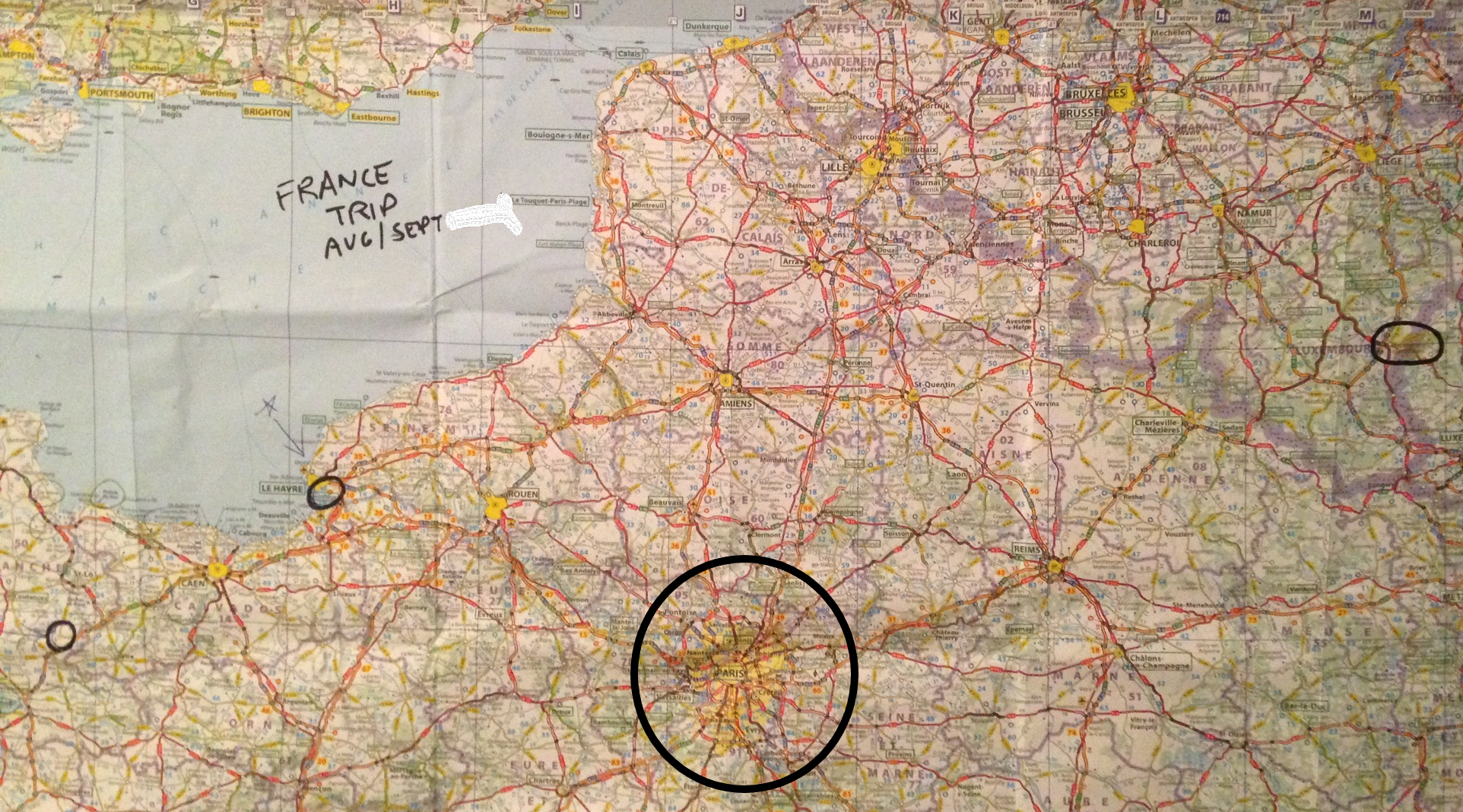





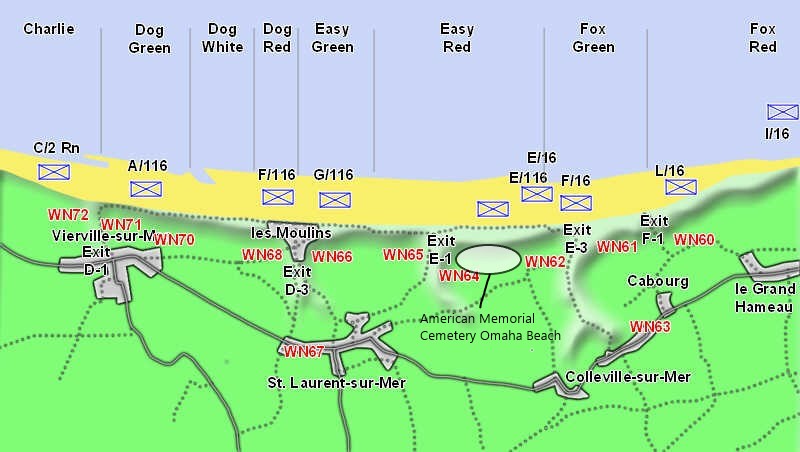
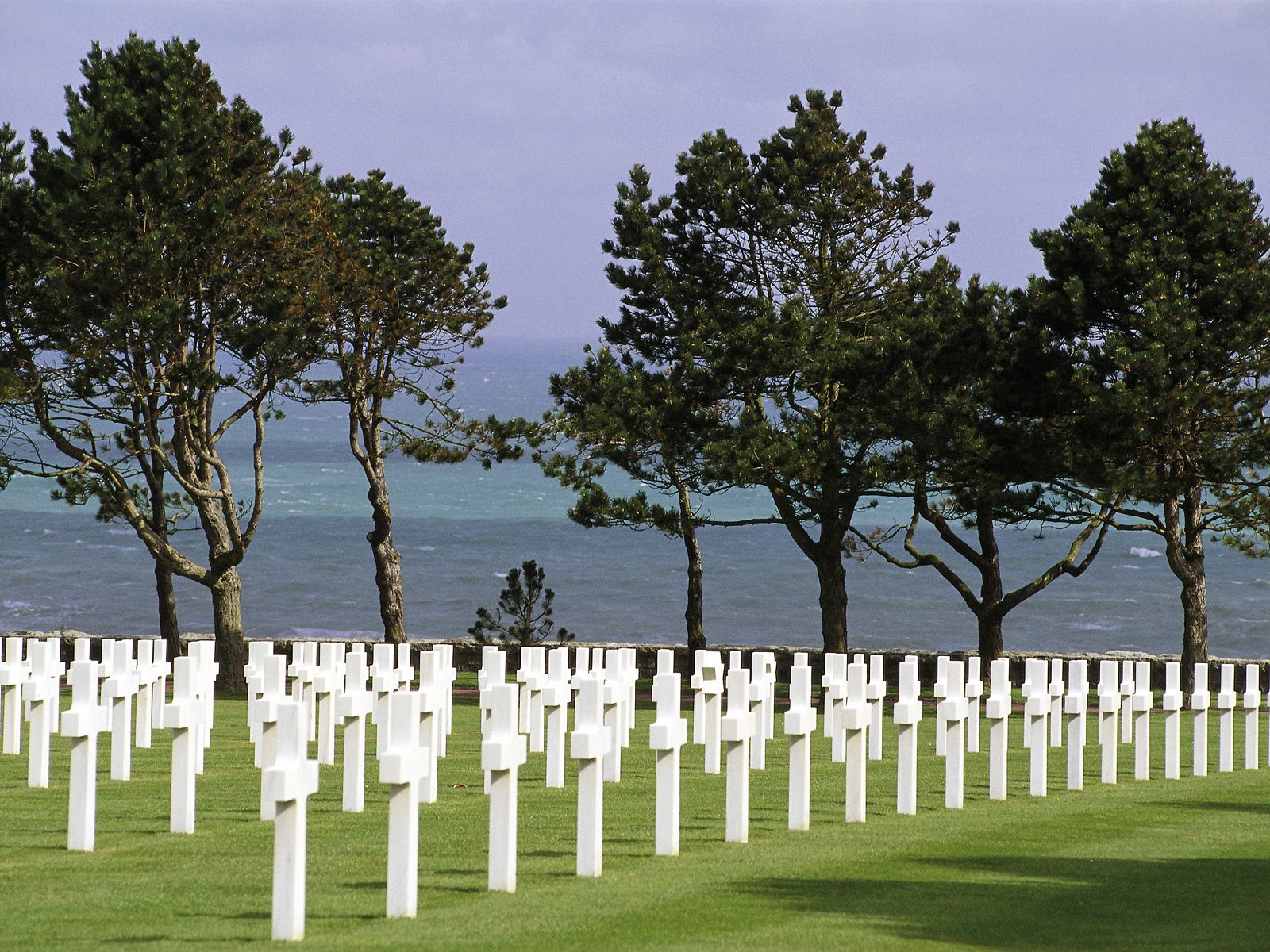
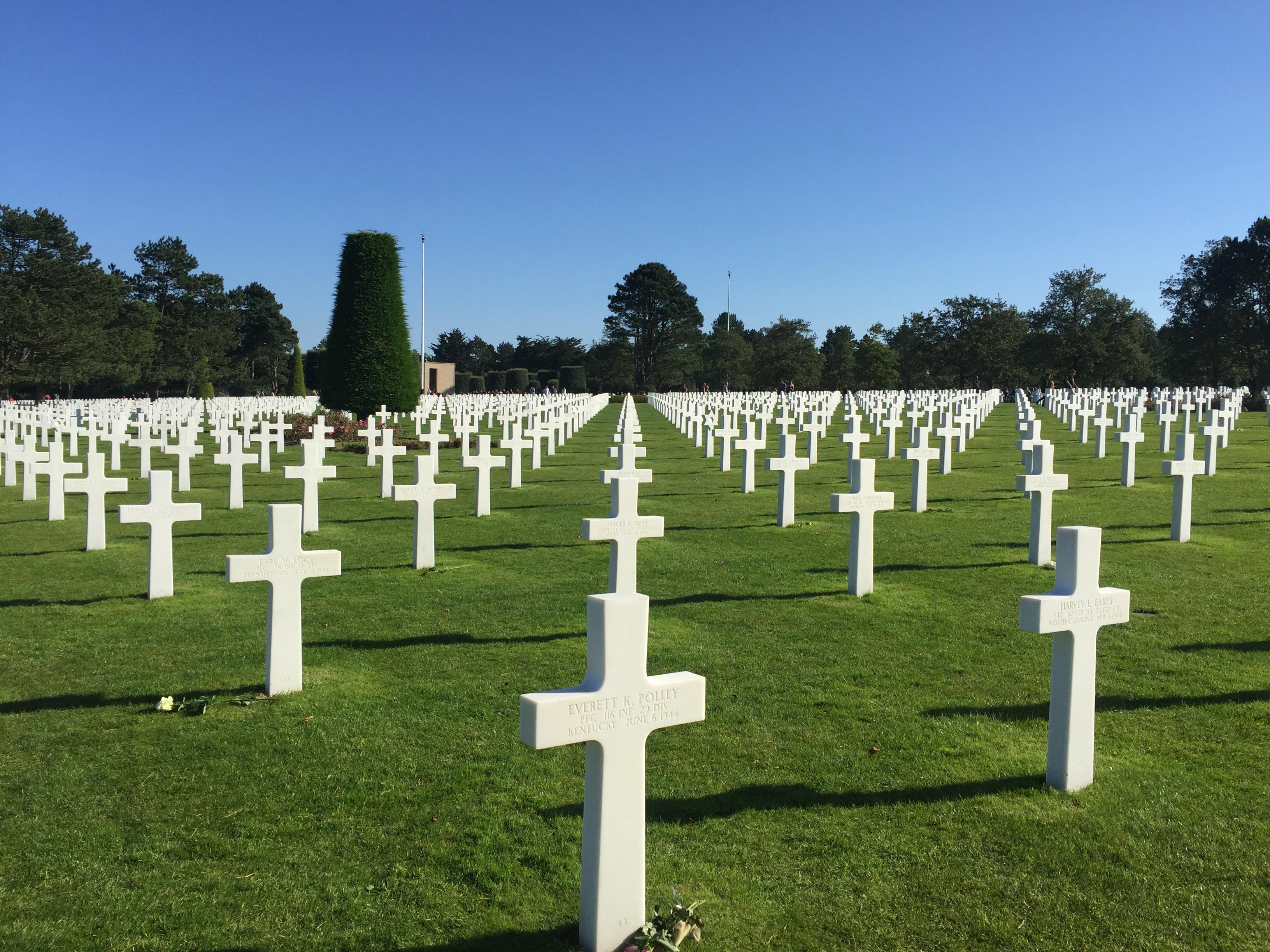


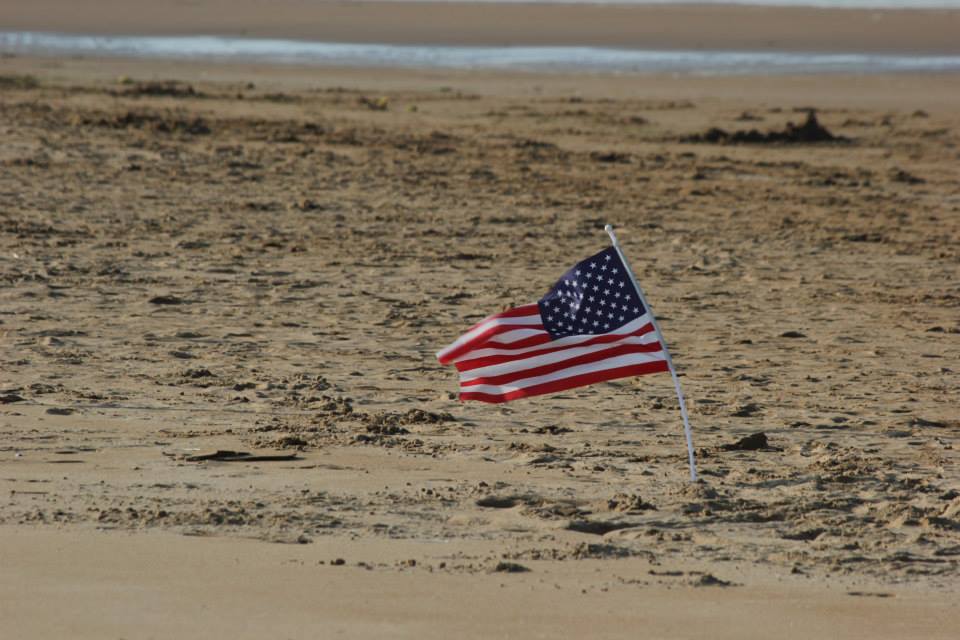


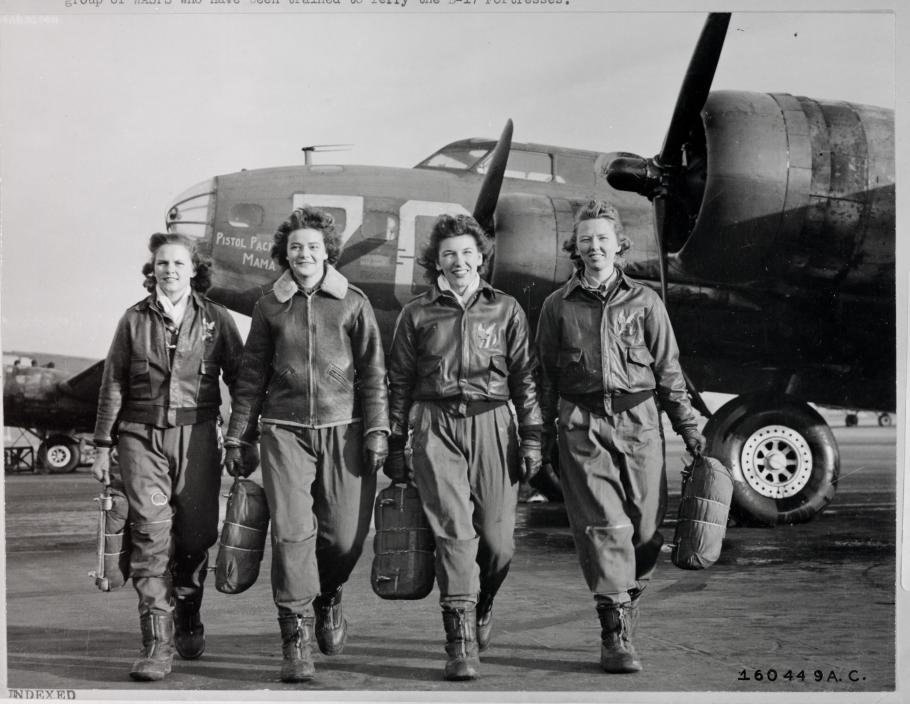
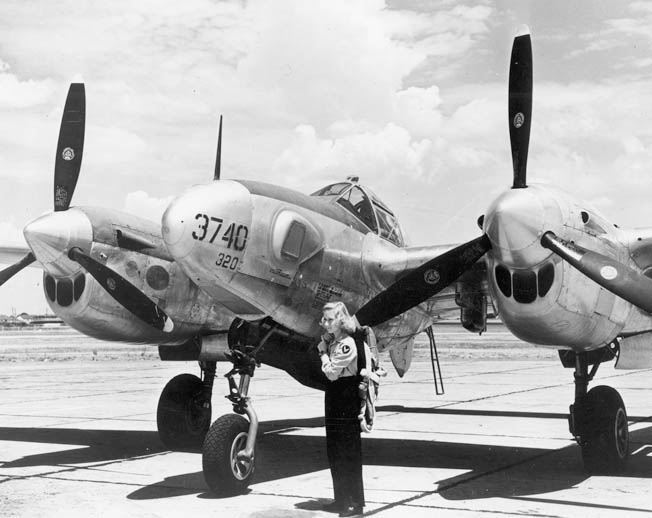
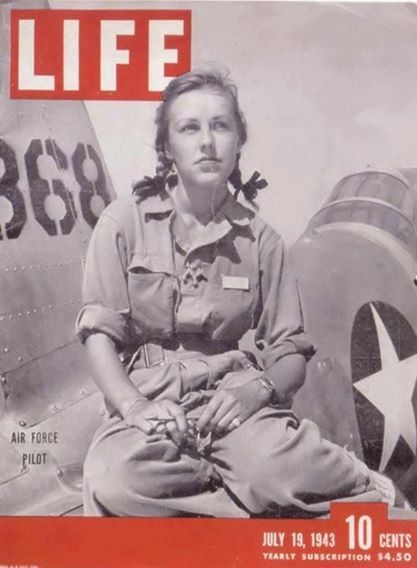
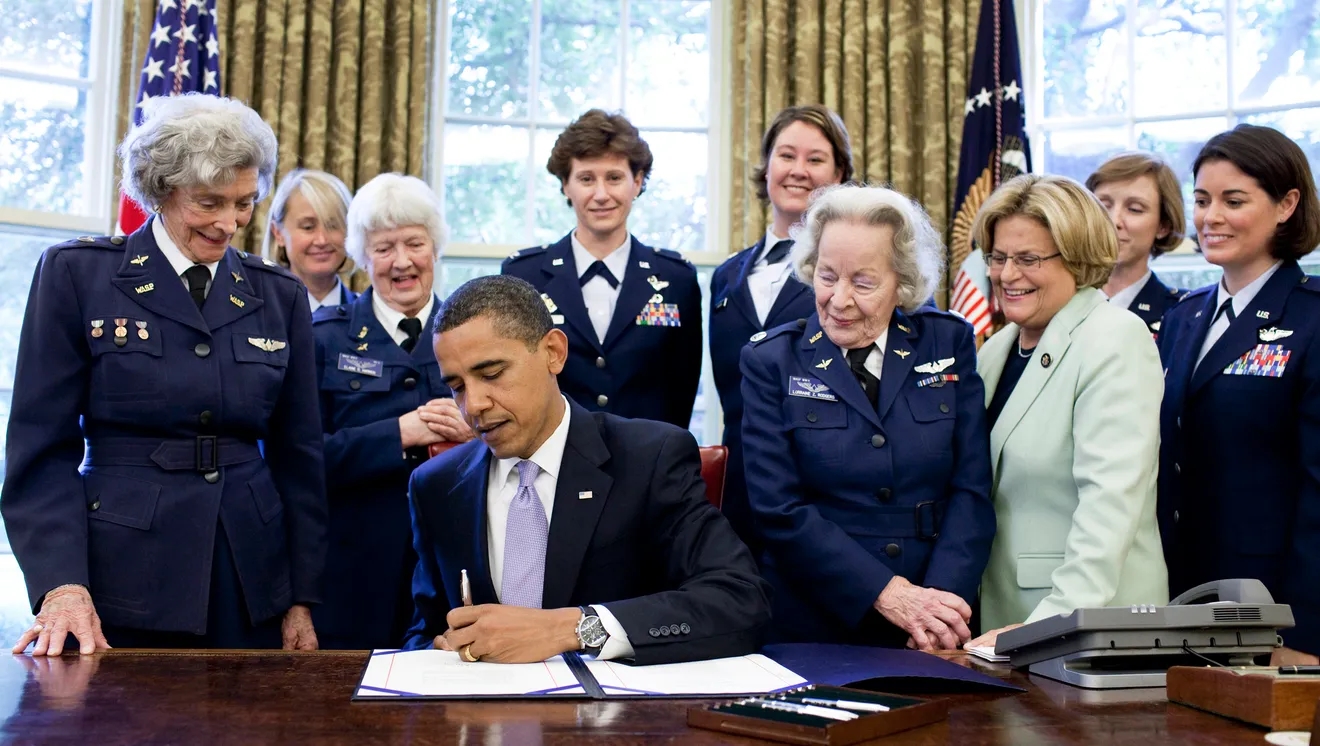


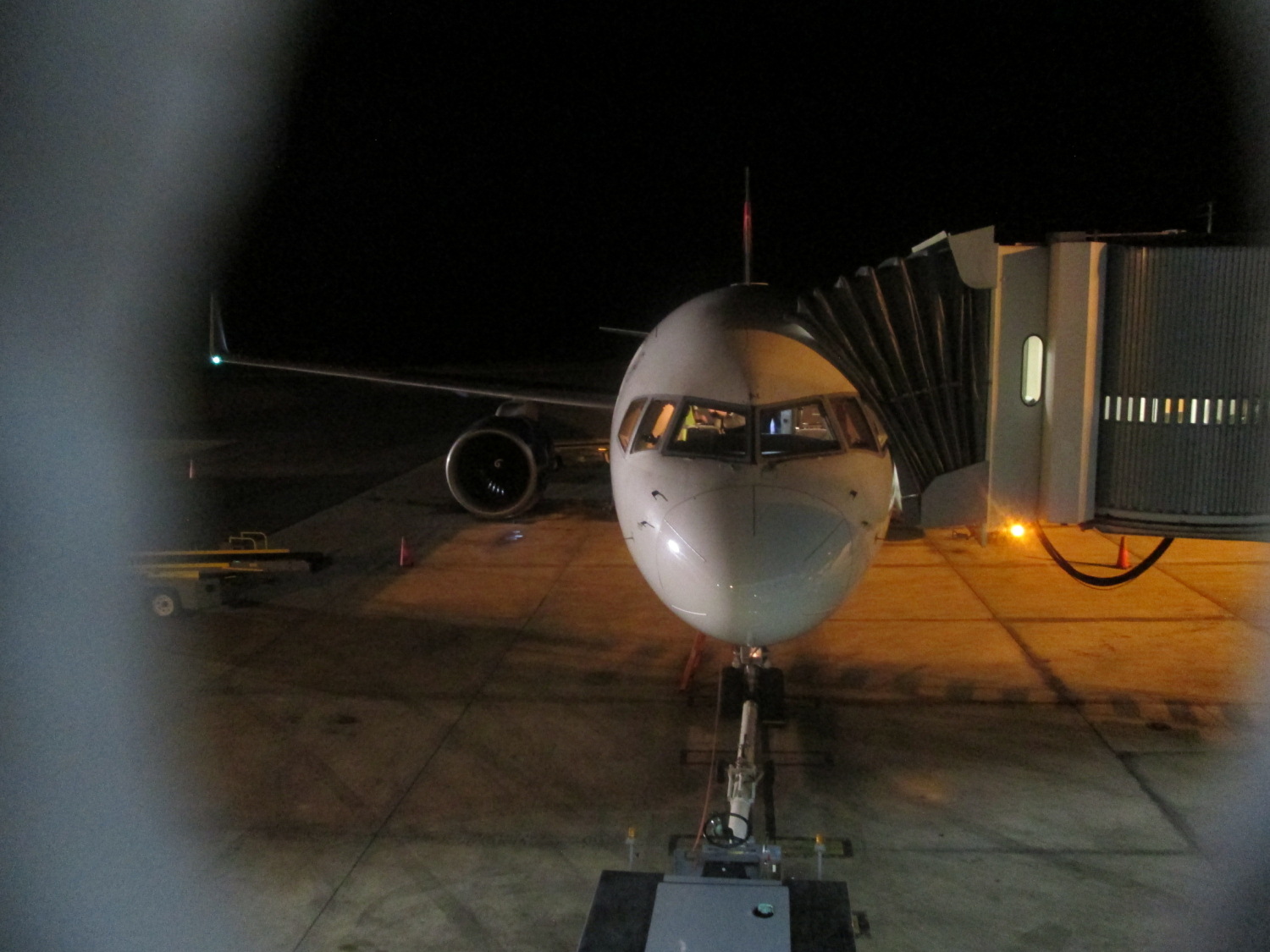

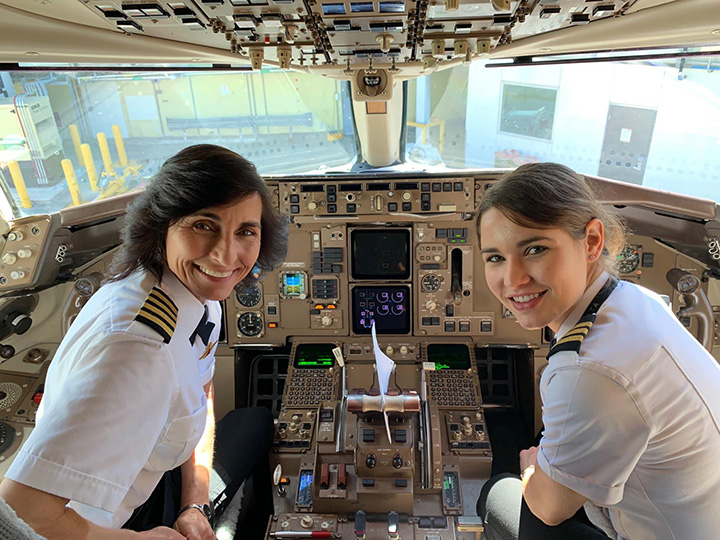

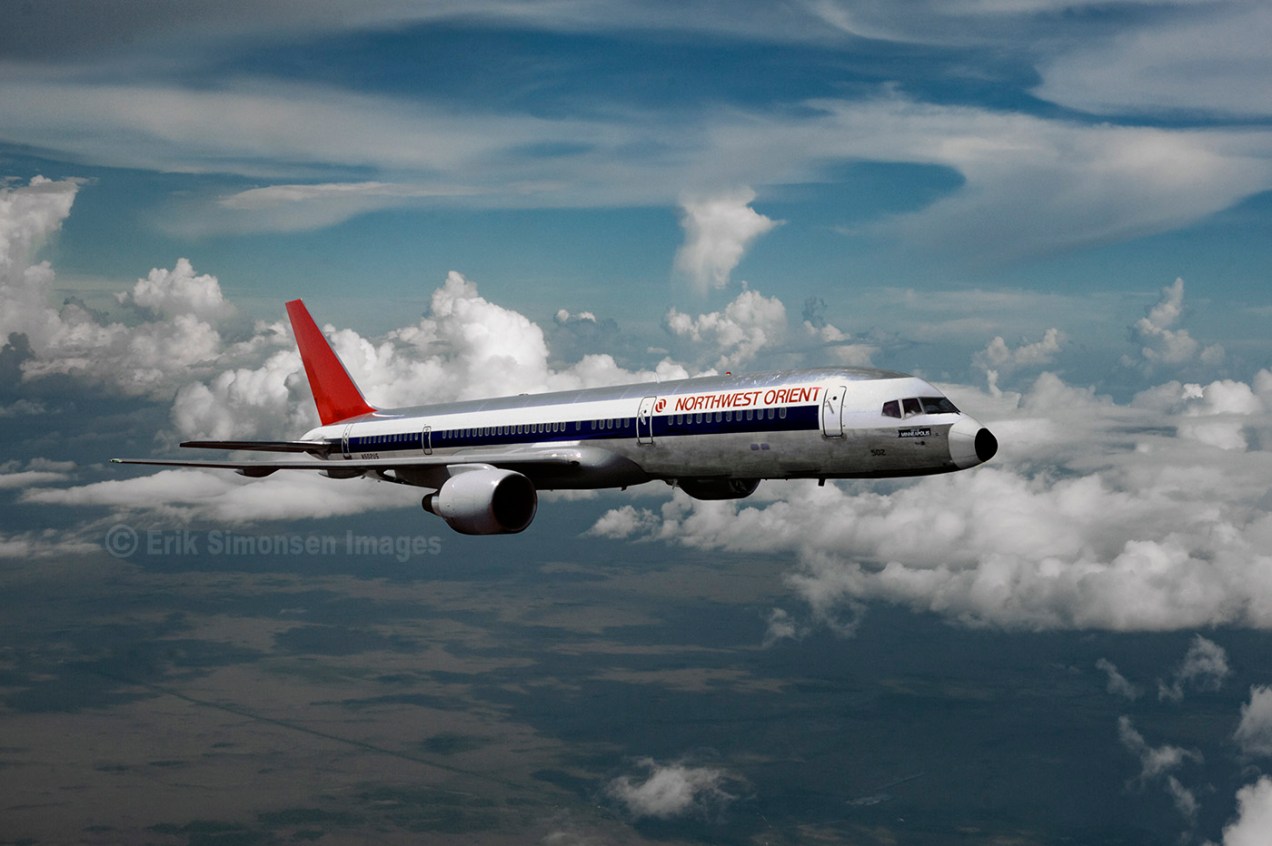







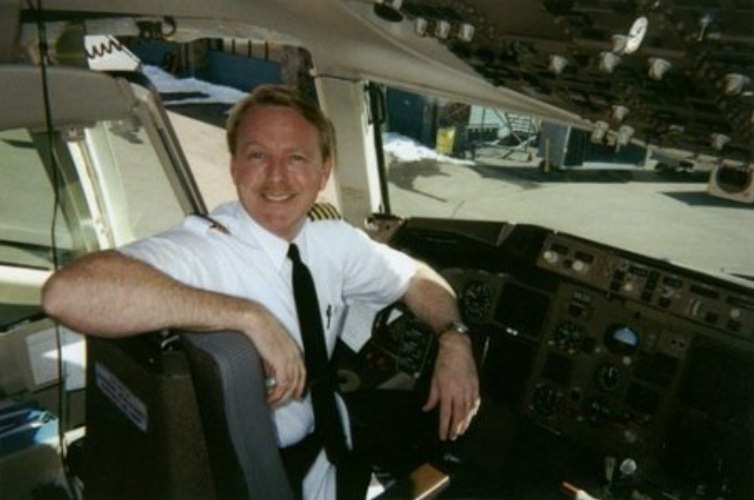
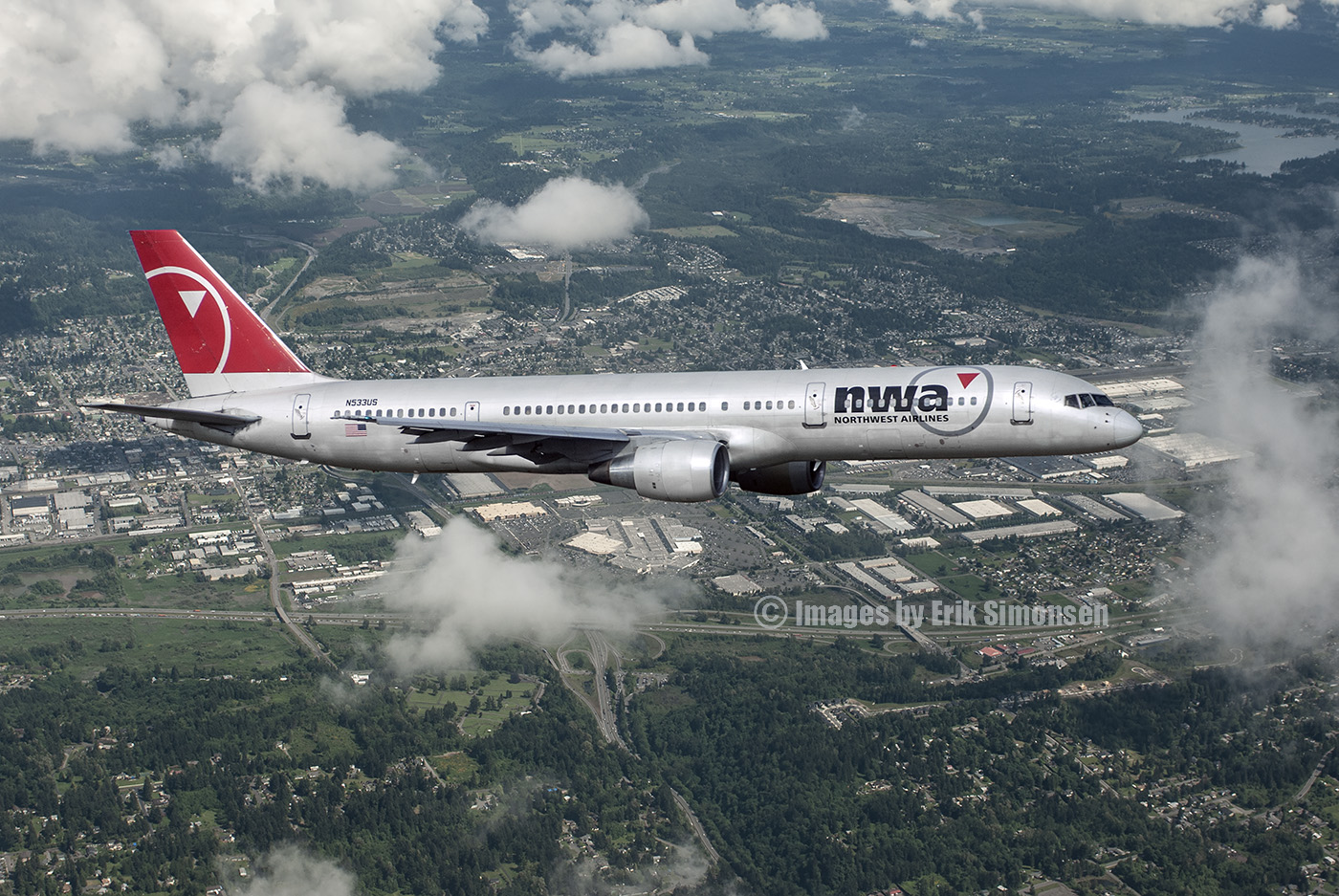

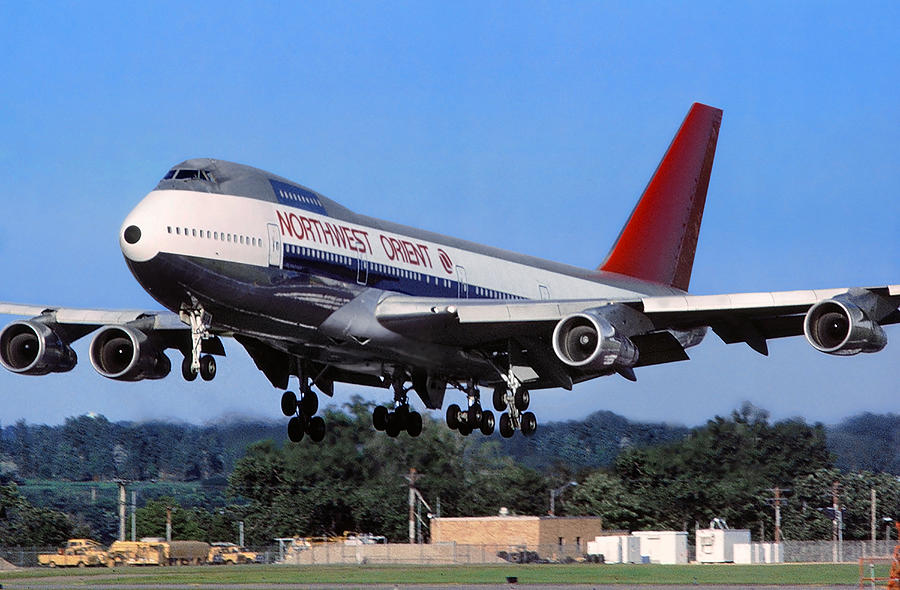
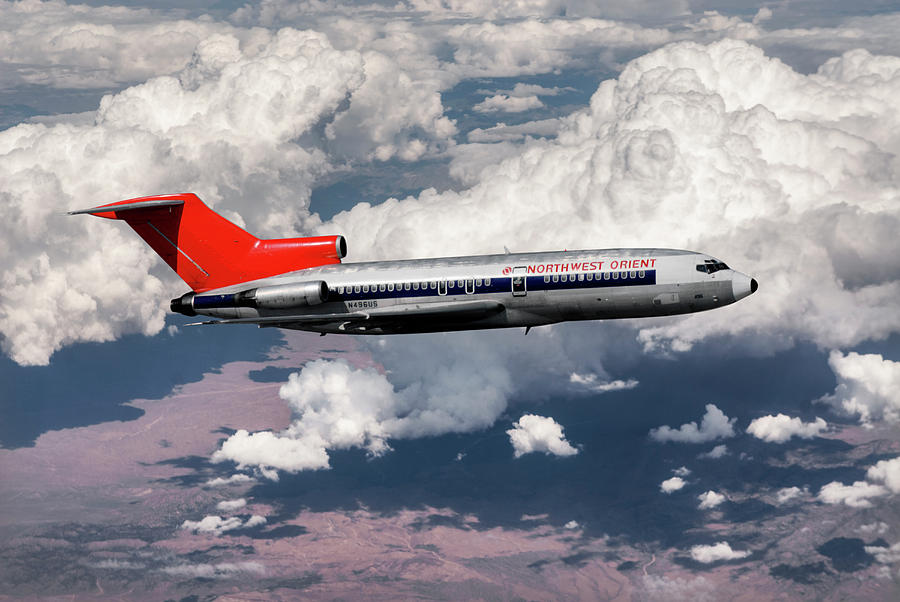
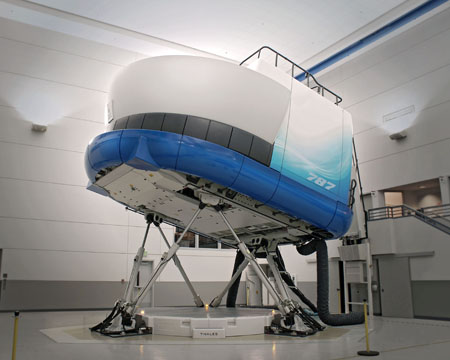
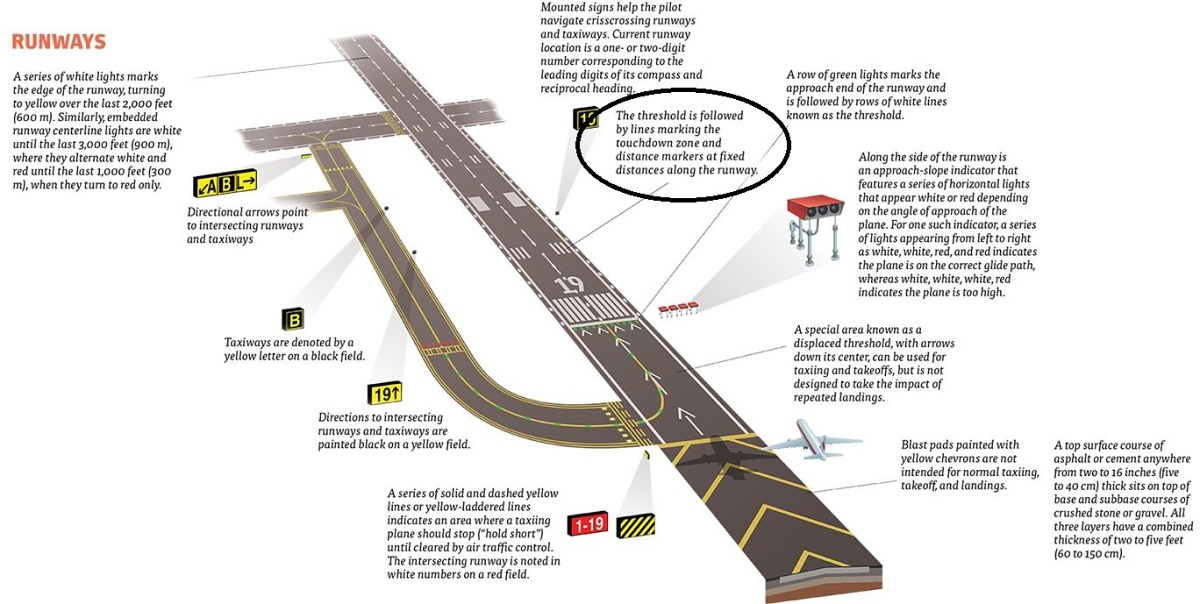
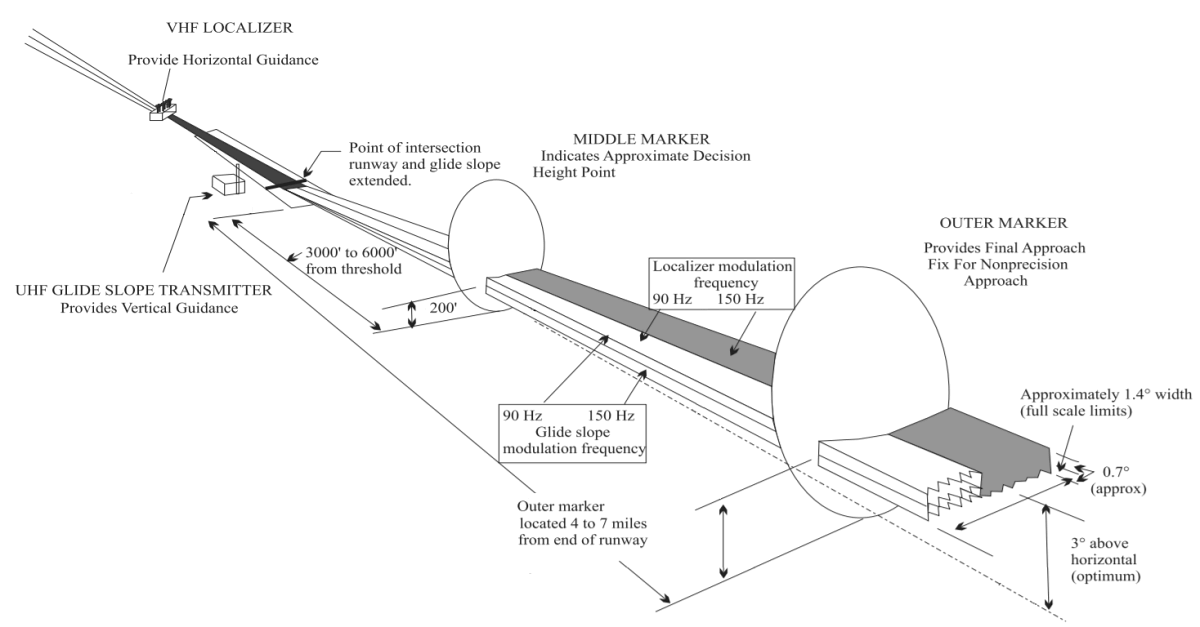




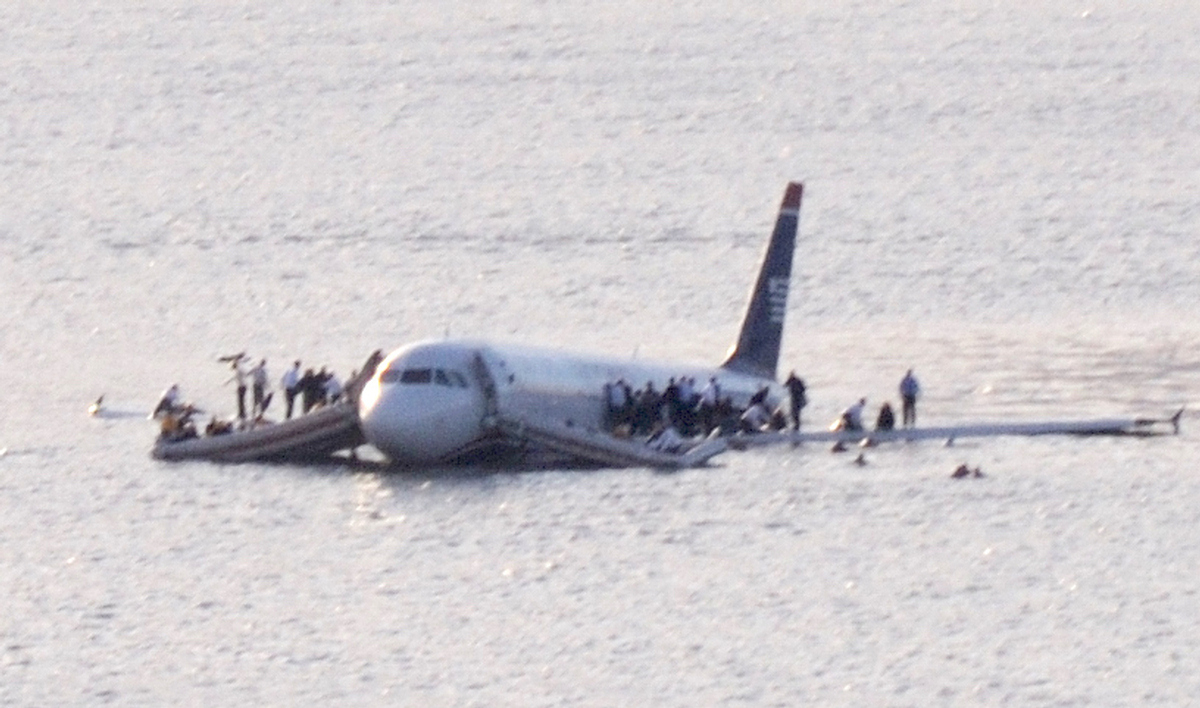



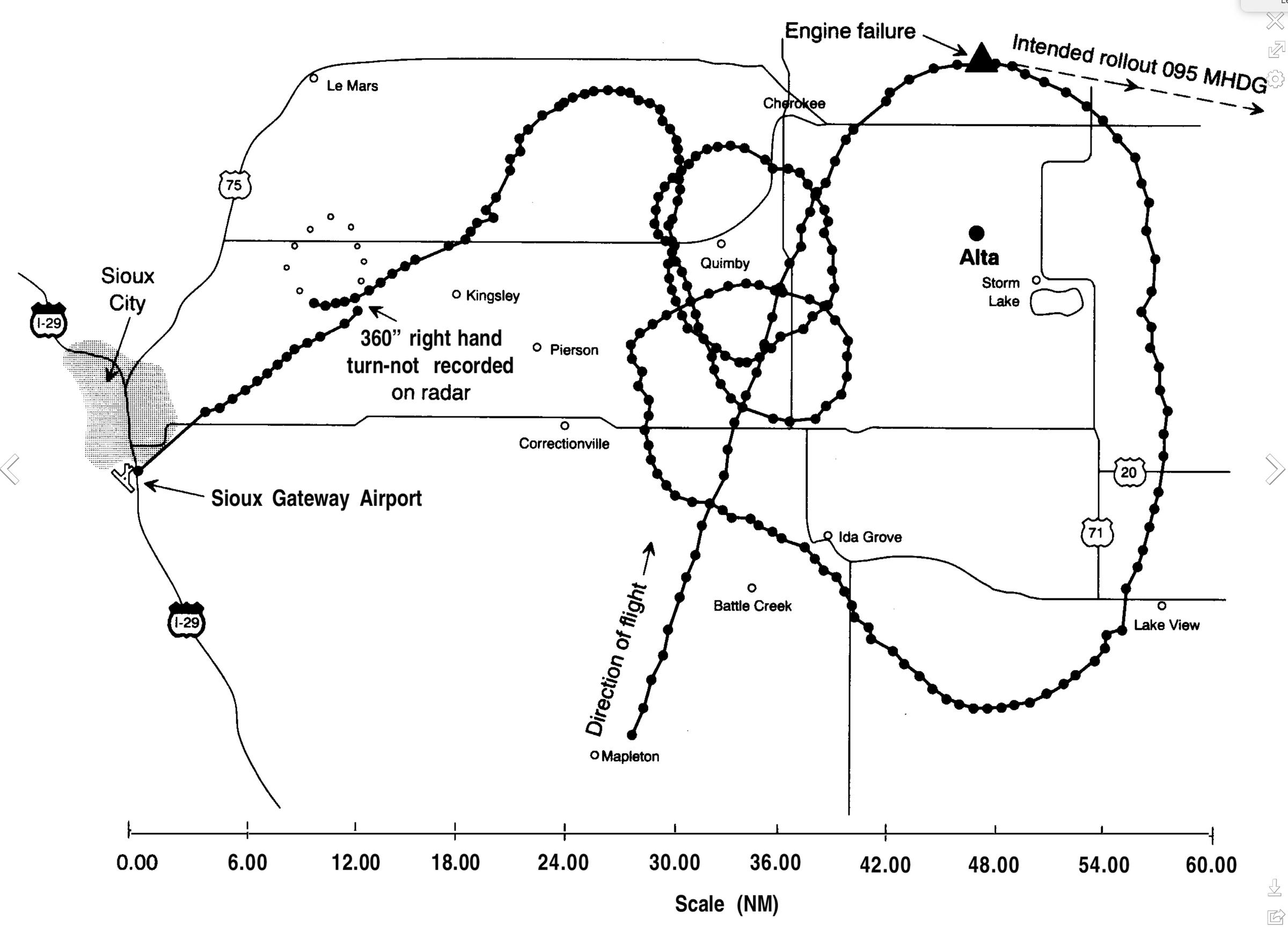





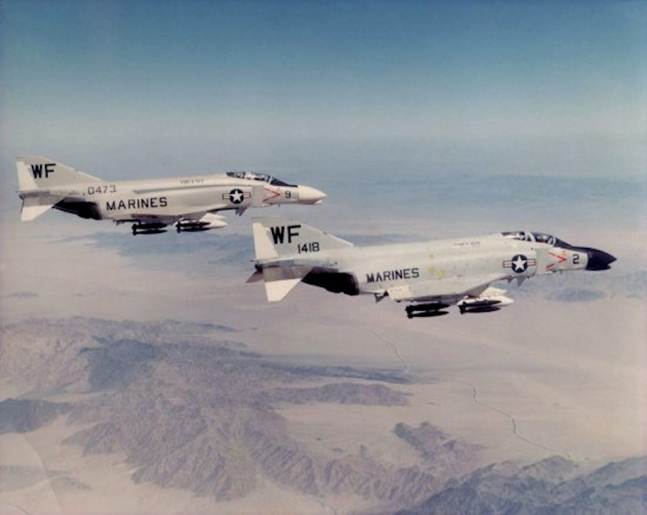
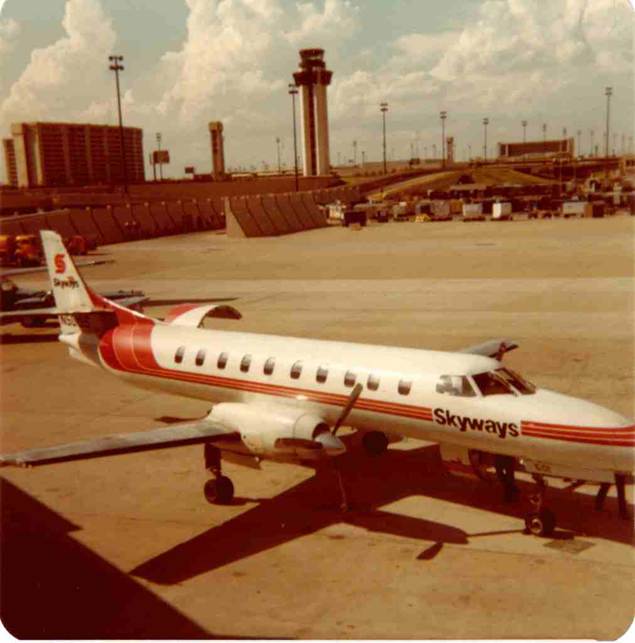

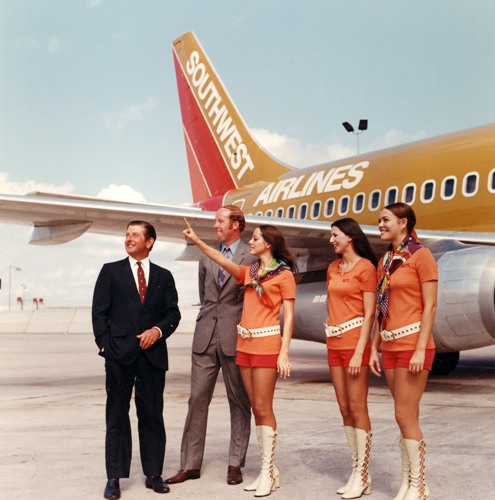


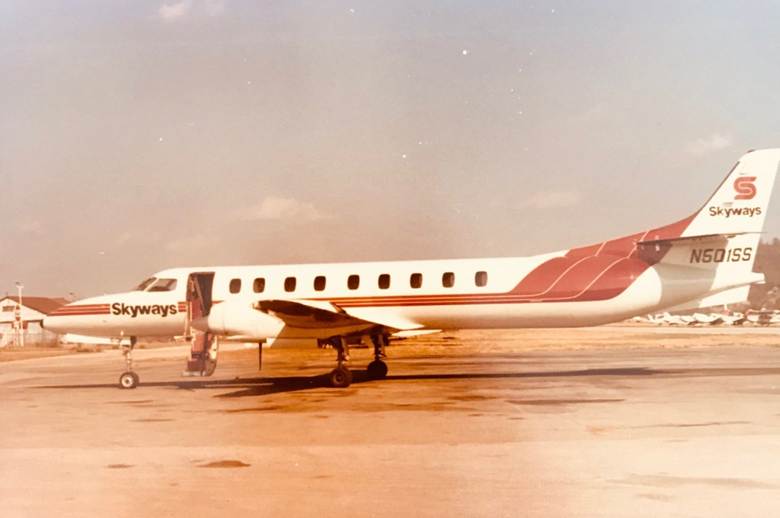
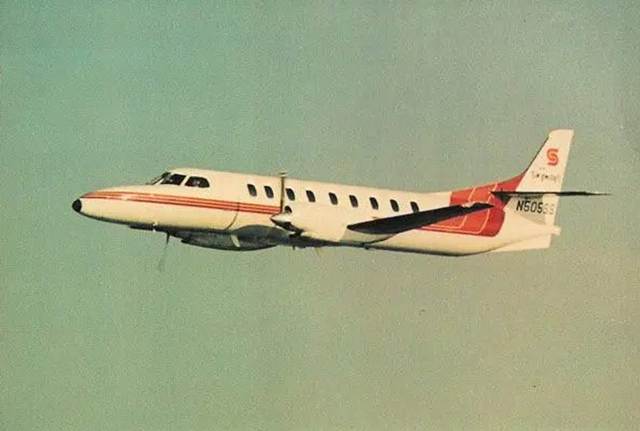

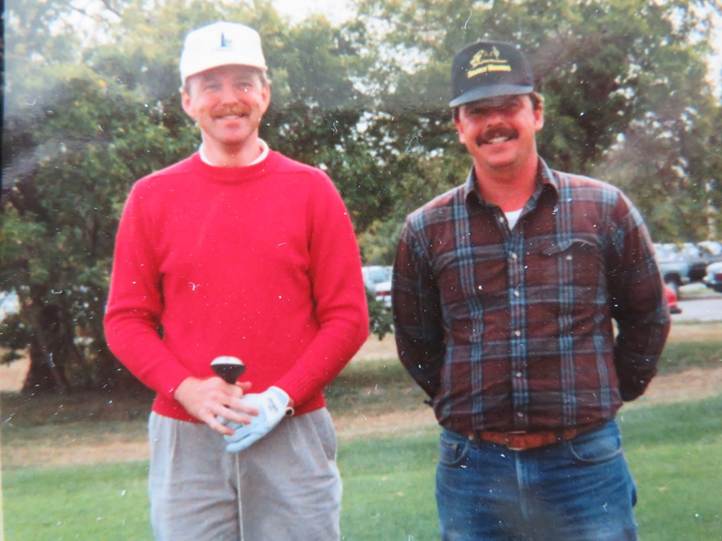

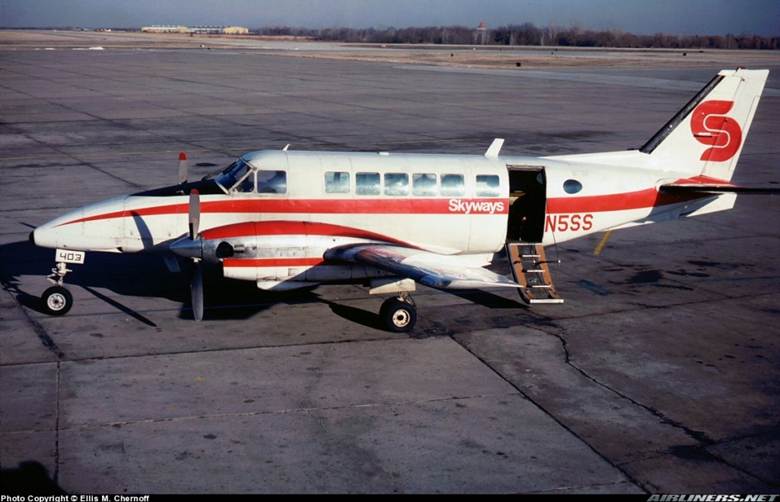
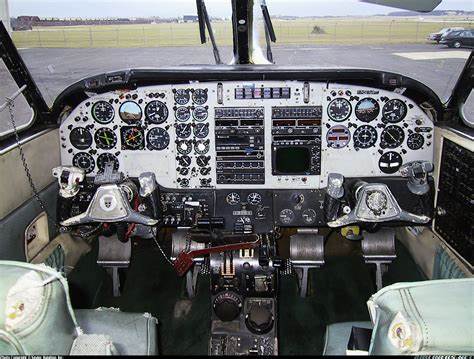



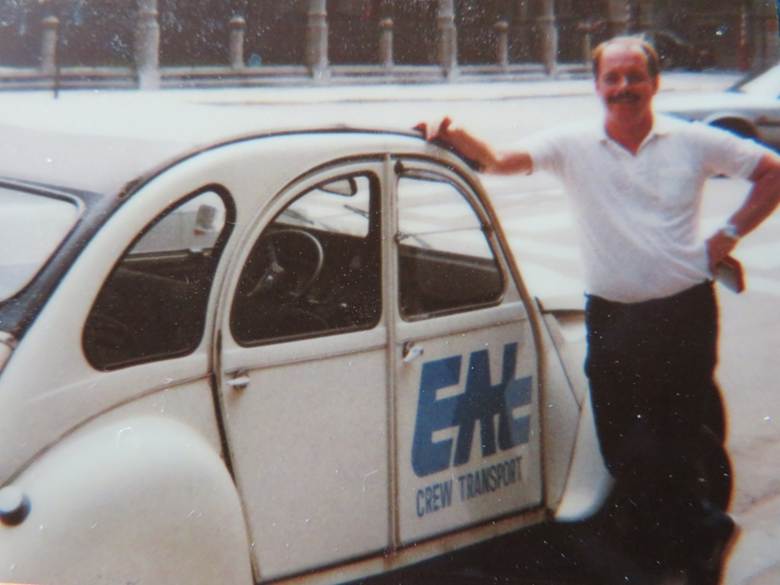
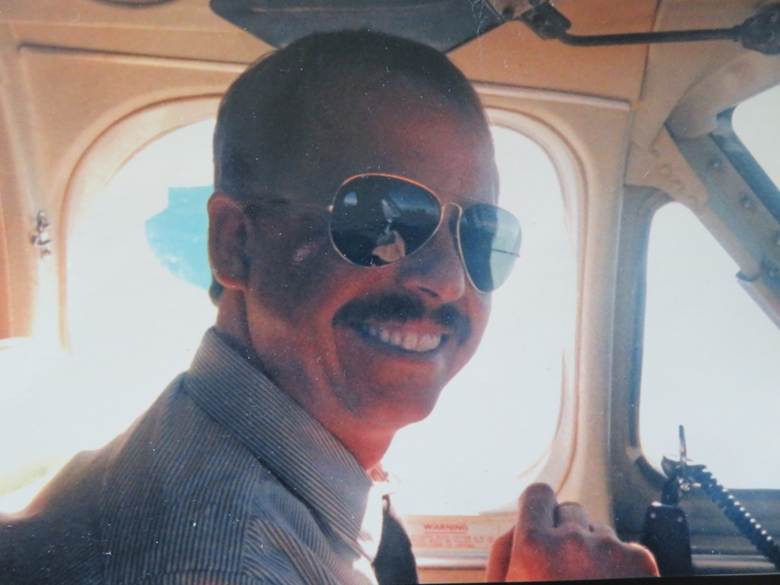




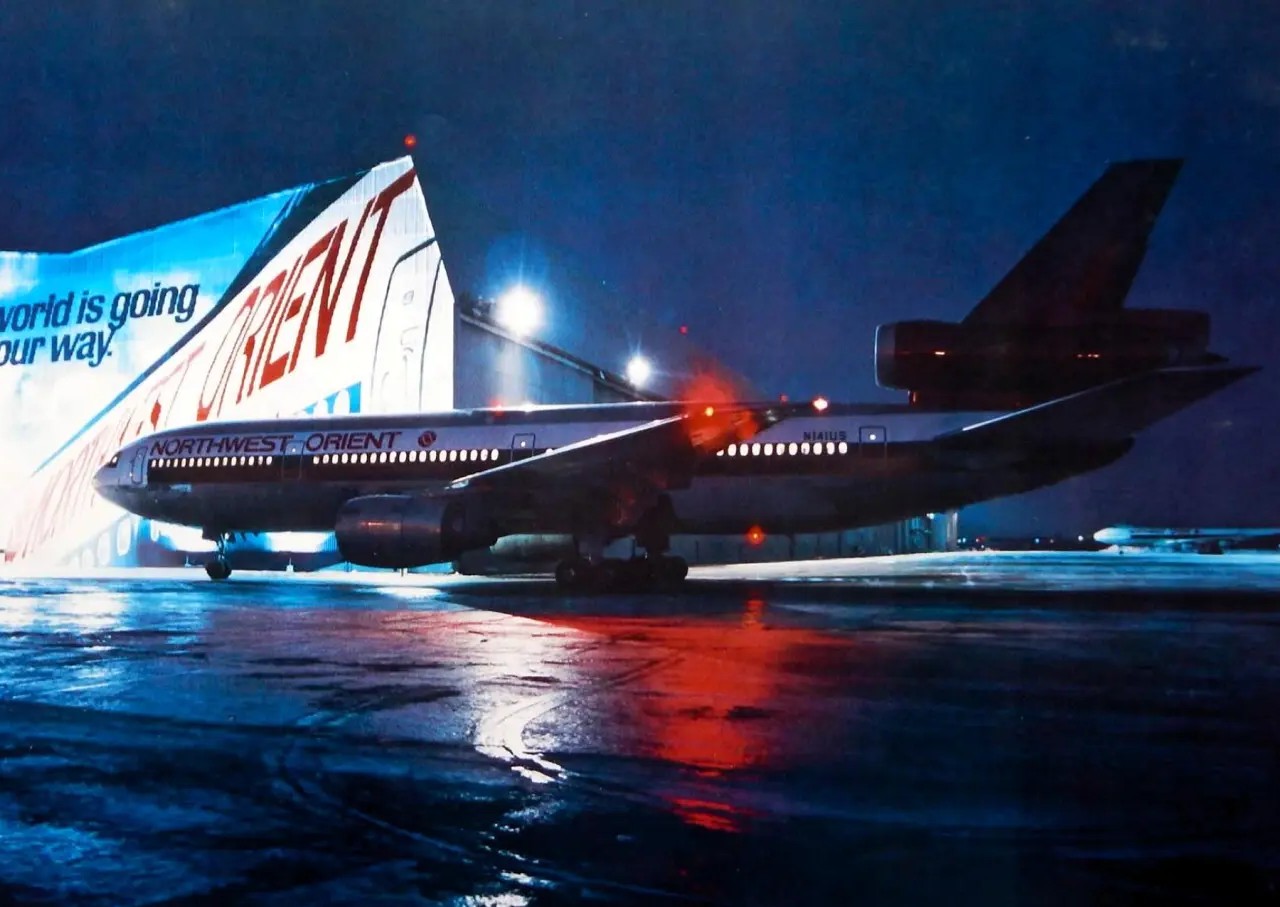
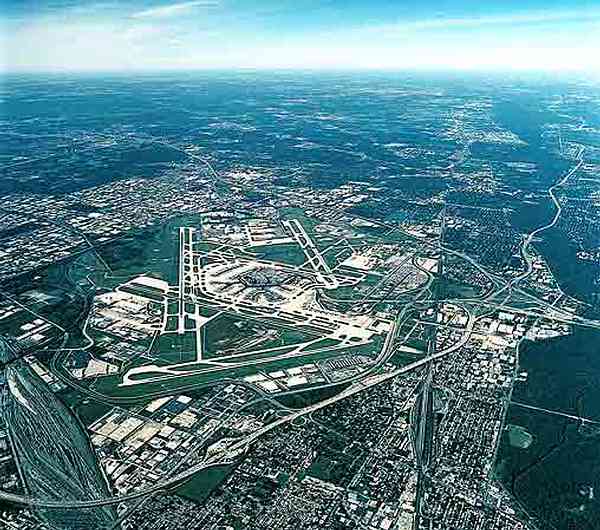
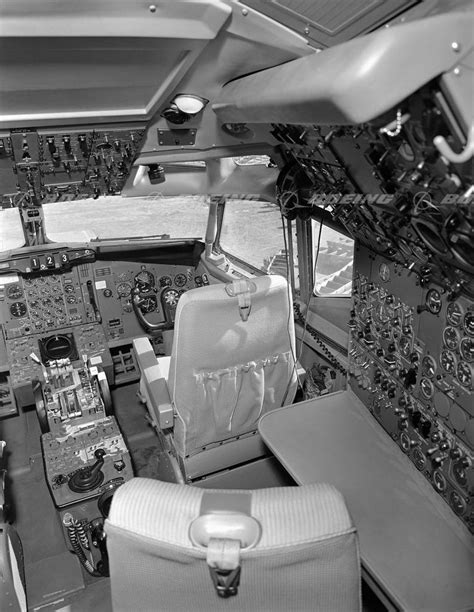


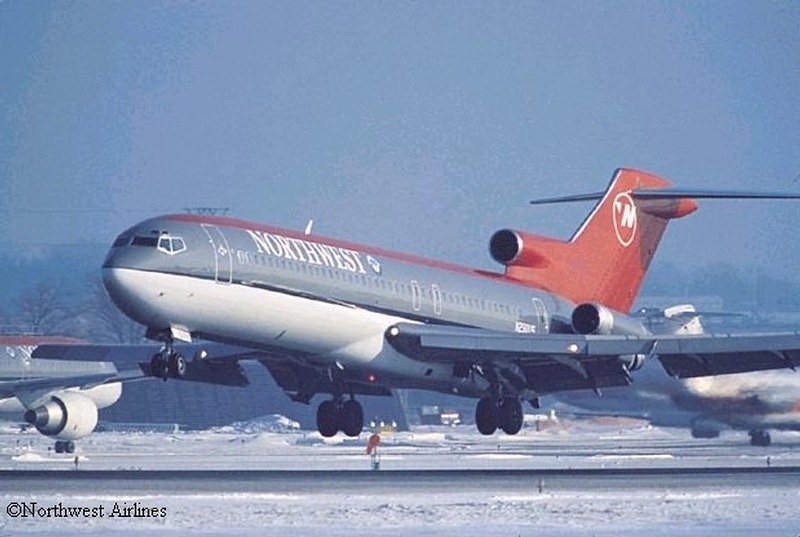
 BBALL'S LOGBOOK