It happens each month like clockwork. Nope, I’m not talking about the normal ills of being a (greying) whisker shy of seven decades of sunrises. Nor am I speaking of “old friends” like the aches and pains that come with moving too fast, or midnight bladder runs, since that thing called “middle age” hit like a tsunami. No, I am speaking of something that comes with the regularity of the tax man; the monthly publication of my union magazine (yes, even retired pelicans continue to receive it). The “Air Line Pilot” magazine’s ability to track one is legendary, almost mystical, for after several cross-country moves with no effort to update my address, it still inhabits my mailbox on a regular basis. I am quite certain that after the wizards at the Witness Protection Program erase you from all memory, the ALPA gnomes will locate you, and the magazine will show up just as it did the month before (when you were an actual person).
Regardless, it magically appears and is mostly filled with articles regarding airline safety, various FAA issues, new technology on the horizon, and information regarding the various ongoing contract negotiations within the industry. All those are fine and dandy, and mildly interesting to a retired pilot. Still, within the slick, glossy pages of this periodical, there remains one section that I (and most of my contemporaries) thumb to immediately.
It is called “In Memoriam.”
In aviation, we have a saying when one of our brothers (or sisters) passes from this Earth into the next realm… we say they’ve “flown west.” Within this section lies a hallowed list of aviators that reads like a roster from the dusty book of line pilots who have taken that journey “west”. Under the title sits a short poem/mantra that is as familiar to most pilots as their Pre-Start Checklist. It reads:
“-Author Unknown”: “To fly west, my friend, is a flight we all must take for a final check.”
To those of us who have shared our world among the clouds, sitting but a few feet from a person for hours (even days) on end, there exists a bond that is as sacred as it is unexplainable to those who have lived within the restraints of gravity. Each month, as I page through the names, the list seems to be longer than the last. As the months pass, I recognize more of the names as those of brothers (and sisters) with whom I have had the privilege of logging flight time. They have all departed “west” to their eternal layover, and not surprisingly, some of the names spark the memory cells in my brain. Many of the names evoke wonderful memories (occasionally one that conjures the opposite), and I’ve either written about many of them or (in some cases) intend to pen a yarn about them in the future.
(The “In Memoriam” page from a recent ALPA magazine.)
It was a pleasure and an honor to fly with these folks, the ones who groomed me as a young “birdman”, and those who had my back as a new Captain. In later years, as my experience and comfort level in the Commander’s seat took on the “old shoe” style comfort, I endeavored to mentor the younger crewmembers and (at times) take on the role as a trusted advisor and marvel at their talent. They all (the wrinkled and the young) were amazing pilots, skilled in their profession, and they were a joy to work with (and for). The following link is a yarn penned many years ago of one of my all-time favorites when I was a new-hire at Northwest Orient Airlines:
Before my 37-year career at Northwest began, I was fortunate to fly with the most incredible group of pilots I had ever been a part of. We all worked for a small airline called Scheduled Skyways, based in Fayetteville, Arkansas. There were fewer than 100 pilots at this line. The following list reads like a “who’s who” of the gifted Captains at Skyways in the 1980s: Jim H., Jay T., Ron R., Wendall L., Gil M., Bill L., and Pat B. After a year, when I moved to the left seat and took command of the small “airliner” for the first time, the list of trusted First Officers was as hallowed as the list of four-stripers: Steve “Buzz” B., Cortney K., Pete C., Strawn F., Will H, Sinotra O., Ted J. Al M., Matt S., Don P., Stu B., Greg W., John A., Buddy A., Mike C., Scott E., Grady W., Paul B., and Mike D. Every name from those lists were (are) excellent pilots, and I was extremely fortunate to have them in the cockpit with me. Not every pilot at this line was mentioned; some were inadvertently left off (my apologies), some not so inadvertently.
The names mentioned are the men who helped shape me as a professional pilot, and many became friends (some to this day), and I was blessed to spend four years in my mid-twenties with them. Although we never shared the crucible of flying bullets and flag-draped coffins, we shared many a rain-swept, lightning-filled sky, more than our share of trials with difficult flying machines, and lots of bad days with difficult airline management. Pain spares no man, and we were no exception. We helped each other through death, divorce, and illness. When my beloved oldest sibling tragically took her own life in 1982, a dear friend and colleague made a suggestion that has become a lifelong outlet for my thoughts and feelings. He suggested that I begin a journal (“blogs” did not exist back before a guy named Gates hooked a keyboard to a screen). He explained that many years removed from the event, I would recall the event itself, but the details, and especially my feelings/emotions, could easily be skewed. He was spot on, and thousands of hours, ten calloused fingertips, and gigabytes of X’s and O’s (and one novel) later, I would be remiss if I failed to thank him profusely.
“Thank you, Peter, your suggestion has left many with sore eyes and bruised brains, but it has saved what little sanity I ever had… many times over. God bless you, brother.”
During those days in and out of the loud, cramped cockpits, we laughed, we bitched, and we bonded. Thank you, gentlemen, you will never know just how much I cherish those days.
Then there was Mark Detrixhe.
I first met Mark on a clear, pre-dawn September Sunday in 1979. I had been in the employ of the small “hometown” airline in Fayetteville for one month and one day. This was to be my fifth day of flying as a new First Officer on the Swearingen Metroliner in the livery of Scheduled Skyway. The initial training was “interesting” to be sure; it was flown in the middle of the night (the machines were far too busy to use during daylight hours), and under the intense tutelage of the Chief Pilot Ted B. The one other pilot in my “new hire class of two” (Howard S., who became a good friend and ended his career with FedEx) and I felt like we were taking a sip from a gushing fire hydrant. It was a huge amount of information for two young pilots (me, from the world of night freight in the Piper Navajo, and he, from the SoCal world of flight instructing). Still, we studied hard, flew to the best of our ability, and completed the program. I recall my first impressions of the machine was that it was very loud (we wore “noise cancelling” headsets…they did not cancel much of anything but a nice haircut), was much larger and heavier than anything I had piloted before (it had a 12,500 pounds gross take-off weight…by comparison the Navajo tipped the scales at just over 6000 pounds), and was rather over-engineered… a fancy way to say it was a complicated airplane (it was my first experience with things like “bleed switches”, “start locks” and “current limiters”).
(A typical Piper PA-31 Navajo cockpit.)
———
(A typical Swearingen Metroliner cockpit.)
The previous four days of this, my “virgin” week, were a blur. For the first two days, the weather was characteristically ugly for late summer in the Ozarks. Thunderstorms across the entire route structure (to include a missed approach at one of the smaller stations, Harrison, Arkansas), with lots of turbulence, heavy rain, and winds. After the front had passed, the next two days were a daze of dense, hazy skies and hot, humid flights. The four Captains for these first days were either the oldest guy I had ever flown with (Ray Y., … in his 70’s!), silent and surly (Art K.), or just rather “different” (Ed F. and David R.)…nice guys each one, but not the kind of commanders that might put me at ease (and thus relaxed) enough to truly glean anything useful about operating this beast in the 14-hour day, 10+ leg world of the commuter airline flying. I hung on by my fingernails, did exactly what they told me to do, mostly just watched them fly the aircraft (they were all “old heads” with lots of time in the machine), and finished each day wrung out and exhausted. Day five with Mark would be completely different.
Northwest Arkansas, in the Fall, can be a stunning place to live. Endless forests filled with vibrant hues that leave nothing of the color spectrum to the imagination. Cool mornings, warm afternoons, and gentle winds. This was what I expected on the first four days of my fledgling airline career; luckily, this was what I was presented with on day five. After meeting this man (roughly my age) whose smile was eclipsed by his easy manner and friendliness, we departed Drake Field as the eastern horizon began to brighten with the approaching sunrise and settled into our day of hauling posteriors through the clear blue skies of the deep south. We motored through Ft Smith, Memphis, Harrison, and Fayetteville, back to Memphis, and finally returned to our home base of Fayetteville as the clock was a few hours north of noon. Where the previous four days were long, intense, exhausting hours in the cockpit, this day was exactly the opposite.
(Scheduled Skyways ship number N501SS on the ramp at Drake Field.)
My most vivid memory was that we laughed. A lot. He told (and showed) me things with the machine that no one had mentioned (admonishing me to “don’t try this until you have hundreds of hours in this piece of sh*t”). He did it all in such a way that as I walked to my car at the end of the day, I felt as if I had just flown with a “guru,” a pilot who had been doing something very difficult long enough to make it look easy. He had, in effect, given me a “master class” on flying a machine that was most assuredly NOT easy to fly. And he did this all the while keeping the cockpit atmosphere relaxed and fun. I would not crew with Mark again for two months (flying almost every day), and when I did, the weather that day was characterized by rain, fog, low clouds, and wind. It was decidedly more challenging than our first day as a crew, but did the pressure of a day of ugly weather change this “easy-going” pilot in the command of our machine (and me)? Nope, same relaxed manner, same fun “banter,” same practiced “wizardry” at the controls of a difficult steed, and same feeling for me at the completion of (another) long day in the Metroliner. The “master class” continued, and I looked forward to seeing his name next to mine again on the schedule.
For the next few years, we crewed many more flights through many more beautiful (and at times angry) skies, and I learned a great deal from him. He became a friend, and I can still see his smile, hear his funny yarns, and recognize his influence on me as a new “airline birdman” as real and positive. He was a “Captain’s Captain,” and it was a pleasure to fly with him so early in my airline career. Like the rest of us brothers at this line, we all went our separate ways (I being hired by Northwest Orient in November of 1983). For some of us, our journeys would cross at regular intervals; for some, we would never see each other again.
Sadly, Mark “flew west” a few days ago, and although the years saw us drift apart and our lives move in different directions, I knew my aviation brother was still an integral (read important) part of my flying journey. Our last “conversation” was in a group text, and it breaks my heart to say it was not as “easy” as our early days in those noisy, cramped cockpits. Though we might have parted as polar opposites regarding things of this Earth, I pray that he knew I respected him as a man, an exemplary aviator, and loved him as a cherished friend. Several from our little group have journeyed before Mark, and in the end, we all will pass that invisible barrier between here and what awaits us. He will be missed by everyone who knew him.
I sat in my office a few nights ago and raised a glass of spirits to Mark. I prayed that he found his “paradise” and that he knows that we miss him.
“Fly west, Mark, on your journey that we all must take for a final check. I wish you only following winds and calm skies, my friend. Buy Buzz a beer for me, oh, and grab one for yourself… put it on my tab, brother.”
Not actual tears falling from the ducts, but emotionally weeping. This is not new to my world, for since a bright-blue Tuesday morning in September twenty-four years ago, as each late summer approaches, I am left with a torn and bruised soul. The month of September is bittersweet; it is a time full of joy and sorrow. The first few days are full of delight and love as the next anniversary of the blessed birth of my youngest child dawns early in the month, and then a spiritual funk inevitably begins to take over. Each year, as we approach the eleventh day, my thoughts and emotions drift back to that day when a dastardly evil crawled out of its corner of Hell and came to the shores of my beloved America. On that morning, the world watched as thousands of innocent people were murdered at the hands of demons using peaceful, graceful machines of the air as their heinous tools. Over the years, I have written about it several times, attempting to find answers and some sense of closure to that unspeakable madness…sadly, mostly to little or no avail.
This year, after north of eight thousand sunrises, I am sad to say that my soul weeps more than ever. The sage advice that “time heals all wounds” can be accurate, but those words fall short in the context of this human tragedy. This year, the pain of what has become known as the “9-11 Anniversary” was made worse by more evidence that whatever lessons mankind may have learned from that painful morning seem to have faded. Evil continues to have an address within the human heart and thus the source of my words.
People have always used language to influence others. Words are powerful, very powerful. They have changed the course of countries, populations, and even mankind. They can be beautiful, uplifting, and steer the human heart toward greatness. The likes of “We hold these truths to be self-evident,” “Four score and seven years ago,” “Ask not what your country can do for you,” “I have a dream,” and “Give peace a chance” will live through time as some of our finest linguistic moments. Sadly, we have seen the opposite; Stalin uttered, “The death of one man is tragic, the death of thousands is a statistic,” Mao hissed, “Morality begins at the point of a gun.” Himmler warned, “The best political weapon is the weapon of terror.” Yes, words can be beautiful, and they can be worse than horrible.
But why the bruised soul? Why the internal weeping?
Again, this past week, we as a collection of humans witnessed more of the depravity that “9-11” displayed to us all those years ago. Our “advancements” in technology now allow for millions to watch death and suffering as never before. In past weeks, a video surfaced that depicted a man being repeatedly shot in the back as he walked down a New York sidewalk. Early last week, we saw an innocent young woman be savagely murdered on a subway train as others appeared to be uninterested, and a few days ago, the world witnessed a man being killed by an assassin while debating his thoughts in the public square. All three of these humans woke that morning, went about their day as planned with no inkling that they had seen their final sunrise and that they would all horribly die as the rest of us watched on screens small and large. They were tragic events that displayed the very worst that an evil heart can conjure, but the story grows worse. In at least two of these tragic stories, sick, twisted, hate-infected people found these acts not only justified but a reason for rejoicing. Yes, I used the word rejoice. Not recoil in horror, not wince in moral repugnance, but somehow felt it was time to descend and devolve into something I am not sure my humanity can comprehend. They danced with evil, and it sickens me.
Sadly, history is rife with such actions. The murder at Ford’s Theater was celebrated by those few still loyal to the Southern cause, horrible people far from Dealey Plaza smiled as a nation lay stunned, and horrific bigots grinned and shook hands as a great man bled to death on a Memphis balcony. Again, my heart is shattered to think that “motivated murderers” are celebrated as death came to a man on the cold pavement of a city sidewalk and under a warm canvas tent in Utah. What is so broken within these people that it would allow them to feel such things? What can possibly live in their heart to think that taking the life of someone you have a social disagreement with (political or otherwise) is somehow “O.K,” or “justified,” or even…I shudder to think… “noble?”
I am certain I do not possess the insight or intellect to answer.
This begs the question, “Why?” Why would a group of our fellow humans do something so dark? Not the murdering of another person, that is the subject of another piece altogether, but how could someone that we may know and consider a “normal” person find a place in their heart to find joy in such a disgustingly non-normal event?
The only answer that continues to rattle within this head is one thing: “Words.”
As mentioned above, words are powerful. Words do matter.
We are continually fed a diet of horrific monikers spewed toward a group (or groups) that we do not share the identical worldview with. Terms like: “Fascist,” “Bigot,” “White Supremist,” “Homophobe,” “Hate Monger,” “Existential threat to our Democracy,” and of course, the grandaddy of them all…. comparing an individual to history’s most infamous person; “he is like Hitler.”
These words are intended to, and will spark powerful emotions in the purest of hearts, and using them to describe another person or linking them to an “idea” is at least horrific and at most deadly. Hearing these words directed at one person, organization, or idea ad nauseam for year after year has consequences, and we have recently (graphically) witnessed what those consequences look like. DO NOT for a moment muse that I exist in a “Pollyanna” world where I consider every person, every political leader, every corporation, every ideal to be wonderful and above reproach. Quite the opposite. I have scoured the “Warren Commission Report” and the “Pentagon Papers,” and have lived through the “It all depends on what IS…is” butchering of the truth. Free societies are messy, and our Republic is certainly not exempt. One of my historical heroes, Sir Winston Churchill (an imperfect human being, but perfect for his moment in time) said it best: “…democracy is the worst form of government except for all the others that have been tried.”
Which brings me back to that one thing: language.
Yes, words do matter; they can stir humans to greatness, and they can stir humans to hatred, but make no mistake, there are things that words cannot do. They cannot perform violent acts. Words are NOT violence; violence is violence. The wound from a knife blade, a 9mm pistol round or a 30 caliber rifle bullet are the violence, not words. But again, while words may not cause the wound, they can absolutely influence another person to cause it. Repeatedly referring to a certain group with disgusting invectives serves one thing; it dehumanizes that collection of humans, and in the end, invariably targets them for violence. National Socialism used words to convince millions that members of an ancient religion were dirty, horrible, disgusting, dishonest people (their term was “Untermensch” or “subhuman”). Their businesses and houses of worship were destroyed; they were shunned, physically assaulted, and within a decade were being herded onto boxcars to be systematically murdered. Why? Because of words.
Where do we find ourselves today? Have we in America spiraled into what some are referring to as an “assassination culture”? I will refrain from listing a “scorecard” of which political group physically attacks the other group more than the former, and vice versa. That is a fool’s errand, and although I do have an opinion regarding the ideology of which group leads in the macabre tally of hatred, destruction, and assault (to include killing), I will save that for another time and another discussion. I ask one simple thing…have we fallen so far from our humanity that we cannot ALL use our words to say it is WRONG, it is IMMORAL, and it must STOP?
Can we?
Sadly, I am not sure. A few days ago, I posed a similar question to a group of friends from my aviation past, and I was sadly left wondering if we can. Truth be told, these men were part of my early days in commercial aviation, and we cut our “pilot baby teeth” in the same cockpits of the crucible of “low altitude, bad weather, dangerous airplanes, onerous Company management”. A comradeship developed that years of shared difficult situations will invariably produce. We leaned on each other in those days, and although I knew our lives diverged over the years, I assumed our values and “inner mettles” remained mostly constant. It seems I may have been wrong; I sincerely hope that I have not. When I posed the above question after the recent spate of violence (and a link to a video denouncing the sickness of killing as a means of disagreement), the response was something I did not expect. Either silence or polite refusal to offer an opinion. I pressed on (maybe unwisely).
I added: “If I ask the question, “can we all agree that murdering someone because their world views differ from another is a horrific thing…and that our Republic is better than that? Does that proffer an answer, or are we gonna take a pass on that too…” I added the word “Respect” and included a “saluting” image.
Again, most remained silent, a few declined to comment, and after pointing out that none responded to my question and offered that I believe we should all find the “core agreements on our humanity,” one became markedly upset and erupted with an angry, invective-infused response. Truth be told, the furious response did not wound as much as the deafening silence. It seems that the lack of words carries as much weight as the words themselves. I was immediately reminded of quotes from two very wise men,
“The only way for evil to flourish is for good men to do nothing.” Sir Edmund Burke
and
“Indifference to me is the epitome of all evil.” ― Elie Wiesel
Ironically, the man who was publicly murdered while talking to students on a college campus has said, “When people stop talking, that’s when you get violence.” Disgustingly, almost before his corpse had cooled, the chant began that his words carried “hate,” for they did not align with a particular world set of viewpoints; fine, have your opinions, debate those opinions. I ask, however, did this now qualify him to fall into the category of “he got what he deserved”? Each person must peer into their heart and answer that question. If your answer is “NO,” then we agree that language is the tool to use when we disagree, not bullets. But, again, WE MUST not use the words that are designed to foster hate. Simply because a person disagrees with you does not mean they are a “Fascist”, or a “Homophobe”, or a “Hate Monger”…it only means they disagree with you. State your views sans hatred and listen to the response. The words this man spoke did not draw blood and stop a life, but the words used to inspire the man with the rifle most certainly did. If your answer is “YES, he did deserve what he got,” then we fundamentally disagree on the definition of what “humanity” and “moral” mean within your heart.
I will also add that the darkness of your avenue on the journey of life we are all taking should give you pause.
I love my country. I love the uniqueness of the ideals on which we were founded, and I thank God every day that I live in this amazing collection of states. When I need a reminder of our special uniqueness, I reach into my pocket, retrieve a coin and read the inscriptions;
“In God We Trust”
“E Pluribus Unum” (“From Many One”)
And,
“Liberty”
Soon, we will be approaching our two-and-a-half-century birthdate, and I pray each day that we can find a way to debate our ideas around the dinner table, in the “town square” (virtual and actual), and do so without using words that influence one human to visit violence and death upon another. I find the longer I witness human behavior, that while it is easy to love people, it can be difficult to not detest humanity as a whole. I pray that someday I may find reasons to alter those thoughts about humanity as a whole.
We need our words; it is one of the things that separates us from other life forms on this wonderful planet.
I offer these nine beautiful words in closing. If we might all pause and put them in our hearts, things might be different. They were spoken two centuries past, and they are as relevant today as the moment they left this man’s lips;
“I am the way, the truth, and the life”
God bless you all.
Love each other and let us live and let live (and keep talking).
As I penned the previous blather, I mentioned one of the “resolutions” for the New Year was to finally finish a project that has been banging around in this melon for many years. As I began writing in earnest the year was 1982, and after the tragic passing of a beloved sibling, I was advised that putting pen to paper might be used as “therapy”. As it turns out, the dear pilot-friend who proffered the suggestion (thanks again Pete Connelly) was sage-like in his advice. The upside is that it helped tremendously with my loss, the downside is that it began a lifelong addiction of trying to integrate a brain with a keyboard. Some have said it was a good thing, just as many said the opposite. I never took that to heart, for I knew that the ghosts of Twain or Hemmingway flowing through these fingers was never going to happen.
With that said, I thought that possibly a snippet of this, my first work, might just help with the process of “building a fire” under this posterior working toward its completion. The story begins in the year 1980, and the premise is simple, but the telling is not. The protagonists are a son (a Marine Corps F-4 Phantom fighter pilot), a father (a world-renowned UCLA Humanities professor), and a strong-willed mother. The mother has passed and the gravely ill father has penned a diary for his son to read. It relates the story of his parents’ life (previously unknown to him) when they met during WWII in war-shattered Poland.
The “hook” is that his father was a German fighter pilot (shot down and wounded) and his mother was a Jewish Polish resistance fighter. Their love helped them survive the ideology of hate and the son comes to grips with this (and other issues related) as he reads the words of a dying man.
The tentative title: “The Eagle of Judea”
Chapter 27
7:00 a.m., Saturday, December 13th, 1980.
Room PV #301, Neurosciences Critical Care Unit.
Cedars-Sinai Medical Complex, Los Angeles, California.
“Beep, beep, beep.”
“Beep, beep, beep.”
“Beep, be….”
Rudy grabbed the small brown leather box, flipped it open to display a shiny Seth Thomas wind-up clock, and fumbled with the small switch on the back to silence the annoying noise.
“For the love of God, whoever invented the rollaway bed should burn in hell for their sin.” Groaning as he painfully sat up, he heard the mattress springs squeak loudly as he did so. Their metallic protest was as sincere as his.
Turning to look at his father lying in the bed, it appeared that nothing had changed during the night. He vaguely recalled the nurse quietly slipping in every few hours to check the machines, write some notes on a clipboard, and leave. He could not recall if it happened twice, maybe three times. It didn’t matter; the rollaway guaranteed that any attempt at restful slumber would be impossible.
“Coffee, and the sooner, the better,” was the single thought trapped in the sleepy cobwebs of his brain. Grabbing his clothes hanging over the back of the desk chair, he groaned in unison with the metal springs of the bed as he stood to get dressed. A few minutes later, enjoying the ritual first “head call” of the day, thoughts of the diary came flooding back to him, and questions from the night before began another swirling dogfight within his mind.
“Kazandra? Really?” shaking his head, “In my wildest dreams, I never thought of my mother as a Kazandra. Boy, do I need some coffee!”
Thirty minutes later, after a trip to the crowded nurse’s lounge, battling through the fog of cigarette smoke and gossip, he returned with two large Styrofoam cups of the strongest coffee he had ever tasted…it made Marine Corps coffee taste like Kool-Aid. The door to his father’s room was slightly ajar, and as he entered, he was met with the morning shift nurse on her way out bound for the room of her next critical care patient.
“Good morning,” Rudy offered, pausing to hold the open door with his foot as she filed past him into the sterile hallway. She smiled politely as they passed, obviously too busy and too preoccupied for conversation. That was fine with him; he wasn’t really in the mood for small talk.
Pausing to watch her move down the hall, he spotted the last person he wanted to see so early in his day. It was nurse “Ratched” from his initial visit to his father’s room, and she was inbound in his direction. She had delivered the Marine D.I. “in your face” dressing down and was intently looking down at a clipboard as she closed on him. The flashback of her enraged, spittle-laced diatribe flooded back to him in full techno-color, and he recoiled by ducking quickly into his father’s room, allowing the door to close safely behind him. Breathing a sigh of relief, he relaxed, his very un-Marine-like retreat had all but guaranteed the possibility of a second round of her angry ire was now hovering somewhere around zero. Setting one of the two coffee cups on the small desk in the corner, he was mid-gulp into the other when the door suddenly opened, and in stepped the very cause of his retreat! Stifling the urge to send some of the hot liquid back into the cup, he pulled it away too rapidly and, in the process, spilled a fair amount down the front of his blue shirt. The liquid was still very hot, and looking down at the large wet stain on his chest, he instinctively let out an…
“Ah, crap!”
Not seeing him, startled, she turned to face his direction, “Excuse me?’
“Oh, not you…no…. I…. I spilled coffee…. down my shirt,” Rudy stammered, red-faced. She noticed the large brown stain on the nice blue flannel and burst out laughing, and this brought a large grin to his face. Her original angry demeanor was gone; she was now someone completely different. He thought she looked a bit like what the actress Angie Dickenson’s older sister might look like if dressed in a white nurse’s uniform. Her blond hair framed the white nurse’s hat, and her large dark brown eyes were bright with the beginning of a new day. The angry outburst from their initial meeting seemed from a different person. She now appeared to be simply another dedicated nurse, working long hours at a difficult job.
She stopped laughing and turned more serious. “I’m sorry,” she said, “I shouldn’t laugh; that probably didn’t feel very nice. Are you O.K.? Should I call a doctor?” she stifled another laugh.
Even more embarrassed than before, Rudy awkwardly brushed the wet-stained front portion of his torso, attempting to make the spot smaller or possibly lessen the contrast between the dark brown and the soft blue. He meekly replied, “I’m fine, thank you for asking.”
Setting the half-empty cup on the table, he picked up the other and asked, “Would you like a cup of hot coffee? I think I’m going to wait a bit before I attempt to drink anymore.”
Her red lips formed a friendly smile, “No thanks…”
The door suddenly opened once more, and Dr. Patel entered the room. His lab coat looked slept in, but it was the bags under his eyes that told the story; his night had seen very little if any, sleep. He looked tired, but then again, he always looked tired. Seeing Rudy by the window, he forced a small smile and a slight nod, “Good morning, Major.”
The nurse’s smile vanished into a “business-only mask” and she quickly moved to the bed to begin her duties at the various machines monitoring her patient.
Not waiting for a reply, the doctor approached the bed, lifting the clipboard from its holder at the near end. Flipping through the pages, he said without looking up, “I heard from the Nurse’s Desk that you were here all night.” Rudy intercepted him at the bed and extended his hand in greeting. He barely looked up from the charts and graphs to return the handshake. His grip was slight, and his small hands were smooth to the touch.
Rudy could tell that he was not in the mood for small talk, “Yes, sir, I spent the night on that horrible contraption.” Gesturing with his head toward the portable bed in the corner.
“Ummm…. I see.” Was all the doctor could offer, engrossed in the flood of information he was consuming from the clipboard. The pages snapped as he flipped them over and back again. Rudy was not sure that he had even processed his answer, so he decided to remain quiet while the man digested the volumes of information from a dozen or so pages. He looked completely engrossed and concerned about what the clipboard was revealing to him.
To remove any distractions, Rudy quietly moved to the window and slowly opened the blinds. A bright yellow hue from another smog-drenched California morning washed over the green and golden hills of Hollywood. The famous, 50-foot-tall white letters that proclaimed you were now in the land of fame and fortune were barely visible, shrouded in the morning haze. Spread below, the ant-like masses were moving to the non-stop rhythm of life in the big city. The myriad avenues and freeways were teaming with cars and trucks, all of them ignoring the fact that it was a Saturday morning, for the pace of life in Los Angeles was fast. It seemed surreal compared to the slow pace of the world in his father’s hospital room.
Gazing out the window, his mind wandered. Was it from the stress of the last four days, or maybe it was the horrible attempt at sleep the night before. Did it matter? Stress was stress, and he was feeling it in spades. He was lost in the view from the window, his thoughts engrossed in the sheer number of people he saw spreading out in motion before him. What were their stories? Were they tales of love and goodness? Or pain and sadness. Possibly both. Were they moving on a journey of happiness and joy or moving toward a rendezvous with pain? He hoped it was the former, but he knew many were the latter. The story of his mother and father’s early life together was nagging at his thoughts. He obviously knew how their story would end, but what was their complete story? He felt a tugging desire to return to the diary, but first, he and Dr. Patel needed to speak. His heart was heavy with what he expected to hear.
His thoughts turned to his mother and sister, and he longed to be with them again. He wished they were still with the living, and for his father to be healthy. He yearned for all of them to be together again, but he knew it was not to be. As he read the reports, the expression on Dr. Patel’s face foretold his father’s future, and he knew it almost certainly would include his worst fear. His dear father was slipping from him, and no matter how much he tried, this brilliant man in the white lab coat could not change that.
Unnoticed by Rudy, Dr. Patel had finished his review and was quietly standing at the window also gazing out as a drab morning stared back, framing the mood now inside the hospital room. Realizing a few seconds later that he was not alone, and without turning to look at the tired physician, Rudy asked, “How much longer does my father have Dr. Patel?”
Looking straight ahead, he slowly signed and offered the words that three-plus decades as a doctor had not made easier, “I’m afraid he does not have much longer. A day, maybe two. I am very sorry, Major.” Across the years, he had seen those simple words elicit all manner of human emotions: anger, disbelief, numbness, loud wailing, and soft sobbing. Modern medicine could sometimes vanquish disease, but it could never conquer grief. Dr. Patel was not new to this conversation, and he knew that his words were confirming Rudy’s worst fear, but they were the truth. Two facts were clear. First, the man in the bed would not recover. Second, this man, Josef Bergman, would be the 103rd patient who would perish while under his care at Cedars-Sinai Medical Center. Each name added to that list was another reason why he and a peaceful night’s sleep had become disaffected strangers.
Dr. Patel turned to look at Rudy, “My duties require that I must leave now. I will check back with you later today. Again, I’m very sorry, Major.”
As he spoke, he looked intently into Rudy’s eyes, extended his hand, and took the younger man’s hand in both of his. The grip was no longer weak but strong and firm. Sunken dark circles eclipsed his sad brown eyes, the product of countless hours attempting to prolong what awaits all of us, and they spoke more than his words ever could. They silently conveyed that he cared deeply about each of his patients, the ones he could save and especially the ones he could not.
He left the room to a dying father whose last grains of life were slipping through the hourglass of time and to a son staring out a window at a panorama of life that was blurred as if being seen through a veil of tears. How long Rudy stared out the window feeling numb is anyone’s guess. He had no sense of time, but he knew that time sensed him, and it was most assuredly not his ally.
He turned to look at his father, and the soft morning light was filtering through the window frame, illuminating the man that Rudy loved as much as the man loved him in return. For the first time in his twenty-nine years, he pictured a world without this man, and that was a hammer to his chest. The words echoed in his mind, “…. he does not have much longer. A day, maybe two.” It was now more than the persistent feeling of dread that had been his companion since the phone call at NAS Jacksonville five days ago. It was now a medical diagnosis from a physician he trusted. “A day, maybe two.”
He picked up the small leather diary and sat down next to the bed. Taking his father’s hand…it was cold and still when he hoped it would be warm and full of life. It was not and his eyes swelled with tears.
The slow rhythm of soft air from the respiratory machine, the steady beeps and blinking lights of the monitors, and the amber fluids moving through the needles all announced that this man, dearly loved by his only son, was moving unchecked toward eternal salvation.
“Pappa, It’s Rudy. I’m here.”
Nothing.
“Pappa, I love you, and I know you must leave to be with Mother. I have told you before that I know you must be with her. You belong with her, and she belongs with you, but please stay with me for a while longer so I can finish the diary sitting with you. I have to know your story before your time here comes to an end. Please, Poppa, stay with me just a little longer.”
The rhythmic beeping of the monitor suddenly skipped a beat. Then beat twice in rapid succession, then settled back to the previous steady rhythm of a life weakened and frail.
After losing his precious daughter Abigale and then, a year later, the love of his life, Dr. Josef Bergman’s will to live had diminished as each day became harder than the last. He longed to be with his love once more, and for that to occur, his time on Earth must come to an end. Rudy knew in his heart that the diary was an extended “goodbye letter’ from him, a window into his soul for only Rudy to peer through. He knew that his father had heard him, and he also knew that he had to finish the diary while the man was still alive.
Rudy opened the diary and reread the line.
“She went by the resistance code name “Kazandra,” but you would grow to know her as “mother.”
He paused and thought of his mother and how deeply he missed her. Her strength and guidance were eclipsed only by her love for her family. If she were here, she would know just what to do, just what to say to help him deal with all of this. She was indeed one of his pillars during the difficult times in his life, but that pillar was gone, and the other lay dying next to him. He thought back to the circumstances of her passing, and it left a hole in his heart that haunted him.
Her abdominal pains had been kept secret for far too long, but eventually, the frequency and severity became too much even for her, and she sought medical attention. Her efforts were met with a shattering diagnosis of “late-stage pancreatic cancer.” The news rocked all that knew her; still, with the courage and strength that was their way, she and Rudy’s father accepted the news and vowed to fight the disease with everything they had. When they last spoke, Rudy was nearing the end of an overseas deployment, and he had phoned home to Los Angeles for two reasons: first, and most importantly, to see how she was feeling and second, to let them know his return from the Mediterranean had been delayed. A few days before the call, the PLO had attacked a city bus on the Coastal Highway north of Tel Aviv, savagely killing and wounding over a hundred civilians. The U.S. Embassy immediately requested a beefed-up military presence in the region, President Carter agreed, and he was now stuck 5000 miles away until further notice. He had filed the paperwork asking for an emergency leave upon hearing of their delay, but the papers seemed to be lost in the shuffle.
The surgical procedures and chemotherapy treatments had left her weak, and her strength began to fade a little more each day. She knew her time was drawing near, but her love transcended the long-distance line, and she did what she did best: she put her pain and sickness on hold and spoke to her son as a worried mother would when her child was in harm’s way.
He thought of the last conversation they had before she passed. He called from the USO facility at Naval Station Rota, where he had been given shore leave for 48 hours. His Marine Air Wing, stationed aboard the U.S.S. Forrestal, was scheduled to arrive back in Norfolk by late April, but that had changed. The indefinite delay had him feeling horrible about not being with her, and he hoped that hearing her voice might lessen the feelings of guilt coursing through him.
“Mother, how are you feeling?” Rudy strained to hear through the receiver.
He could hear the soft weakness of her voice, “Rudy! I am fine, honey. How are you? Are you eating enough? Are the Marines feeding you enough? Did you get the package your father and I sent you last month?”
Rudy smiled, “Yes, yes, Mother, I received the package…thank you, it was wonderful. I’m doing fine. Yes, the Marines, well, the Navy is feeding us well. Enough about me, Mother; what is the latest from Dr. Wells? Is there any news on the tumors?”
“Oh, Rudy, the tumors are still there, but they have more treatments and ideas about how we will fight them. Do not worry honey, I will be just fine. Rabbi Dershowitz came by yesterday, and it was wonderful. Are you sure you’re feeling well? You sound tired, honey. How are you sleeping? You need to be rested when you are flying your jets, you know.” He could hear her voice getting weaker.
She asked him about the deployment, and he spent the next few minutes explaining how their time was extended due to the issues in Israel, but not to worry, he had filed the paperwork to come home as soon as he could. She replied that she understood and admonished him again to get more sleep.
“Click, click, click.”
Rudy knew that was the signal that he had two minutes remaining on his call. The line of sailors and Marines waiting to use one of the few phones was getting longer by the minute.
“Mother, I’m fine. It’s you who must rest.” Rudy longed to be there with her.
“Rudy, will you do me a favor?” She asked.
“Of course, Mother, what can I do from over here?” His mind was swirling with how he could possibly be of any help to her from the other side of the world.
“The news of the bus attack in Israel, I saw it on the television, and I’m sure that is why President Carter needs you there. Rudy, that evil hatred hunted your father and me during the war, and that evil is still hunting our people. If you and your Marines find them, honey, for our people, for Israel…” her voice trailed off.
“Yes, Mother…what can I do?” Rudy answered
“…be our modern-day warrior, King David, Rudy. Like we did to the Nazis we fought against, Rudy, kill them all, send them all to hell…” The receiver went silent.
Rudy’s heart was breaking. “Mother? Mother?”
“Yes, my dear boy?” He pressed the black hard plastic receiver to his ear; her voice was a whisper.
“I love you, Mother. I love you, and I will be home as soon as I can.” The receiver went silent.
The next voice was that of his father, “Hello, son. Your mother is sleeping. The morphine shots they are giving her take effect quickly nowadays. Any news on when you might be coming back to Norfolk?” He sounded exhausted.
Rudy hung his head and slowly shook it back and forth. He was feeling the same sense of weariness, but he knew he had to put a good spin on it. “No sir, they said we’re on an indefinite delay in theater. I put in for an emergency leave, but my Skipper hasn’t gotten back to me yet. As soon as I know something, I’ll phone you with the details. Is there any good news?”
“That will be fine, Rudy. No, son, I’m afraid that we have not had any of that kind of news in quite some time.”
“Click, click, click.” The one-minute notice sounded in the receiver.
“I have to go now, son. Dr. Wells and his team just came into the room, and I’m sure they have some information from the tests this morning. Please call when you have any word about your returning home.” Rudy could sense he wanted to say something else.
“and Rudy.”
“Yes, father?” He knew the next sentence would be a knife to his heart.
“She does not have… (his voice broke) …. Rudy, she does not…”
“I know, father, I know. I’ll try to get home as soon as I can. I love you, Poppa.”
“I love you too Ru…”
“Click.” The phone connection stopped.
Three days later…
1423 hours, Tuesday, 02 June, 1978
153 Nautical miles southwest of Lisbon, Portugal
U.S.S. Forrestal Strike Battle Group
“Strike, Devil 2, flight of two, angles 3.5, inbound.” Rudy unkeyed the microphone; the sweat beading up in his oxygen mask was irritating the stubble on his face. He should have shaved before the sortie…rookie mistake.
“Devil 2, Strike, you are the only chicks inbound. Push Channel 1, contact Mother on a 5-mile initial, QNH three zero zero one.”
“Devil 2, pushing Channel 1.” His gloved left hand hit the button on the throttle to switch to the next radio frequency in the queue.
“Mother, Devil 2, flight of two, five northeast, approaching initial.” Rudy’s transmission was short and sweet. Exactly the way the Navy and Marine Corps required their pilots to speak on the radio. Clogging up a frequency with needless chatter was the mark of an unprofessional aviator, and Rudy strove to be the most professional pilot in his squadron.
“Devil 2 flight, continue, cleared for the break.” The man’s voice was all business, and the moniker “Mother” seemed to offer a sense of “home and safety.” Aircraft Carrier pilots knew that any feeling of safety only happened when the jet was parked, lashed to the deck with chains, and the engines were shut down. It had been a long, two-hour flight, but this was no time to relax. The most demanding part was still ahead of him.
It had been a long road to get him to where he was now. The Texas summer day four years ago was the high-water mark of his initial flight training, for it was the day he made his first-ever landing (or “trap) on the deck of an aircraft carrier. The U.S.S. Lexington (the “Lady Lex”) was on station in the Gulf of Mexico, steaming 100 miles south of Beeville, Texas. She was conducting initial “carrier quals” training for another class of Navy/Marine Corps pilots destined for sea duty. He and his instructor, Navy Commander James Poole, callsign “8 Ball”, were inbound in their T-2J Buckeye training jet, and the weather could not have been better. Clear skies, calm winds, and light swells. The Buckeye was as stable a platform as anyone could ask for when attempting the one thing that separated pilots who wore the “Wings of Gold” from every other military jet jockey. That thing, of course, was landing an aircraft on a dangerously short, moving “runway” in the middle of the ocean. Navy and Marine pilots had to demonstrate that they could safely do it anytime, anywhere, and in almost any type of weather. If they failed to master the task, they were shuffled off to another job flying something other than a fighter jet…a fate worse than death in the minds of the young pilots.
Although the Buckeye was a relatively easy machine to fly, Rudy knew what lay ahead of him would be the most difficult thing he would ever attempt to do in an airplane. A veteran of 30-plus combat missions over North Vietnam in the A-7 Corsair II off the carrier U.S.S. Oriskany, “8-Ball” was the perfect person to get him past the mental barrier that every Navy/Marine Corps pilot had to conquer. During the pre-mission briefing, he shared with Rudy that during the war, the Navy had conducted studies to measure the amount of stress their pilots were experiencing during flight operations. Surprisingly, they found that the blood pressure and heart rates of most of the pilots were far more elevated during their landings aboard the carrier than they were while actually flying their combat missions. Again, he knew if he could not master getting back aboard the carrier, Rudy’s career as a Marine Corps fighter pilot would be over before it ever truly began. “8-Ball” had coached him through the practice “traps” on the Beeville runway and given him all his tricks for getting it done safely. The ones that Rudy remembered and used on every trap… “Don’t forget to breathe, and don’t squeeze the stick like you’re trying to choke it! Wiggle your toes, relax…and …breathe!”
Most of the day was a blur, but after his three planned “bolters” (where he slammed onto the deck and quickly took off again), on his fourth approach, he lowered the aircraft’s arresting hook and caught the second 2 1/2 inch cable in the stack of four stretched 3 inches above the gently pitching deck. Like all students, he was shocked at how fast it brought them to a jarring stop. Two hours later, after his first catapult take-off from a moving ship, they were back at Beeville Naval Air Station de-briefing the flight, and then it was off to the Officer’s Club for a well-deserved round of beers. That was several years and over one hundred “traps” prior to this one, but it felt like a million years ago.
That was then, this was now. Looking down, Rudy saw that the cobalt-blue water off the coast of Portugal was as smooth as it had been that day in the Gulf of Mexico. He keyed the intercom button and asked his “back seater,” Lieutenant Johnny “Rebel” Carter, to check on Devil 2-2’s position in the formation.
“Reb, how’s dash-two looking?” Rudy asked.
From the aft cockpit, “Rebel” glanced to his right and slightly behind them, then answered quickly, “He’s right four o’clock, Boss.”
Rudy’s roommate, Lieutenant Jerry “Chunks” Caswell, in the other Marine Corps Phantom jet, Devil 2-2, was in the briefed position as they approached the spot to begin the maneuver to “trap” onto the carrier. Rudy brought his right hand up and flashed a “pushing out” gesture to tell “Chunks” to move away and take spacing for the entry into the traffic pattern.; reaching down, he grabbed the lever labeled “HOOK” and moved it to the down position. The indicator changed from “UP” to “DOWN,” telling him that it was ready for the upcoming bone-jarring stop.
Rudy checked his airspeed and altimeter, “350 knots and 800 feet. Looking good.”
The U.S.S. Forrestal battle group lay ten nautical miles dead ahead, and with clear skies and unlimited visibility, he had no trouble lining up to fly the required ½ mile to the starboard side of the carrier. As he passed abeam the ship’s superstructure, called the “Island” in Navy-speak, he was exactly on the correct speed and altitude for their entry into the landing pattern. Thirty seconds after passing the ship, he executed “the break” (the beginning of his landing) by pulling the two throttles by his left thigh back to IDLE, rolling into a 45-degree, 3 G bank to the left, and extending the flaps and landing gear. He rolled out on a heading exactly opposite of the direction the ship was traveling.
“Mother, Devil 2-1 in the break.”
“Devil 2-1, Mother, continue.”
As the jet began to slow below 200 knots and he started a descent to 600’ above the ocean, he glanced to his left and saw “Chunks” rolling into his break turn at exactly the required 60-second interval for the visual traffic pattern.
It was time to get serious. “Reb…give me the Landing Check” Rudy quipped over the intercom system. The world around him was now measured in seconds, even milliseconds. As if working with a single brain, “Reb” in the aft cockpit was thinking the same thoughts.
“GEAR” called “Rebel” from the aft cockpit.
“Check DOWN,” was Rudy’s reply.
The staccato exchange continued.
“Rebel”, “FLAPS.”
Rudy, “DOWN.”
“Rebel”, “HOOK.”
Rudy, “DOWN.”
“Rebel”, “HYDRAULIC PRESSURE and WARNING LIGHTS.”
Rudy, “CHECK GREEN and OUT.”
“Rebel”, “MASTER ARM.”
Rudy, “SAFE.”
“Rebel,” “HARNESS.”
Rudy, “PILOT … check.”
“Rebel”, “RIO…check. LANDING CHECK complete.”
“Rebel” decided to add his infamous addendum to the checklist. Every pilot that had flown with him had heard it…”Don’t f*ck it up, Boss.”
Rudy smiled beneath the rubber oxygen mask.
What would take a “normal” pair of humans a minute to recite, they accomplished it in 1/4 of that time. It was all the time they could spare, for they didn’t have the luxury of 60 seconds to casually converse. Rudy’s mind was working overtime now,
“…90% RPM, a mile and a half abeam the ship, INDEXER doughnut showing an orange circle…. on speed…”
“…45 degrees from the boat, left 30 degrees of bank, descent at 500 feet/min…”
“…O.K., pass the ship’s wake, roll in the “groove,” INDEXER still shows orange, ship’s MEATBALL is perfect…”
(The term “meatball” refers to the optical landing system on the carrier. Technically, it’s called the IFLOLS, or “improved fresnel lens optical landing system”. It is a system of lights and mirrors positioned to the left of the carrier’s landing area. Since its inception, it has been known by those in the world of Naval Aviation as “the meatball.” Basically, it works like this. If the yellow light (the “meatball”) displays in the middle of the “ladder” in reference to the green datum lights, it signals to the pilot that they are on the perfect path to hit the deck at the precise spot for the aircraft’s hook to snag the third cable out of four that are stretched across the deck {the 3rd wire is what is known as a “perfect 3-wire”}. If it shows high on the ladder, the hook could miss all four cables completely, resulting in a “bolter” or what landlubbers call a “go-around,” if it displays low on the ladder, the aircraft could slam into the fantail of the ship with deadly results… every pilot had seen the films of that exact event during training. It would put “the fear of God” into any new carrier pilot.)
Rudy’s mind flashed the same thought he had every single time he trapped onboard the ship,
“Rebel is right…don’t f*ck this up, Marine…”
At ¼ of a mile behind the ship, Rudy keyed the mic, “223, Phantom ball, state 6.5.”
(Rudy’s brief transmission gave the Landing Signal Officer some very important and required information. He reported the tail number of his Phantom jet, then let the ship know he had the yellow “ball” of IFLOS, and finally, he gave them the amount of fuel remaining in the event of a “bolter”)
Traveling across the water at almost 250 feet/second, his mind now switched into hyper-drive, with events happening nearly faster than he could process them. He was 25 seconds from either slamming his 17-and-a-half-ton flying machine onto the pitching steel deck of the carrier and grabbing the arresting cable with his hook or slamming the two throttles full forward. The two G.E. J-79 engines would almost instantly belch large flames as each produced 18,000 pounds of thrust and launched him off the deck to enter the traffic pattern and attempt it once again. To add a “slight” modicum of stress to the equation, Rudy knew that each “pass” (trap or bolter) was graded by the LSO (Landing Signal Officer) and posted on what was known as “the Greenie Board” in that squadron’s Ready Room. This denoted for anyone that would see it, every pilot’s prowess around the boat…or lack thereof. On this cruise, he was the undisputed king of the “Greenie Board” with several perfect traps. That, however, was in the past; the only one that mattered was the one he had yet to accomplish.
Rudy’s mind was racing, moving his eyes from the aircraft’s orange “INDEXER,” circle showing him at the proper angle of attack and at the proper airspeed. Small, imperceptible movements of his right hand on the joystick kept the jet lined up with the centerline of its 600-foot landing “runway.”
“… lineup is good, INDEXER orange, MEATBALL centered, line up is good, INDEXER orange, MEATBALL centered, line up, INDEXER, MEATBALL, line up…”
WHAM!
Rudy felt the massive G-forces slam him against the shoulder straps as the Phantom’s hook grabbed the steel cable, bringing them to a jarring stop. He looked to his right and saw the yellow-shirted Deck Director moving his hands to raise his tail hook and taxi to clear the deck as “Chunks” was making his quarter-mile call. He precisely followed the signals until that man handed him off to the next Director, who moved his extended arms together, signaling him to fold the wings….”Rebel” confirmed from the aft cockpit they were indeed moving toward their stowed position. The third and last Director in the queue took command of them and deftly moved them around the deck until, finally, he was secure in the allotted parking position and shutting down his engines as the ground crew chained the jet to the ship’s deck. He climbed onto the ladder that the Crew Chief had positioned against his aircraft as a Navy Phantom roared off the bow of the ship, catapulted into the sky precisely as an A-7 Corsair jet slammed onto the deck, sparks flying as its hook grabbed the third cable abruptly bringing the machine to a stop.
Glancing at the Corsair suddenly coming to a stop, Rudy smiled, “A perfect 3-wire…showoff.”
The screaming daily choreography of launching and landing jets on the huge ship marched on. The two-hour-long mission was complete, and he was more than ready to debrief the mission and then grab a hot shower and some chow. Maybe he would stop by the Skipper’s stateroom afterward and see if there was any word on his request for leave.
The Forrestal battle group was scheduled to transit through the Gibraltar Straight and arrive off the coast of Cyprus within the week, but Rudy would not be with them. Thirty minutes later, as he was wrapping up the debriefing, he was summoned to the stateroom of his squadron Commanding Officer, Lieutenant Colonel Lawrence “Bozo” Andrews.
Rudy rapped on the stateroom door.
“Enter!” Andrews was a busy man, for commanding a squadron of over 100 personnel, including 2 dozen pilots and a dozen aircraft, was a daunting task.
“Sir, Lieutenant Bergman reporting.” Rudy moved quickly to stand at attention in front of the massive desk. The man in front of him was a legend; what he had done in combat was the stuff movies were made from. This was his first time alone with him, and through the nerves, he tried to remember he was simply a man who flew jets off the boat, much like him.
“Sir, you sent for me?” Rudy asked rigidly staring at the wall above the man’s head like he was taught in Marine Corps Basic training.
With slightly greying temples framing his “Marine issue” crew cut and small wrinkles at the corner of his close-set, brown eyes, Larry Andrews looked a bit older than his 37 years. Then again, seventy-four combat missions over Vietnam in an A-4 Skyhawk would make any man old before his time. He had seen half a dozen friends die or become P.O.W.s, and the walls of his stateroom were decorated with their photos, taken on the flight line at Chu Lai, South Vietnam. In the corner of one wall was a small plaque displaying his 1972 commendation for the Navy Cross … and the medal itself. Rudy glanced at the plaque, then returned his gaze to the wall.
“At ease, “Rabbi,” I was given this an hour ago.” Looking him in the eye, Andrews handed him the telegram message, offering a heartfelt, “I’m sorry, Rab…we’ll get you home ASAP.”
Rudy read the one-line message and felt a cold numbness like an ocean wave crashing over his body “… mother has died” screamed into his brain.
Within the hour, he was aboard a C-2A Greyhound aircraft bound for Rota, Spain, and 22 hours later, after a connection flight to Madrid, then an Iberia Airlines 747 to Dulles and a Delta L-1011 to Los Angeles, he stood at the white, picket gate in front of his parent’s home. The numbness he felt in the C/Os stateroom had traveled the globe as his companion and would be his constant comrade for many days. The funeral service was a blur, and the next few weeks and stream of well-wishers through his childhood home only served to make the entire experience a protracted, painful ordeal. His father’s days were spent overwhelmed with grief or in silent reflection, and each time Rudy looked at him, the pain and sadness he saw left him feeling helpless and alone.
One very difficult month later, he was back in the cockpit of a screaming Marine Corps F-4 Phantom fighter jet, lost in a sheltered world where he could deal with the pain of losing his dear mother, his biggest fan and a cornerstone of his inner strength, on his own terms.
So, another trip around the sun is complete. It should look good on a resume someday, right? Well, maybe not. The last 12 months of my existence have been full of life’s usual “sine wave roller coaster” in terms of ups and downs, and I won’t bore anyone with any details; suffice to say that family and friends came through it (mostly) unscathed. Another one down…? many more to go.
If the last 68 rings around the ol’ Sol have taught me anything, it is that this day (the “O-oneth of January”) is perennially full of competing ideas for personal promises and declarations. For the record, I have NEVER been a fan of dragging my ass outta bed at noon on this day, swearing off the act of imbibing in alcohol and staying up all night howling at the moon, and then spending the next version of consciousness (read wakeful sobriety) telling myself (and the universe) that the world will now be witnessing a “new and improved” version of a human being by rattling off a laundry list of “New Year’s Resolutions.”
It’s a fool’s errand, period.
On that front, nothing has changed as this day dawned. However, IF…and it’s a big IF…. I was ever to complete said list of things that I was swearing would happen (or not happen) during the next 364 days to mold myself into a more “perfect” human being; it might look something like this:
My (fantasy) list of 2025 New Year’s Resolutions.
I resolve to:
1). Sleep 8 hours a day and internally consume only from the Rober F. Kennedy, Jr. daily menu (side note #1: this DOES NOT include the Donald J. Trump “Mickey D’s” presidential menu recommendations as served on all “Trumpforce One” flights).
2). Drag my ass onto the treadmill (and weight bench) every third (or fourth) day of each week to keep this “Earth suit” from atrophying at a rate not considered “normal.”
3). Keep my sanity in terms of my hobby regarding “flying” within the computer world. I promise to refrain from the required rants following each software update of Digital Combat Simulations (that inevitably breaks more in the simulation than it “fixes”). This includes refraining from my usual response of ordering 157 Pizza Hut pepperoni pizzas to be delivered to the residence of the Senior Producer for said flight simulation (the infamous Watt Magner).
4). During online flights of said flight simulation, I will vehemently aspire to accomplish the unrealistic goal of ensuring that all my landings equal all my take-offs. This to include heeding Commander bitboy’s sage advice to “be wary” when attempting to comprehend his information-filled pre-mission briefings.
5). I will refrain from “taking a piss” (what my bro’s from “Ol’ Blighty” say when they are giving someone a massive amount of crap) out of my online flying partners, Commanders TBob and FALKAN, and endeavor to spend the flight complimenting their obvious prowess as simulation pilots and overall excellent human beings.
6). Finally completing the delivery process for the 15-mission AH-64 campaign (“Apache Dawn”) that began two years prior and has proven to be a very long and painful gestation period (see comment above concerning DCS software updates and the resulting rants).
7). Complete writing the novel I began last Spring (but have been “writing in my head” for the last several decades). Currently sitting at 29 Chapters, 79+ thousand words and 205 pages.
8). Become a “kinder, gentler” version of a grumpy old curmudgeon (this includes refraining from the standard refrain of “GET OFF MY LAWN” at the neighborhood urchins).
9). And finally, to treat everyone with respect and love (to include all infants and puppies). This may include providing hugs and/or balloons to all who are suffering from a case of “the sads.”
So that’s about it. My resolutions for the coming year.(Side note #2. After revealing the above list to the bookmakers haunting the halls of the Las Vegas casinos…the highly-respected team of oddsmakers from the brains of “Bushkin and Bushkin Speculators, Inc.” they’ve concluded that there exists a:
“0 %” chance of completing resolutions #’s: 1, 2, 3 and 5.
“50%” chance of completing resolution # 4.
“23%” chance of completing resolution # 6.
“66.9” chance of completing resolution # 7.
“0%” chance of completing resolution #8.
LESS THAN “0%” chance of EVER completing resolution #9.
Should he “be”, or should he “not to be”…it seems THAT was the question Herr Hamlet had banging around in his melon…amongst about a million others. So, BBall, does your titillating title from scene one of the third Act of Willy Shakespear’s yarn about the Danish bloke (that couldn’t make up his mind), mean that you’ll stop being a dumbass and refrain from making stupid decisions in your life? Nope. High-brow thoughts like that never seem to cross these neurons. I just thought it was a cool title that referenced dreaming (only in Hammy’s case, he was talking about the BIG SLEEP…you know….the “dirt nap”). No, I’ll continue to make idiotic decisions like should I buy the big gaming computer…or the BIGGER gaming computer. Anyone who knows me can easily answer that question. “He’ll buy the red shiny one…guaranteed.”
(Oooh…shiny.)
Actually, this blather is about dreaming; specifically dreams concerning slipping the “surly bonds of Earth.” You know, flying. Raise your hand if you’ve ever had a dream about being able to fly? O.K., everyone can put their hands down; it seems that somewhere just shy of 100% of humanity can say that they’ve had that type of dream. I guess I started having them as a kid, for if you’ve read my earlier blogs you know that I logged many an hour around airfields getting familiar with all sorts of exotic flying machines. My dear lovely bride gets excited each time she tells me about a dream of flying (Side note; she’s an “adrenaline junkie”…loves skydiving, loves high places, married me, you know…a crazy person). Hers are usually the type that can be described as “Peter Pan” flying (or I guess, maybe the son of Kal-El, you know Clark Kent …er…Superman). This, of course, begs the question, “Do people who do the low-Earth orbit thing for a living” have dreams of flying? The answer (for me at least) is yes. I had a “flying dream” the night before last. Side note #2; I remember my Dad saying that he had dreams about flying long past his last day as an aviator.
(This would be me…only frozen with terror. I wonder how the Cessna would land with me hanging onto the wing strut?)
Why would someone with a gazillion flight hours dream of flying? Truthfully, I’m not sure. Tuesday, the 25th of February, 2000 was the last time these grubby mits would touch a flying machine in real life (flight simulations do not count…I looked it up). Actually, on that day, I only touched the beautiful Boeing marvel as a literal “bus driver”, for it was the First Officer’s leg and I simply taxied the machine to the runway in Guatemala City and to the gate at LAX after we cleared Runway 25R five hours and forty-three minutes later. I had no way of knowing that the combination of a serious medical condition (achalasia), and the worldwide nightmare of the COVID-19 pandemic, would mean that the loving pat I would give the big Boeing as I stepped onto the jetway that afternoon, would be the last act in my last moments as a professional aviator. Truth be told, a more fitting way to give a personal “goodbye” to my beloved flying machines I could not imagine. So, do my dreams of flying signify a desire to be ensconced back in that world. I don’t think so (more on that later).
So? What type of dream did you have two nights ago BBall? After four-plus decades of hauling dare-devils (I mean customers) around hither and yon across the planet, what possible brand of slumber-induced adventures occupy your REM hours? Were you “Peter-panning” your way through the Grand Canyon on a mission to locate and save a lost group of Peruvian orphans? Maybe riding a mythical winged beast across medieval lands spreading good cheer and permanently uniting the kingdoms with your superb display of aerial antics? Oh, wait, I know…you were piloting a souped-up version of the Bell X-1 (after Chuck Yeager called in sick) to HIGH Earth orbit to combat a Romulan battlecruiser thus saving humanity from 1000 years of enslavement? (With the secret laser weapon I installed on the X-1…hey, it’s my dream, leave me alone), Do any of those sound familiar? Nope…my “flying dreams” seem to fall into the category that might be described by the words…worried and/or anxious.
(This bugger would end up as just another floating mass of space junk!)
Two nights ago as I slumbered, I was back at work, and things were exactly the same only different. The cockpit of the wide-body jet looked exactly like I remembered it…big, beautiful windows, nearly unlimited visibility, super comfy seat, and, of course, a million gauges and “funny clocks” staring back at me. Funny thing, when you spend thousands of hours in the same spot at work (in this case, the First Officer’s seat on the DC-10), climbing back into that chair is very much like putting on your oldest, most comfortable pair of shoes. I was sitting in the F/O seat, and we were at the gate in Paris preparing to launch toward some (unknown) destination in the colonies (USA). So far, so good, right? This is where the whole “yay, it’s a flying dream thing” started to get pear-shaped. What was the issue? Bad airplane, bad passenger, did you forget to put on your uniform pants (again)?
(Such a beautiful machine that even a retired 68-year-old pelican could fly it. Thanks to Mr. Wanrooy for the use of the pic.)
Nope, this particular dream regarded a legal issue. I was responding to the Captain as we chatted before the departure when I suddenly realized that I had been retired for almost five years (apparently, I was a 68-year-old First Officer who had been recalled out of retirement …talk about flying past your “expiration date”) I confessed to the Boss that I had not taken an FAA check-ride and/or stood naked in front of an FAA Medical Examiner since that fateful pandemic year, and that I was not legal to take the flight (or any other I might add). After I mentioned that small fact he was (rightfully) more than just a wee bit upset, but what did he expect…his F/O was a newly “un-retired” 68 freakin-year-old co-pilot!? At some point, he mumbled something about how he hoped we would not be “ramp checked” by the FAA in the U.S., and that it would be better if we just kept our mouths shut and spent the next 8 hours worrying about our conjugal visit rights if we were caught and sent to prison. At that point in the dream, I stood up, got my suitcase, and nonchalantly sauntered off the jet. Hey, I may have stranded 300 people in Paris, but at least my conscious followed me into dreamland.
(In all seriousness…THIS is what an airline pilot should wear to work. No way I would forget to put my pants on…right?)
Full disclosure; I have indeed had the dream of standing on the jetway preparing to board the jet and noticing I have no pants on (hand to God), plus I’ve had the “I’ve got to get to work and keep getting lost on the freeway and can’t seem to figure out what exit to take”, and the vanilla version of the “I can’t find my uniform so I show up in my civilian clothes to the horror of the Chief Pilot” nightmare. This one, thankfully, didn’t involve a forgotten or misplaced uniform article, but do I ever have flying dreams that aren’t screwed up? Sure, very occasionally to be sure, but I sometimes do. Usually, they involve a very close relative or friend who’s “flown West” and I wake up feeling pretty warm and fuzzy. My Dad comes to mind immediately, plus my dear friend Steve “Buzz” Baker (past blog entries about both), and the great post-dream feelings are probably more about the person I’m with once again than the experience of flying machines. I guess the BIG question is do I miss the world of aviation enough to dream wonderful, exciting dreams about soaring over the beautiful lush lands of the world? Apparently not, but I guess if I did, then (unless things have changed drastically in the last five years) I would have to dig through my closet and find my black uniform pants.
“Ya know Bill, you suck as a baseball player. You cannot catch worth a damn, your arm is like a wet noodle, and you bat…well, let’s just say you don’t bat. I’m afraid you won’t be playing in today’s game…you’ll be riding the bench.”
“O.K. Dad…. By the way, thanks for coaching my Little League Team.”
For those of us who grew up participating in the world of kid’s sports, being told that you would be “riding the bench” carried less than stellar connotations. It would invariably mean that you would not be playing as the team’s premier first baseman, kicking game-winning field goals from the 50-yard line, or shooting your patented three-pointer from the top of the key. Nope…you would be what every other person without a uniform is…the dreaded “S” word. That’s right, a worthless spectator. Not a good thing, but as long as you’re on-field performance did not reflect in your paycheck (and what 12-year-old has that sort of problem), then it would not be the end of life as you knew it. Just embarrassing as hell. Just to set the record straight, the above story never took place. I happened to be our Little League team’s STAR first baseman…I swear.
In the world of professional aviation, we, too, have a “bench,” as it were. The official terminology is “the first observer’s seat,” but we airline types call it by its more popular name: the jumpseat. Moreover, when you are sitting on that seat, we say you are (you guessed it) “riding the bench.” Most airliner cockpits have at least one jumpseat in the cockpit, some have two, and some even seem to have LOTS of them (most notably the Aeroflot Tu-134 that I toured at the gate at Charles De Gaulle Airport). If I recall correctly, it was in the neighborhood of 6…. I had no idea you could fit that many people into a jetliner’s cockpit. My jet has one, and it is, without a doubt, the most uncomfortable seat anywhere on the 757; however, when it is the sole way to travel from point A to point B, it can be the best seat in the house.
(The Tu-134 has a “gaggle” of jumpseats, and they do not look like a baby’s high chair …like mine does).
Initial ride on the airline bench.
The first time I had the pleasure to ride on an airliner jumpseat, the year was in 1982; I was in my twenties and flying for Scheduled Skyways (a “commuter airline”) based in Fayetteville, Arkansas. I found myself at the Southwest Airlines gate in Tulsa, looking to bum a ride down to Dallas as part of my plan to spend the weekend back in “God’s country.” My girlfriend was in the cabin with a real-life ticket, but I was looking to do better than that. Since I was now an “airline pilot” (even for a puddle-jumper outfit), as long as I was in uniform and presented all the correct credentials, I could legally sit in the cockpit with a couple of “real” airline heroes… didn’t matter that I wasn’t on any official type of business. I was a 26-year-old airline captain bound for the big city to party; if that is not official ENOUGH business, then what is, right?
(A Southwest Boeing 737-100 from the early days. We used to say that their paint scheme resembled the contents of your average baby diaper.)
Upon introducing myself and presenting the paperwork to the Captain, I stood in the cockpit doorway like an idiot, wondering just where I was supposed to sit. The “jumpseat” is not visible to the untrained naked eye, and my eye could not have been “naked-er.” In some of the smaller jets, like the Boeing 737 and McDonnell Douglas DC9, the jumpseat is tucked into the doorway bulkhead itself. Depending on the model, you stand out of the way, squeeze some levers, pull at the right spots (do a dance, whistle a tune, and say a prayer), and VIOLA! Down it slides on two vertical rails and locks into place. To be totally accurate, you are actually sitting IN the doorway to the cockpit, and the door acts as the back to your “chair. You are sitting spread-eagle, legs straddling the center console, a bit behind and between the two individuals who are doing all the work. The idea that on these smaller airliners, you sit in any real comfort would be a gross delusion of the truth.
They explained the physical gymnastics required to drop the “bench,” but in the end, the First Officer graciously climbed out of his seat and showed me how to lower and latch it into place (must’ve been the “doe in the headlights” expression on my face). I climbed on (you really do sit high up; I’m 5’ 11”, and I can dangle my legs) and began the process of getting buckled in and familiarizing myself with the Crew Oxygen Panel, Communications Panel, etc. In the middle of the “pre-takeoff” briefing the F/O was spieling concerning all that (plus what would be expected of me in the event of an evacuation), we were interrupted from the cabin. To be totally accurate (again), interrupted isn’t completely accurate; I felt two rather enormous breasts pushing against my head and heard the sugar-sweet voice of a Texas angel ask, “Ya’ll want anything to drink before we take off?”
(The view from the “bench” on an early model of the Boeing model 737.)
I truly did not know what the proper protocol called for. Was I too:
-act like an idiot and try not to notice that I was being pushed forward so hard I was about to tumble out of the bench itself.
-turn around and take my chances on asphyxiation.
-sit motionless and enjoy this unexpected nirvana,
or…
-wait and see what the other pilot-types did.
I chose the latter.
It was then that the First Officer looked at me with a stupid smile on his face and began to spew words that I thought would get him (and me) a ferociously stern rebuff by this wonderful woman (whose face I had yet to see). In the present day and age, if he crossed the invisible that he was about to cross, he would probably be fired for this most heinous of acts…making a crass comment. But then again, Ronald Reagan was president, and the world was most certainly different. He said (and I quote), “You know Thelma Lou (or whatever her name was…good “Suthurn gurls” always have two names), you have the NICEST TA-TA’S I HAVE EVER SEEN.” (Note. He did not use the term “ta-ta’s”. He used a term far more crass beginning with the same letter “T”.)
If I’m lying, I’m dying. I cringed and attempted to sink my head into my shoulders but could not, for it was held in a vice-like lock. I awaited the onslaught of yelling and incriminations that was sure to come from Thelma Lou, but all I got was a little wiggle from “the vice” and a heartfelt “WHY THANK YA’LL!” The vice released my skull, and off she went to attend to other duties. Needless to say, I sat dumbfounded, and the F/O just looked at me and winked. The details of the flight itself are a blur, for my gray matter had chosen to forget all that, but I’m sure that the skill and professionalism demonstrated by these two brave aviation professionals was indeed impressive. I do recall that after the Captain had set the brakes at the gate at Love Field, I unbuckled, shook his hand, thanked him for the ride, and walked off thinking to myself, “Holy crap, this jumpseat thing might be O.K. after all.”
Over the years, I’ve ridden the bench on just about all of them, from Saab 340s doing the Memphis to Gulfport milk run to FedEx heavies hauling a load of purple-striped packages at 3 in the morning. One of the funny parts about being on an “offline” jumpseat (not your airline) is that you get to see the culture of the different lines, and that can be something to behold. I won’t use company names, but on one particular line, the Captain rules with an iron fist, his word being the Law…period, no discussion allowed. I’m sure this world-renowned company does not have a policy to upgrade only a-holes to the rank of Captain, but it sure seemed that way to me. On other air carriers, everyone is routinely friendly and nice to the point that you’d swear you were their long-lost cousin. At one line that I used quite often, the cabin attendants would frequently pack a small “goodie bag” to give me as I was deplaning…playing cards, First Class amenities kits, and yes, even several mini-bottles of their finest booze. All compliments of riding the bench.
(My jumpseat sits VERY high on the bulkhead, and if the Captain has a bald spot, you’ll be looking square down on it…LOL.)
A couple of my favorite “bench” stories.
A ride on the “Hoot”-Mobile.
I was living in Little Rock, Arkansas, but flying as a Second Officer (or Flight Engineer if you wish) on our Boeing 747s out of Minneapolis/St. Paul. Since my airline did not fly into Little Rock, the best way (really, the only way) to get to work was to ride on TWA’s jumpseat through St. Louis to MSP. I had done this dozens of times, and the TWA folks (from agents to pilots to flight attendants) across the board were some of the nicest airline people I have ever had the pleasure to meet.
On the day in question, I boarded the Boeing 727-31 at Little Rock, got comfortable on the First Observer’s seat in the cockpit, and prepared for our hour-long flight to St. Louis. The crew was wonderful, the departure routine, and, once settled down in cruise flight I began to notice things. Things about this particular jet that didn’t seem right, most notably the trim settings. The rudder had what appeared to be a large amount of trim applied (not normal), but that paled by comparison to the aileron trim settings. Over the years, I had seen older jets that were a bit “bent,” if you will (a few too many hard landings), but I had never seen one skewed this much. The Captain noticed the puzzled look on my face as I peered at the large, black trim knobs on the aft section of the center pedestal.
He turned in his seat and offered, “Bill…what’s up? You’ve never seen rudder and aileron trim settings like that before?” He had a sly grin on his face. “Why, you don’t know, do you? You’re on ol’ ship 840…you know…the HOOT-MOBILE!” HOLY SHIT! It was true; I was riding on the very same jet that became famous after it experienced a “jet upset” and did a big “high dive” over Michigan! The event was infamous in the industry, as much for the maneuver as with the legendary pilot, Captain Harvey G. “Hoot” Gibson, at the controls! If you are a fan of either Boeing 727s or TWA, then you know that on an April evening in 1979, this machine essentially went out of control while in cruise flight, and only by extending the landing out (and superior airmanship blessed by Lady Luck herself) did the crew gain control and land the crippled aircraft.
(N840TW in the flesh. Many thanks to Frank Duarte for its use.)
Controversy surrounds the legend, and only the three in the cockpit would ever know exactly what happened. The crew claimed that some of the leading-edge devices (called slats) extended while at 39000 feet without being activated by the flight crew, thus causing an asymmetrical condition that resulted in the aircraft tumbling out of control. Legend has it that the flight crew “may” have attempted to extend the flaps (thus making the wing “bigger) to aid the jet to climb to an altitude that was higher than the current weight would allow (a big no-no). I don’t recall the limitation on the 727, but the 757 restricts their use to below 20,000 feet, and in their case, it would have required an ill-advised “Rube Goldberg-type” non-approved procedure to accomplish this.
The industry-wide legend is that while the Flight Engineer was in the forward lavatory depositing some of TWA’s finest coffee, “Hoot,” and the First Officer found the circuit breakers for the “LEADING EDGE SLATS” (panels that extend on the forward part of the wing to add lift at slower speeds) and pulled them rendering that system inert. They then moved the FLAP handle to the 2-degree position and extended the flaps on the trailing edge of the wing (again, the “bigger wing” theory). The F/E (not privy to the plan) returned to the cockpit, noticed the circuit breakers out, and pushed it back in. The hydraulic system next did what it was designed to do, and (since the FLAP HANDLE was in the 2-degree position) it attempted to extend the numbers 2 and 3 slats on the left wing and the 6 and 7 slats on the right wing. Unfortunately, they did not extend symmetrically, and since the days of Sir Issac Newton (and the “what goes up must come down crowd”), the lovely red and white, 170,000-pound wonder from Boeing abided by the laws of physics. It rolled over and quickly pointed toward Mother Earth, displaying the flying qualities of a steel manhole cover.
In effect, they caused their own emergency. The last-second extension of the landing gear probably saved the 89 souls on board, but not before plummeting roughly 7 miles in a very short period. My guess is that after the emergency landing in Detroit, hours of therapy awaited most, if not all, of them. The TWA Captain I was with on that flight relayed that Captain “Hoot” Gibson had become an expatriate somewhere in Central America. Truly, after that small “life event”, maybe a life spent beachside, to included several million umbrella drinks, just might be the most appropriate therapy required.
The final NTSB report vaguely implicated the crew, and that’s where history left it.
Either way, I was firmly plopped on the jumpseat of a famous piece of aviation lore. Only history will know the truth behind the event, but from what I could tell by the position of the trim wheels, it was either the most “bent” Boeing 727-31 that ever flew, or the TWA mechanics pulled the wings off and put them back on upside down and backward. The mere fact that it ever flew again is a glowing tribute to Mr. Boeing’s wonderful flying machines.
A bookcase can be a bench.
A few years later, I was still living in Little Rock, Arkansas, domiciled in Boston and flying our DC10s overseas. Again, the best way to get to work (or home) was on an “offline” jumpseat. 99% of the time worked like a charm, but now and then, it got a bit “pear-shaped”, and I would end up spending the night in a bed other than the one I intended to be in. Not the end of the world, but still a pain in the ass at times.
On this day, we had gotten into Boston too late to catch my usual flight home, so I ran over to a different carrier that would get me to Little Rock, albeit by a rather circuitous route. I was to leave Boston, fly to Charlotte, North Carolina, change jets, then move on to Little Rock. I dashed over to this airline’s gate, filled out the paperwork, and proceeded to the aircraft to plead with the Captain for a ride home.
(Rush hour at Boston’s Logan International Airport. Thanks to Josh Rawlin for the use of the picture.)
The Boss on this flight was an older gentleman, and the wrinkles and grey around the temples hinted that he had been with his line since way back when. When he was hired, they probably still had those funny twirly things that stuck out in front of the engines. He was standing at the boarding door and introduced himself with that same graceful southern accent that “Thelma Lou” had soothed me with so many years and miles ago (it could have been her dad, for all I knew). Following that, Captain “Billy Bob” took those southerly good manners (reminiscent of Rhett Butler himself) and proceeded to walk me into the cockpit and introduce me to the First Officer. He climbed into his “Captain’s throne,” and I dropped the jumpseat on the 737 (I knew how to do it without looking like a spastic moron by now), and I prepared to let these two rather amicable gentlemen fly me down to Charlotte on my first leg homeward bound.
The ticket agent had informed me that the flight was going to be full, with the intent of making sure that I knew I would be occupying the jumpseat all the way down to North Carolina. On most airlines, even though you are “booked” on the jumpseat, if a seat in the cabin is available, you can ask the Captain if he would rather you sit amongst the regular folks. Some allow you to go back; some don’t. As a rule, I always tell a jumpseat rider in my cockpit to sit where they would be most comfortable. Regardless, the jet was packed; I was strapped in tight on “the bench,” and this line’s version of Thelma Lou had plied us with coffee. Life was good.
Within minutes of the planned departure, I heard the sound that would ruin my plans this evening. Another pilot-type was introducing himself to Thelma Lou as their jumpseat rider, but not to panic; if this guy were another “interloper” like me (not employed by this airline), then I would have won the “first come, first served” lottery. Unfortunately, this was not to be the case, for he did work for this carrier, which meant that the only thing for me to do was to unbuckle, gather my junk, deplane, and wait for the next flight headed in my direction.
I began the ritual of extracting myself from the cockpit, but Captain Billy Bob turned around and said something to the effect of, “Don’t go anywhere; just slide on over here (slapping a flat surface to the left of the jumpseat) and make yourself comfortable.” Paint me confused, for it seemed to me that he was motioning me to sit on what looked to be a technical manual storage box that stuck out from the left side bulkhead. I moved toward that “box,” and he handed me a first-class pillow he had procured from “Thelma Lou.” I plopped it on the spot he wanted me to occupy and was telling the ticket agent that all was set and she could shut the door for an on-time departure! Surely, I mused, he meant for me to sit on the pillow until he could explain exactly which little cubby-hole their second jumpseat would fold out from.
Amid all of this, the other jumpseat rider was strapping onto the “bench” (that I had warmed up for him) and was giving me a hugely quizzical look… mirroring mine. I sat down, and while looking around for the seatbelt and shoulder harness, it finally dawned on me. A) this was no jumpseat, B) there was no second “hidden” jumpseat, and C) I was about to occupy the made-up jumpseat (that the rest of the aviation world would call a storage box), and for the next two hours of winged flight! As this insane realization set in. I noticed that we had pushed off the gate and were starting the engines. “WHAT THE HELL!!??”
(Essentially where I was sitting (sans the jumpseat on the back bulkhead). My kingdom for a seat belt and O2 mask!)
I was faced with an interesting dilemma. I could kindly ask Captain Billy Bob to taxi back to the gate and allow me to deplane. I could DEMAND that Captain Billy Bob taxi back to the gate and let me deplane. I could grab the microphone and begin yelling over the Boston Ground Control frequency…” HELP, I’m being kidnapped!” The answer to this dilemma, of course, is that I could do none of those. I was essentially trapped in this (now) cramped cockpit, with no FAA-approved place to sit, no FAA-approved seatbelt or shoulder harness or crew oxygen mask…no FAA-approved anything! I was tasked with sitting on a pillow on the top of the cockpit storage box, with nothing more than a window support brace, and hanging on for dear life. Lovely.
The elderly gentleman driving the jet and sitting directly in front of me offered, “Don’t worry, Bill, that seat ain’t so bad; I rode it all the way to Florida a few weeks ago.” My thinking was “Gee, thanks, Captain Billy Bob!” I guess I was a tiny bit glad that his airline did things a bit differently from mine (otherwise, I would be stuck in Boston for the night). I confess I was pining away to have something that vaguely resembled a seat belt. As we fell in line behind a dozen other jets taxiing toward runway 22R, I had visions of us aborting the takeoff with a blown tire, bouncing off through the weeds, and me riding her like I was a rodeo star on “ol’ Widow Maker” and waiting for the 8-second bell! If the FAA got a whiff of what was going on…well, let’s say that Captain Billy Bob and I would have a bit of explaining to do.
Fortunately, the flight turned out to be uneventful. Smooth air en route (thank God) kept me in one spot on my “seat,” and the F/O painted the landing gear onto the runway in Charlotte with the touch of a feather. He was either showing off, or he was envisioning me bouncing around (and ending up in his lap), and it gave him the heebie-jeebies. I was glad that we were now nearing the end of this little adventure, but as we taxied toward the terminal, thoughts of the FAA began to set it yet again.
)I seriously DID NOT want to see a badge with this logo anytime soon.
The gate agents at every airline wear several hats. Not only do they assign the seats for each passenger on the jet (except for Southwest Airlines…they are the exception to the rule), but they also position the jetway up to the aircraft and open the passenger door once it’s in the chocks. As we are being motioned into the gate, they will pass a few feet to the left of the side windows of the cockpit (most smile and wave). The agent who would meet this flight would be well aware that the Boeing 737 had but one cockpit jumpseat, and the appropriate number of heads to count as we taxied by should be three…and only three. Our issue would be that they would see that we had “grown” a head en route from Boston. I hated math in school, but I did know that three does not equal four.
I was concerned by what their reaction might be, and I visualized it running the gamut from being amused at seeing four noggins in the cockpit to calling the FAA and turning us in. My heart was in my throat as we pulled up to the gate, and I attempted to get VERY small on the stowage box, thinking that maybe they would not see me. I held my breath as we slowly taxied past her, not sure if she saw me or not. When the brakes were set and the Shutdown Checklist was complete, Captain Billy Bob turned around, shook my hand, and thanked me for coming along. I choked out a “You’re welcome, thanks for having me!” I grabbed my belongings, left the cockpit like I was shot out of a cannon, and did the “fade into the night” thing as best I could.
The ticket agent never gave me a second glance as I walked past, and I quickly put as much distance as I could between myself and that gate. The next flight was completely uneventful, and I was offered a very comfy seat in the coach cabin of the little Fokker F28. I not only had a seat belt and an oxygen mask (behind the little pop-open door), but I also had a reading light and air vent! Life was good, and I was living large! I have thought of that night and dear ol’ Captain Billy Bob and his “creative” jumpseat assignments often and wondered if he would have been just as happy with me riding down to Charlotte that night, sitting on the toilet reading the Sunday New York Times. I’m guessing he probably would have been.
I have ridden many a cockpit jumpseat over the years, and while not all were on the order of your favorite comfy leather chair (actually, none of them were, for that matter), they all served a purpose. I will be eternally grateful to the Captains who so graciously allowed this stranger to ride on their jets, and almost without exception, they made me feel welcome and very much at home.
So, the next time you see three pilots come out of a cockpit designed for two, you will know that one was “riding the bench.” They may look a bit frazzled from the less-than-comfortable seat, but the smile across their face will mean that comfort factor notwithstanding; they are at last home. Or, it might mean that they had the luxury of a seatbelt, a shoulder harness, and an oxygen mask. One of the two.
C: a person admired for achievements and noble qualities.
D: one who shows great courage.
But what IS a hero? All of these definitions? None of these definitions?
What makes a person “heroic?”
I love the examples “A” and “B” above, but I offer that the daily definition is more of a mix of “C” and “D.” History gives us countless yarns, odes, and ballads of the first two, but the people I know who define the word have had precious few tales of their deeds spoken in an ode and nary a ballad sung in their honor.
I know true heroes who have donned the various uniforms of many professions. My dear father, my son, my son-in-law (and son-in-law-to-be), relatives, and friends proudly wore the colors, hues, and camo of our military. Other dear friends and relatives daily donned a different type of uniform and held the “thin blue line” keeping peace in the streets of America. Some have never “raised a hand and sworn an oath” to defend our Constitution, but yet have offered their most precious commodity in acts of service. They gave their time on the hallowed path of service and should also proudly be considered heroes. They’ve spent hours selflessly looking to comfort, care for, heal, and nurture others. Doctors and nurses (like my amazing daughter-in-law) and millions more the likes of social workers, teachers, truck drivers, electricians, firefighters, and nameless numbers who work to keep our society safe and the envy of the world. This, too, must be seen as a most noble (read heroic) cause.
The heroes that raise us.
And the mothers and the fathers. Those wonderful people that day in and day out love and care for those of us who are incapable of caring for ourselves… be they too young or too old. As an “Army wife,” my mother never stood “on the wall”, or conducted a “close order drill” (unless you consider corralling five young children by herself), but she also served, and my incredible oldest daughter and daughter-in-law currently serve in that very same capacity (to include the young children part). My amazing wife Debora, my precious partner of the last thirty years, suffered many of the same issues “serving” as the spouse of a man gone from home fully one-half of the time. Raising our three incredible children and running a loving home with the scant help of an (on-site) husband…yours truly…. was not for the faint of heart. A more difficult job I cannot fathom.
In the Second World War, it was known as “the Home Front,” and a popular slogan was: “They also serve who only stand and wait.” The last definition above from Webster’s speaks of being “noble,” and I can think of fewer traits that deserve that moniker. It also deserves the term “heroic.”
It is as true now as it was back then.
Each year, on the eleventh day of November in America, we honor our heroes in uniform (past and present). We take a day to stop and give thanks to those who serve (and have served) in the role of protecting the freedoms of those of us who never had the honor and privilege to do so. On the 11th hour of the 11th day of the 11th month in the year 1918, the nightmare of “the Great War” (later known as the First World War) came to an end. Back then we called it “Armistice Day”, but thirty-six years hence we (rightfully) changed the title to “Veterans Day”. To this grateful son of a combat veteran, it is a day whose spirit should occupy the remaining 364. My brain knows it, my heart feels it, and I attempt to live it each day.
All truly do “give some.”
Again, returning to the word “hero”, what of those who wear (or previously wore) the uniform of our military services? Are they true heroes? I would offer a resounding “yes”. To bravely volunteer and answer a call to arms and agree to proceed willingly into harm’s way carrying a weapon made to take a life (and possibly watch those around you lose theirs) is a quality that few can comprehend. To pilot an aircraft towards peril through angry German skies, to sail a ship (or submarine) through vast oceans over countless watery graves, to wade through a leech-infested Delta rice paddy, or to creep down a dark hallway in Fallujah is a terror that few of us will ever know. It is, indeed, a human trait that must be called brave, but is it “heroic?” Volunteering to proceed into a dangerous unknown must surely qualify one.
We must come to grips with what happens AFTER those who have volunteered come back to us. Many who have shown that brand of bravery suffer long after the bullets stop flying and the bugles for peace have sounded, for they take their war and their terror with them from the battlefield to home. My father was one of those, and I’ve written of his divorce from the ability to sleep for fear of what he may dream. Some take those terrors to a pre-mature, self-induced grave. The trauma never leaves them, and they swallow the soul-killing poisonous thoughts that the world (and their families) would be better off without them. Recent studies show that more than TWO DOZEN VETERANS A DAY take their own lives in a final search for peace, and this is a tragedy that we cannot ignore. Thankfully, organizations (like The Mighty Oaks Foundation https://www.mightyoaksprograms.org/ ) exist that help to restore those who are owed so much more than our platitudes. The wonderful folks at these organizations save lives, and God bless them for their work. Are they heroes? Yes. Do the folks they work to save deserve our prayers and a “hand up” back to a healthy feeling of worth? Hell yes they do, we owe them at least that much.
But what of those who serve in uniform but not at the tip of the spear? Are they also heroes? Yes, in my humble opinion, they are, for they willingly sacrifice years of their lives by swearing to put the freedoms and safety of others ahead of themselves. Heroes come in all sizes, shapes, and colors (and M.O.S.’s).
George Ross.
The following is an example of a true “hero.” It is the reprint of an interview I had the honor to conduct for a website I was writing for at the time (now defunct). It is a conversation I was privileged to have with a wonderful “77-years-young” veteran shortly after the horrible attacks of September 11th, 2001. It was originally posted in January 2002.
I hope you enjoy my talk with George.
(My original pre-amble.)
A few weeks ago, I had the great privilege of sitting down to talk with a gentleman by the name of George Ross. He enlisted in the United States Navy in 1943 and served in the Pacific Theatre of Operations aboard the carrier U.S.S. San Jacinto. What makes George’s story so incredible is that he joined up (aware of the strong possibility of serving in a war zone) at the tender age of SEVENTEEN! Coincidentally, he served aboard the ship with the Navy’s youngest aviator, a young man by the name of George Herbert Walker Bush. Through the crucible of combat, they got to know each other, and that friendship has lasted almost sixty years. When they shipped out, one was a teenager and the other not much older, both living in a time and a place that few of us would understand. His story both fascinated and inspired me, and I believe it sheds some light on his generation: their thoughts, their patriotism, and their sense of resolve concerning the task before them.
Before hearing George’s words, I thought a brief history of the ship they served on might be in order.
The U.S.S. San Jacinto.
She became known as “the Little Queen” but began life as more of a bastard child. She was conceived as the cruiser U.S.S. Newark, but the lessons of Pearl Harbor and Midway showed that the real “hammers” of the fleet had now shifted to be the aircraft carriers, or in the language of the times, the “flattops.” She was transformed into what became known as an Independence Class Carrier (a hangar and flight deck were added to her cruiser hull) and was to be christened the U.S.S. Reprisal. After an overzealous bond drive by the citizens of Houston (to replace the sunken cruiser U.S.S. Houston), enough money was left over to “buy” a small carrier, and the U.S.S. Reprisal was to be it. There was a rather large problem, though; the name “Reprisal” simply would not work for those with Texan blood flowing through their veins. It would have to be a “Lone Star” name, and the Department of the Navy knew that the best solution would be to have the good folks of Houston name her. History would come to know this freshman carrier as the U.S.S. San Jacinto, but to those who served aboard her, she was simply the “San Jac.”
Barely six months after her birth, she dropped anchor in the Majuro lagoon, preparing for a baptism of fire. The target was the Marianas archipelago in the Central Pacific, and D-Day would be 15 June 1944. She was one of the newest members of Vice Admiral Mitscher’s famed Task Force 58, and in the next fifteen months, she would wreak havoc and hell upon the foe. Fate would see her doing battle with her counterpart, the Japanese carrier Zuiho, and to no one’s surprise, the “Little Queen” would come out on top. She would extract an incredible toll from the enemy, her numbers putting to shame some of the fleet’s bigger (and more famous) ships. She would:
-Sink or damage six aircraft carriers, two battleships, four cruisers, and ten destroyers
-Sink 200,000 tons of auxiliary, merchant, or small craft
-Destroy 712 Japanese aircraft (12 by George and his fellow ship’s gunners)
-Expend 980 tons of bombs, 5,436 rockets, 42 torpedoes, 14,740 40mm rounds, 19,160 20mm rounds, 22,530 .30 cal. rounds, and almost a million and a half .50 cal. rounds.
-Fly 11,120 sorties
-Steam 153,000 combat miles
-Spend 471 days in the forward area without rehabilitation
-Spend 357 days at sea
She suffered from many Kamikaze suicide attacks, and though they were never struck full force, her crew would suffer death and destruction from the near misses. Some said that she was “blessed,” but tragedy spared no one. On the afternoon of October 17th, upon returning from a mission, an aircraft blew a tire on landing, firing the guns that were inadvertently left “hot.” One crewmember was killed, and 27 others were wounded (including the ship’s Captain). She was to suffer greater losses to come, but she would also deliver “one helluva punch.” Her gunners saved her time and again, even shredding a plane headed for the “Big E” off the coast of Leyte. Displaying their admiration for the smaller ship and her crew, their signalers would blink the message, “Thank you, Little Queen.” However, what the Japanese could not accomplish, Mother Nature almost did.
In December of that year, fate concocted a mixture of wind and waves the likes of which this crew had never seen. The typhoon was to toss her in its 70-foot waves, and she would pay the price of her fast “cruiser hull,” for it would measure lists of up to 40 degrees. Aircraft broke their lashings, creating havoc on the flight deck, and when all was said and done, the fleet was a mess, sending three destroyers to the bottom. Miraculously, the “San Jac” was still afloat, and she limped back to Ulithi to care for the wounded and be patched up…literally patched up. The powers that be decided to make one carrier from three, so they grafted from the flat-tops U.S.S. Cabot and U.S.S. Monterey and sent her back into the fray (she was to suffer a total of three typhoon encounters).
Her list of battles would read like a page from the history of the war in the Pacific: first Philippine Sea, Yap, Ulithi, Peleliu, Leyte, second Philippine Sea, Luzon, Mindoro, Iwo Jima, Okinawa (where for the first time in the Pacific war, the naval cost in lives was higher than that of the ground forces), Formosa, and the raids on Kure, Kobe, Nagoya, and the Dai Nippon “center of the universe”, Tokyo itself. She would steam more miles in combat and fight more battles than any other carrier during the last year of the war, and she would do it heroically.
Accolades would be many: a Presidential Unit Citation for “extraordinary heroism in action…”, seven battle stars, even a cartoon accompanying the Operation Order for the Okinawa invasion depicting a rather beat-up, rusty light carrier sporting longhorns and streaming the Texas flag…the caption read, “Boy I sure do patrol this range.” (it would be the only such frontispiece of the entire Pacific War). However, her greatest honor would be the message she received as she departed from Tokyo Bay on the evening of Japan’s surrender. It read:
“COMMANDER TASK FORCE TO SAN JACINTO, THE SPARK PLUG IS NOT THE BIGGEST PART OF THE MACHINE, BUT IT IS THE THING THAT MAKES HER HUM. WE WILL MISS THE LEADERSHIP OF THE “LITTLE QUEEN,” THE FLAGSHIP OF THE TEXAS NAVY. OUR BEST WISHES FOLLOW HER AS SHE PARTS COMPANY HOMEWARD BOUND. WELL DONE TO A GALLANT SHIP.”
(The following are George’s words from our interview.)
BB: “First of all, George, I’d like to say thank you for taking the time to sit down and talk to us about your experiences during World War II. There are lots of questions I would like to ask, but the first one might be the most obvious. Why did you enlist at the age of 17?”
George: “I had three brothers, and all were in the Army. I guess I felt that I wanted to do what they were doing…and so, my folks had to sign for me in order to enlist being 17.”
BB: “Could you expound a bit on what it was like growing up in America back then?”
George: “Well, back then, when we used to go to the movies, it was five cents, a haircut was two bits, and a shave ten cents…so it was quite a bit different. But at the time that I enlisted, people were really sticking together and stuff, so I thought it was great to be able to serve my country.”
BB: “Did you follow world events very closely, or would you describe yourself as a “normal” teenager, caught up in their own world?”
George: “History was my favorite subject when I was going to school. As young as I was, and going through what I was going through at the time, I never dreamt that I would see New York and Boston and Philadelphia and these big cities and end up in Pearl Harbor before we went on to the Pacific. So, I really thought that I was making history.”
BB: “Do you remember hearing about Hitler invading Poland, and what were your thoughts when you heard it?”
George: “I was younger, and I didn’t think it was too nice…. I expected him to come over here at any time. So, I was glad to be able to do what I could at the time.”
BB: “What were you doing when you first heard that Pearl Harbor had been attacked, and do you remember your initial thoughts or how it made you feel?”
George: “I remember my Dad listening to the radio, and President Roosevelt was giving his talk about how “it would live in infamy” and stuff, you know, and I guess I was kind of gung-ho at that early age to get involved.”
BB: “How did you find your first days of military service?”
George: “Well, I wasn’t used to taking orders (chuckle)…so I mean, it was a lot different.”
BB: “Where did you enlist?”
George: “I enlisted in Milwaukee, joined the Navy, and went to Great Lakes for my training (14 weeks). From there to Philadelphia, we put the ship to sea (commissioned) in Philadelphia and then went down to Trinidad for the shake-down.”
BB: “So, you sailed from Philly to Trinidad. Did you sail through the Panama Canal to reach the Pacific?”
George: “Yes, we did. We went through the Panama Canal, and I had quite an experience there. The ship was so big that you could put one foot on the ship and the other on the land…that’s how close it was. I went off of the ship there. I met some Panamanians, and I exchanged American money with them. I came back aboard ship, and I had a whole fist-full of Panamanian money, and I said, “Boy, look here, did I make a deal!” A guy said, “What did you pay for that?” and I said, “I don’t know, ten dollars.” He said, “You don’t even have two dollars there!” (chuckle) I was learning fast!”
BB: “George, could you describe your job aboard the U.S.S. San Jacinto?”
George: “I was in the deck force and also a gunner…on the 40-millimeter…twin 40s back aft on the fantail.”
BB: “You were part of the gun crew. Can you explain a little about what the “gun crew” consisted of.”
George: “We had “pointers,” who used to sit in the seat, and we had people who would be out on the shield to look for the enemy planes and identify them coming in, and when you would shoot the twin 40s, you had to be careful, because if you were on the deck, the hot shells coming out of there were so fast and so hot, that you would burn your legs. I happen to have one I’ll show you in the basement; I had all the places we were engraved on there, and the name of the ship.”
BB: “Were you physically the “shooter,” or did that rotate?”
George: “That rotated. Sometimes, I would put the shells in; they came in clips of four; it was quite an experience with the different things that you did on there.”
BB: “When you were the gunner, and you shot down an airplane, who got to take the credit for that kill? Did you, as the gunner or the entire gun crew get the credit for who shot it down? Who got to boast about it?”
George: “The ship got credit for it. We shot down 12 enemy planes… the ship’s crew.”
(Sailor wearing a “talker” helmet with communications gear.)
BB: “Were there competitions between gun crews?”
George: “There was. We had a detachment of Marines onboard. And they had their own 40s and 20s and stuff. One of them became pretty famous… Art Donavan played football for the Baltimore Colts. His father was the referee who refereed the heavyweight fights when Schmelling and Lewis were fighting. Art now owns a country club up in Baltimore.”
BB: “George, where did you first experience combat?”
George: “We started at the Marshall Islands…was our first, and then went through the Marshalls, Saipan, Guam, Tinian, Yap, Peleliu…………… Okinawa………..was the…”
(George became quite emotional during his answer. I stopped the tape machine…it’s a very personal and powerful moment when a man grieves for comrades who fell so long ago in battle. BB)
BB: “Realizing that unless you have been there, it may be impossible to describe, but could you tell us what it was like?”
George: “On the ship, we had what we called a “General Headquarters.”…I mean, the alarm would go off, and when that alarm would go off…we had a lot of practice and stuff. I played a lot of poker, I loved cards… and the first time, I think I won about $700, and when that thing went off, I was more worried about going in the drink and losing the money than I was about getting hurt! But it was scary. When we did knock down our first plane, everybody on the ship, when we saw this thing hit the water and explode and stuff, we all would holler and clap and … to say, “well by God, we got one of them” …but it was scary.”
BB: “And you were on the deck crew, so I assume you saw accidents during the flight operations. How was that?”
George: “A lot of times, they would go through the barrier. It wouldn’t stop them, and they just had so long to get out of there.”
BB: We’ll talk about Lt.(jg.) George Bush in a minute. He flew the TBM Avenger. Do you remember the other types of planes you had on the carrier?
George: “We had the Corsair.”
(Side notes about Lt.(jg) Bush …)
Reprinted from “Naval Aviation News” March-April 1985 …
Nadeau added that Lt. (jg) Bush had a lot of friends among the enlisted men. “Mr. Bush wasn’t one of your run-of-the-mill officers,” he said. “Being an enlisted man, I couldn’t go into officers’ quarters, and as an officer, he couldn’t go into enlisted quarters. So, we’d meet quite often up on the flight deck by the plane. We’d always be checking our aircraft out. He would look his plane over, and I would look over the armament. We were both very conscientious about the work that we were doing.” Once up on the flight deck, Nadeau said the two of them used to talk about most anything, including the women both of them would later marry.
Bush, who received three Air Medals by the time he was discharged in 1945, said, “There is no question that having been involved in combat has affected my way of looking at problems. The overall experience was the most maturing in my life. Even now, I look back and think about the dramatic ways in which the three years in the Navy shaped my life — the friendships, the common purpose, and my first experience with seeing friends die … ” “The Avenger was a great, stable airplane,” he said. “It was the easiest plane to land aboard the carrier. It was reliable and sound.” Bush, who is credited with 126 carrier landings and 1,228 flight hours, remarked that he’s done only a ”little bit of civilian flying” since leaving the Navy. Nowadays. the former Naval Aviator said he is happy to have the pilots of Air Force Two fly him around the world as he fulfills his obligations as Vice President. “They are A-1 pilots,” Bush said. “But their wings aren’t gold.”
(back to George Ross…)
BB: “You had all types of missions taking place. I’m sure you saw them come back with all sorts of battle damage…”
George: “Right, right, they did. Of course, a lot of them didn’t come back.”
BB: “I remember stories of the ground crews counting the aircraft as they came back. Did you have the opportunity to do that, or were you too busy doing other things?”
George: “No, we had the opportunity to do that, and they would announce…how many planes took off, and “so and so” didn’t come back.”
BB: “That must have been sobering. I know in the European Theater, nose art and “messages” on the bombs were quite a thing. Were you allowed to do that, or did that even take place?”
George: “No, they allowed it.”
BB: “And the messages on the armament? Who got to do that?”
George: “The flight crews got to do that…the people that loaded the bombs and stuff did that.”
BB: “As mentioned earlier, I understand that you met and became friends with Lt.(jg) George Bush. Could you tell us about that?”
George: “Well, him being an officer, and I being enlisted, when I was on the gun crew, and he wasn’t flying, or they would declare a “holiday routine,” which meant that you could be up on the flight deck and sunbathe or do anything that you want, he would walk around and stop and visit with you and stuff. I did have the occasion when he was elected president to be invited to the inaugural, but at the time, I wasn’t fortunate enough to have enough money to go. It was nice to get the invitation, and I have them all framed in my rec room in the basement.”
BB: “Was that a common thing for the flight crews, the pilot-types, to visit?”
George: “No, that was pretty common because, after all, they didn’t get a chance to walk around the ship that much; they had their own staterooms that they used to hang out in. To be around with the crew and to visit…” Hey, where are you from?” “Wisconsin.” “Oh, that’s the dairy state.” Well, one thing led to another, and well, we became pretty close.”
BB: “Were you allowed to fraternize? I mean, when you played in a poker game, did you have officers playing too?”
George: “No…”
BB: “Was there any animosity between the two groups?”
George: “No…no…no….as a matter of fact, when we were anchored over in Ulithi, I had a good friend that I used to play ball with from my hometown. He was a Chief; he had been on the old “Lex” that had gotten sunk, and he was now on the Cowpens, another carrier of the same class as the San Jacinto. I got permission to go over and visit him, and that was a lucky day for me because a Chief in the Navy really had pretty good duty; they had good food and stuff, so I was invited to have dinner with him, and instead of eating beans, I was eating steak that day…. (chuckle)…that was quite a trip.”
BB: “What was your rank, George?”
George: “Seaman First. I could’ve gone for another rating, but you had to study and, being that I enlisted when I was 17, which meant I quit school, well, I didn’t like to study.”
BB: “How about your other shipmates? Could you tell us about some of them?”
George: “We still keep in touch; we have a reunion. Our next reunion is coming up now in September, down in Jacksonville, Florida. Our first reunion was over 40 years after the war. I got a notice, and so I attended, and guys used to say, “Which one are you?” When I got discharged from the Navy, I weighed about 130 lbs. Now I’m 240, but they didn’t stop to think that they were in the same shape that I was in. (chuckle) It was really nice to see the old friends and stuff. We still keep in touch with one another. I got a call the other day from the head coordinator down in Ohio, and another one called, and he’s losing his eyesight and his hearing …it’s kinda sad. He was a Medic First Class…did a great job on the ship.”
BB: “George, what would you consider to be the worst day of the war …for you personally?
George: “Well, we were in three typhoons, and it was bad enough to try and land on this carrier when the weather was right. They had sent out the planes to attack the Japanese, and the storm came in, and they were low on fuel; a lot of them had to go into the drink because they couldn’t make it back; destroyers and other ships picked some up. It was so bad that it took the bow off of the cruiser Pittsburgh; the storm was so fierce that we lost a lot of gun mounts, and planes went over the side even though they were lashed down; they broke loose and went over the side.”
BB: “The best day of the war?”
George: “I think the best day was when they announced that the war was over. The Captain… announced…. that the…. the war…. was over….”
(Here again, George’s eyes clouded with tears. He looked off as if searching for dear friends left in a place and time long ago. BB)
…but all at once, a general alarm went off, and there was a sound like “gong, gong, gong,” …and we thought that someone was horsing around, but the Captain came on and said, “Man, your battle stations!” It was a couple of Japanese planes that didn’t want to give up; they were the Kamikaze planes, and well, we opened fire and got ‘’em…but just hearing that the war was over was pretty good news, and that we’re going home.”
BB: “Could you describe what it was like during one of the Kamikaze attacks?”
George: “Well, normally, when a plane would come in, you could see it real good, but what the Japanese Kamikazes did was come in from the sun. They would get up in the sun so you couldn’t see them from the glare, and then they didn’t just shoot at you; what they wanted to do was dive-bomb you and crash into you. We were fortunate; we had a lot of damage done, but never to the point where we couldn’t continue. But when we did get hit, we thought, “Well, we’re going back to the States now,” …but what they did was take parts off of another carrier and put them on ours, and we never did go back.”
BB: “Did you, in the Pacific Theatre, keep up with the events that were happening at the European Theatre?”
George: “Not so much. We would get Mail Call maybe once or twice a month, and rather than read the letters, I used to grab the hometown paper to get all the news…the Hammond News. Guys used to say, “Ross, where are you from?” They would read the paper and read the ads in there that would say things like..” Wanted to buy: 20 chickens, ten bales of hay”. They got a kick out of that; these guys from Brooklyn and L.A….” Good God, Ross, you live way back in the sticks or something?”
BB: “What did you think after you heard the news about D-Day? I know you must’ve been busy with what was happening in your neck of the woods, but when the news reached you, did you have any thoughts like, “Well, this thing WILL wind down, and it WILL be over someday, and we’ll get to go home.”
George: “Oh yeah, yeah, right. You know it was quite a crew…you didn’t know a lot of them personally, but if you’d be off on shore or something, and someone would get in a fight, and you would hear that they were from the “San Jac,” and you’d be BINGO…right in there.”
BB: “These questions will be not so much about back then but more about what’s happening nowadays. How does a member of your generation, what some have labeled “the Greatest Generation,” feel about what we find ourselves embroiled in now?”
George: “I think we’re doing the right thing. I think President Bush is doing a great job; I feel that we probably should’ve gone all the way when we were over there before in Iraq and settled it then. But I still think we’re doing the right thing.”
BB: “If you could stand in front of a group of today’s military recruits, possibly heading off to war, what would you say to them?”
George: “Oh, that’s kind of hard because I didn’t have anybody to say anything to me. But it doesn’t take you long to know why you’re there and to get the job done. We had a terrific crew out there.”
BB: “Last question, George. I’m sure that in the early days of the Second World War, victory was anything but a sure thing; what would you say to those today who might doubt the will, the resolve, and the sense of duty that we share against the forces of terrorism?”
George: “I have no doubt that we’ll do what we have to do. That’s why we’re the country that we are, why we elect the senators and legislators to the jobs they have, even though they’re of different parties and stuff when it comes right down to the show…they stick together, and I think that’s what makes America what it is today…we hang in there.”
BB: “Is there anything else that you’d like to add?”
George: “Well, I’d just like to thank you for the opportunity to share my experiences, whether they be good or bad. If I had a son today, and he was going into the service, I would have him thank about going into the Navy because as bad as we had it…we still had a good place to sleep and we had good food, and that’s something that a lot of them didn’t have.”
BB: “George, thank you for taking the time to speak with me. The honor of being allowed to share, by your words, your profound experiences as a young man in a war zone is one that I don’t take lightly. Thanks again, George. God bless you.”
I originally penned this during my son’s first overseas deployment to a war zone. I was rummaging through the old vault of “Logbook” articles and came across it. Memories of that night came flooding back, and I felt it should be posted up. Better late than never I guess might be appropriate. God bless our young men and women in uniform…they are indeed special.
“FINAL FLIGHT”
Like every working human, those of us who are blessed to be aviation professionals have good days and bad days. Also, like everyone else, we experience the close cousin to those days; they’re known as the “easy” day and the “tough” day. They may seem the same, but they are actually quite different. Let me explain what I mean.
A good day in my world could mean anything from a duty period filled with no issues to a day filled with nothing but issues. Things like thunderstorms, mechanical problems, and passenger headaches, down to just plain old Air Traffic Control delays. Even though it may have been a “tough day,” it can still be a good one. Many a day has ended with me lying my head on the hotel pillow, reflecting on the day, and thinking, “You know, Herr Captain, you took everything that was thrown at you today. You made good decisions, acted professionally at all times, and provided the customer with a safe product. Although it was tough today, it was still a good day. You earned your keep, used skills that 4+ decades of aviating have taught you, and, in the end, you brought your ‘A game,’ and it was good.”
See, good does not always mean easy.
Yesterday, however, would prove to be one of the toughest days I have had at work in a very long time.
Calling it a “day” is a misnomer, for we were tasked with flying the midnight departure from Anchorage through the dark night over Canada, with our destination the sprawling metropolis of Minneapolis/St. Paul. The flying machine for the mission was in superb shape (Mr. Boeing’s 757 on its worst day is still better than most airliners on their best), the cabin crew was top-notch, the weather in Anchorage was benign, the ride at flight level 350 (or 35000′) was mostly smooth, and except for a beautiful lightning show (from thunderstorms north of our course over Regina), the flight was completely uneventful. It was what I would refer to as a “no-brainer.”
(What several hundred miles east of Anchorage looks like from 35,000 feet.)
So, what made the night so bad?
The answer is very simple: it was tough due to a single passenger (and his companion).
So, what was the issue? Was he drunk? Was he loud and obnoxious? Was he rude and annoying? What exactly was the problem with this one person, the guy who made your night so miserable, Captain BBall?
The issue was simple. He was silent, perfectly motionless, and headed home. He was 19 years young — and he was a fallen hero. His companion (his best friend) was adorned in his Army Class A uniform and was respectfully seeing that his life-long best friend, his “brother,” made it home.
After I was informed of my special charge while at the gate in Anchorage, my thoughts immediately turned to my son. He proudly wears the single silver bar of a United States Army officer and has been “in country” in Afghanistan for the last three months. We are fortunate to talk to him regularly, and each time I (or my wife) hear his voice, our eyes light up, our hearts rejoice, and we smile from ear to ear. Whatever is on the docket for that day suddenly becomes wonderful. To say that talking to him from the other side of the planet makes our day brighter is like saying there are stars in the sky. Words simply cannot do it justice.
As we readied ourselves for the launch from gate B6, I was too busy to let my mind wander and begin the mental gymnastics of what lay ahead of me that night. Later, after the many tasks required to take a 100-ton flying machine from motionless to 500 knots in low Earth orbit had been accomplished, we settled in for the five-hour leg to Minnesota. It was only then that I had time to think about the young man lying below deck in my cargo hold. I could not stop picturing his shocked and grief-stricken Mother and Father, siblings, aunts/ uncles, and all the friends he had made growing up. I know it sounds cliché as hell, but their nightmare of pain was coming home to roost. Below me lay a young man, not even in his second decade, and he had stopped being. He had no wife to love, no children to raise, no grandchildren to spoil, and his legacy to be written for all of time was that he fell serving freedom and democracy.
(The business end of Mr. Boeing’s B757-251…here on the ramp in Saipan.)
I began to wonder, as a young man, whether he was a curious person. Did he love sports, or did he lean toward the introverted side? Did he love to toss the pigskin around, or did he spend hours with the likes of young Mr. Potter or Frodo and company? My son was both as a young man. He excelled in sports and was quite comfortable being alone with his books and novels. He had his moments (doesn’t every teenager?), but all in all, he was a joy to parent.
Bumper sticker slogans mean little to me. Chances are high that this young person fell in the company of his friends and possibly lost his life defending them. I would guess that his last thoughts were not of country and politics but of his home and loved ones. Thinking of these things in the dark, quiet cockpit, I would feel the tears begin to well up, and I found a way to squelch them. I concentrated on the machine, the flight plan, the fuel burn, and (later) the lightning show outside my cockpit window. But as much as I forced my mind to obey, it continued to wander back to the cold compartment below me and the sacred cargo I carried.
As the parent of a child in harm’s way, trust me when I say your days are filled with apprehension, worry, and even what I can only describe as “terror thinking.” You do not allow yourself the luxury of something as simple as counting the days until their return. The fear that doing so might somehow jinx the journey is very real. Did this young man’s mother and father experience the same feelings as my wife and I? Did they live on pins and needles as we do, and did they count the days? Are they counting them even now? I’m guessing they were simply counting the hours until he was home.
The Lead Flight Attendant provided me with information on this soldier and his Honor Guard for my planned P.A. address, asking passengers to respectfully remain seated after we arrived at the gate in Minneapolis. This would allow the young man in uniform to deplane first and join his friend on the ramp, ensuring his companion was offloaded promptly (and respectfully) and thus ensuring his escort duties were met. I wondered if I would be able to speak to the passengers without becoming emotional; it would, in fact, be hitting far too close to home. I did what any good commander would do…I delegated the duty and asked the First Officer to make the announcement. He graciously acknowledged that he would do it, thus cementing his place at the top of my “New Favorite First Officer” list. All kidding aside, I was glad that he understood my situation, and I was grateful for his help with this task.
One hundred and fifty nautical miles northwest of Minneapolis/St. Paul, I began our descent for landing as the eastern horizon was beginning to glow orange, signaling another beautiful Minnesota Fall sunrise. I briefed the F/O on the approach to runway 30L, and since the hour of the day (0500) meant we were the only target on the radar screen, the ATC folks cut us loose early and cleared us for the “visual approach.” Shortly after that, they cleared us for landing, and I knew that my time with the young hero was drawing to an end.
(One of the many hundreds of sunrises these eyes have seen from six miles above the Earth.)
I knew I had to give him something, but what? I had but one thing to offer, and I vowed to make the smoothest approach and landing this old airline pelican could muster, for I felt like I owed him at least that. Our 60-knot tailwind and the close ATC vectors had us a bit high on the descent profile on our downwind leg, but with aggressive use of the speed brakes and/or earlier-than-normal flap extensions, we turned a five-mile final approach right on speed and on the glide slope.
The speed looked good, the descent was perfect, and at the exact moment called for, I closed both thrust levers and gently rolled the main wheels onto the pavement. Gingerly lowering the nose landing gear to the runway, I pulled the thrust levers into reverse, and we slowed to a comfortable speed to exit the runway. It was the smoothest landing I had made in years, and as we taxied toward gate G22 and the First Officer began his P.A. announcement, my mind began to think of his grieving family again. He was almost home, and my contract with him and his loved ones was nearly complete. The tears were fighting to come back, but I had no time to think of that now, for I had to concentrate on one last task… getting us to the gate quickly, smoothly, and safely. I was very proud of my 180 passengers, for once at the gate, to a person, they remained respectfully in their seats, allowing the young Army Specialist to deplane first. Perfect strangers came together on a long, dark night over western Canada, pooled their humanity, and honored a young man they had never met.
My part of the agreement was to get him home.
His part, well, he had already done his part.
My chosen career allows me scant opportunity to do what might remotely be considered “honorable,” but last night, I was afforded that opportunity.
It was a tough night but a good one.
From a grateful father and grateful nation — thank you, Private — God bless you.
“Rest in peace, soldier; your time on the wall is done.”
The date was the 9th of December, 1980, and I awoke to a rain-soaked Tuesday morning in Springdale, Arkansas; I was to fly later that morning. As the clock radio came to life, I lay dumbfounded, and a sick feeling washed over me. As the reporter spoke, I realized that I was experiencing another of life’s inevitable gut punches …” Last night, December 8th, 1980, John Lennon was killed outside his brownstone apartment in New York…”. The rain against the bedroom window felt like the tears of a world suffering a newly broken heart. In a few hours, I would be looking down on the forests and fields of middle America, but now they would look different. The world had changed, and I wondered if we, as humans, would ever “give peace a chance?”
I was a first-grader at the Evergreen Elementary school on the massive Ft. Lewis Army base when the speaker came to life to announce to 35 rowdy kids that our president, John F. Kennedy, was dead. The teachers all recoiled in shock, cried, and hugged each other; school was canceled, and we all went home to a mom glued to the black and white television hanging on Walter Cronkite’s every word. My father left Ft. Lewis later that day to sit on alert somewhere on the southern coast of America, awaiting a foreign attack that never came. He was to be gone for many weeks, and I, as a crew-cut, G.I.-Joe playing, sling-shot-carrying six-year-old, did not realize it, but the world was now a radically different place.
I was sweeping the hangar floor on an “Okahoma-hot” August day a few weeks before the start of my junior year in college. Suddenly, another of the airport line crew workers rushed into the hangar to ask if I had heard the news. I had no idea what he was referring to. “Elvis, did you hear about Elvis?” He informed me that Elvis had “left the building,” only this time for good. He was found dead earlier that day at his mansion in Memphis. “The King” was dead, and his court (the world) would mourn for decades. Could this be the actual day that Don McLean spoke of when he lamented about “the day the music died?” The world of entertainment had changed forever.
The shivering cold that January morning in 1986 helped cool the hot brakes on the big Boeing 727 as it sat in the chocks at the Cleveland Hopkins International Airport. We had landed from Detroit less than thirty minutes earlier, and I was signing the dispatch release for our return flight. The wall-mounted television in gate A4 held the focused attention of our three dozen or so passengers, and I looked up to see a beautiful Florida morning and a gleaming white orbital vehicle roaring to life with monstrous flames and billowing smoke. Seconds later, with the glow of a thousand sunrises, it lifted into a clear, cold sky, and one minute and thirteen seconds, and 46000’ later, it was gone…a bright flash, with twin plumes extending like twisted fingers into the cobalt blue sky. Seven Americans died, and the world was in shock. It would be almost three years before humans would slip from gravity once more. We had changed, and the world changed with us.
And the granddaddy of all “gut punches” …what history would name “9-11”. I have written about that “day of days” many times; suffice it to say, it was a day that changed my world of aviation forever. In the heat of battle, I failed to comprehend just how fundamental that change would become. More importantly, it changed the entire human race for eternity.
My personal worst gut punch came courtesy of a blinking telephone “message” light in my room at the Sonesta Hotel in Amsterdam. I awoke at noon from my post-all-night flight from Boston, noticed the light, and called home. I sat stunned and broke down, weeping at what I had been told. Suddenly, and without warning, a giant piece of my world was gone, and I was left with a hole in my heart that took several years and many more tears to soothe. The date was February 4th, 1993, and I had just learned through the phone receiver that my dear father had died during the night. He was my mentor, one of the two “rocks” of our family (I was to lose the other…my dear mother…three months later), and was the driving force behind my career in the sky. I suddenly felt that I was now “flying without a compass,” and in many ways, I most certainly was. I must now find a way to live my life without his loving guidance, and attempt to be the kind of man that he showed me I must become. In some ways, I have utterly failed, but hopefully, in some other ways, I will have made him proud. The world did not change that day, but my world most certainly did.
I offer these “signposts” in history (global and personal) because a few months ago, I was feeling many of the same emotions that I felt from those events. I apologize for the delay in putting them to pen. Suffice it to say that the death of one’s beloved nation is not an easy thing to vocalize…another “gut punch.”
Politics suck.
I despise political seasons, for lots of reasons. They are too long, too over-the-top, and too…well, everything. The current one, however, is the worst my 60+ years have witnessed.
I will not mention names or political parties but simply say that during the current political season, one party (and their candidate/s) seems bent on obtaining the Seat of Power in America by destroying the other candidate. Students of history (the greatest teacher of all) know that this is a page from the playbook of every despot through time immemorial. The empire of Rome was destroyed from within by this perversion of power, and in recent times, we have many examples of evil doing what evil does. Mao jailed and murdered his opponents, Hitler destroyed the German Chancellery, and his opponents mysteriously disappeared. Lenin and Stalin murdered the Czar (and his family), then jailed and executed what was left of the ruling class to gain power. In every case, the “crimes” were fabricated, the courts and its cast of useful idiots were aligned, and the light of choice and freedom was snuffed out. Most importantly, the misguided people who despised or hated those being removed celebrated joyously in the streets. Until the darkness came for them… and it did…it always does. Simply ask the current head of local municipal power in New York City; the wolves he has aligned himself with are currently knocking at his door.
In this season of the body politic, things have gone from their normal bad to the horribly surreal.
A candidate for the highest office in the land had been crucified, both legally, personally, and almost physically.
He has been legally crucified for the last many months, all intending to remove him from the political scene. You may not be overly enamored with the person who was accused and/or convicted of a bizarre set of “crimes,” but a wise person will see past the man. A democracy (or, to be more precise, our Representative Republic) cannot survive in an atmosphere of tit-for-tat politically motivated revenge court proceedings. Lady Justice is wearing a blindfold for a reason… she is intended to be, in fact, “blind,” and, most importantly, her scales are designed to tip in both directions. In these proceedings, the blindfold seems to have been angrily torn off, and her scales have been weaponized. This will not work in our America; this type of justice, if continued, will certainly devolve into violence…it always does.
Rule to live by: Do not love politicians. Love (or hate) their policies.
I learned a supremely valuable lesson years ago, and it was the following: politicians are flawed… all of them, with the possibility of one notable exception. This was a person whose pure heart was only matched by his incredible vision for all Americans, and his name was Lincoln. Hatred and evil took him before his time, but the brief years that he steered our country were some of the brightest the world has ever seen. Sadly, they were also some of the darkest our country had ever lived through. Politics can ruin nations, and it nearly ruined ours.
Politics can also save nations.
I recently wrote the check to pay for my democracy by logging several minutes in a local voting booth. With my research behind me and my “vote for the policies, NOT the person” rules in place, I worked to divorce feelings from that sacred cubicle. Failing to do this is a huge error (THAT MANY AMONG US MAKE) that has enormously far-reaching consequences. An endearing life lesson from my lovely parents was to “think with your head, feel with your heart,” and although difficult at times, it is supremely worth the effort. When I hold a precious grandchild in my arms, my heart bursts with feeling; when I am picking a leader, my head hurts with thinking. If I like or admire the person in question, great…., but it dare not be an integral part of the equation. I do not aspire to become best friends with them; I do not want to play golf with them or invite them into my home for Thanksgiving dinner. I’m not looking for them to be my “life coach” or “spiritual advisor”, or even a member of my book club (I actually don’t belong to a book club), but I do expect them to fulfill certain requirements for my vote.
To represent me in our sacred halls of power, I require but a few things from them: keep my country safe, attempt to keep peace in the world, keep the lion’s share of my money in my pocket (not theirs), and try to stay out of my life as much as possible. It’s actually very simple. They should never lose sight of two very important facts: 1). it is a privilege to serve the people of this country, and, 2). they serve at the pleasure of the citizens who gave them the power they wield. Never forget those two facts, and they and I will get along just fine.
Side note: If one is looking for a “nice” or “perfect” person to sit at the controls of the country (meaning, your life), then you may be looking at the wrong occupational group of people. Again, probably the last truly “morally good” person who occupied 1200 Pennsylvania Avenue was over 250 years ago. Let’s take a moment to look at some of the personality traits of a few of our country’s past leaders.
-Washington was prone to brooding.
-Madison had a world-class temper.
-Jefferson never met a mirror he did not fall in love with.
-Grant drank to excess and was prone to fits of depression.
-Andrew Jackson was a hot-headed bully who killed a man in a duel after he insulted his wife.
-Teddy Roosevelt would kick your ass (and had no problem telling you so).
-Eisenhower smoked like a chimney and kept a mistress as his driver.
-Kennedy was a world-class philanderer.
-Lyndon Johnson was a rude jerk and had a profane vocabulary that was not only immense but often used.
-Nixon could be rude and loved to dominate every conversation.
-Clinton made Kennedy look like a choir boy, placed his hand on the Bible, and openly lied to the American people (not the first or the last politician to do so I might add).
-Bush’s patriotism allowed advice from warmongers against his better judgment.
-Trump “embellishes” facts and is prone to hyperbole (what man isn’t guilty of both…ever listened to a fishing tale?)
My point is that all of them are/were flawed human beings, but all had some good (even great) leadership abilities and policies.
Again, suppose you do not like the person who has been the target of the current “Stalinist” persecution (a person continually maligned in the media that has had attempts on their life… possibly stoked from hatred fueled by said media coverage). That feeling is certainly your choice as a citizen of this country, but I ask you to do one thing. Take a moment away from your disgust/hatred and/or glee to ponder the fact that if an arm of the United States government and the power of the media (social or print/television) can squash a world-famous billionaire (who happens to be the leading candidate for the opposition party), then they can certainly squash you, too. The wolves of power are never satiated, there is always the “next threat” that must be dealt with. Will that be you?
Love the person in question, or hate the person in question. That is not the issue. The issue is this: where do you stand on freedom and democracy and the “power of the people?” In our current America, do we decide our collective fates with crazed rhetoric, disturbed people with “John Wilkes Booth”-like hatred in their hearts, or an army of attorneys? Or do we determine our fates with a ballot?
I implore you to do two things in the next few days.
Vote… hundreds of thousands of Americans have died since that first “shot heard round the world” to secure your right to do just that. Don’t waste their blood…VOTE.
Make your decisions with your brain and not your heart. Go home and use your heart to hug your kids, or pet your dog, but don’t vote with your “feelings”…the act is far too important for that.
The tattoo on my left arm reads: “WE THE PEOPLE est. 1776”
Where do YOU stand? One thing is certain: there will be no bench warmers on this issue…. The fate of our/YOUR country will not allow it. It is time to take a stand. DO SOMETHING. Talk, write, donate, put a sign in your yard. This is not a time to do nothing…to appease the storm. Spending your time hoping the storm will not touch your world is a fool’s errand.
Churchill once famously proclaimed, “An appeaser is one who feeds a crocodile, hoping it will eat him last.” The crocodile does not care about your feelings…nor does history or the universe…it only cares about your actions.
Decide where you stand and act. History will be written in the next few days.
In every pilot’s journey through their career, they will share the cockpit with hundreds of other airmen. The personalities of said airmen will run the gamut from wonderful, to decidedly less than wonderful. During my four decades in a cockpit, the folks that fit into the “not so wonderful” crowd were few and far between, and that is a good thing. Of that group, an even smaller subset was formed. These folks excelled in the fine are of being a horses’ ass (as in the “I would not cross the street to urinate on them if they were on fire” category…a few yarns about them brewing). Again (thankfully), that group was indeed quite small. Most of the people I spent time with in the pointy-end of the machine, were truly great to work with (and for), and a select few became my life-long “brothers” as it were: bonded by our deep passion for machines that fly and our shared experiences in the sky.
The following entry has been grouped into something I call my “Roll Call” series. All the pilots in these yarns were; 1) folks that I personally shared a cockpit with, and 2) a unique spoke in the wheel that was my aviation journey. I offer to you:
“The Best of the Best”
The year was 1981, and I was a newly minted 25-year-old “commuter airline” Captain, firmly ensconced in the world of screaming turboprop engines and long duty days. I was flying the Fairchild Swearingen Metroliner II, and finding out that not all the jackasses sat in the left seat (meaning not all the jerks were captains). Indeed, some of these mal-contents sat a mere 36 inches to my right in the First Officer’s seat, and sometimes that distance seemed to magnify their personalities. I gleaned that crewing a 6-ton, 19 passenger, commuter “airliner” with these type folks could be a graduate course in “Human Psychology.” A dozen years removed, after I had upgraded to the “God seat” on the Boeing 727 at Northwest Airlines, I discovered that nothing had changed in that realm of aviation. Jackasses were still jackasses, no matter where they sat, and no matter the size of the flying machine.
(I was so green; I’m sure the price tag was still dangling from the back of my brand new “Captain’s hat.”)
Doug C.
Doug was most certainly not a jackass. With that said, many of my left-seat contemporaries did not fancy sharing a cockpit with him, often referring to him as “a real piece of work.” I however, did not share their opinion, for I found Doug to be quite interesting, if not a bit fascinating (refer to above reference to “Human Psychology”). He was the type of guy that may appear to be a grown man, but within him lives a “little boy” that more accurately sums up his true personality. He had a perpetually playful attitude, given rise by his overabundance of confidence. Confidence that bordered on the obnoxious. Regardless of his propensity for too much swagger and attitude, I enjoyed flying with him…. but for God’s sake I wish he would stop vomiting all over the instrument panel!
Allow me to back up a bit. The date in reference was Friday, the 21st of March, 1981, and I was paired to fly a 2-day trip with Doug; one of our more seasoned Scheduled Skyways First Officers. He was employed by this small airline, based in the hills of northwest Arkansas, for the same reason that the rest of us were; to build enough experience (read flight hours logged) to land a job with a “major” airline. We were young men and women with one burning desire: to bide our time, pay our dues, and hope for the big day when “our ship would come in.” In our case, we all hoped that ship would take the form of a winged wonder from the folks at Boeing or McDonnell Douglas.
For those not familiar with the lifestyle of a commuter airline pilot in the 1980s, let me sum it up for you; it could suck. “Hang on there Tex! Isn’t flying a 12000-pound airplane around all day a fun thing to do? Sounds cool, even enjoyable.” It certainly could be; but many times, it was far less than fun, and the cool part didn’t pay the bills. It could also be hard, very hard actually. The airplane was very demanding to fly (we had no autopilots, we “hand flew” it 100% of each flight), the small airports we flew into could be “interesting” (read dangerous), and the weather in the Mid-West could be awful. We saw far too many days filled with “tornado alley” type thunderstorms, pea-soup London fog, and even the occasional snow or ice storm. The airline operated on a shoe-string budget, which helped to spawn egregious management, and horrible work rules. We flew long days and nights (14-hour days in the cockpit were quite common), and we flew plenty of them. Mix all that together, and you have a witch’s brew of difficulty. The daily grind could take its toll, almost to the point of negating our youth. We bitched, we complained and we “soldiered on.” Why? Because we were young (mostly), and we loved to fly.
(A Fairchild Swearingen Metroliner II at the gate in Birmingham, AL.)
So, what was so different about that and a job at Delta, American, United, TWA, or Continental? The closest analogy I have found over the years is to use a professional baseball comparison. The minor leagues are the commuter (or regional) airlines, and the MLB “big show” represents the major airlines. At the bottom of the airline food chain (the commuter airlines), the pay salaries were bad. No, check that, they were horrible. As a new hire First Officer in 1979, my monthly pay was $800 (whether I needed it or not…lol), I actually met the federal and state parameters to qualify for food stamps. Surely traveling to all the fascinating destinations made up for the bad salaries, right?
It is true, we routinely flew into very large, very busy cities (Dallas, Memphis, Kansas City, St. Louis, Nashville, etc.) but we were far too intimate with the one-horse, backwater towns of the South. These were thriving hamlets right out of the “Bumpkinville” phone book, and seemed far more suited for a Mark Twain story then the world of the 20th century. Have you ever been to El Dorado, Arkansas? How about Harrison, Arkansas? Ft. Leonard Wood, Missouri? Jackson, Tennessee? Texarkana, Texas? We knew them like we knew our own back yards. Again, it could be a grind, but we were pursuing that “golden ring”, and we simply needed to build enough flight time to apply for a “real” airline job (all the while trying very hard not to kill ourselves and a plane load of passengers).
(The route map for Scheduled Skyways, circa 1983.)
Back to Doug.
As a destitute First Officer, Doug had one rather large advantage working in his favor. He had another flying job, and those paychecks were signed by “Uncle Sam” himself. On the days he was not flying for the airline, he flew jets for the Arkansas Air National Guard in Ft. Smith. But not simply any jet, he flew the deadly famous McDonnell Douglas F-4 Phantom II fighter. On those rare days off, he would strap himself into a multi-million dollar, “balls to the walls, hair on fire” military jet made for one reason: to roar off into the heavens and do battle with a dreaded foe. He was a by-God “fighter pilot” (albeit part time), the likes of Eddie Rickenbacker, Richard Bong, Robin Olds, even the great Pete “Maverick” Mitchell (at least in his own mind). He stood six feet tall, head full of crazy blond hair, the requisite fighter pilot “broom handle” mustache, and was lightning quick with an “aw shucks” sort of smile. Doug’s ego wrote the checks, and his attitude readily cashed them.
(An F-4 Phantom II of the Arkansas National Guard…it sports the iconic “razorback” emblem on the engine intake.)
With all this going for him, he possessed one big fault. Truth be told, it would not be a fault in your “Mach-2, yank and bank, flying, and drinking on the edge” kind of fighter pilot’s universe, but in the world of commuter airline flying, it was indeed a large blemish. This kink in his armor seemed to inevitably rear its ugly head when he opened his mouth about aviation. He had no qualms about telling you that he was without a doubt, 100%, the shining example of “GOD’S GIFT TO AVIATION” …period, end of discussion (and everyone else sucked). That simple little “minor fault” was the very essence of why many Captains preferred not to fly with him. To be sure, he should have left it out of the commuter airline cockpit, but alas, he did not. Again, I liked Doug and I just chose to ignore the “God’s gift” part…besides, I could fly the aircraft as well (or better) than him, so there was that.
(My initiation into the world of the Metroliner. FAA registration N6SS. When I was hired at Skyways in 1979, the airline possessed but two of these machines…and 3 Be-99 “Beechliners”. Its sister ship was N7SS.)
Again, the aircraft type was conceived as the SA226TC Fairchild Sweringen Metroliner II, but the flying world knew it as the “San Antonio Sewer-pipe” (their factory resides in San Antonio). We, the pilots at Skyways had our own name for this beast, for we called it “the Trauma Tube.” To say we had a hate-hate relationship with this aircraft would be an understatement. There was a plethora of reasons for our disdain of this machine, and here are but a few: it had the spaciousness of a sardine can, was excruciatingly loud in both the cabin and the cockpit (I suffer hearing loss to this day partly due to the screams of the engines…and we wore “noise cancelling” headsets), it was a sweltering steam bath in the summer, and colder than a frat house beer fridge in the winter. Mostly notably, we hated it because it was vastly underpowered and the small wing required lots of very heavy control wheel inputs. It was difficult to fly, and very difficult to fly safely.
(Where the cabin sardines sat. Our seat covers were definitely not of the leather variety.)
The environment in which we operated them was a mechanics nightmare (each machine could easily be flown over a dozen legs per day), and the maintenance gremlins were proof of that. Fortunately, at Skyways we had a superb collection of mechanics that somehow kept us in the air…these folks were true magicians. We put lots of “cycles” (startups and shut downs) on the two Garrettt TPE-331 engines, and as they accumulated more cycles, the less powerful they became. The FAA knew this and developed a program whereby we attempted to mitigate that (they called it the “Degraded Power Program”). Before each takeoff, we were required to check performance charts and graphs to determine a “minimum” thrust number to be read on the engine gauges. During the takeoff roll, if we did not meet that number, we were required to abort the attempt, and reduce the weight of the machine (this was done by offloading passengers and/or cargo). So, essentially, every takeoff was a “test flight”, and it was a nightmare for the folks trying to get from point A to point B. It played havoc with our flight schedule (and was making us old before our time). I recall many takeoffs on sweltering hot days where I was not completely convinced the airplane wanted to depart Mother Earth and imitate our winged friends. We never crumpled up an airplane (or a passenger), and to that I attribute incredible skills from a group of very talented pilots… and maybe a large dash of love from “lady luck” herself.
The “day of days.”
On this journey with Doug, we began our 2-day trip leaving Fayetteville, Arkansas early in the morning, and had drawn one of the company’s newer aircraft. For once in a blue moon everything was working as the factory advertised, and as we launched, things began on a good note, for the weather was generally good. It looked to be a “medium hard” workday with only 6 takeoffs and landings scheduled (our hardest airline trip was a day with 14 takeoffs and landings…it was a killer). For my money, the best part of the day would happen when it was complete; not because of Doug mind you, but because of the locale where our day would end. The layover that night was to be in my hometown of Dallas, and a good friend was slated to pick us up and chauffeur us around to the local libraries for some quiet study time…yeah, no. Rick had been one of my college roommates, and a few years earlier had landed a job at American Airlines, thus breaking out of the small airplane quagmire.
As the day progressed, I noticed that Doug seemed to be a bit friskier than his normal self. It could have been his excitement at flying with yours truly (probably not), or because the 7th moon of Jupiter was aligning with his stars (also, probably not). God only knows why Doug was acting that way…I didn’t want to know, so I didn’t ask. Doug being Doug however, most of our cockpit conversations were full of his exploits at being Doug. According to him, he was the envy of his fighter squadron, for he was indeed the “best of the best.” He regaled me with stories of how he had shot down all the other pilots in their mock dogfights, and how he had consumed the most beer at their Officer’s Club parties. I listened during our five plus hours in the cockpit that day, doing the “yeah, right Doug” routine as I flew the machine (and looked out the left-side window a lot). I had no way of knowing that his “friskiness” would manifest itself into a long night ahead in Dallas, and an even longer day to follow.
As the western horizon was slowly changing from gold to crimson, I set the parking brake on the ramp at DFW, thus bringing our cockpit day to an end. Within the hour we had arrived at the hotel, and quickly changed into our street duds. Shortly after that my friend Rick picked us up in his brand-new luxury sedan, and we made a bee-line for one of his favorite watering holes. Within a scant few minutes, it was easy to notice that a certain amount of tension existed between Rick and Doug. The chance that they were going to be “besties” anytime soon, vanished within moments of their first conversation.
I couldn’t put my finger on it, but it might have been due to Doug’s warm salutation upon meeting my good friend. As I introduced them, he exclaimed; “oh, you’re one of those… a f**cking FLAP!” (FLAP stands for: F**king Light Airplane Pilot…an invective that military pilots would occasionally throw at us civilian guys. Side note: While Rick never served in the military, his father had served heroically in the Pacific during the WWII. He was fully aware of the honor of military service). I never let the “FLAP” thing bother me, but I could tell that it was not the best way for Rick and Doug to begin their “relationship.”
As the night wore on, we changed venues a few times, and eventually found ourselves sitting at a small table in a neon-infused establishment, with loud music blaring, and a stage covered in dollar bills. In fact, the small table had a pole extending through the middle (I’m guessing this was the “library” Rick had informed me about). Not being one to infringe upon local traditions, I was quick to remove my drink as he shouted, “Move your beer asshole!” Within seconds, a high-heeled foot attached to a curvy leg stepped onto the chair next to Doug and then onto our table. I was beginning to get the picture. The pole was part of her work equipment, and she was going to perform some local “native dance.” Sharp, aren’t I?
(Picture this table…only with a pole in the middle…and three idiots jammed around it in a dimly lit, rather loud, “library”.)
Doug seemed to like this “native custom.” We all did, but he seemed to REALLY, REALLY like it. After 30 minutes of him really liking it, he started getting a weird look in his eyes, and began to exhibit some “interesting” (read strange) behavior. I chose to ignore it and concentrate on the native custom. Bad move #1. At the next offer of refreshment from the waitress, Doug changed his preferred choice from a cold beer to a “double martini.” OK, this was not too shocking, but what happened next was. Upon arrival at the table, he would take each double martini, gulp it down, mumble something unintelligible, and then take a large bite out of the martini glass! Hmmmm…I had never seen that done before…shocking to be sure. After crunching, and forcing the glass down his gullet, he would follow with a statement concerning the manliness (or lack thereof) of civilian pilots …I think the actual quote was, “You f**king civilian pilots are all a bunch of f**king pu**ies!” (Crunch, crunch…swallow) Interesting, to say the least (I point again to the “Human Psychology” reference earlier).
(NOT what Doug’s martini glass looked like, but you get the picture.)
Even though some parts of Texas are still considered the “wild West,” this seemed to be pushing the boundaries of civil behavior a bit. The locals started to notice my esteemed First Officer’s sudden appetite for gin and glass, and were beginning to give us some disturbing looks. I was both amazed and concerned at Doug’s sudden, strange penchant for swallowing shards of glass, but sat motionless hoping it would all play itself out. With a look of disgust, Rick commented, “Where the hell did you find him?” I was at a loss for words, and chose to sit back, have another cold beer, and watch the show…the young ladies, not Doug’s. Bad move #2.
As you might expect, along with snacking on the bar chalices, Doug was intently watching the show… to the point of fascination. In fact, after several martinis,’ he became so enamored with the young lass conducting her “native ritual” on our small table, that he had no choice but to take matters into his own hands; so, he did. With a crazed, mesmerized look on his face, he suddenly stood up, shoved his chair back crashing it into the table behind us, grabbed her posterior, and gave it the same treatment as the martini glasses! The look on her face was only matched by the scream from her (now snarling) lips!
That “Virginia,” is the part in the movie where we grabbed Doug, one under each arm, and vigorously dragged him toward the nearest exit. The ape-like bouncer, witnessing the entire thing, intercepted our little trio of stooges, and politely asked us to vacate the premises (actually, he yelled something to the effect of “GET THE F**K OUT OF HERE BEFORE I KICK ALL 3 OF YOUR ASSES!). His thundering admonishment of our comrade’s less than proper behavior, left us no choice but to agree with him and to his terms of our dismissal. We excused ourselves, apologizing as we left, and as we dragged Doug across the pavement to Ricks car, we continued to hear the shouts of the young lady, and the continued profanity-laced instructions from the bouncer.
The ride back to the hotel was a blur for yours truly, but was far worse for Doug. As he rode sprawled in the back seat of Rick’s new car, he serenaded us with what can be described as the groans of a dying animal. My curiosity beckoned, but I (wisely) chose not to look behind me. Rick angrily offered that if Doug began to deposit the contents of his beleaguered stomach all over the back seat of his new car, he would be kicking BOTH of us out on the side of the freeway. Praise be to the “god’s of gin and glass,” for Doug kept the contents within his bodily vessel, and we eventually got him inside his hotel room. We poured him into bed and ended the evening with Rick telling me that he was not exactly impressed with all of this. Nonetheless, he invited me down again …. with one very large proviso… “Do not bring that a**hole with you next time!” Fair enough.
(A typical Texas sunrise at the Dallas Ft. Worth International Airport.)
Dawn came early, and standing at the curb waiting for our ride to the airport, the morning sun was shining down on two steely-eyed, clear headed, and ready for another day of aviating pilot types…well, one…. kind of. I had to “assist” Doug in his wake-up and pre-launch routine from the hotel, and after the short bus ride and finding our departure gate, he disappeared toward the airplane. This was not unexpected; for his preflight duties and mine were very different. Mine entailed the maintenance status of the airplane, checking the weather for the flight, ordering the fuel, reviewing the flight plan, and talking to the dispatcher back in Fayetteville “Flight Control.” Though Doug’s duties were a bit simpler, they were no less important. His consisted of doing the interior and exterior preflight inspections on the bird itself, and a seasoned F/O could accomplish that in under 30 minutes easily. Roughly 20 minutes later, as I stepped on to the ramp and walked towards the plane, I noticed something very strange. The orange, plastic, engine “intake plugs’ had not been removed (they were installed the night before to protect the interior of the engines during the overnight). Before we could aviate, they obviously needed to be dealt with…part of Doug’s preflight duties. This did not portend good things.
I boarded the machine, peered into the cockpit, and found Doug…or what might have been mistaken for Doug’s corpse. He was slumped in the First Officer seat, softly moaning, and looking like death warmed over. His head was tilted back, and he had his crewmember oxygen mask strapped to his face (pure O2 has the effect of limiting a hangover…at least that’s the old wife’s tale in aviation). He was taking deep breaths between anguished moans, and it was obvious that his pre-flight duties had not been accomplished…and why. I set about quickly doing them so as to get us out of the gate on schedule. As busy as he just made me, I should have realized that this was but a preview of what the day had in store.
Needless to say, my morning began a bit pear shaped. I was essentially acting as a single pilot in a two-pilot aircraft. Doug was basically just ballast; worthless to be sure, and was to “ride” along in the F/O’s seat while I flew another “easy” little day…a mere five legs and we would be home free. We (meaning me) found Hot Springs, then Little Rock, and then Ft. Smith just where they were the day prior. All that remained in our journey was to fly to Tulsa and then home to the “mother ship” at Fayetteville. Again, my erstwhile First Officer was present in his cockpit seat in name only. Truthfully? I was OK with that. After the previous evening’s events, I was not in the mood for a morning full of Doug’s litany of “hero stories.” The upside is that it made the workplace rather quiet. Except for the screaming engines…and the moaning in my headphones.
(At the gate doing a “quick turn.” We routinely left the right engine running while we deplaned and boarded the next load of customers. All of the pilots hated doing this (I’m sure the ramp agents did too), the danger was obvious, and we were very lucky that no one was ever injured or worse. Another operator of the Metroliner was not so lucky, and the story makes me shudder all these years later. I’ll keep it to myself.)
The day slowly wore on, and as we left Ft. Smith bound for Tulsa, I was beginning to see the proverbial “light at the end of the tunnel.” (Side note: on top of being “solo” in the cockpit for the first six hours or so, of the three previous landings, the only airport where an instrument approach was not required was Little Rock). A stationary cold front was sitting over the Midwest, and most of the landing approaches were to a ceiling of under 1000 feet with a visibility of roughly two miles in fog. Was I miffed that Doug had yet to do any of “that pilot shit Mav”? Yeah, a bit, but my previous flying jobs were all flown as a single pilot operation (charter, night freight, etc.), so this was a little like the old days for me.
As we neared Tulsa, the afternoon sun was high in the sky, and we were flying above the clouds in clear, smooth air. This signaled that the weather was improving west of the cold front, and with loads of bright, warm sunshine beaming into the cockpit, I was to witness a full-blown miracle. It was hard to believe, but Doug was coming back from the dead. He was making human like noises, and seemed to be on the mend… (I had no way of knowing that said miracle was to not last long, and our day would end in the likes of an apocalyptic, dystopian world). At this moment however, Doug was beginning to lose the pale, yellow zombie look he had been displaying all morning, and was speaking in a language that resembled English. He mumbled something about being hungry, and about getting a bite to eat after we landed in Tulsa… once again, I chose to ignore him at a critical juncture in time (you would think by now I would have learned). Bad move #3.
I landed the machine, we deplaned the folks, and off he went toward one of the “choke and puke” food stands in the terminal (this was in the days long before most terminals had actual restaurants where the food might be mistaken for being edible). A few minutes later, he was back at the boarding gate, looking mostly human, but now sporting a “troubled look” on his face. In his right hand, he was grasping the remnants of something, and when I asked, he held up an item that did not look like something one should injest into one’s body. He grimmaced it bit, then asked if I wanted the rest of his hot dog. I adamantly, vociferously declined, for having flown into the Tulsa International Airport many times in the past, I knew that the “tube steaks” there were by far the worst in the entire airline system. No sane pilot would eat one! Not on a dare, not on a bet, or not even with a gun held to their head. It seems that Doug did not get that memo on Tulsa, or simply did not care, whatever. The most disturbing part for me (and probably his intestines), is that it looked as though he had consumed roughly 3/4s of the hideous thing. The “troubled look” thing was beginning to worry me, but I saw him throw the rest of it in the trash can, so I quickly put it all behind me.
(Doug’s tube steak might not have looked exactly like this…but it was not far off.)
No matter, the time had come to finish this little clam bake, and I was more than ready for it to be over. We had boarded the last load of customers, started up the two screaming Garrett engines, and began the 30-minute flight eastbound to the green grass and rollling hills of northwest Arkansas (and home base). “Troubled look” notwithstanding, as Doug now seemed to be firmly amongst the living, I casually informed him that his “rest time was over,” and that he would be flying the final leg home. He offered a rather meek “OK,” sat up a bit straighter, grabbed the control wheel and away we went. As we climbed away from Tulsa and turned our little wagon train eastward, my thoughts turned to being finished and parking my ass on a bar stool somewhere (sans Doug I might add). As we leveled off at our cruise altitude of 15000’, we were well above the clouds, sailing along in smooth, clear blue skies. All seemed satisfactory in my little world. That is, until we checked in with the ATC Fayetteville Approach Control folks.
As fate would have it, things were going to be a bit “sporty” on this leg, for Fayetteville was still suffering the effects of the stationary cold front. The weather folks predicted it to be clearing at our arrival time, but that had not happened, and any pilot will tell you that forecasting the whims of Mother Nature can be a fool’s errand. The day was winding toward evening, and I was feeling a bit worn out after a short night, and a long day flying “solo.” All that aside, I now had a newly “re-born” First Officer at the controls ready to take me home, and he could handle it. After all, he was “the best of the best” …right?
The ATC folks informed us that the airport was reporting an overcast ceiling of 1000’, a visibility of 3 miles in fog, with the wind gusting out of the northwest. This would require an instrument approach, and the flavor of choice was to be the “VOR Alpha approach, circle to land runway 34”. Side note: The home base operations for our little airline were staged out of an airport that was not at all suited for numerous “airline type” flights. In fact, it sucked majorly, for it lay between two groups of hills, it had no precision type instrument approach, and it had a “non-radar” Approach Controllers facility (I always envisioned them pushing plastic planes around a big board map, ala. WWII and the Battle of Britain). To make matters worse, it was a very busy place during our hub “rush hours,” and this of course, was exactly the time of day that we were tasked with arriving.
(The Fayetteville, Arkansas Drake Field airport. The “lore” concerning the airport was that the guy conducting the survey to decide where to build the airport died before he got a chance to tell anyone where it should be built. They found his map with a red X and decided to build it there. The lore part is that he put the X in exactly the spot to NOT construct an airport. The surrounding hills made an instrument approach “challenging”. Interesting fact: just up the little 2-lane road heading to the left in the picture ((Hwy 71, it runs north-south just west of field) was a liquor store with a VERY bright neon billboard-type sign. Rumor has it that the Skyways pilots, on foggy nights, used to fly the instrument approach to legal “minimums,” and if they could see the bright liquor store lights flash below them…they knew they were exactly on the electronic centerline of the runway and would “cheat” and descend a few dozen feet lower in an attempt to see the runway. Rumor also has it that the “Liquor Store One Arrival” got many a flight into the airport on foggy nights that otherwise would have been forced to divert to Ft. Smith…rumors mind you. 🙂 )
So far, so good. All was proceeding fine as we descended inbound to the airport, and Doug and I briefed all the information to conduct the instrument approach. I set up the navigation radios, and he started to configure the airplane as the Fayetteville Approach Controller cleared us for the procedure. We were still in clear air, but as we descended toward the cloud layer, I could tell they possessed the signature little puffy build-ups that announce to the experienced flyer… “it’s going to be just a wee bit bumpy as we fly into them.” Doug was hanging in there, doing a good job of keep the airplane “right side up”, but he was now sporting a “furled brow” of intense concentration to go with his “troubled look.” I began to have an inclination that this may not end well for Doug and his Tulsa “tube steak” (I told you I was sharp).
(We may have been the “most experienced regional airline in the south”, but Mother Nature was not impressed.)
As we entered the tops of the clouds, the machine started to bump around slightly, this turned into bumping around abruptly, and then quickly, it turned into a full-blown “ride on the mechanical bull”. I could plainly hear the “whoops” and “hollers” from the passengers as we hit the turbulence, but that didn’t concern me very much. It was what I heard next that got my undivided attention. I had been dreading that I might hear it (and praying that I would not) …. but from the right side of the cockpit, from the “best of the best” fighter pilot his squadron had ever seen, through my headphones I heard a muffled “UHHH, OHHH.”
I slowly pulled the curtain that separated our cockpit from the passenger cabin (the Metroliner had no cockpit door and the passengers seemed to enjoy watching what was happening in the cockpit…so we tended to leave the curtain open under most operations). I grabbed the control wheel, sternly announcing to First Officer Doug that “I have the aircraft,” and began the process of flying the machine in the clouds. This was a moment blessed by the “gods of perfect timing,” because the moment I grabbed my control wheel, Doug let go of his (again, there were no autopilots on our airplanes). He was now desperately grabbing for something he could use as a container to deposit stomach items that were angrily intent on being regurgitated! As a rule, we did not keep airliner type “barf bags” in the cockpit, so he used the only thing he could find.
He grabbed the spiral-bound, plastic-covered Pilot’s Checklist resting in the pouch under his right-side window, and upon opening the plastic sleeve holding each page in the binder, he let go a spew that would have made “Mount Vesuvius” proud! The results were disastrous. After filling up several of the checklist holders, one might think the event would have been over, right? Wrong. Linda Blair fire-hosing vomit in “The Exorcist” had nothing on Doug. He power-vomited all over his side of the instrument panel, all over his own uniform, and finally, with nowhere else to aim, he simply hung his head between his knees and let go.
(Picture the right half of this Metroliner instrument panel covered in…well…just covered.)
I was busy; and when I say busy, I mean really busy! I was flying the instrument approach, reporting our position on the radio to the “little plastic airplane on a big board” ATC controllers, and concentrating enough to NOT become a victim of the “sympathy puke” program (which every kindergarten teacher can tell you is a real thing). Somewhere in this nightmare, I managed to switch the radio to our Station Operations frequency, and request a cleaning crew to meet the airplane. They knew exactly what this meant, for they had seen days like this turn one of these little airplanes into true “vomit comet.” By now, Doug was finished doing the deed, and was as limp as a wet dish rag. He was spent, he was kaput, he was toast, …you get the picture. With his head tilted back, eyes closed, blond locks and face slick with spittle, he slipped back into “moaning zombie mode.”
At that instant, the second miracle of the day occurred, and it happened not a moment too soon. If I could not see the runway, and see it soon, we would be forced to abandon the landing attempt and suffer the unimaginable fate of entering a holding pattern thus prolonging this vomitus-induced nightmare. Suddenly, the clouds parted, and the runway appeared slightly to our left, thus showing us the path to our salvation! I executed a slight S turn to align ourselves with runway 34, plopped the aircraft firmly onto the pavement, reversed the propellors and turned left to clear the runway. I “expeditiously” taxied the airplane to the ramp hardstand, shut down the engines, removed my headphones, and just sat there attempting to comprehend what I had just witnessed.
Normally, the First Officer would get out of their seat, open the cabin door, deplane and “kiss everyone goodbye” as he/she helped them down the stairs. Not on this doomed ship of fools…we had no First Officer, just a rung out, puke covered, noodle limp fighter pilot. The ramp agent, being a bit perplexed by a lack of movement by the F/O to open the door, did just that and began the process of welcoming all our “cabin daredevils” to Fayetteville. As they filed past the cockpit (curtain still closed) and out the exit door, I heard more than one loud comment about the smell. Not without reason, for a disgusting hot dog, dusted with glass splinters, and a gin “chaser” (or several gin chasers) was indeed disgusting.
(Words cannot describe what I removed myself from.)
After the (now traumatized) customers had deplaned, I slowly unbuckled my seat belt, and without uttering a word, vacated the scene of the crime. Doug sat in all his “splendid glory” as if paralyzed by the recent events. The short walk to our Operations Office provided me two things; a chance to breath fresh air again, and a moment to process what had just happened. As I passed the outbound captain for that aircraft, he asked if someone had gotten sick on the flight. All I could muster was a heartfelt, “I’m truly sorry Wendell.”
Less than an hour later, finding myself firmly planted on the bar stool mentioned earlier, I ordered a beer, and picked up the phone. There was but one person to call, and waiting to make that call would not suffice. As I recounted the last few hours of my life to Rick back in Dallas, I could hear him laughing hysterically. Still suffering from a bit of trauma myself, I began to realize that he saw my tale far more entertaining than I did (through the prism of 40 years however, it now seems hilariously funny). Amid his merriment, he stopped laughing long enough to make a comment about military pilots and their “lack of manliness.” I think his actual statement was: “F**king miliary pilots are all a bunch of f**king pu**ies!” Enough said, I guess.
Addendum to the story.
Doug never made it to “the big show.” Several months later, he and I were ferrying a disabled aircraft from Little Rock to our maintenance base in Fayetteville, and he pulled an (unannounced to me) bone-headed stunt. Unfortunately for him (us), it was witnessed by the FAA, and he was fired. After that, he became a full-time “Guard bum,” for the Arkansas National Guard. He spent his days flying an F-4 Phantom II across the skies of Arkansas, and keeping us safe from the red horde…or something.
(The Phantom is an iconically beatiful jet to be sure.)
Side note: I too was let go after that ferry flight, but rehired after Doug selflessly insisted that I was not a part of his little airshow. He offered that I had no idea he was about to do the maneuver (the truth), and thus, I should not be held responsible for his actions. The Chief Pilot and Director of Operations grudgingly hired me back, but not without attaining their pound of flesh. They had me sit in the proverbial “chair in the spotlight” in the middle of the office and the Chief Pilot handed me the big black book that was our Operations Manual. He then ordered me to read the Federal Aviation Regulation that pertained to “Careless and reckless operations” (FAR 91.13…every pilot knows it by heart).
“FAR 91.13: “Aircraft operations for the purpose of air navigation. No person may operate an aircraft in a careless or reckless manner so as to endanger the life or property of another.”
As I began to read the words, the Director of Operations loudly blurted out…”OUT LOUD…READ IT OUT LOUD!” I blankly stared at him and quoted the regulation verbatim, purposefully neglecting to look down at the page. I guess their Gestapo display of “we’re in charge and you’re not” was enough castigation to keep me employed. Lovely folks they were.
Fast-forward to a few years later, and I’m sitting at my breakfast table fat, dumb, and quite happy. I was now living in Little Rock, and was many months out of the morass of the commuter airline world. My “ship had come in,” for I had landed a position as a pilot with Northwest Orient Airlines, and life was good. As I opened the morning edition of the Arkansas Gazette, I found myself staring at Doug’s picture on the front page. Never a good thing.
He was doing low-altitude ACM (air combat maneuvering…dogfighting), had flown his F-4 Phantom II low and fast into the rugged hills of western Arkansas, and had never returned. The next day, they would locate the bodies of Doug and his “back seater,” but a happy ending was not to be. He was to leave a widow and five children.
The article read:
———————————————–
“An Air National Guard F-4 jet crashed in the…
HARVEY, Ark. — An Air National Guard F-4 jet crashed in the mountains of the Ouachita National Forest Wednesday, killing both men aboard, officials said. The jet, which was on routine low-level maneuvers, crashed at 10:28 a.m. CDT, setting a fire that the National Forest Service rushed to extinguish.
The dead were identified as Maj. Douglas C. CXXXXXX, 32, of XXXXXX, Ark., the pilot; and Capt. XXXXXXX X. XXXXXXX, 31, of XXXXXXXXXX, Ark., a weapons systems operator. Both were attached to the XXXth Tactical Fighter Group at the Air National Guard base in Fort Smith, Ark., said Maj. XXXXX.
The F-4 and two companion jets were on a low-level training mission over the national forest when the plane crashed about 30 miles southeast of Waldron, Ark. ‘There was no other than normal communication from the plane at the time. There was no indication of any problem whatsoever,’ XXXXX said.”
——————————————–
I was left shocked and speechless. Memories flooded back to me of the “night of the bite,” and the events of the next day’s flight. Vivid memories of the “gin, glass, and gushing hot dog” moved my face into a forlorn smile. Those memories had been lost in the dusty brain-vault of my cortex, but they were now on full display. I had lost a cockpit friend, a comrade of the sky, and for that, I was truly sad. But I realized that Doug had died doing his thing, doing what he dearly loved, and at that thought I gently smiled. Low and fast, “hair on fire,” yanking and banking, drinking all the beer, killing all the “bad guys,” and perishing in his world of fast-jet aviation. All the while….
…. being the “best of the best.” I raised my coffee cup in salute.


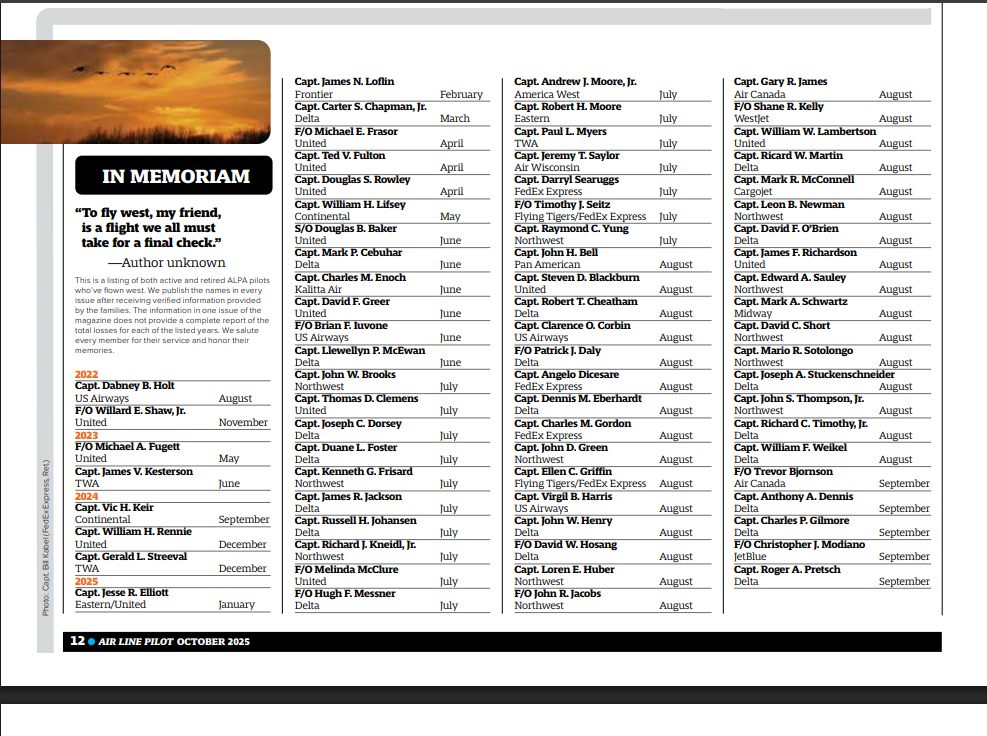





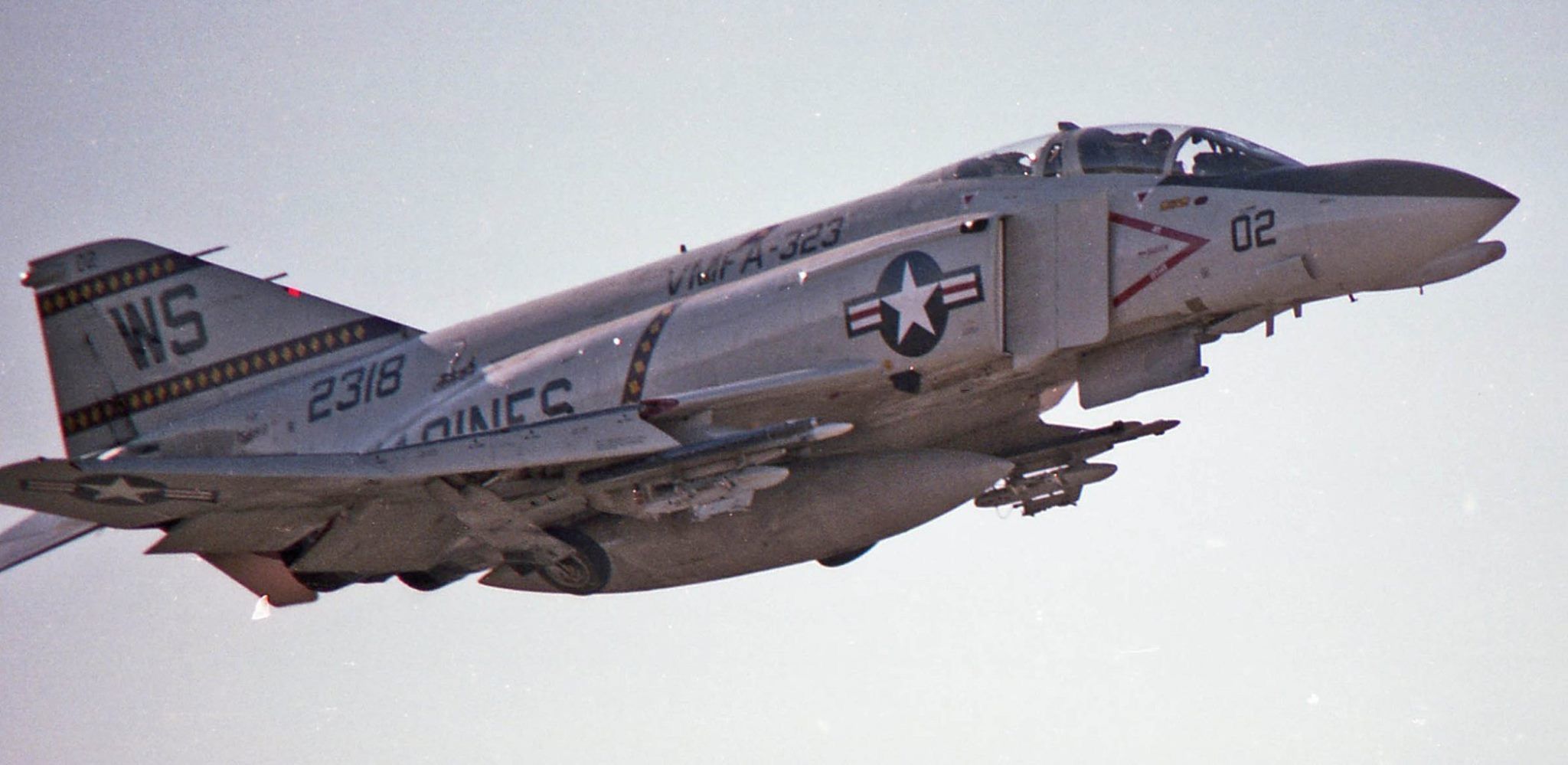


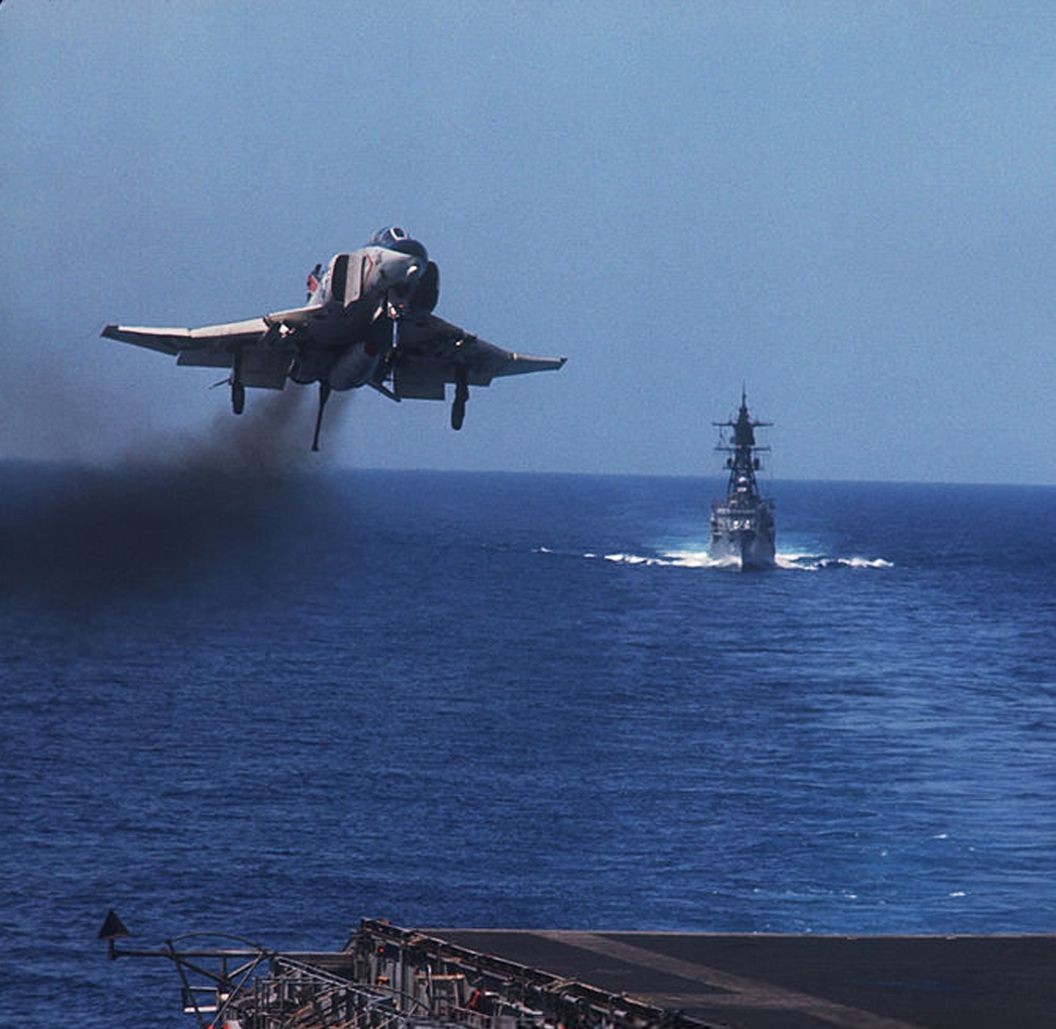






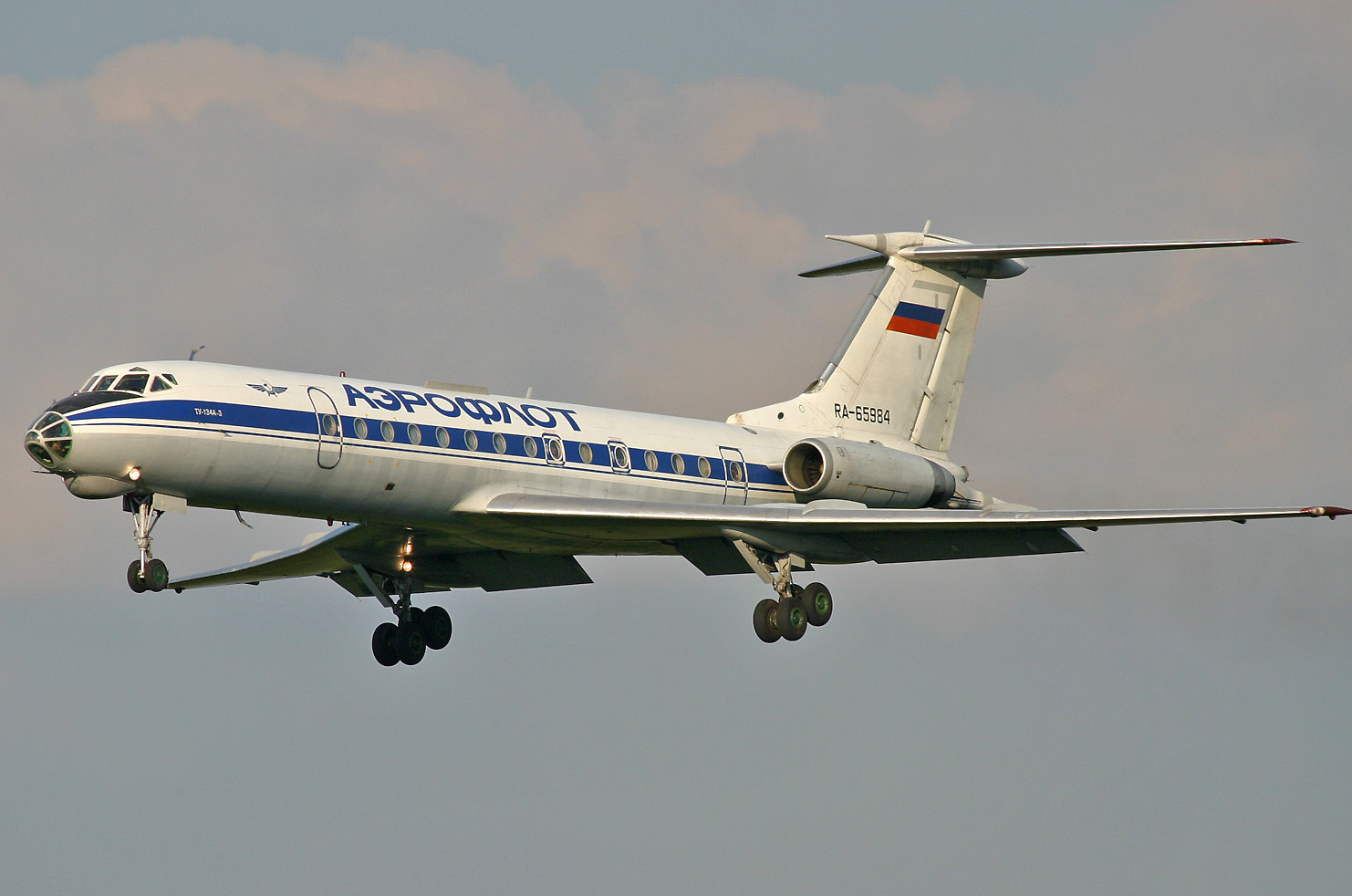

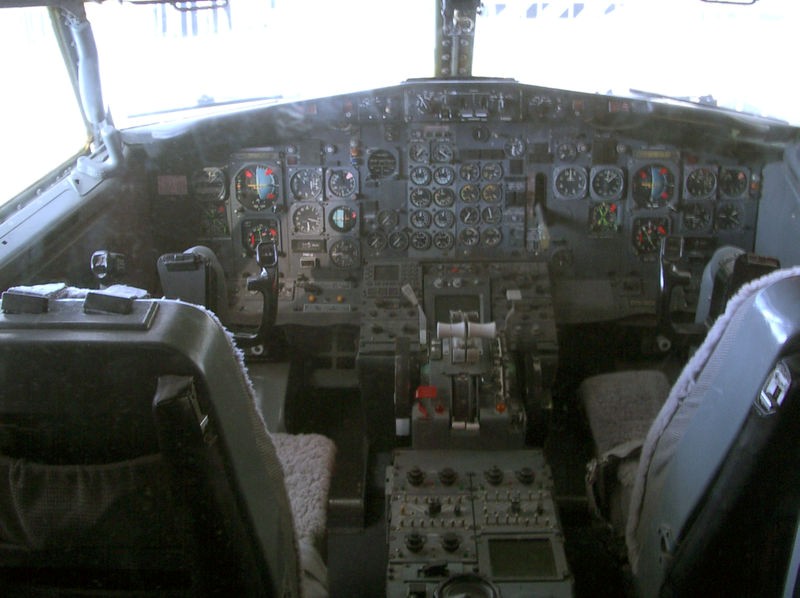
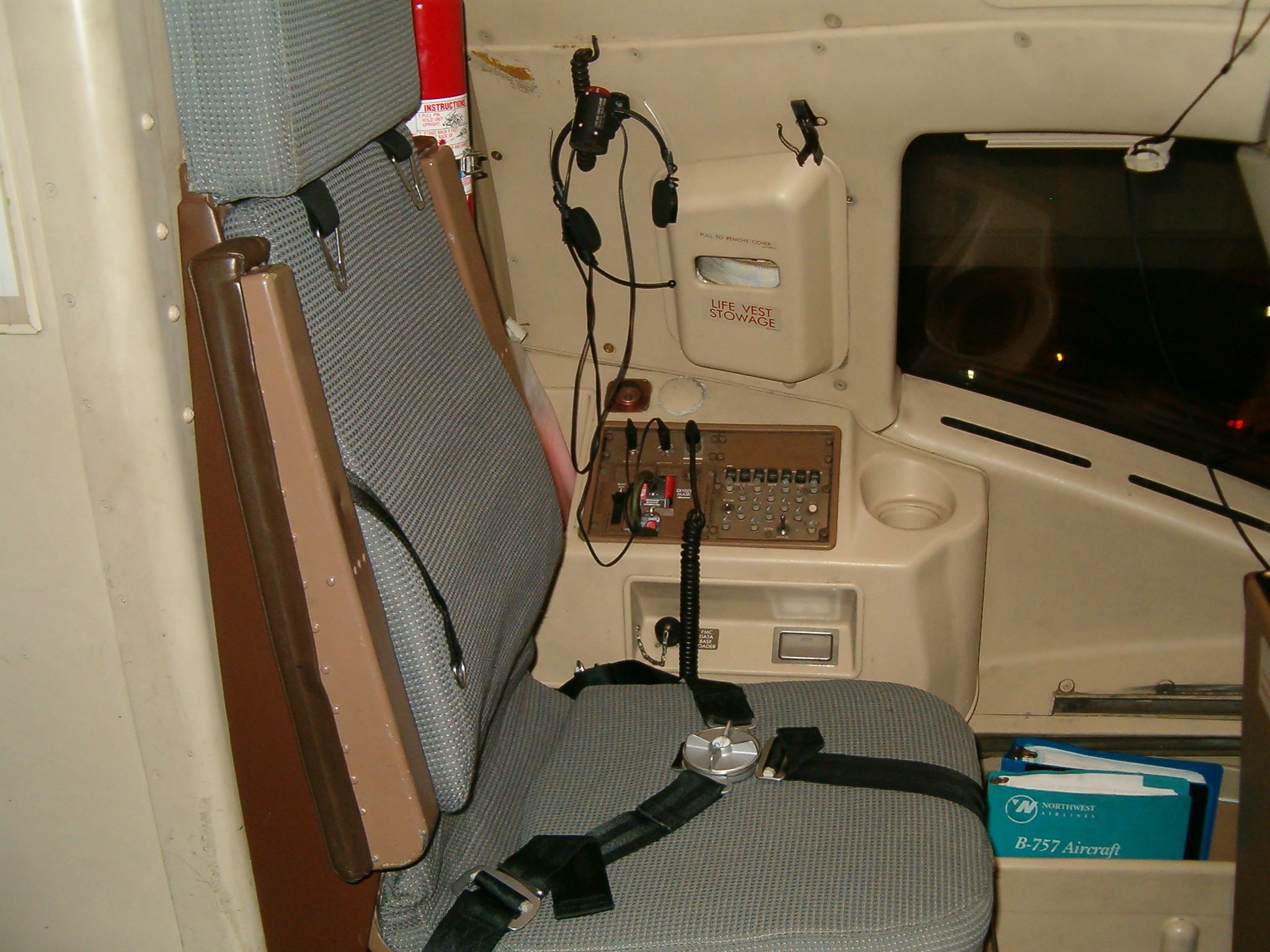
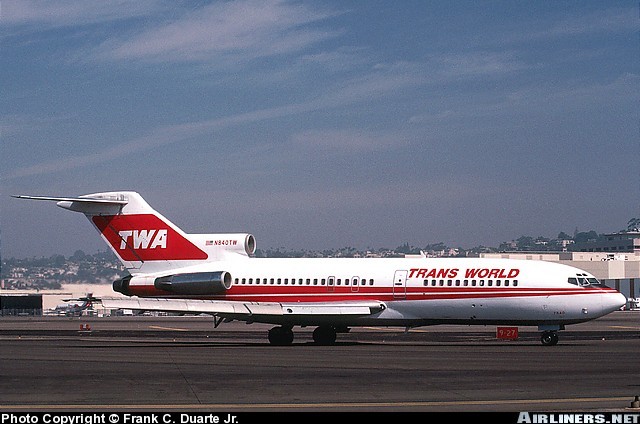











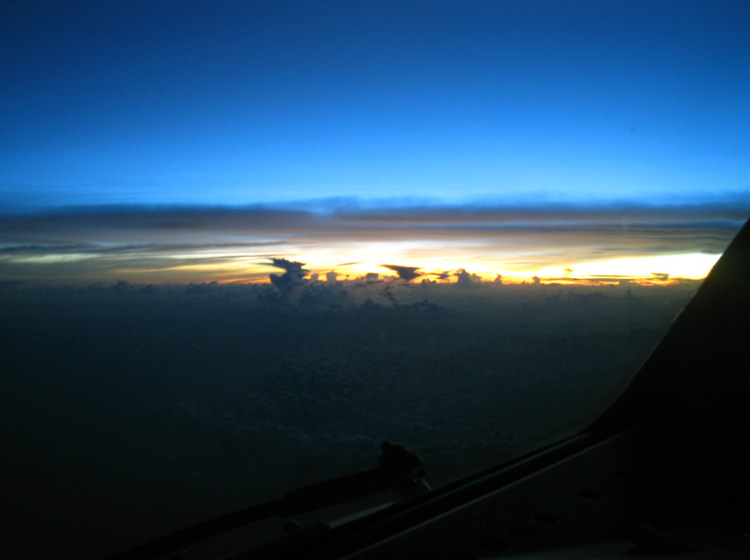



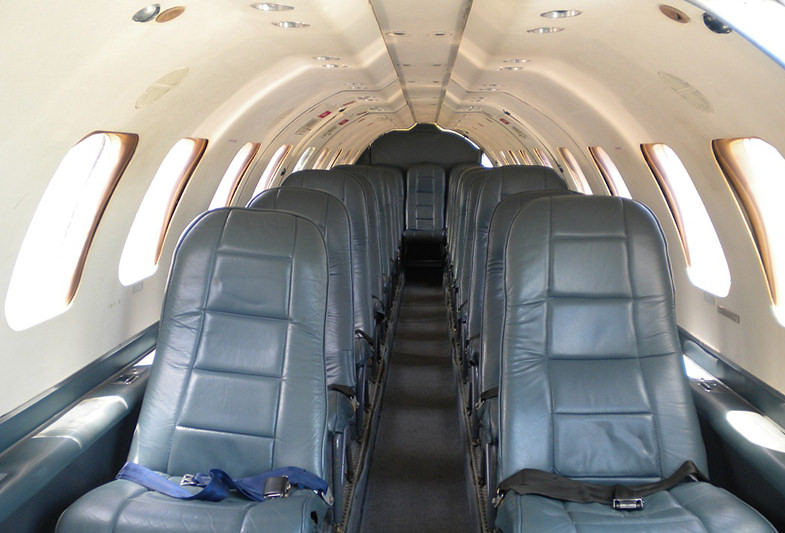






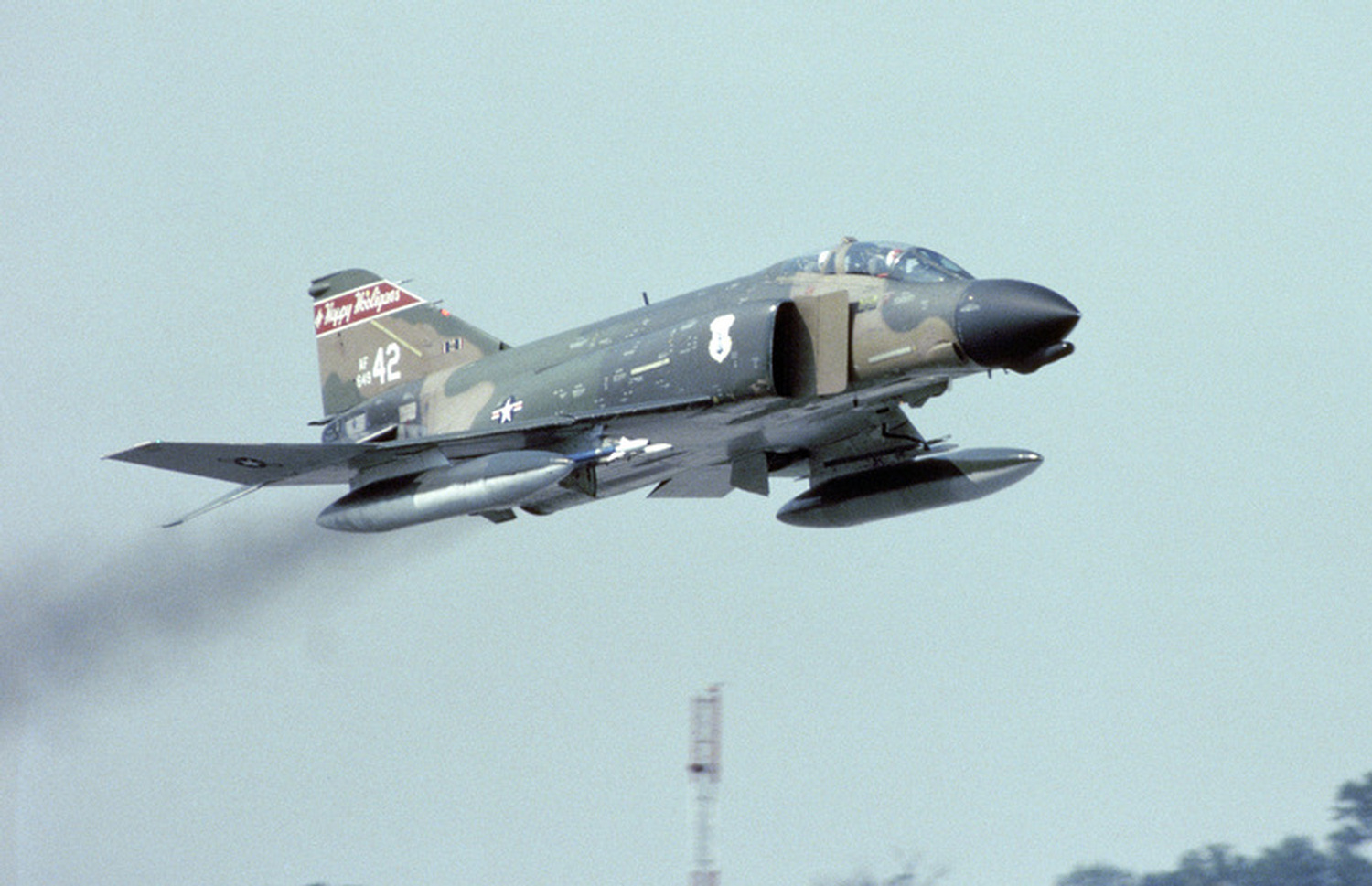

 BBALL'S LOGBOOK