“Did He Say Bomb?”

(Originally published March 2015.)

                                     Did He Say Bomb?


 Tuesday, the 22nd of November, 1994, dawned cold, with drizzling rain, and generally just plain awful conditions. It was two days prior to Thanksgiving, and the weather that day in the sprawling city of Memphis portended a wet holiday season (Elvis would do something about it…if only he were not dead).  First Officer Terry looked at me and asked, “Bill, do you want the engine heat on?” “Yeah, it’s below 10 degrees C, let’s turn it on…Ken, would you make the EPR corrections on the take-off data card?” (Exhaust Pressure Ratio…essentially, the gauges we use to set the thrust.) As we gingerly taxied out of the cramped alleyway to join the conga-line of red-tailed Northwest Airlines jets queuing for departure that grey morning, First Officer Terry and Second Officer Ken were busying themselves with their respective “before take-off” duties. I, on the other hand, concentrated solely on taxiing the aircraft without swapping paint with any of the jets jammed back in the alley with us. After a layover in Little Rock the previous night, we had flown the 20-minute flight to Memphis and were now working NWA Flight 632, destination: New York’s LaGuardia Airport. The aircraft was one of our line’s superb Boeing 727-251s, registration N298US. Save for the inclement weather, things were humming along nicely, and life was good. All this was to change in the next few moments.

As mentioned before, in aviation, one experiences many firsts. Most of these are wonderful occasions: your first solo, your first time in command of a multi-engine aircraft, your first time flying passengers for hire, your first time as an Instructor Pilot when you release a student to fly solo, etc. However, not all your aviation events are so full of joy: things like your first FAA check ride or perhaps your first in-flight emergency are decidedly not full of joy. Over the years, I have heard it said on more than a few occasions that during your career as a professional pilot, “you will experience one of everything.” Before my head would hit the pillow at the end of this day, I would be able to put a check in the box marked “Bomb Threat.” Not necessarily a good thing.
(By the year 1994, we had merged with Republic Airlines [in 1987] and dropped the “Orient” from our corporate “nom de guerre”.)

Continuing to concentrate on the taxi, I called for Terry to position the flaps to their normal take-off position of 15 degrees. Suddenly, we received a “ding-dong” chime from the Lead Flight Attendant, Rose. Second Officer Ken selected the “Intercom” button on his Communications Panel to answer it. By the tone of his voice, I could tell that it was something important (not the usual issue, like being out of Colombian coffee or the forward lavatory being backed up). My ears began to perk up. Ken’s response had them perk up a bit more. “OK, I’ll tell him, and why don’t you come on up, so he can talk to you?” He hung up the interphone microphone and turned sideways from his engineer’s panel to face me. What he uttered next would affect the lives of all 146 strangers and the crew of six for the next several hours. It came out as, “Bill, you’re gonna love this, we’ve got a bomb threat.” My “steely-eyed, squared-jawed, iron-nerved, Captain-like” response came out as, “Huh?”

Let me stop for a moment and introduce you to the cast of characters in this little “ship of fools” melodrama.

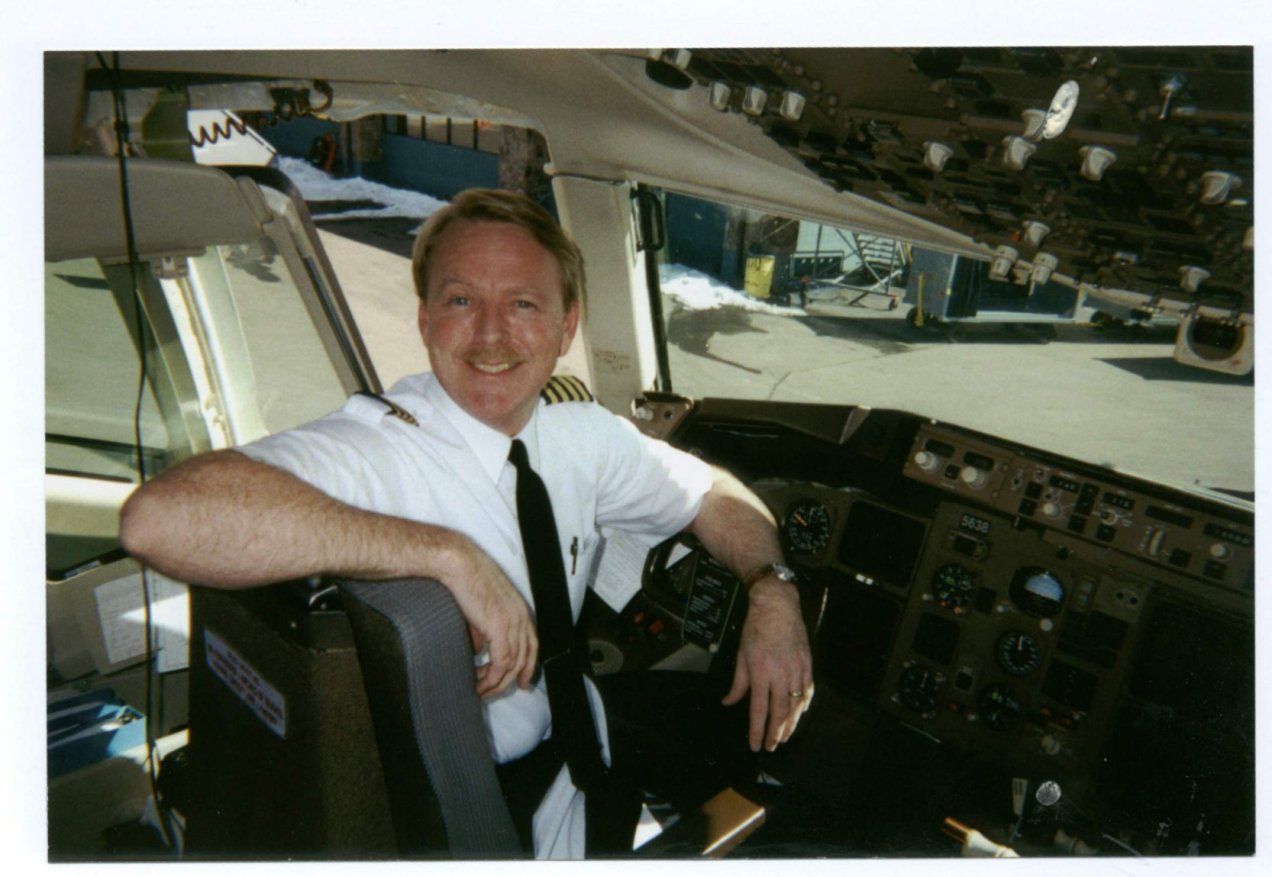
Playing the part of Captain and aircraft commander was yours truly. At the time, I was a 38-year-old, relatively new “four striper” with about nine months of experience in the left seat of the Boeing 727. I was feeling quite comfortable in the Commander’s seat, as moving from the First Officer’s seat on the DC-10 and training on the “7-2” as a Captain was like reuniting with an old girlfriend. I had crewed her as a Second Officer in my initial position as a new hire at NWA, then served as a simulator instructor and Check Airman, and flew her as a First Officer for about a year in the mid-80s. It is a tremendous machine (albeit old technology), built like a tank, and (like the old saying goes) when the “going gets tough, put me in a Boeing.”

Sitting 3 feet to my right was my trusted First Officer, Terry. A tall, handsome, gregarious fellow Texan from the bright lights of Houston. He was in his early thirties, and in another life and time, I’m convinced he would have been a riverboat gambler. His gold chains and Rolex watch were rather gaudy evidence that he had done quite well in the world of wagering; however, his mood would change as did his fortunes. This is not to say that Terry had a “problem” with gambling, but at every stop during our trips that month, he would be on the phone with his bookie. They may have been your friendly “how’s the wife and kids?” type calls, but I got the impression that he and this person were maybe a wee bit closer than he and his betrothed. A terrific pilot, full of opinions (what pilot is not?), and generally a fun guy to share the cockpit with.

Ken was even more enjoyable to have in the little room in the “pointy-end.” He was relatively new to the airline, in his fifties, sported a full head of grey hair, and had recently retired from the Navy at the rank of Captain (I’m not sure, but isn’t Admiral next?). He was cast in the role of the (older, sober, full of wisdom) Flight Engineer and took the job at Northwest basically to get out of the house and have some fun. He had done it all, and seen it all, from flying fighters off the rolling decks of aircraft carriers to serving in the Pentagon, and was now sitting behind a “wet behind the ears” new Captain at the Second Officer’s panel on a twenty-year-old airplane. His wit and sense of humor were sharp as a blade, and the fact that he had two “young pups” driving him around the system was a constant source of jocularity for him. He stayed planted rather firmly in Terry’s face (good-naturedly, of course) and kept “the kid” riled up almost constantly. (It did not help that they went out gambling on the layover the week before in New Orleans on our previous trip, and he won big on the craps table not having any idea what he was doing…..he spent the entire next day counting his $2400 winnings on his Second Officer’s table over and over again, while asking Terry “how much did you win last night?” Terry had not done well at all … I loved it.

The last member of the troupe in this episode is Rose, the Lead Flight Attendant. A wonderful lady and a true source of help during all that transpired. She was most assuredly from the “old school”, made sure her hair and makeup were always perfect, and was hired back in the days when all “good” things started with N…Nixon, Napalm, Namath, and Nicotine (probably hired back when they were known as “stewardesses”). She, too, was in her fifties, loved her job, and before NWA, she had logged many hours flying for the (now defunct) Braniff Airways. There was no mystery as to who was in charge in the back of the jet, and I was very lucky to have her aboard during all of this.
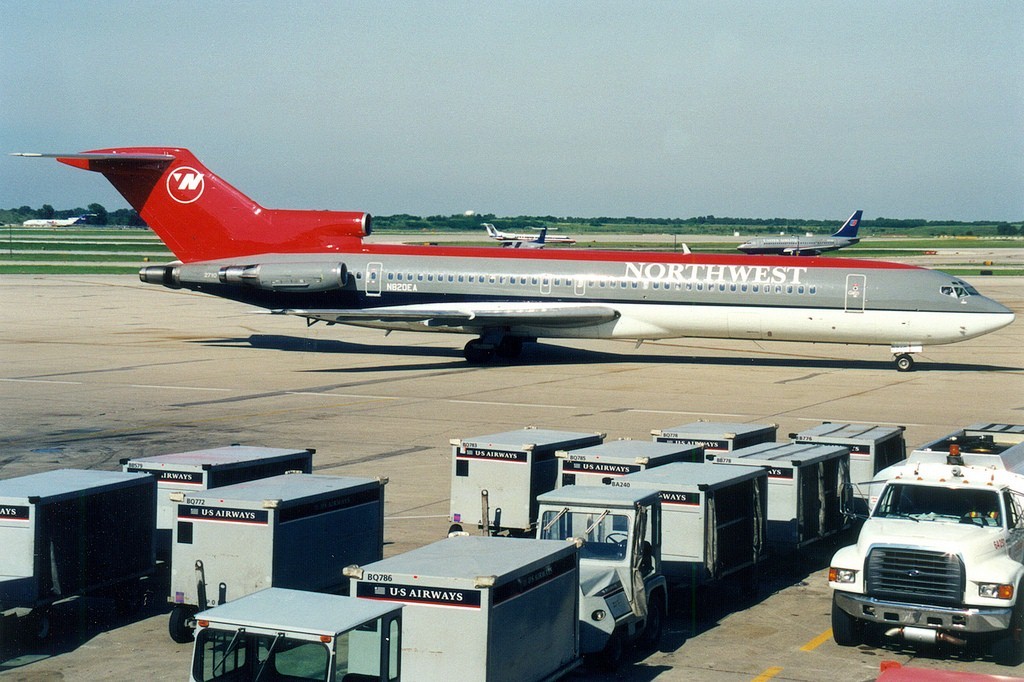
(One of the jets Northwest purchased from Eastern Airlines, N820EA. The Flight Engineers loved them because the bean-counters at Eastern forked over the extra dollars and ordered them from Boeing with “fancy” electronic automatic pressurization controllers. Our old NWA birds had none of that “new-fangled” craziness; our F/Es had to work at keeping the passengers’ ears from being a source of pain.)

With that said, the cockpit door opened, and in stepped Rose with a magazine in her hand. “Bill, I think you’re going to want to take a look at this” Since I can’t taxi and read at the same time (at least not in the confined alley we had found ourselves in), and since Terry did not have a “tiller wheel” on his side of the cockpit to steer the jet on the ground, I stopped the plane, set the brakes and took the magazine from her. It was our version of the complimentary in-flight magazine that all airlines have. You know the one; it is full of interviews with people you couldn’t care less about, blathering on about stuff you have no interest in reading about (do we really need another article about “finding yourself”?), and a crossword puzzle that Daniel Webster could not finish. On the page adjacent to our “Welcome Aboard” message from the CEO, someone wrote, “I have placed a bomb on board this aircraft. If you choose to ignore this, it could be FATLL! You choose.” Lovely, a wordsmith, a Spelling Bee champion, and a terrorist all rolled into one. Just the way to start my day.

After reading a couple of times, I decided to share it with the other two heads, who were trying to read over my shoulder. Terry’s eyes started to take on the “doe in the headlights” look, and Ken just started to smile and shake his head. Rose looked at me with an “O.K., Herr new Kapitan, now what are you going to do?” look. I had three pairs of eyes boring holes into my skull, looking for guidance, and I was desperately trying to figure out how I felt about all of this. This is, of course, “the rub” with wearing that fourth stripe. When the excrement begins to impact the proverbial fan, all eyes look to you, and you must make a plan, and it HAS TO BE right. Although this was my first experience with someone making a threat against my aircraft, I was determined to follow the proper procedures and get it right.

Since we were away from the gate, the last place that Air Traffic Controllers and the law enforcement authorities wanted us was back at the terminal, so we were committed to doing this out on the tarmac. As most of you might well imagine, the moment you mention the “B” word over any FAA frequency, telephones start to ring in offices all over America (from the local FBI to the airline, to the aircraft manufacturer, to the FAA, all sorts of folks in D.C….it gets ugly in a hurry). We are briefed, trained, and practiced at the art of what to do when this starts to happen, but it is a bit like getting pregnant; it’s no big deal until it happens to you!

We fessed up on the ATC Ground Control frequency, and that person leaned over and slammed down the big red button (I don’t think they actually have one, but it’s a cool image, right?). The first thing they had us do was to taxi out of the crowded alleyway (for obvious reasons, an explosive device detonating around all those jets, people, fuel trucks, catering trucks, etc., would be devastating). Unbeknownst to most laypeople, every commercial airport has a designated “ground zero” area for just such an aircraft (be it a bomb threat, a hijacking, etc.), and we were instructed to taxi to that spot. This area affords the best access to your aircraft, and just as importantly, it keeps you well away from anything important in the case of any collateral event (a nice way to say ‘big explosions,’ eh?). We began our taxi to that spot at the Memphis airport, while I had Terry suggest to ATC that they have the other jets on the taxiway keep a safe distance from us (none of them seemed to mind doing just that).

During the ten-minute taxi to “ground zero”, a myriad of questions began to race around in my head. Is this a “for real” bomb threat where an explosive truly is on board the jet? What will we do if we find said explosive device? Should we evacuate the aircraft? What am I going to tell the 146 customers who think we are happily on our way to New York? Will our training be sufficient to enable this emergency to unfold as we have trained for it to do? I had to come up with some answers to these questions, and do it pretty darn quickly. I began by having Rose stay with us in the cockpit for a few minutes, so she could hear what the game plan would be and thus be on the same page as the rest of us.

With the same three heads giving me “the look”, I stopped about halfway to the ground zero spot, set the brakes, and began to formulate the plan. I started by eliciting opinions about how “serious” they thought this little note might be. We all agreed that it was serious, but we all felt that it was almost certainly put there by either some snickering, pimply-faced 15-year-old or some drunken moron pissed off because we had lost his bag the last time he flew NWA; none of us was inclined to believe that “Spelling Bee” person actually put a device on the jet. We all agreed that had we had an actual “ticking thing” to look at, then we’d all be off the jet like we were shot out of a cannon! I felt very certain (and they all agreed) that this was almost certainly your basic hoax. We would treat it seriously, and we would ALL be getting off this thing shortly. Still, we WOULD NOT be conducting an emergency evacuation (invariably, someone is injured during this type of evac; breaking an ankle, etc.). Rose left the cockpit knowing how we were going to play this, so now it was time to tell the folks in the cabin that they would be a bit delayed. I picked up the passenger P.A. mic and told them what was happening, that it was most certainly a hoax (I did not use the snickering 15-year-old, or pissed off drunken moron analogy), and what we were planning to do about it.
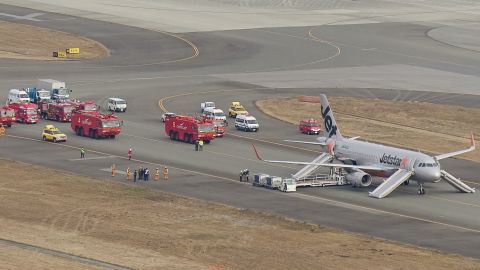
(Since we did not have a “ticking thing” in hand, the emergency slides would be staying in their door packs. This looked like the vehicle response that greeted us, only far more law enforcement and “black SUVs” than Fire/Rescue.”)

So far, the plan had been going rather smoothly, well, as smoothly as a bomb threat can go, I suppose. The local authorities were scrambling to find enough buses to meet us at “ground zero,” deplane the passengers, take them into the terminal, and begin to brief/interrogate them. The FBI bomb team was to be on-site as we set the brakes at “ground zero,” and the NWA Memphis Station Manager was there to meet us when we shut down the engines. He was on-site to coordinate any additional needs we may have. Cool, just like in the movies.

Rose came back into the cockpit to tell me that “most of them are doing fine with all this, but one little old lady wants to know WHY we aren’t evacuating the airplane.” Really lady? Ray Charles could have seen that one coming. I stopped the jet (once again), set the brakes, and returned to the P.A. mic to explain why we were going to prevent this from turning into a “Chinese fire drill” (apologies to anyone from China reading this). Rose was doing a great job of keeping everyone in the back informed and focused on what she needed them to do, and I could not help but wonder if “Riverboat Terry the gambler” was mentally calculating our odds on this one. “Let’s see…. I’ll take $5000 on Spelling Bee Bomber to WIN in the daily double.” I was hoping that if he had to place a wager, he would at least bet on the Boeing crew. During all of this, “Admiral” Ken was a cool as a cucumber… I would have expected no less from him.

By now, our fame had spread all across the airport property, evidenced by our escort of about a million emergency vehicles (all with lights flashing). As we reached the designated spot, I brought the big jet to a final stop, set the brakes (once again), and began to speak into the P.A. mic (once again). “Folks, this is where we’ll be parking the aircraft during all of this. You will see the buses arrive very shortly. In a few minutes, you’ll be hearing us shut down the engines, the authorities will be boarding the aircraft from the stairs in the tail, and then we’ll have you deplane and wait in the terminal while we have everything checked out.” So far, so good. I glanced back at Ken, “O.K., let’s have the ‘Shut Down Checklist’ please.”

“WAIT!” (It was Terry the F/O speaking)

I won’t go as far as to suggest that “Riverboat Terry” was spending too much time in a world other than the one MOST of us find ourselves, but maybe his overactive imagination was starting to get the best of him. On our layover in Little Rock the day before, he and Ken had gone to the movie and watched the blockbuster cinematic adventure that was in all the theaters at the time. None other than the film “Speed” with Keanu Reeves and Sandra Bullock…you know the one with the BOMB ON THE BUS?! You can see it coming. As I was reaching for the Fuel Cut-off Levers to shut down the two screaming Pratt and Whitneys that were wailing away, sucking Jet A fuel at an amazing rate, he grabbed my hand. The look on his face was comical — if not troubling.

“What if the bomber hooked up the device to a Tach Generator on one of the engines, and when it winds down…. KA-BOOM?”
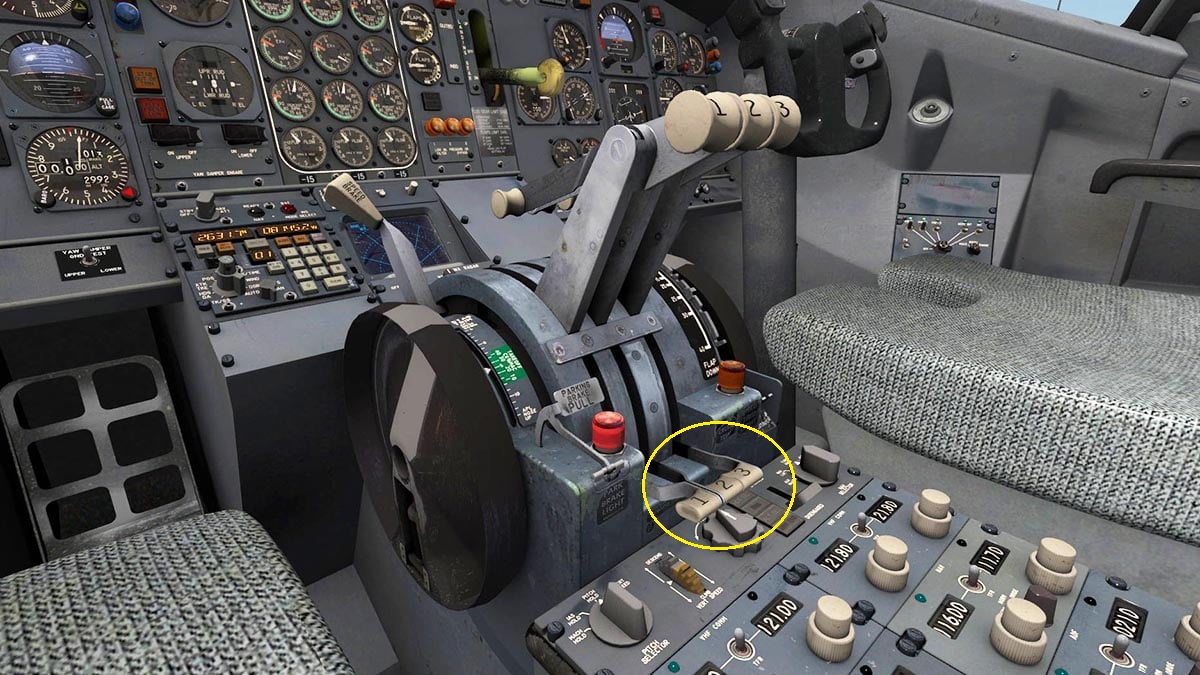
(The killer-deadly Fuel Cutoff Levers that were living “rent-free” in Terry’s head.)

I looked at him and uttered, “What? What the hell are you talking about?.”

Now his voice patterns became excited, “You know, just like in ‘Speed’… only they have to keep the bus above 55 mph, or it goes KA-blooey!”

I glanced back at Ken…his eyes were closed and he was slowing shaking his head.

“Uh, Terry, you definitely have to get out into the fresh air more often. Now, I am going to move both levers to the “Cutoff” position….and if you’re right, the next sound you hear will be your ass flying through your eyeballs. Ready?”

I could go an entire career without the chance to do what I did next. Sneaking a glance at Ken, I winked; he caught my drift and immediately became part of the conspiracy. As I lifted both levers over the “Run” detent and quickly brought them down toward the “Cutoff” position, we both let out a huge “BOOM!” (and Ken forcefully hit the back of Terry’s seat with both hands!)

Terry either almost: 1 had a small heart attack, or 2) defecated in his black uniform pants…maybe he did both. I’m not sure, but I’m certain that I hadn’t laughed that hard in a long time. It still makes me giggle a bit.

(Looking over Flight Engineer Ken’s shoulder toward First Officer Terry’s cockpit seat.)

Once firmly anchored at “ground zero,” the engines shut down, and the “Securing Checklist” was accomplished; things began to happen rather quickly. On Ken’s Second Officer panel, we were showing that the aft air stairs were unlocked, and the aft entry door was open; he uttered something to the effect of, “Elvis was in the building.” Within a few seconds, some rather stern-looking gentlemen came into the cockpit and informed me that they were the “local response team,” here to assist in getting all the passengers onto the buses and headed for the terminal. The next face I would see ended up pissing me off to no end. In walked a guy who was about as tall as he was round, and he immediately started to hit me with a fast line of “Here’s what we are going to do” (he was the aforementioned Station Manager for my line). “We’ve been on the phone with all the appropriate security folks, and have decided that this is a hoax, there is no bomb, and so we’re just going to do a quick search of the cabin, re-board the folks, then you’ll be on your way to New York in no time.”

HOLD ON THERE BIG HOSS! Wrong, buffalo-breath! This scrawny-assed (four-striped) home-boy had no intention of playing it like that. My Texas blood got a bit riled at all those “this is what you’re gonna do” type words, and I blurted out,

“Now just a minute there, cowboy. I don’t know who you’ve been talking to, and I don’t really care, but I am not taking this anywhere until every inch of this aircraft has been searched. I want every seat, every overhead bin, every suitcase, and every friggin matchstick to be searched. If that’s not good enough for you and all those folks you’ve been on the phone with, then YOU can fly it to New York…. the keys are in the ignition!”

I spun around and pretended to have something important to attend to. What kind of a moron did this guy take me for? Yes, there is no question that the note was probably a hoax, but I do not get paid to take that kind of chance with anyone’s well-being. And I did not give a rat’s ass how long it was going to take; they were going to be looking at ol’ Mr. Boeing’s airplane long and hard before I would take it anywhere. “Mr. Personality” got pretty pissed off, turned around, and marched out of the cockpit. I think Terry and Ken wanted to give me a big kiss right then and there (ugh, sobering thought).

So out into the cold, drizzling rain, we marched. Your steely-eyed, intrepid flight crew (more like cold and rain-soaked). As I spoke to the on-scene commander for the FBI, I noticed that my two stout cohorts had taken refuge in the black government Suburban (read: heated and dry) …wimps. The passengers and my three flight attendants were now safely in the terminal, so the process of turning this thing inside out had begun. The FBI Bomb Squad was on site with their two K9 companions, and were in the process of testing them before turning them loose on the aircraft (one gentleman was planting packages of C4 in an adjacent field for the dogs to individually search for and find…. if they failed, then they are not used for that mission). To my relief, they both passed their tests, and into the cabin they ran (and I do mean ran). I followed them in and was amazed to see them up in the overhead bins, rapidly moving and sniffing everything at an incredible rate. They covered every inch of the jet in no time. I have heard that a dog’s sense of smell is thousands of times greater than ours, and I was hoping that whoever relayed that little tidbit of “fun facts to know and tell” was not mistaken.

As we exited the plane, the ramp personnel had unloaded all the suitcases and lined them up neatly in several rows on the pavement. Each dog then had a turn sniffing the bags, and when they would “target” one (signified by sitting down next to it), the handler would remove the dog from the area. The ramp folks would then play “shuffle the suitcases,” and the dog would return to do more sniffing. This went on for quite some time, and BOTH dogs ended up targeting the same three suitcases each time! Oh, oh…. not looking good for the home team. I noticed that “Mr. Personality” had changed his tune. He said to me, “Maybe it WAS a good idea to have them search everything.”…. brilliant statement there, Sherlock Holmes!

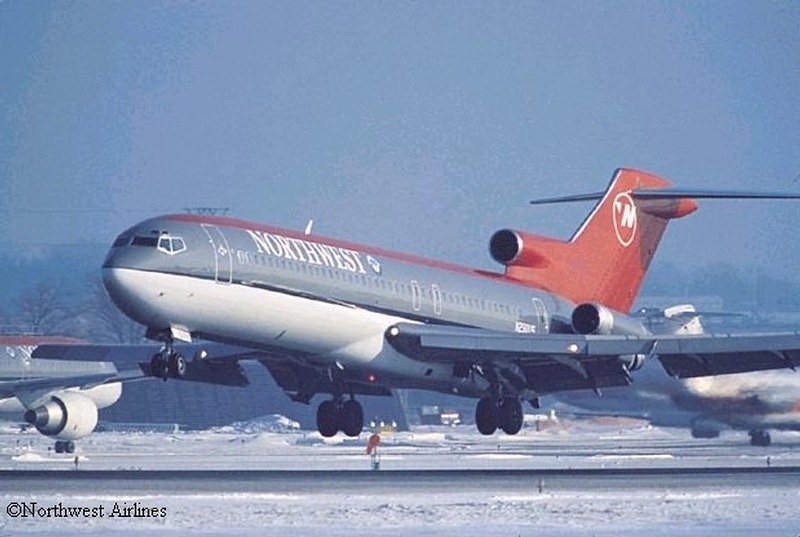
(One of the most beautiful commercial jets ever conceived. Aerial artistry to be sure…plus a joy to fly.)

The FBI agents swung into high gear. They headed for the terminal, rounded up the folks that owned the three suspicious pieces of luggage, and back to the jet they came. Each one was asked to open the offending bag and display its contents, and they did one by one. The first was an elderly gentleman who had a butane hand warmer in his bag (good pooch, smelling that butane). The next was a lady from Korea, and she had some cooking spices packed in her suitcase (poor dogs had probably never sniffed Kimchi before…been there, done that). The last was a lady who looked to be in her twenties (I do not even want to think about what they sniffed in her suitcase). When they were examining it, I was talking to the “fingerprint expert” about the prints of Rose and me on the magazine. Since I had never heard a “Freeze, FBI!”, I assumed that the young lady’s contents were okay. All that was left now was to load everything (and everyone) back onboard, and away we’d go.

So, after our 3+ hour delay, everyone (minus one lady who did not want to have anything more to do with my operation that day) got back on the jet, and we began the process of taking 175,000 pounds of metal and people into low Earth orbit. The passengers all seemed to be in a rather “who gives a damn” mood after all of this, and we flew the next two hours without one bad comment about the entire episode (they were, after all, New Yorkers). The weather cleared over eastern Tennessee, and we sailed into LaGuardia without incident. Well, almost without incident.

For those of you who have never landed at the “mess” called La Guardia Airport, let me describe it for you. It was built back in the Roosevelt era (or perhaps even in the caveman era), on a sandbar in the middle of Flushing Bay. It has two short runways (by transport category jet standards), and if you run off the end of them, one ends with a trip onto a very busy freeway, while the other ends with a journey into the water. In my opinion, this place was obsolete the moment the first DC-4 landed there, and it has only deteriorated since then. The volume of traffic is insane, the ramp areas are nightmarish, and the NYC “attitude” (regarding the ATC people) adds to the level of tension. In a nutshell, when landing at this place, finesse is not in the cards; you drive the jet in, slam it on the runway, and do your best to get it stopped quickly. By the way, it’s the same as the “technique” you use landing at the other two really “interesting” airports that accept big airliners: Washington’s Ronald Reagan and San Diego’s Lindbergh Field. I was to perfect this to an art form on this very day.
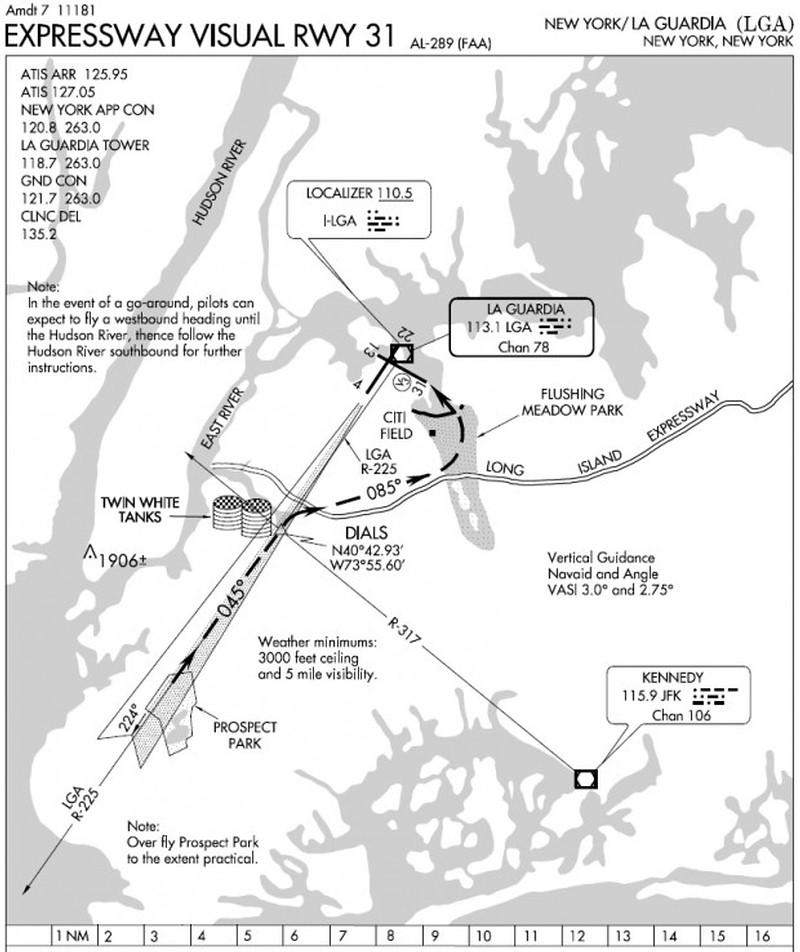
(The approach plate for the “Expressway Visual” approach to runway 31 into La Guardia.)

The “Expressway Visual 31” approach went off without a hitch. Hell, the ATC people did not even yell at us once (a first, on occasion, I have heard them yell at EVERYONE), and the tight 135-degree turn over Shea Stadium to line up with RWY 31 came off nicely (I silently mused, “I got her wired today”…. famous last thoughts). I wish I could say it was the gusty crosswinds, or the wake from the airliner in front of us, or even that the sun was in my eyes, or that the grass was too tall…. but none of that applies. I got the beast into the flare, thought I had it just about an inch above the pavement, just ready to gently kiss the big main wheels on, when …”Uh, oh”, we dropped about five feet, and … WHAM! “Contact!” was the smart-assed response from Terry, while Ken said something about “You got the three wire (Navy carrier term), and I got whiplash!”

My pithy response? “Bite me!”

(The view from over “Flushing Meadow Park” looking to the northwest. The touchdown zone for Runway 31 is in the lower right. If you look closely, you might still be able to see the dent I put in the pavement…)

After wrestling the machine to a safe taxi speed, I turned off the runway, and we contacted Ground Control. We immediately found ourselves in line behind numerous aircraft on the taxiway, so we had some time before we reached the gate. My two “partners in crime” were still giggling and making smart-assed comments about my arrival, so I did the only thing that I could think of…. I grabbed the P.A. microphone and spoke thusly:

“Ladies and gentlemen, this is your captain speaking. I want to welcome you to New York. Once again, we apologize for the delay today, and I would like to express our sincere gratitude for your patience. Also, if you were wondering about the “firm” landing, that was just one more effort on my part to find out CONCLUSIVELY if we had any explosive devices on this aircraft…. for if there was anything hidden onboard, it SURELY would have gone off with that landing.”

After hanging up the mic, I was greeted by two faces sporting huge smiles.

However, it was what I was hearing from the cabin that made the day for me — the sound of laughter and applause.

‘till next time,

BBall
Standard

“Flight Simulations: A Pilot’s View”

It is every pilot’s nightmare…the feeling of not being totally in control of your machine or your situation. Sure, I was new to the airline back in 1984, but certainly not new to airplanes, and most importantly, how to keep the metal of said airplane from getting bent. With that said, I was just not having a “warm and fuzzy” feeling about this at all.

The weather was truly ugly; one of those dark, stormy nights that only look good in the movies. The machine was sick, and that was not good. It was one of our newer model Boeing 727s, but one of it’s three engines had developed an oil leak, so passing through flight level 250 (or 25,000′) in the climb, we aborted the flight to Minneapolis, and were on our way back into our departure airport…General Mitchell Field in Milwaukee. The upside to all of this was the the fact that the two gentlemen in the front seats (I was the Flight Engineer), were seasoned veterans, with many hours logged in the venerable Boeing. That notwithstanding, something just didn’t add up. Even though I was new to the airplane, new to being a Flight Engineer, and new to the airline, I could still tell that something simply wasn’t kosher. Hence my seat was the recipient of lots of squirming “new guy” butt.

pilot simming 5
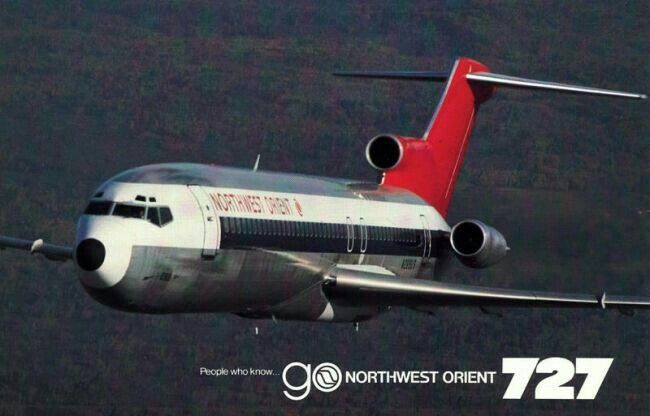
(A Northwest Orient Boeing 727-251…this was the name of the line when I was hired in 1983. Huge thanks to Bob Garrard for the use of this gorgeous picture.)

It all started about 30 miles from touchdown. We had declared an emergency with ATC, had secured the number 1 engine, performed all the required checklists, informed the cabin crew and passengers of the situation and our plans, and I was in the process of coordinating with the company dispatchers (and the station personnel) for our return. “Bang, bang, bang”…about that time, the number 2 Pratt and Whitney JT-8D began to compressor stall (an airflow problem…sounds like your car engine back-firing). The Captain remedied this by immediately reducing the thrust on the that engine to the point where the stalling ceased. In this case it happened to be all the way back to idle…not good. I was about to become one VERY BUSY person…

I asked the Captain if he wanted me to begin dumping fuel, his reply was a terse “YES! Take us down to 150,000 lbs!” (landing weight). Opening the Fuel Dump Panel on the aft bulkhead to my right, I positioned all the switches correctly (we were allowed to do this from memory…most all other procedures required the use of a checklist), watched for all the green lights to confirm that the valves had indeed opened, and then began the mental gymnastics to calculate the required time to dump to have us at the weight specified by the Captain (I knew he would be needing that answer, and soon). So far, so good for the new guy.

Here is where it all began to unravel. My next question to the man commanding this stricken ship, was an inquiry to see if he would like to run the “Single Engine Checklist” (when down to 1 engine on ANY multi-engine airplane, it gets VERY SERIOUS quickly, and the [very involved] “Single Engine Checklist” was the nightmare of any Flight Engineer…it could reduce a “Top Gun” to a sniveling schoolgirl quickly.) To my shock and amazement, he answered, “No! We have only 1 engine SHUT DOWN…so we’ll fly this just like the books calls for!” Well, he WAS right (and he was the Captain), we had only one engine actually turned off, but of the remaining two, one was normal and the other was operating at a VERY reduced power setting (idle to be exact), and I was starting to have strange flashbacks.

2
(I took this as a new 727 Captain departing KMSP one cold, sleeting afternoon.)

As a child of the 1960s, I’ve always been a huge fan of the WWII movies, especially those involving aviation. I began to flash back to those scenes of the battered B-17 Flying Fortress, barely able to stay aloft, and the heroic crew throwing everything not needed overboard…. 50 caliber machine guns, parachutes, armor plating, even the dead guys (well, not really, but MAYBE). They knew that gravity is a cruel bitch, and that fast air over the wings was needed to keep the bird in the air…and making her lighter was the only answer. The obvious logic was that if it can’t help you…then consider it junk and GET RID OF IT. I adopted that mentality right then and there. Great idea to be sure, the only problem was that I wasn’t in command here…

The next statement I made to him was a bit hard to make as a new hire, but it had to be said. I advised the seasoned dude in the left seat that “in my humble opinion”, since No.2 was at idle, and it’s only use for use was the hydraulic pump and/or electrical generator, and since it appeared that it WAS NO USE for thrust, why we don’t we set up to do a single engine approach? If No 2 does quit, then we’re ready, set up for it, and if it doesn’t then it’s like money in the bank.

(note: There were some big killers on the single engine approach in the 727. Depending on which single engine you had running, you could be stuck with hand cranking the landing gear down [a huge pain in the ass for the Flight Engineer], and once it was cranked down, there was no bringing it back up…. which means there was NO GUARRENTEE that you would have any go-around capability! You were committed to land, period. Plus, you made your approach with only 5 degrees of flaps (instead of the normal 35), AND you had to extend them electrically, which took longer than usual. So you really had to be “on your game” mentally to allow extra time to get everything done, and it meant that when you turned in for the field, you were going to be going like a bat-outta-hell on final approach. So as an F/E, you found yourself: dumping fuel, running several checklists, electrically extending the flaps, hand cranking down the landing gear, all the while providing the two pilots with all important landing approach airspeed numbers, and (IIRC) about a million other things. LOL…)

2a
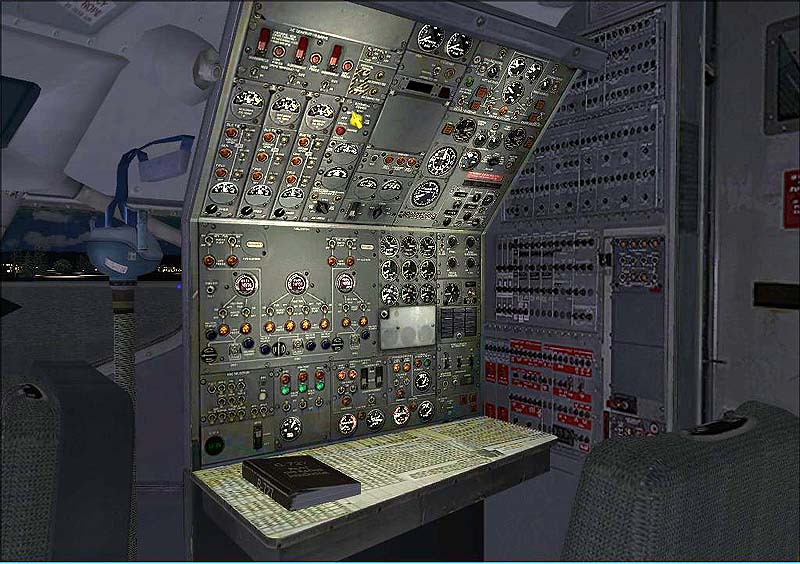
(My “office” for the first year at the airline…the 727 F/E panel.)

To my shock, he rejected my suggestion!

I attempted to suggest it again, this time with a bit more of a “convincing tone”…he cut me off. The pilot in the First Officer’s seat wasn’t injecting anything into the conversation, so I decided that CLEARLY they knew more about what was going on than little ol’ me, so I deferred to his command status, and (like any smart noob should) shut my pie-hole, and did as I was commanded.

We crossed the outer marker for runway 01L with the flaps at 15 degrees, and as the glideslope needle centered signalling time to begin our final descent for the runway, the Captain called for the landing gear to be lowered, and the flaps to be extended to 25 degrees. Thank God we still had that middle engine working, for it’s hydraulic pump began the process of opening the big gear doors, and pushing those massive wheels into the dark, wet slipstream. In fact, the pilots had pushed up the thrust a bit on No2, and it seemed to be running pretty well.The tower contoller had cleared us to land several miles back, and I could see the blinking lights of the emergency vehicles lining the taxiways. At about 1000′, I secured the fuel dumping, informed the boss, and was tiding up the landing checklist. All seemed to be right in the world, but the feeling in the pit of my stomach just would not go away.

3
(An aerial view of General Mitchell Field in Milwaukee. You’re looking directly down RWY 07.)

That’s when it happened.

All I remember is a very loud “BANG!”, and the No2 engine seized up! Holy sh*t…”flaps to 5, flaps to 5″ the Captain was yelling at the F/O as he fire-walled the only remaining engine that was running (No 3)! I was gripping the backs of their seats so hard that my hands were aching. The nightmare was unfolding before me. Not in control of what was happening! I remember calling out his airspeed, for he had to adjust it for the lessor flap setting he was commanding. The control tower was calmly broadcasting, “Flight 303, we show you going low on the glideslope”…no kidding pal…don’t bother us now! To say that the three sphincters in that cockpit were closed rather tight might’ve been the understatement of the century. All three of us were talking to that big marvel of modern aviation…both out loud, and to ourselves…”come on baby, come on…almost there!”

It was not to be. Three women became lonely widows that rainy night on the shores of Lake Michigan. In an effort to stretch our descent, the Captain let the machine get slow, we dropped a wing, hit the approach lights with the force of a 150,000 lb collection of metal, fuel and flesh, and we cartwheeled down the runway. The resulting explosion and fireball left no survivors.

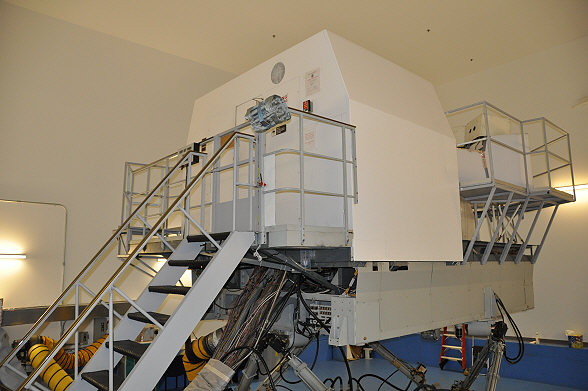
Actually, I lied. It wasn’t night at all, it was 10 o’clock in the morning. It wasn’t raining, it was January, which meant it was probably snowing ilke the devil. We weren’t in Milwaukee, we were in simulator bay #2 at the airline’s training center in Minneapolis/St. Paul. I wasn’t lying about the “brand new Flight Engineer” part, for I was so new that I had not even finished my initial “new hire” Boeing 727 Flight Engineer training. In fact, this little flight was my final test (or check ride) before my learning would be complete. So, except for that, it was all a lie. Albiet, a very convincing one. That’s what simulators (our workaday verison of the PC flight simulations) do for the professional pilot. They construct a totally believable lie that we use to develop, learn, and hone our skills as aviators.

4
(That “happy place” we call a simulator. A trip through “the box” happens for every airline pilot on a regular basis…it’s just a part of the job. You don’t pass your check-ride, and you’re life changes drastically.)

My first experience with a flight simulation was as a ten year old lad in the year 1966. Wait a minute there Hoss, the PC wasn’t even a glint in the eyes of the Gates/Jobs lineage back then, so explain that one. Totally right there pilgrim, but bear with me for a few minutes on this one.

As you’ve probably gathered from my other entries, back then I was living the dream for a kid like me. My biggest hero lived in the same house, had a cool job, we travelled the world, and I got to play on some of the coolest “play grounds” on the planet. When he was occupied at the Army Airfield with a non-flying day, he would march me (and usually my brother) out to an inert flying machine, park us in the cockpit and return hours later to gather us up for the return trip home. He didn’t realize it at the time (nor did I), but he was de-facto creating the first “flight simulation” for this pimply-faced youngster way back then.

When sequestered in those helicopters and/or airplanes, my entire world consisted of that cockpit…and I was by God the hottest aviator in the United States Army! I was rolling in hot on Charlie at some God-forsaken LZ in Vietnam, or under fire holding us rock steady in a hover as the Crew Chief was on the cable snatching the downed pilot from the mitts of the bad guys. It didn’t matter what “lie” I had created for myself, at that moment, it was very much a real thing for me, and that’s all that mattered! I pretended I knew what all those funny clocks meant (many I actually did know), and what all the switches were that I was constantly flipping from “OFF” to “ON” and back! It didn’t matter if I knew what I was doing, for I pushed/pulled, flipped and spun everything in that cockpit, and in my scenarios I would ALWAYS get back to base just as the rest of the company had given up all hope! I was “simulating” something, and most importantly, I was “believing” it. Cool days for a kid, eh?

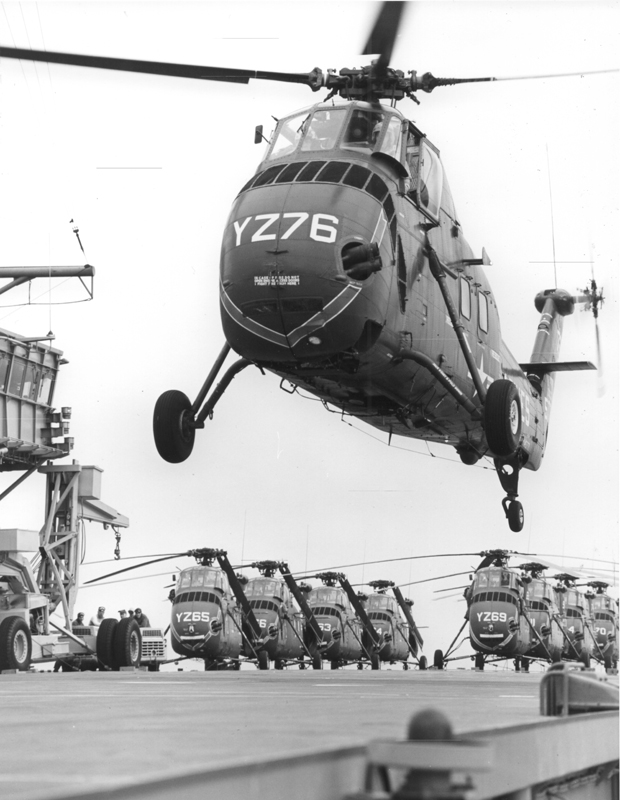
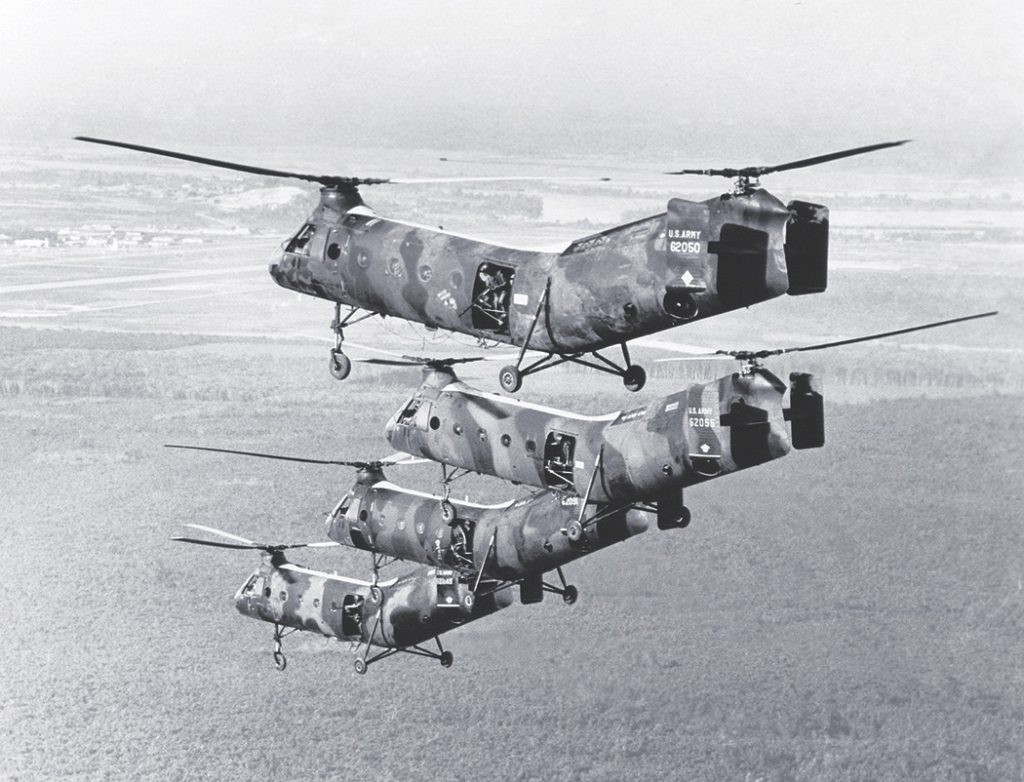
U.S. Marine Corps Sikorsky HUSorH-34. Photo courtesy of Frank Colucci
(I was fortunate enough to log many an hour in the cockpit of the Sikorsky H-34.)

So how does all of this relate to flight simulations, and the experience we call “flight simming”? A reporter asked me at a LAN meet several years ago while she was interviewing us for the local news rag, “Why would you fly these things, when you fly airplanes for a living?” I gave her the static, corny “I love to fly things” answer, but in retrospect that didn’t quite seem enough. My next statement to her was more on speed. I explained that at work, we operate under an umbrella of enormous responsibility, and we have to attack it each and every day on it’s terms. In other words, for instance when the weather is totally gonzo, we put on our “weather game face”, and go at it, with the stakes being as high as it can get. But in the world of flight sims, I get to attack it on my terms, with the option to mulligan if needed… the real world life and death things just aren’t a factor.

To expound on that a bit, I guess the “hardball” part of my career as a pilot is there every time I put on the uniform, every time I sign the Dispatch Release, and every time I step on to the flight deck. Does that mean it’s not fun? Of course not! It’s a huge amount of fun, just a totally different kind of enjoyment. But it’s always hardball, always for keeps…every day, every flight… getting it right the first time. No mulligans, no time-outs, no penalty kicks. The question then becomes, as a real-life pilot and part-time flight simmer, do I want to simulate the airplane part or the pilot part? Funny thing actually. I find that even though I do it for a living, I not only want the airplane/helo part to be great, but I want the pilot part to be exceptional too. Which means I want the “lie” that goes with it to be believable, not some made up, “terrorists kidnap the President’s kid, and I have to rescue them at halftime at the Superbowl” type B.S. Won’t hack it…not for this old pelican.

5
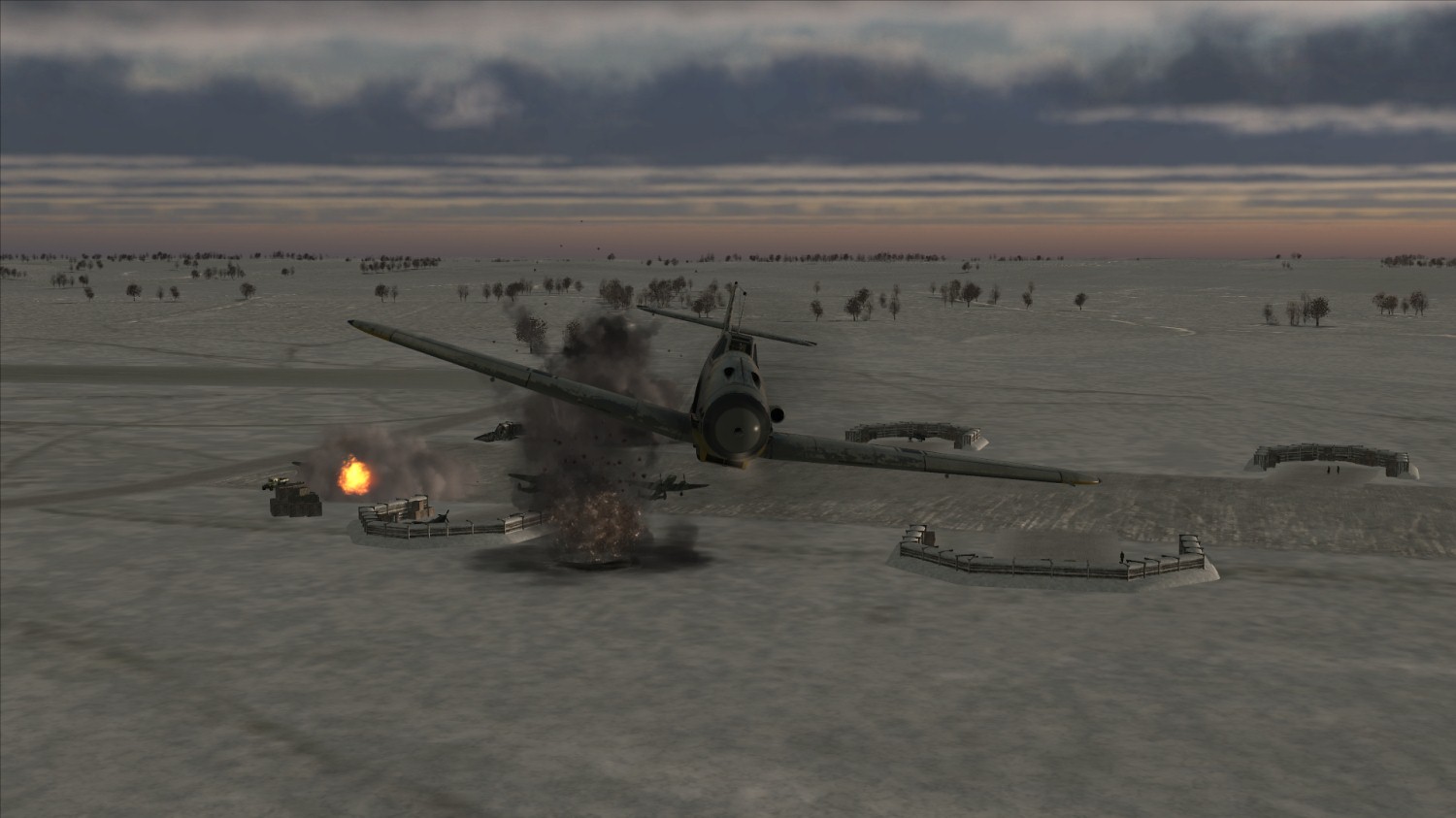
(1C Studios incredible “IL-2 Sturmovik: Battle of Stalingrad”. Here, I’m attempting to lay waste to a Russian aifield…)

I’m not looking to totally alter my reality…hell, a good bottle of wine can do that. I guess I simply want to be transported to a “pilot world” (place AND time) that only few a will ever see; if only for a few hours (or even minutes). I want the world to be believable, it doesn’t have to be 100% accurate, but it shouldn’t be an “eye roller” either. For example, the world of the leather-clad Spad pilot thinking he’s immortal, the disillusioned Luftwaffe ace, desperately fighting for his homeland, the newby Apache helo driver just praying not to screw up on his first combat mission, or the “pin your eyebrows to the back of your head” Viper or Hornet fighter pilot, loaded for bear, dodging SAMs and AAA over some remote, barren stretch of sand.

When all is said and done, I can sit back, critique my flying, hope I didn’t kill any virtual folks that “didn’t need killin”, police up all the empty beer cans, say good night to my mates on TeamSpeak, and call it a night. It was all “serious”, but only as serious as I decided it to be in my little virtual world. Again, reporter lady, I get to attack it on my schedule, on my terms, and with my fun-metrics. So those flight sim scenarios are all one big fat lie, but it’s a lie of my construction, and it’s as real as I deem it to be. So in a nutshell, I guess that’s one of the big reasons I fly these amazingly wonderful things we call “flight sims”.

Screen_141121_220411
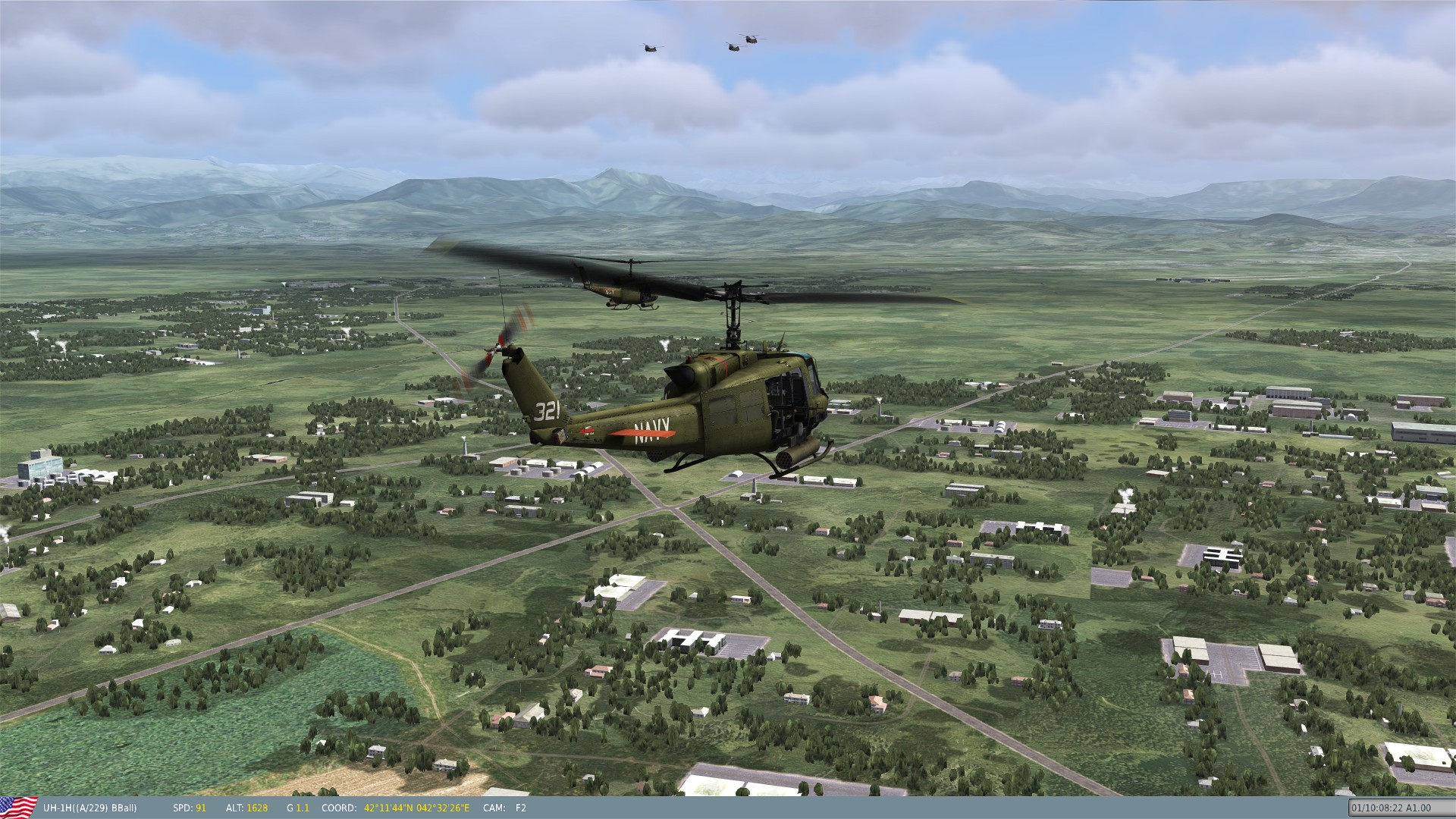
(Here I’m flying a UH-1H “Huey” online in “DCS World”. Our mission is to escort the flight of Chinooks to repair a bridge.)

6
(I’m online with a friend as he spools up in an A-10C, also in “DCS World”.)

2015_2_14__18_30_39
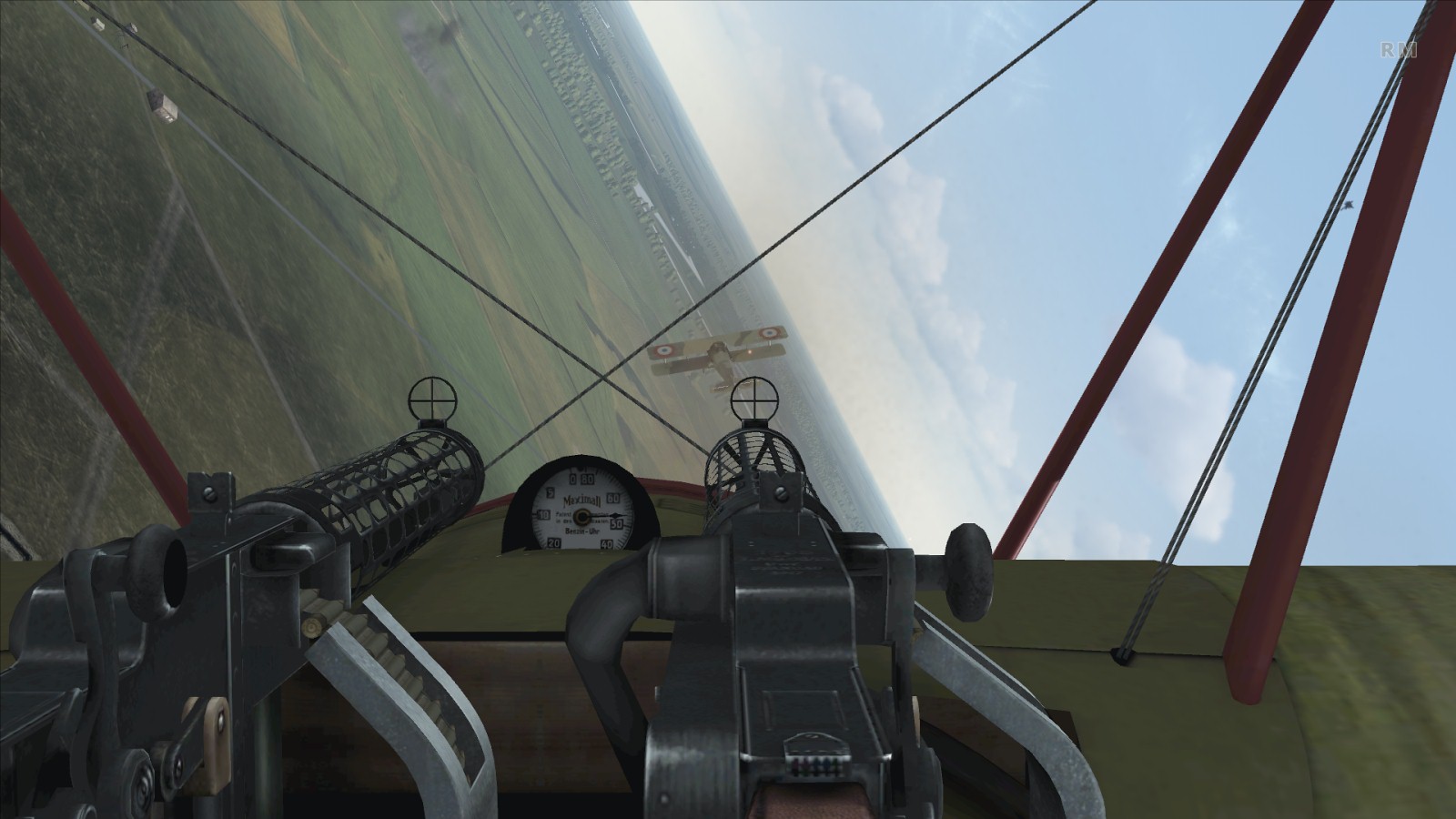
(And finally, I find myself over the bloody fields of Flanders doing battle with an Allied Spad. This is from the WW1 flight simulation “Rise Of Flight”.)

So what were my emotions in the make believe world that I found myself in on that fateful morning as a new-hire airline pilot? I quickly learned as a student (and later, witnessed it first hand as a 727 instructor), that these simulator machines do a helluva lot more than just simulate flight in a particular aircraft. They go a long way toward simulating (or creating if you will) the maze of emotions that people can feel in a high stress environment, surrounded by a believable world chock full of challenges, dangers and hardships. I’ve seen these “mother of all” flight simulations bring out the best (and the not so best) in a group of highly intelligent, highly skilled, very motivated and dedicated aviators. And it all starts because at some point in the experience, they give into the lie and start to believe. Take it from me, it’s not all that hard to do in these machines…they are that good. Isn’t that exactly what a good flight sim will do for one? Allow us to give in to the lie and begin to BELIEVE?

Oh, and by the way, in those last few seconds before we struck the approach light stanchions that dark, stormy night in Milwaukee, I cringed and braced myself just like in real life. A few seconds later, when the dust had settled (actually, the simulator just freezes), my only thought was….”f*ck, I’m dead!”

(addendum to the above mentioned 727 simulator story: The instructors informed us that yes, we did indeed crash and all were killed. The Captain and First Officer were taken off “line flying status”, admonished for not taking the (good) advice from the new guy, sent through more training, and another checkride in the simulator. I know for a fact that I did NOT endear myself to them, but so what? This is serious business, so check your ego at the door brudda. I was told that I did a good job of everything, except selling my idea that “if it ain’t working for us, then let’s not count on it…and maybe get rid of it” program, but unfortunately, I too perished in the crash (dead right?). Within a few years of this story, the airline industry as a whole began what we call “CRM Training” [Crew Resource Management]. It’s a wonderful tool, teaching (among other things) how to speak up as a subordinate crew member, and how to effectively use your crew as a Commander. It’s an excellent program, and has essentially (almost) rid the airline world of the “Captain Queeg” types. So I passed my final test, and was sent out to fly the line with an I.O.E. [Initial Operating Experience] Instructor. That first actual time in the jet with passengers turned out to be a funny story…but I’ll save that for another time.

– Happy Simming!

’till next time…

Standard

“Images Again”

(Originally published, 07 June 2000)

Prologue: Recently, at a Memorial Day picnic, a good friend commented that I might consider writing a “Logbook” piece about my father’s flying experiences in Vietnam (thanks again, Olieman). It was an intriguing idea, but one that was not easily done. I collaborated with my brother John to try and make sure the facts (concerning the incidents mentioned) are correct. Using his old Army logbooks, numerous documents, and our collective memories, we verified that the information is as accurate as we can piece together. The rest is my bit of “literary license.” I felt that only three people would ever be qualified to write this. One is gone, and I simply beat the other to the keyboard.

“Images, Again….”

 The Minnesota countryside was rushing past the window, blurring everything into a ménage of colors. As I listened to my teenage son’s tales of recent baseball heroics and computer game victories, I thought of another young man —a boy from thirty years past, also sharing a drive with his father. Like my son, this lad was also in the first years of his second decade and was blessed with the same interests and general “clueless” outlook that one must have at his age. He, too, dreamed of sporting triumphs, battles won, and faraway lands conquered. My memory banks took me to a moment from three decades prior, and I remembered a kid listening to his father painfully blather on about stuff that he couldn’t care less about, and was rapidly becoming extraordinarily bored.

I thought of that day, and I was transported to another father-son drive that held two major differences: first, I was the youngster awash in the “clueless” outlook, and second (as mentioned), my father was the one endlessly rattling on about something as he navigated the vehicle north on the German Autobahn. At that time in my young life, our family was enjoying our second year overseas as my father flew his helicopters from an Army base just outside of Munich, Germany. We had spent the previous year in the ancient city of Nuremberg and had recently relocated 100 miles south into Bavaria; life was good.

The trip in question involved a 75-mile drive northeast to an automobile factory in Regensburg to retrieve some parts for a sports car he was rebuilding. The mysterious part was that my brother and I were invited to accompany him on this three-hour round-trip adventure, for he had made the trip a few times before, but it would always be a solo mission. Why this trip was different was anyone’s guess, but a few minutes into the drive, we discovered that there was indeed an ulterior motive behind our invitation.  We were both rapidly approaching our “vulnerable” teenage years, and he had decided to initiate us into manhood with “the talk” on this very day, on this very drive. As he rambled on about things that made no sense at all (I wish now that I had listened better), my mind began to wander as all young minds do. I was discovering that at the tender young age of eleven, I could not care less about love or girls, or “where babies come from,” or whatever the lecture was supposed to be about. My mind turned to better things to think about…like helicopters.

Let me back up a bit.

My dad was about the best damn father a young boy could draw. He was all the things I needed him to be, and this allowed my stock to be damned high in the little-boy world pecking order. He was tall, handsome, an Army officer of the finest order, but most of all, he was a helicopter pilot. Those funky flying machines were still new in the modern lexicon of things, and most “regular” folks knew they flew differently from airplanes; they just had no clue how or why. This made the people who flew them almost “mystical” in their abilities, evoking thoughts of the heroes who rode dragons in fantasy novels. How they did it was anyone’s guess. The fact that they did it … was, well, awesome. When he would enter my world in his olive drab flight suit (his combat boots announcing his arrival), those bigger than life silver aviator’s wings on the left breast, and his ready-made smile for me and my siblings, he was a hero in the first degree.

(This is the smile of a man who loves what he does for a living. The picture shows his room in the “hooch” he shared with some other pilots during his time in Vietnam. Even during the pain and chaos of war, a smile is still a smile, and it showcases my father’s basic personality …. He was generally a very happy person.)

I had stopped my daydreaming, battling to ignore my dad’s lecture, long enough to see that we had pulled over at a rest stop to eat breakfast. He was unpacking the PB&J sandwiches he had made for us at 0400 that morning (why did every trip have to start before dawn?), and was unscrewing the cap on his coffee thermos as “the talk” continued. I was not hearing a word he was saying, or at least, trying desperately not to.

This had gone on long enough, and I could take the boring lecture no more, so I did it, I asked, “Say, Dad, what did you fly over in Vietnam again?” His hands stopped working the cap on the thermos, his face lost its usual animation, and his eyes stared blankly as if they were seeing something that only he could discern. The year was 1967, and with that one innocent question, I sent him back to hell.

——————————————————————————————————————————————————————–

The noise of the rotor blades slapping against the hot, wet air above the jungle filled my helmet, adding to the chaos and confusion.

“Shut up, Ben! Shut the hell up!” “But Mr. Ball, did you see that? Did you see that? Dragon One went down…. he crashed!”  Of course, I had seen it; I was looking right at him when it happened. Jesus Christ, how did they expect us to be doing this?

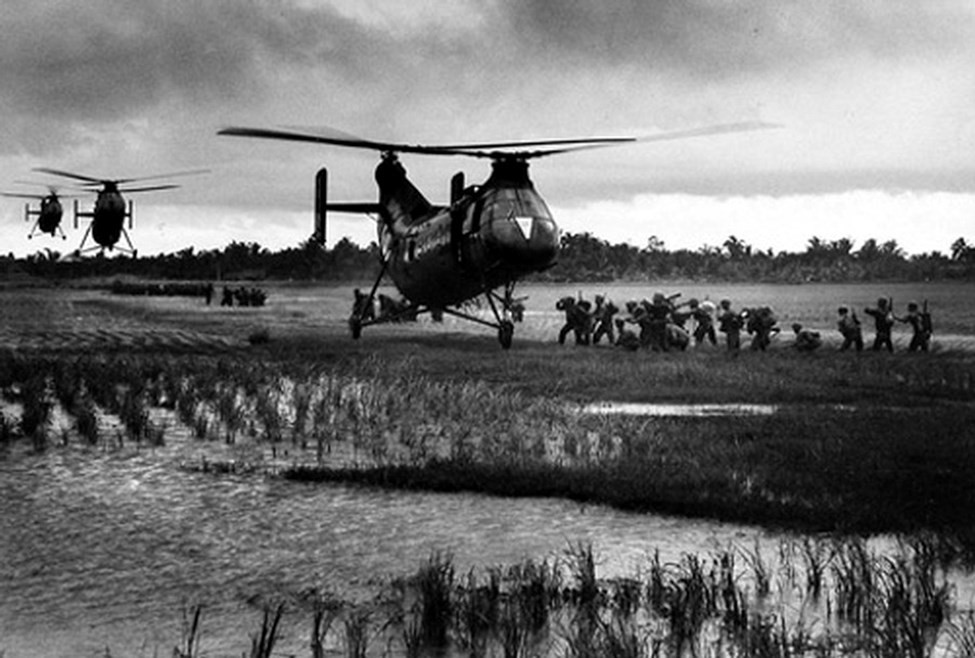
“I saw it, damn it, I saw it….” This was turning into another bad day for the 81st   Transportation Company. We had deployed out of the old French airstrip at Pleiku with a four-ship, landed in Ban Me Thuot to pick up some ARVN Rangers, and were now taking their asses up country for God only knows what. This piece of crap, Shawnee, was just not meant to be flying in the mountains when it’s this hot and humid, but a few months ago at Schofield Barracks, the Army said get yourselves and your helicopters over there, so here we are.

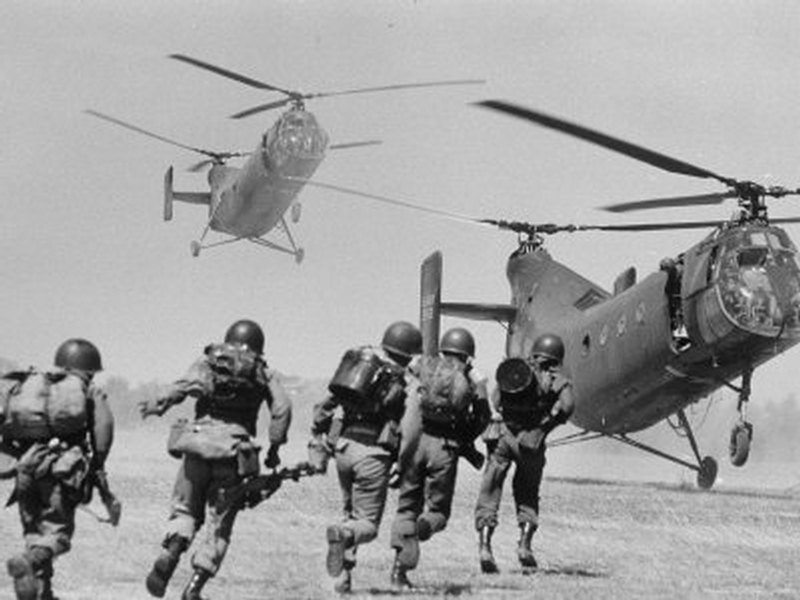
(The Vietnamese soldiers weighed far less than the Americans, so more could be packed into one helicopter…and when the weight of the machine was critical, this was a very big thing.)         

Dick was leading us on the leg up north, and had elected to fly at 1000’ to stay under the overcast. The G2 guy had briefed us that any AAA en route was to be a non-item. We would be echelon, right, and I was flying second in the formation, right next to Dick; my callsign was “Dragon Two.”    And now this…  How can this be happening? Dick was in the right seat, allowing Bob to fly in the left to gain some aircraft commander time, and I was looking right at him as he smiled back and shot me the finger. Out of nowhere, big orange tracers came out of the jungle and BAM! One hit their cockpit, and all I saw was a cloud of pink where he had been sitting. It must have been a large-caliber weapon, maybe 51 caliber, for after the first round hit Dick, the next several just shredded the cockpit, and they nosed straight in. There was no way that anyone could have survived that.

(They called it “the chopper killer” for good reason.)

“Ben, you and Jackson, find that gun! Harry, mark the crash on the map, get your ass on “Guard” freq, and tell them what happened!”

“OK, Bill, keep my shit together here, I’m leading this mess now, so start flying like you’ve been trained….

“Dragon Flight, Dragon Two, I’m up lead, let’s hard left 30 degrees, and Di Di our asses outta here!”

Christ, I can’t think about this now, fly this thing! What’s Vne again? 128 kts…that’s right…get the nose down, and get to that speed…. But Dick and I had gotten our wings together back at Wolters, and just like that, he was dead. How would they tell Maryland? And if it happened to me, how would they tell Shirley and the kids? God, I’m beginning to hate this God damn place…”

“Let every nation know, whether it wishes us well or ill, that we shall pay any price, bear any burden, meet any hardship, support any friend, oppose any foe to assure the survival and the success of liberty.” -Inauguration address, 20 January 1961, John F. Kennedy

We had been “in country” for about four months now. The duty piloting these “flying bananas” around Oahu and the islands was damned cushy, but that came to a screeching halt last October. “Where the hell is Pleiku, South Vietnam?” That’s all we could think about when the orders came down. President Kennedy had committed more “advisors” to the Republic of South Vietnam, and we in the 81st were tasked with getting our machines over here, setting up camp, and doing just what we had been training to do… transport stuff. People, cargo, we didn’t give a damn, you needed it hauled, we hauled it.

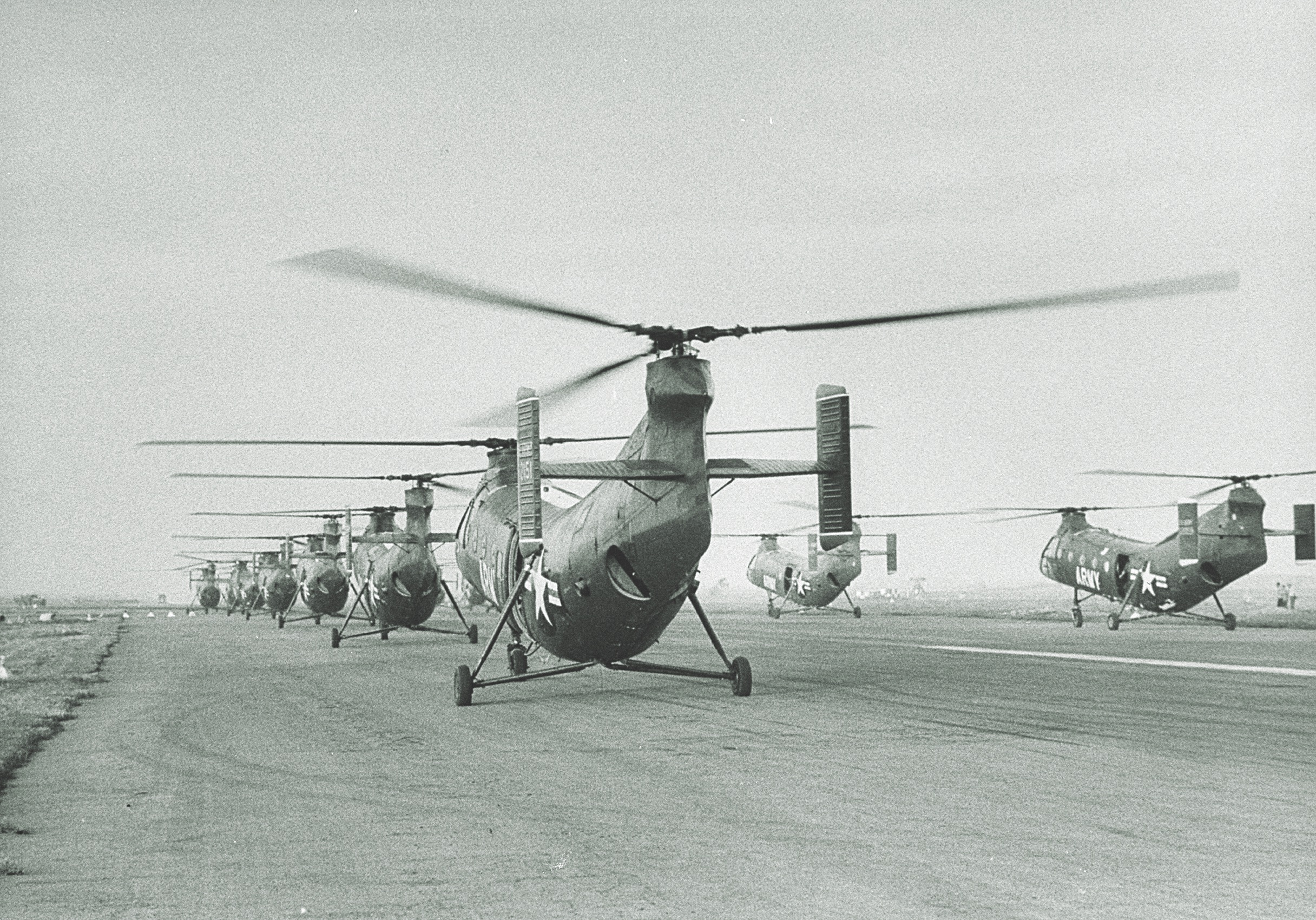
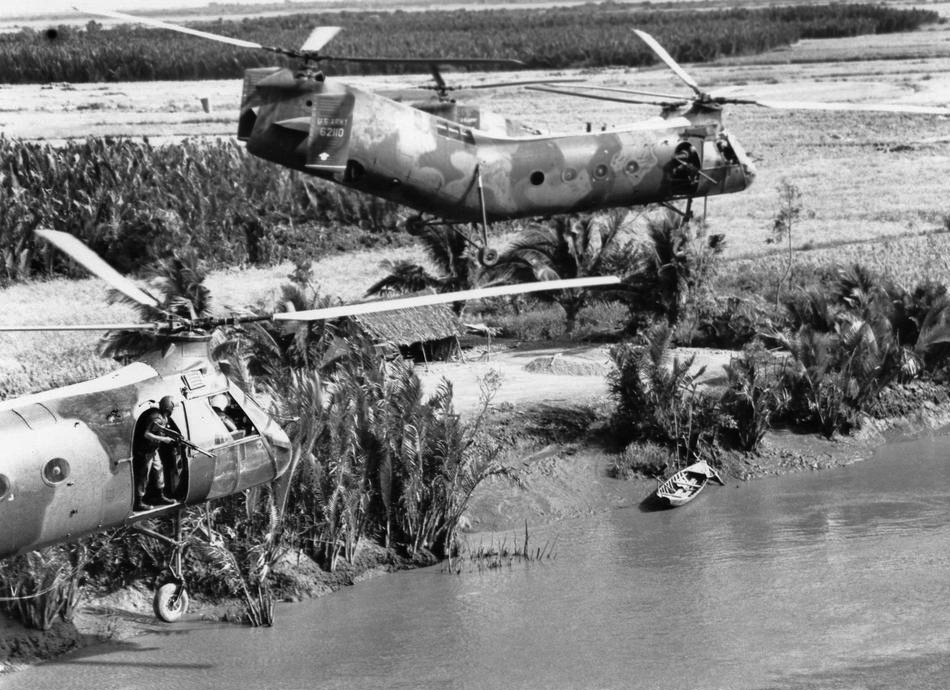
(The H-21 Shawnee was very unsuited for the crucible of Vietnam. For every 1 hour of flight time, 11 hours of maintenance were required to keep it in the air.)

I was feeling about a million years old, and even farther from home than I ever thought possible. Shirley had taken the kids back to Colville, Washington, to live with her mother, and I was having a hard time remembering all the good things in life, especially after seeing the crap I had seen here. The more agony and death I saw, the harder each day got, and by now, the days were beginning to run together. The worst part is that I was starting to feel numb about it all, and that was scaring the hell out of me. I knew that to get through this, the trauma and pain would somehow bury itself, but that might come years from now, or it might come next week…. All I know is, it would not come soon enough. The mission two weeks ago was the worst I had seen, until today, that is.

(There were credible reports…my dad confirmed them, that occasionally they would come back to an LZ with another load of ARVN soldiers, and the ones they had dropped off an hour before were now shooting at them. They would just overfly them in the LZ, and head back to the ARVN base to drop off the dudes they were carrying at the time. His comments were that, in his opinion, the South Vietnamese soldiers were either very good, or very bad… no in between.)

It was another Ban Me Thuot run, just like today’s. After we had picked up the ARVN troops (with a few of our “advisors” mixed in), we launched and headed toward the central highlands. The VC and any resistance were (again) briefed to be a non-factor, but (again) that proved to be a bunch of crap. Would they ever get their Intel stuff figured out? We had to do some pretty fancy “pilot stuff” to get these things airborne. It was hotter than a summer day in Dallas, and if not for the ability to do a rolling take-off (and get our ass into translational lift ASAP), I think we would have had to kick about half the troops off. That single Wright-Cyclone was straining to get those blades turning and our butts into the air. But I will say that when we did get up and going, our three “four ships” were a pretty damned impressive sight. Look out, Charlie, here we come.

(One of the entries in his logbook showed a day in Vietnam where he made 23 (twenty-three!) takeoffs and landings! I would bitch in the 757/767 when I had to do three or four!)

Operational secrecy seemed to be non-existent…otherwise, how they knew we were coming is beyond me, but they did. To go to all the trouble they did to shoot us up, they had to have known we were coming. I don’t remember the name of that little village in the middle of the jungle, but it was tucked damned far into the hills, and that “one way in, and one way out” operation gave me the creeps from the moment they mentioned it in the briefing. All I remember is they let us come in, drop off the troops, and then the shit hit the fan. They opened up on us like they were hosing us down at the car wash. Ben was yelling and saying something about little kids, and I was wondering, “Why the hell isn’t he shooting back?” I quickly glanced out the right side, and I could not believe what I was seeing! They had grabbed a bunch of women and children and had them standing in front of a gun emplacement! They were all wailing and screaming and trying to get away. Shit! Now what do we do?

Ben was yelling at me from the .30 we had in the right forward door. “Mr. Ball, what do we do? Do I shoot? Do I shoot?” They were giving us hell, and I could see that the ships in front of me were taking some hits. Then the one directly in front of us started wobbling just as it was pulling pitch to leave, and at about 15 feet, it rolled to the left and hit the ground hard. It looked like an explosion at the toothpick factory…pieces went everywhere.  But still no one was returning fire. Those damn women and kids, and those damn bastards using them for cover.

It happened precisely at that moment, and why that moment in time, I don’t know. I guess you could say that I just snapped. The yelling over the radio, Ben screaming in my earphones, the noise of the ship going down in front of us, our ship bucking from the rounds hitting us…. I don’t know why I said it, but I did — and it will haunt me for the rest of my days.

“What did you say, Mr. Ball? Say again, Mr. Ball! I can’t hear you!”

“Fire, Ben, fire God damn it….” The noise of his .30 caliber was their epitaph, and I wrote it…. I fought with the controls of the helicopter and felt the tears as I thought about my own kids.

 That was two weeks ago; this was now.

O.K., Bill, get your ass back in the game.”  

 “Dragon Flight, Dragon Two, the mission is still a go…. repeat, still a go.” Dick was down, but I couldn’t think of that now; we still had a mission to fly, and by God, we were going to fly it. “Dragon Flight, form on me,” I heard the replies, but was thinking about a million miles ahead of the program. Harry had received a reply on the “Guard” frequency, and someone was inbound to try to kill that gun and find Dick’s ship, so that box was checked. We still had to get our asses to the LZ, drop these yokels off, and go home.

Home. What a name for that stinkhole where we park these things. “This ain’t Kansas To-To” was the first thing out of my mouth when we arrived, and boy was that the truth. All the comforts of home, eh? I guess if you live in a run down “double-wide” trailer, with a bunch of homesick guys, in a place where its 100 degrees in the shade, the “two-stepper” snake bites you, you take two steps and you fall dead, and people on the other side of the wire want to kill you…then, yeah, I guess it’s like home.

(The yellow-bellied pit viper… the infamous “two-stepper.”)

 And “Shaky Jake,” I still don’t believe that one. He gave the best damn haircut, and the shave he would give you with that straight razor; way better than any of us could do ourselves. A local guy, middle-aged, with lots of jokes and “laughing and scratching” with him while we were getting “fixed up,” as he called it.  Then came the night the VC mortared us for an hour, they breeched the wire, and blew up a couple of the helicopters. In the morning, when we all went around to see what had happened, there was “Shaky Jake” in his black pajamas deader than a mackerel. We got wide-eyed, looked at each other, and grabbed our throats. How many times had we all had that blade next to us? Shit, this was a crazy war.

O.K., there’s the LZ. Doesn’t look hot; let’s get these things in and out fast.

“Dragon Flight, Dragon Two…. LZ, twelve o’clock, three klicks. Looks cold, but keep your eyes open.”

“Harry, keep clearing the left side. Ben, you, and Jackson keep your eyes open, and shoot anything that moves…you hear me?”

Okay, watch the descent rate. Speed looks good; keep the rotor rpm in the green. Winds from the right a little, no activity in the LZ, but what the hell does that mean? Down! O.K., boys, get your asses off this thing; I want my butt back in the air! What? “Three” is taking hits from the rice paddy on the right? Shit! 

“Ben, do you see the gun? Ben!”

It was then that I felt the impacts of the rounds hitting our bird; it was as if we were in a trash can and someone was banging on it with a baseball bat. We took some rounds into the cockpit, glass flew everywhere, but most of them hit behind us, and Ben wasn’t answering the interphone. I tried Jackson at the other door, but he must have been busy taking care of Ben. No guns working for us, and we are getting our ass kicked… this was not looking good.

(Flying echelon right over one of the countless muddy rivers/creeks of the Central Highlands of Vietnam.)

Instinct is a fascinating reflex, for it allows you to do things without cognitive thought. I was in a daze when I looked back and saw that the ARVN Rangers were gone. I brought us to a hover, and it was then that I saw him. He was about 100 meters at our 1 o’clock position, still shooting at us, but he must’ve emptied his magazine, for he turned and was running down the dike toward a village about a half a klick away. I don’t know what I had planned to do, but I pedal-turned toward him, gently lowered the nose, and slowly began to pick up speed. Harry was yelling something at me; I glanced to my left and saw his mouth moving, but I heard no sound; it was as if I were stone deaf. I had no idea what I was thinking … probably that we would get a gun going and shoot his little VC ass, but any calls to the back were going unanswered. I just instinctively steered toward him.

It has been said that when a man fights a war, he is not committing murder; he is killing to stay alive. That might be a true statement, but I will live in eternity seeing his eyes as he ran down the dike, glancing back over his shoulder. He had dropped his weapon and was just running. Running like he had looked into Satan’s eyes himself.

We could barely feel the thumps as the forward rotor disc began to strike him….

————————————————————————————————————————————————————–

 “Dad…dad! Did you hear me? Are you OK, Dad?”

  “Yeah, son, yeah, I heard you….”


We finished our trip that winter day in Germany, and he said nothing of the incidents described above.

The crossing of the mysterious barrier into “manhood” for my brother John and me came neither on that journey nor any others we took with him in an automobile. For myself, it came as the result of a lifelong journey with him as my father, my friend, and my trusted advisor. He was the driving force behind my life in aviation, and he continues to be the yardstick by which I measure myself daily.

Epilogue: My father returned from South Vietnam in the spring of ’63. He had several Air Medals in his footlocker (he said they were for picking guys up that had been shot down…he said they asked for volunteers, and he simply raised his hand…nothing more, nothing less…my guess is that there is INDEED more to those incidents), but he had taken no physical damage. He retired from military aviation in the late 1960s when he received orders to proceed to Ft Rucker and attend the CH-47 Chinook School, with the stipulation that he would return to Vietnam upon completion. He had served as a combat medic in the Korean War and as a combat aviator in the Vietnam War. He decided his days in the Army were done, for it seemed that two lifetimes of killing and suffering for this gentle man of peace was more than enough for him.

He didn’t talk much about his time spent in either of those two horrors, but when he did, the above incidents from Vietnam were about all he shared. He only told my brother and me when we were much older, I’m guessing, thinking that we were mature enough to handle it. He (thankfully) kept it from my sisters, and as far as I know, my dear Mother.

Shortly before he died in 1993, I shared the book “Chickenhawk” by Robert Mason with him. It’s renowned as the Holy Grail of books about being an Army helicopter pilot in general, and in particular about flying combat in Vietnam. When he had finished reading, I asked for his opinion. He mentioned that he loved the parts about the early days of pilot training at Ft Wolters, Texas, as he had gone through his initial flight training there. After retirement, he had worked at the very same facility as a civilian helicopter instructor contracted to the Army. Then he paused and said he didn’t like the parts about Vietnam because they “brought back too many bad memories”.

Although, like many veterans, he wrestled with insomnia most of his adult life… I noticed that shortly after reading the book, he could no longer sleep through the night, any night. It breaks my heart to think that maybe when he closed his eyes, wishing for sleep, it was not to be, for he found himself looking into the terrified eyes of someone else.

“My dearest father,

I sincerely apologize for reopening those old wounds. I know you buried those thoughts and feelings in a deep place, wishing they would never return. I’m so sorry for giving you back that pain…you know I never meant to do that. I pray that your flying now is above peaceful lands, with warm days, and gentle breezes.  I miss you, Pop.

You’re loving son,

Bill”

Standard

“Firsts”

I am still not on flying status with the airline, so that leaves tons of time to do things like this (and bug the heck out of the wonderful “Mrs. BBall”…poor woman). The problem that’s keeping me from the cockpit (diplopia) seems to be getting better on its own (as the doctor advertised), and “if the good Lord’s willing and the river don’t rise,” I’ll be back to work in a couple of months (or hopefully sooner).

This next tale was born of a suggestion (always open to those…IMHO, some of my best topics were hatched from another brain).

We all remember our firsts.

From the immature things such as a first “love” (Laurie R. in elementary school…first kiss too…lol), to the first purchased automobile (1969 Pontiac Firebird), the first job (newspaper delivery boy Ft. Worth Star-Telegram), to the serious and earth moving events. Wonderful things like a first child (James and Barbara came in a packaged deal with my amazing wife Debora) to the inevitable and heartbreaking first death of a loved one (my dear sister when I was 27). We are all blessed with “firsts” in our lives, and my professional world was not immune.

After a terrific suggestion from a friend concerning the subject matter for this entry (thanks again, Todd, my good friend, and fellow Texan), I began to let the ‘ol memory banks wander back in time to some of the pinnacles of my aviation career (the faded brain cells ably assisted by my old Logbooks…lol). He suggested that I scribe about some of the “firsts” in my aviation journey…. events like my “first solo” and “first solo cross country.” I immediately liked the idea, for you see, my friend Todd is in the early stages of his flying adventure, so his sky story has just begun. However, as I began to ponder my own “firsts,” I quickly realized that a 42-year history of a life spent as a birdman (mostly for hire) includes far more initial events than the two he offered; in fact, they’re almost too many to mention. I’ll offer two that stand out…

My first flight as a brand-new airline captain and my first solo flight as a Student Pilot.

First trip as “the Dude”.

As the hotel van left the parking lot that quiet Sunday morning, the sun was beginning to rear its ugly head on the eastern horizon. Sleep had not come easy the night before, and after besting the alarm by almost an hour, it was obvious that coffee would not be needed to get me going. The six weeks of ground school and simulator training had been completed, the five-day trip with a “Check Captain” had gone well, and now it was time to prove my mettle as a commercial aviator. The date was the 5th of June in the year 1994, and I was to fly my first line trip as an airline Captain (for a major airline … I chronicle my first flight as a “commuter airline” Captain in the post “Laughter and Heartaches”).

The last time I had “captained” a commercial flying machine was approximately 11 years past, and then it was on a small turboprop “commuter airliner” that held a total of 19 trusting souls. Today would be a vastly different experience in many ways. The ride would be another of the iconic inventions from those wunderkinds at Boeing, the 727-251, or “3-holer,” as we knew her in the business. It was not only a complicated airplane (a crew of 3 pilots, with almost nothing being automated) but also a supreme joy to fly. She has been described with terms the likes of  “sexy” and “beautiful,” and many have said that she appeared to be going “Mach 1” just sitting motionless at the gate. I had to agree.

7 727 3

(The amazing, iconic Boeing 727-251, or “3- Holer”.)

She offered one hundred and forty-six passenger seats, again was crewed by three pilots (Captain, First Officer, and Flight Engineer), had a range of roughly 2000 miles, and was able to cruise a hair under the speed of sound, six miles above Mother Earth, and all in shirt-sleeve comfort. By comparison with today’s fleet of uber fuel-efficient jets (thanks to a mix of composite materials, engines with the thirst of a camel, and cockpit technology that allows maximum aviating bang for your buck), the 727 was the equivalent of the 1975 Ford F-150 to today’s Honda Hybrids. What she lacked in finesse and fuel efficiency, she more than made up for in raw power and strength. I have seen some of Mother Nature’s worst weather from her cockpit, and more than a few times, it had me sitting ramrod straight (and being very much “in the moment”), but I never lost sight of the fact that I was in a Boeing jet. The age-old adage, “If it ain’t a Boeing, I ain’t going,” rang true for many an airline pilot during her time in the skies.

I had drawn two experienced fellow pilots to share this day, Ian and Brian. Although we had never laid eyes upon each other before meeting at our Flight Operations center in Detroit, we quickly settled into our routine of pleasantries and business. Each airline pilot learns this dance from their earliest days with the company, for we fly with a new crew on literally every trip. Fortunately, we are all (for the most part) pretty much stamped out of the same mold. We’re a bit “type A”; we have thousands of hours in many different cockpits (I’ve flown with every type of pilot…from ex-crop duster to ex-Blue Angel), we are tasked-oriented individuals, we hold ourselves to a high standard, and we’re used to accomplishing the mission. We all share a passion for aviation. Plus, 99.9% of us are just plain nice folks, and we seem to have the ability to go from total strangers to co-workers to friends very quickly.

As First Officer Ian and I began our routine of checking the weather and filling out our flight plan for the first leg to Milwaukee (yep, in the “old days,” we actually filled out a paper flight plan, doing all the time/fuel calculations manually…nowadays, it comes off a printer ready-made for us at the departure gate), the Flight Engineer Brian (or Second Officer as my line referred to them) left for the gate to make ready the jet. He would do the cockpit preflight checks, the exterior “walk around” inspection, investigate any mechanical irregularities for this machine, and generally get things ready for when Ian and I showed up.

By now, I had (according to Company policy) briefed both that they would be flying with “a new Captain,” and I’m quite sure they were pondering just how much babysitting I would require on this little two-day trip. Restrictions abound for new Commanders (both Company and FAA), for they are not only required to do most of the flying for the first days of the trip but are limited to higher weather landing minimums for the first 100 hours as Pilot-in-Command. Plus, before each launch, a call must be made to “Mother Dispatch” for a pre-mission briefing. You are kept on a pretty short leash and watched like a hawk when you’re a “noob,” and that’s maybe not a bad thing.

Although the weather was breaking lovely this morning in Michigan, a small cold front was blowing across Wisconsin and would offer my first challenge as the boss. The jet for my inaugural leg as a Captain (N277US) was in fine form, the cabin crew had been briefed, and due to the low overcast and rain forecast for Milwaukee, the Dispatcher and I had elected to board extra fuel and list our departure point of Detroit as our alternate airport. The day had us scheduled to do a “Milwaukee turn,” then down to central Florida for our layover. In plan-speak, that would be the short hop over to “Brew Town,” an hour on the ramp, then back to “Mo-Town,” another hour break, and finally end the day in Orlando …I guess that would be “Mickey-Town.” To be sure, it looked to be an easy day on paper, but every pilot will tell you that sometimes the days that look the easiest turn out to be anything but.

8 727 4

(The “front office” of the big Boeing.)

My landing on runway 25L in Milwaukee was not great, but not bad. Again, first time in the batter’s box without the help of an instructor in the First Officer’s seat. The wind and rain made for a good excuse (in case the landing truly sucked), but I didn’t need one, and I was glad for that. Anyone who’s flown the 727 knows that it can be a bear to land smoothly, and the results of a REALLY bad landing (meaning a hard touchdown) can be the dreaded “rubber jungle.” This is when the oxygen masks above each passenger seat become dislodged and pop out upon the impact with the runway. It can be disconcerting for the customers (you think?) but it can be really embarrassing for the person that did the landing. The accepted procedure is for that person to stand at the deplaning door and take the “chin music” from the passengers as they exit. Have I ever plopped a 727 down so hard that I got the “jungle” …yep…once. The funny thing is it was on RWY 25L in Milwaukee a few years later, and we had an FAA inspector on the jump seat! LOL…I only got a couple of masks to drop, and he just laughed.

Fate would shine on me this day, for we did our “Milwaukee turn” on time. After leaving Detroit the second time for the day and dodging a few summertime afternoon thunderstorms at the Georgia/Florida border, we landed in Orlando shortly before dinner time. Many parts of the day are a blur, for I was tasked with about a thousand decisions that (in the past as the trusty F/O) I was accustomed to just reviewing…not making. Now, I was the one MAKING those choices, and I would be the one to answer to them and/or suffer the consequences. Such is the daily turf of the ship’s commander.

I distinctly remember having some minor mechanical issues with the jet when we returned to Detroit from Wisconsin. As the agent was talking to me at the gate, she queried me as to whether or not she should delay boarding the passengers for Florida. I clearly remember ALMOST saying to her, “Hang on, let me go ask the captain…” then it hit me like a ton of bricks. I was that guy! All the heads would be looking at ME for answers from now on, for the “buck” truly did stop against my forehead. It’s a weighty burden to carry, and I’ve been asked many times over the years about “the pressure” of being responsible for all those lives. I always go back to sage advice that my dear father once gave me regarding such…” learn to take care of yourself, and everyone sitting behind you will be just fine.” Excellent advice from another birdman, to be sure.

First solo flight.

The airspace around Ft. Worth’s Meacham Field is some of the busiest on the planet, and this statement was as true in 1973 as it is today. Several hundred machines of all types transit this rather large “general aviation” airport each day. Everything from small trainer aircraft to large corporate jets and the occasional airliner flying a charter or ferrying in for some contract maintenance. So why on Earth did I pick this busy place to begin my flight training way back then? One reason. My best friend Randy C. had joined the Civil Air Patrol and had received his training there, so I figured if it were good enough for him, then it would be good enough for yours truly. With that momentous decision, Ft. Worth School of Aviation had a brand-new Private Pilot student.

1 Randy Coffey

(My best friend throughout childhood, Randy C., at the controls of a Cessna 150. He grew up to become an eminent physician…I grew up to become…well when I grow up, I’ll let you know.)

I was most assuredly NOT “born a pauper to a pawn” (“…on a Christmas Day, when The New York Times said God is dead, and the wars begun…” Sorry, some of my favorite Elton John lyrics), but our family of seven hung to the tag of “middle class” by our fingernails. We didn’t actually do without the essentials, but there were scant few extras and frills under our roof. My dear mother’s sewing machine logged countless hours fashioning clothes for us (mainly my sisters). Dad busted many a knuckle as our chief automobile maintenance officer (and I saw countless weekends with my head under a hood with him). Fortunately for me, by the time I began my training in the summer of 1973, I was twice daily delivering several hundred newspapers (at 4:00 am and 4:00 pm). I was raking in almost a thousand dollars in profit each month. A king’s ransom for your average 17-year-old and the lion’s share of it wasn’t spent on everyday, normal things… the likes of girls, cars, dirt bikes, and stuff like that. Nope, it was spent on a little blue and white Cessna 150 named “N5305Q”.

My first Logbook entry reads:
“6/14/73 / C-150 / N5305Q / FTW-LCL / Famil/ JD 1930144 CFII / Total flight hours = 1.0”

Although I had logged time in many U.S. Army cockpits as a child (see previous blogs), I had never actually maneuvered a machine in the air before. This one small, seven-block entry “sentenced” me to a life of excitement, thrills, wonder, and yes, even (a few times) disappointment and heartbreak. It began a career that only few dream about, and fewer still get to experience.  This is the part of the story whereby I express a sincere “thank you” to my amazing father for introducing me to flying machines, to my dear friend Randy for taking me up and showing me Ft. Worth from the right seat of a Cessna 150 (and getting me bitten by the flying bug…lol), and to “JD” (my first Flight Instructor), for teaching me how to keep from killing myself as a fledgling aviator.

2 Zero G

(Randy and I are having fun doing some “zero G” on one of our flights).

“JD,” or John D., was a trip (that’s the 1970s speak for “interesting”). Young guy (late-20s), personable, good-looking, and tons of fun to fly with. Showing up for a lesson, I would ALWAYS find him on the phone with one of his “stable” of girlfriends, and of them, he had lots. Again, he was a young, good-looking dude; in fact, he looked more like Joe Namath than Joe Namath did, and this kept him in high demand with the fairer sex. For those not in the know, Mr. Namath was a Super Bowl-winning QB for the NY Jets in the late 60s, and by the time I met my instructor, John, Namath was world-famous as an uber “ladies’ man.” This was all fine and dandy, but I was often met with a toss of the airplane keys and a “go ahead and preflight, I’ll be out in a minute” greeting from John. This usually meant a long, in-depth inspection of the machine, plopping my butt into the cockpit, going over checklists and procedures, and then waiting for another 20-30 minutes before he would finally arrive. But arrive he would, and off into the wild blue we would launch together…but not many times, it would seem.

The coveted solo flight.

For a student to be given the reigns and allowed to fly by themselves (solo), several things must come together. Within a few years of my student status, I would be working as a staff flight instructor at the university and would be tasked with making sure each Primary Student was indeed ready for this big step. Make no mistake, it is a VERY big step in the life of each pilot.

Each student must not only know how to aviate the machine (take-offs, landings, climbs, descents, stalls, emergencies, etc.) but must also be proficient with the use of the communications and navigation radios and in a busy environment like Meacham Field, this can be a daunting task. They must know the airspace structure around the local airports and the FARs (Federal Aviation Regulations) concerning the type of flying to be done, possess adequate knowledge about the weather (current and forecast), and have more than just a hint about a million other things.

With all that said, they absolutely must possess one other thing: a thing so rare and devoid of “Earth-bound” folks that it would seem alien to them. We call it “air sense,” or as the military folks say…” SA” (situational awareness…as it pertains to airplanes, obviously). Some come by it naturally, some struggle to get it (all pilots eventually attain it), but unfortunately, some that wish to be aviators never do, and it WILL make the difference between becoming a pilot or “washing out.” Remind me to tell about the time I had to inform one of my students that he didn’t have what it takes to become a pilot…an interesting day, to be sure.

Back when I began my flight training, the average number of hours for each Student Pilot to fly with their I.P. before being ready to solo was in the neighborhood of 15-20 flight hours (I know this because I looked it up). Each student dreams of that day, probably secretly dread it just a little (am I ready?), but knows that until that moment happens, they are not “really” a pilot, just some yokel sitting in the seat of an airplane while the “real pilot” tells you what to do.

This Friday morning seemed like hundreds of others as I pulled into the parking lot. Light winds out of the south at 5 knots, visibility a beautiful 10 miles, and a scattered layer of fluffy white clouds lazily drifting overhead. It was summer in Texas, which meant that later in the day, it was going to be hotter than the blue blazes (high in the upper 90s with a humidity that would dampen any armpit), but when I left the hangar and walked across the ramp to the machine, it was a “cool” 77 degrees. John was, once again, “doing his thing” on the phone when I walked in, so I was (once again) sent to begin the lesson by myself.  I knew I had plenty of time before John would show up to the little blue and white friend, so I did my pre-flighted checks slowly and carefully. I checked many things that morning (like every other lesson); the oil/fuel levels (draining the fuel sumps and making sure I got a little 87 octane on me so I would smell like a real pilot). I moved all the control surfaces, checked tires/brakes, flaps, fuel caps, antennae and light housings, propeller, and spinner…all the while trying to keep a hand on the skin as I walked around the little Cessna. Call me crazy, but it’s a habit born of those days, and I do it to this day. Often, when exiting the big Boeing, I give it a gentle pat on the skin…find me a pilot that does not love the connection between epidermis and bare metal, and I will show you an aviator “poser.”

Did I know what was in store for me that morning? Not a clue. John climbed in; we briefly chatted about the lesson (same ol’ stuff…” practice area,” …which means stalls, simulated emergencies, etc.…then back to the field for more “touch and go’s”); we then ran the checklists, I started the little Lycoming engine, and we began our taxi. On the radio, the Meacham Ground Control frequency was unusually calm and quiet that morning, and after our magneto check run up at runway 16, we switched to the Tower frequency and noticed the same. John made some comment to the ATC dude about it being “kinda dead this morning…” and off we went northbound for more learning.

After roughly forty-five minutes of demonstrating various maneuvers to John, we turned south for Meacham and the evitable circuits of take-offs and landings (most pilots’ favorite part). John seemed distracted, but I kept quiet and tried to concentrate on my aviating. It also took a few minutes for us to transit the 15 miles or so I took the time just to gaze around and enjoy the view. North Texas can be as ugly as an old wooden plank, full of scrub brush, scrawny longhorn cattle, and mesquite trees, but to me this morning, it was lush with green fields, clear creeks, and the freedom of wide open skies. Ahead of us lay the two vibrant cities of Dallas and Ft. Worth, but their million or more souls seemed far removed from me and my little Cessna. The air was smooth, the machine purred like a happy kitten, and life was good…until he did it.

Yep, as any student pilot knows, when you least expect it, your instructor will yank the throttle back to idle, announce you’ve “had an engine failure,” and see how you react. I was a bit startled (only because John didn’t seem to be 100% in the moment). Still, he had done this exact thing on all of our earlier lessons (except the first “Familiarization” flight…lol), and I started through my time-honored mental checklist (that ALL pilots live by): “aviate, navigate, communicate.” I picked a suitable field to land into, set up my “power off” glide as per the manual, and started into the Emergency Procedure for an engine failure. It all seemed right with the world (well, except for the “engine has quit” thing). Then he did the unexpected…at about 1500’ AGL (above ground level), he “gave me the engine back,” …meaning he announced the engine failure maneuver was complete and I could add power and keep flying toward the field. He had never done that before. Usually, he would let me glide down to a much lower altitude (sometimes just a few hundred feet above the field I was aiming for), then let me “recover” and be on my way. Today, he was acting a little different, but I shrugged it off.

This was fine by me, and since we were at the appropriate altitude for the traffic pattern at Meacham. I was nearing the “highway interchange,” (our visual checkpoint inbound to the field), so I called the tower to announce our position and that we planned some touch-and-go’s. We were told to follow another inbound student pilot. Meacham, at this time in history, had MANY international students…mostly from the Shah’s Iran…and sometimes it seemed the airspace was filled with students that one could barely understand on the radio. We located the other traffic, maneuvered behind them, and entered the landing pattern for runway 16. After a successful landing and take-off (I’ve never forgotten one of my Dad’s favorite sayings about such, “any landing you’re thrown clear of is a good one” …lol), we entered the left-hand circuit for 16 again. Once on the downwind leg, John took the microphone from its holder and requested a “full stop,” landing on our next approach. This didn’t really register with me, for I thought his distracted behavior and the lateness of his arrival at the plane all meant that he was having some issue with one of the ladies in his “harem,” and we had to land so that he could attend to it. Oh well, another fun day in the sky with John…

We touched down, exited the runway at the appropriate taxiway, came to a stop, and I began to go through the “after landing” checklist items. It was then that he said those fateful words, “Pull over, I’m getting out. Take her around for three take-offs and landings…I’ll see you back at the ramp”.  UHHH … SAY WHAT???

The smile on his face must’ve reflected the shock on mine! I was dumbfounded. This was totally unexpected! Was I ready? Could I handle it? What would happen if something went wrong? What the hell do I do now? Oh, yeah…first…Don’t RUN OVER, JOHN, on the taxiway, then get on the radio and ask the Ground Controller for clearance to taxi back to runway 16…lol. In a bit of shock, I picked up the microphone and did just that…hoping that I did not sound too “frightened/dumbfounded/scared to death” on the Ground Control frequency.

The rest is a blur. I remember how “light” the airplane felt without that extra body (the Cessna 150 seats a total of 2 humans…so subtract one of those, and it’s a big difference). She climbed like a “homesick angle,” and I was at pattern altitude way before I was expecting it! I settled down, got the little machine back to the correct altitude, and made my three landings (on the first one, I forgot to activate the “carburetor heat” and scared myself when the engine did the slightest “hiccup” when I pushed the throttle forward…only did that once…lol). After the 3rd landing, I taxied back to the ramp, and John was there to greet me. Smiles all around, and he then performed the “time-honored” tradition of clipping my shirt tail and stapling it into my logbook. It was a great flight and a great day!!!

There is, however, a rough edge to this story.

Logbook 1

(The clipped shirt-tail is a cherished part of my Logbook history.)

3 Meacham Field 1973

(Looking back after departing runway 16 at Meacham Field, circa 1973.)

When I got home, I ran into the house and excitedly informed my dad about my FIRST SOLO FLIGHT! He hit the roof! Within minutes, he was on the phone to John, and was delivering a scathing, TOTALLY (not for young ears) rear-end chewing! I could not believe what was happening, for I thought that I had magically crossed that time-honored “solo flight” Rubicon and was now a “real pilot.” I also thought that my “Army Aviation winged “dear ‘ol Dad would be nothing but happy and supremely proud of his little boy! How wrong I was, and as it turned out, how totally correct he was in both his assessment and his actions! You see, “JD” had soloed me probably just a TEENSY-WEENSY bit early in the program. I did not doubt that since I had grown up nursing on the teat of all things aviation, I must be a shoo-in for the “ace of the base” award. In reality, I was nowhere near ready to be in the air all by myself.

How many hours did I have logged when this “first” happened? I suspect that I still hold the record for “fewest hours logged before solo flight” at Ft. Worth’s Meacham Field.

Log entry:
“6/29/73 / C-150 / N5305Q / FTW-LCL / “Practice area, touch, and go’s, first solo. JD 1930144 CFII / Total flight hours to date = 3.9”

Yep….3 point (freaking) 9 hours (3.9) total flight time. I barely knew enough to kill myself properly. Thank you, JD!

Logbook 2

(Page 1, Logbook 1…this is where it all started…lol.)

Two addendums:

#1
After landing in Orlando on that “day of days,” flying Captain on a jetliner for the first time, I announced to the crew that we would be meeting for dinner, and ATTENDANCE WAS MANDATORY. I also told them to leave their purses/wallets in the hotel room, for drinks/dinner would be on yours truly. They all showed up (go figure…pilots and flight attendants passing up free drinks and a meal…not on your life!), we enjoyed a great night at a terrific restaurant, and later we found a pub with nickel shots…thank God we were not scheduled to depart until the next afternoon! To this day, I routinely run into “Russ” (the cabin purser on that first flight), and we have a good laugh about that trip. It was a long day but a really good one.

#2
I sat in my car (that beautiful Pontiac Firebird) and waited for the Star-Telegram truck to deliver my newspaper bundles like it had done a thousand times before. The alarm at 4 a.m. came way too early that rainy Saturday morning, but thank goodness I now delivered my route from the sanctity of my auto and not walking (or on my dirt bike) as I had done for many years. The month of June of 1974 saw me as a spanking new graduate from high school, but college was months away, and my job of twice daily delivery of the news was still a big part of my life. This was going to be just another wet, crappy morning, and as I worked the bundles into my car, I glanced down at the front page and was stopped in my tracks.

John’s picture … front and center…along with five others.

All dead.

They had departed at 2 minutes past eleven the night before from Lubbock, bound for Meacham, but never made it. John had moved on from his life as a flight instructor and had taken a job flying a twin Piper Aztec for a small oil company in West Texas. The weather the previous evening had seen an especially violent line of thunderstorms march across north Texas, and I remember watching the dude on the 10 p.m. KTVT weather report announce that the “radar tops” of this monster were over 50,000’! Without a doubt, funnel clouds had ripped fields apart that night, and this deadly storm had also ripped something else. It had pulled the wings off N777AV… the airplane that John was flying.

Piper-Aztec-PA-23-250_e

(Piper Aztec PA-23-250.)

Excerpts from the NTSB report:

“Location- Cresson, TX…Fatalities, CR- 1, PX- 5… Type of Accident- Collision with ground/water: uncontrolled… Probable Cause- Pilot in Command- Improper in-flight decisions or planning, Spatial disorientation… Factors, Weather- Thunderstorm activity, turbulence associated w/clouds and/or thunderstorms… Sky condition- obscuration… Ceiling at accident site- 100’… Visibility at accident site- 3 miles or less… Precipitation at accident site- thunderstorm… Temp- 66 degrees… Wind 300/ 13 knots.

Pilot Data- Commercial, Flt Instructor, Age 27, 3000 Total Hours, Instrument Rated.

REMARKS- PENETRATED AREA OF FORECAST SEVERE THUNDERSTORMS.

This seems hardly a fitting epitaph for a young man who took me from a student to a SOLO pilot (albeit a bit too soon…lol) and further into my training for the coveted Private Pilots certificate. Sadly, he would leave Ft. Worth School of Aviation for the Aztec job and would perish before I would get my wings as a newly minted licensed pilot…that would happen 12 days after his death. He taught me many things in our time spent aloft, and I remember him as a happy young man, full of life (maybe too much life when it came to the ladies), and generally lots of fun to be around. In the end, I will never forget the smile on his lips, the twinkle in his eyes, and the look of joy on his face when he stepped onto the hot Texas pavement and gave me a little blue and white airplane (N5305Q) to TAKE INTO THE SKY ALONE for the first time.

THANK YOU, JD… she was my “first.”

4 Me and 05Q

(Yours truly in my little friend…N5305Q… shortly after receiving my wings.)

11 YT

(Forty years and a few million miles later… 🙂 )

’till next time…

Standard

“Going To Work With Dad”

(Originally published July 2009)

The following tale is one of my favorites in both the remembering and in the retelling.

It occurred during the dawn of my second decade and was certainly one of those “day of days” that occasionally grace our lives. I hope it will remain a heartwarming part of my family lore, and I offer it as a peek into my distant past and as a possible explanation of why I turned out as I did…

For us Baby Boomers, I pose the following question;

Do you remember, as a youngster, watching the television shows of the 1960s?

Those family-friendly themes often depicted one of the kids happily heading off to work with his (or her) dear old Dad. Be he the town constable, the local hardware salesman, or the head clown at the rodeo, the chance to be seen with “the ol’ man” at his employment was a treasured thing. Those early, innocent days of television captured that phenomenon perfectly. Somehow, you knew that in your life, when YOUR Dad walked out the door for work, he was embarking on yet another quest to slay the proverbial dragon and gain riches for the family, thus keeping everyone safe and well nourished. The issue for many of us young lads was that we rarely had an opportunity to see him in all of his glory, doing the actual “dragon slaying,” as it were. The days when you accompanied him to work were usually a litany of “Here’s my desk,” “This is the water cooler,” and “This is Bob,” my boss. Mostly horrifically boring stuff. In that realm, I was privileged far beyond 99% of the other kids in my world, and it was a privilege that gives me comfort in firmly ensconcing my father as one of the true heroes of my life. Having the chance to spend time with him at his workplace was an experience that helped shape and ultimately give direction to my young life. It was an adventure that few can equal because for the first 13 years of my life, my Dad was an Army helicopter pilot.

(This is what an ACTUAL hero looks like…at least in my humble opinion.)

Let me back up a bit.

I am my father’s son. To be more precise, I am what he was because he was what I admired and hoped to someday become. We were both fortunate to have spent a large part of our lives with our heads in the clouds. We’ve each logged thousands of hours twisting and turning through the skies, far above the world of the earth-bound folks we served. I am a professional aviator today, in large part because he was one back then., And, as I have gotten older, I’ve come to understand that my love of flying machines was a gift he (slowly and gently) gave to me as a child. In that respect, I owe him a lifetime of excitement, joy, and happiness at my place of employment.

Back to the present.

Over the years, my children have asked many times, “When do I get to go to work with you? My friend (fill in the blank) went to work with their Dad (or Mom), so I want to go to work with you.” From a person in my profession, there is no easy answer to such a question, but I recall a flight thirty years ago (as a brand-new pilot for Northwest Orient Airlines), seeing this play out firsthand. On this day, we were tasked with finishing a long duty stretch with a “milk run” from Great Falls, Montana, over the Bitterroot Mountain range into Missoula for a two-day layover. It was a beautiful late summer evening, clear blue skies fading to dusk, and a very light passenger load, including the 7-year-old son of the Captain, who was accompanying him to do some fishing on the layover. Shortly before pushing back from the gate in Great Falls, Captain “Smith” did something that I will never forget: something that greatly shocked both me and the First Officer (I was working the entry-level position as the Flight Engineer). He excused himself from the cockpit and returned a few minutes later with his son “Timmy” in tow. He introduced him and then promptly proceeded to strap “Timmy” into the First Observer’s cockpit jump seat on the Boeing 727. To our confused looks, he offered the mundane explanation, “Oh, and Timmy will be riding up front with us on this leg.” What the heck?

This was blatantly “verboten” in regards to company policy, strictly against copious numbers of Federal Aviation Regulations, and as far as I was concerned (as a new employee whose job was on the line), probably counter to at least one of two of the Ten Commandments! Again, the airplane was essentially void of passengers, and the three flight attendants could not care less if little “Timmy” sat up front with us. Quick reminder: in those days of the early 1980s, the Captain of the ship was just that…the number one honcho, the “El Hefe,” the “dude in charge,” …. period. What he said was The Law, and that was pretty much the end of it. Dare I say, if I attempted something like that nowadays, I could easily be writing this from a large building with bars on the windows surrounded by high fences. I would love to take one (if not all three) of my kids to work with me someday, but if they harbor any notion of being in the “room in the pointy-end” with me while I am working, they can forget that nonsense. I look like an idiot in stripes, do not fancy windows with bara, and have a distinct aversion to consuming my meals from a metal tray with a plastic “spork”.

The 1960s rocked as a kid.

My days as the child of an Army Aviator were mostly full of excitement, fun, and adventure. To add perspective, those were the magical days of the 60s, and in my world, most things fell into one of three categories: “neat,” “keen,” or just plain “cool” (yes, we spoke like that). Some of the upsides to life back then were events like playing with toys that DID NOT require an internet connection, attending a movie at the base theater for 50 cents (25 for the ticket and 25 for popcorn and a drink), and riding our bikes (sans helmets) long past dusk without an “Amber Alert” being flashed across the heartland. It is not that our parents did not care for us; they just had a far different list of worries than parents do these days. As children (and as a society), we were, in many ways, blissfully clueless. We would watch Mom enjoy a martini and a Salem to calm the anxiety and jitters of (another) pregnancy, and every Sunday evening, we would gather around the black and white Magnavox TV and watch “Bonanza,” not knowing that color TVs (and shows like “16 And Pregnant” and “Here Comes Honey Boo-Boo”) were the frame of our future. When we would pile into the station wagon for yet another family adventure, we would sit serenely bereft of seatbelts as Dad cruised down the street with one hand firmly on the wheel and the other clutching an ice-cold Budweiser. Yep…those were the days.

(Just another Ball Family adventure in the mid-1960s… yours truly on the far left. I told you I look like an idiot in stripes.)

The downside for your average fourth grader was ambiguous, but a fact of life. At school, we were presented with stuff that seemed asinine in retrospect. The “big one,” of course, was that when the “Red Horde” (Soviet Union) launched the nukes, we were to stay calm, get under our little wooden school desk, cover our heads, and, for heaven’s sake, “don’t look toward the flash.” As “Baby Boomers,” we now laugh at this idiocy, but back then, we accepted this wisdom without question, somehow believing it would be all OK (so long as we did not look at that dreaded flash). Raising three wonderful children myself, I now understand why parents back then didn’t want to pop our collective bubbles; it would certainly cause more angst than it would cure. Also, back in those halcyon days of childhood, acting out usually meant more than a stern glare, a “time out,” or a “pow wow” to discuss our feelings. It could mean a whack upside the melon or a kick in the posterior (by the size 11 combat boot of the “ol man”) that would make Beckham proud. “Corporal punishment” was a tool in every parent’s arsenal, and 99% of them had no issues using it (I can attest to that from personal experience). For the most part, however, the 1960s were a wonderful time to be a kid, and for this kid, more special than for most. So incredible that riding out to the Army airfield with Dad was just something my brother and I did on a regular basis. Much like getting our weekly “high and tight” haircut at the base PX or tucking in our shirttails before entering the school building, it was just part of our lives, and life was indeed good.

The day of days.

One dreary Fall morning in Munich, circa 1967, my dad rounded up my brother and me, marched us to the Plymouth Fury wagon, and off we motored toward the airfield. “Cool! Another day watching Army pilots do what Army pilots do.” On this cool, misty day, however, our routine was interrupted by an unannounced stop along the way. He pulled into the parking lot of the liquor store on the big Army base and dashed inside. Ten minutes later, he returned carrying a paper bag containing a bottle of the finest Army Aviator’s “go juice” in the world (that would be Jim Beam whiskey for the uninformed), and we took little notice of this other than the extra ten minutes we spent in the car. Our banter regarding the latest playground drama continued unabated, with my dad chuckling as he fired up another Salem cigarette. However, the mood quickly changed when we crossed the MP guardhouse, signaling our passage from the quasi-civilian base housing to the actual military part of our father’s world. We were greeted by a stern-faced guard (weapon strapped in plain sight) and a razor-sharp salute directed toward the Warrant Officer driving the station wagon (and my father’s crisp return). We instantly knew that we were firmly back in his world of deadly serious men in zippered olive drab flight suits, meaningful gaits, heavy-duty vehicles, and loud flying machines. We were in the company of men who did things we barely understood, things that only heroes could accomplish, and we were somehow a very small part of it all. We had been here before, and it was little-boy heaven.

As we entered the building that housed these larger-than-life men, known as Army pilots, we came face-to-face with someone who could throw a wrench into my dad’s plans for the day. We were hell-bent on hanging out “at work” with our beloved Dad, and being turned toward home would not do. In military terms, this man was known as the Officer of the Day, or simply the “O.D.” In civilian terms, he is a person who has drawn the duty (for that day) from the Company’s pool of pilots to be the “unit fireman,” as it were. If anything in the world of that unit needed timely attention, he would be there to make decisions, affix solutions to problems, and generally stamp out whatever fire had sparked to life. On this day, the O.D. was (like my dad) a Warrant Officer, an Army aviator, and most importantly, a good friend of the family. They greeted each other warmly and smiled like Cheshire cats while the paper bag holding the bottle was passed between them with a soft murmur of, “Is it still on?” followed by an almost imperceptible nod. This slight exchange between the two conspirators was barely noticeable, but apparently, it sealed the deal. Whatever the “deal” happened to be.

(My Dad hamming it up for the camera on one of his days as the “OD.” Nuremberg circa 1966.)

In no time, the three of us entered the hangar for my dad’s unit and were greeted by a wave of familiar sights, smells, and sounds. Later in life, I would spend two years working as an “apprentice airplane mechanic” at the aviation university I attended in Oklahoma, and those wonderful sights, smells, and sounds would come home to roost. My boss back in the days of my fledgling career as a professional aviator was a grizzled old mechanic by the name of “Ralph,” and (among others) he shared this snippet of wisdom with me: never trust the work of mechanics from a hangar that gleamed with cleanliness and pristine order, and Ralph lived by that mantra in spades. I am happy to say that this United States Army helicopter maintenance hangar would have made him proud. The smells of cleaning fluid mixed with engine oil, grease, aviation fuel, sweat, and cigarettes permeated the premises, and to these young nostrils, it was the perfume that flamed a passion for these exotic flying machines. My Dad briefly chatted with one of the mechanics, signed something, and before we knew it, we were walking toward a flight line full of rotor-bladed wonders. The tall one in our group was adorned in his flight suit, carrying a helmet bag and privy to the conspiracy afoot, while the two short versions of him sported an air of nonchalance, adorned with typically clueless expressions.

As we approached the far end of the flight line, we found ourselves standing next to a machine that was as familiar to us as our Schwinn bikes lying back home in the front yard. We were preparing to climb into an Army OH-13 “Sioux” helicopter, the one that became world-renowned from the opening scenes of the TV show “M.A.S.H.” He had introduced us to her at an early age, and I learned to be as enthralled by her as I am sure he was. A large amount of his flight time (and the one peacetime accident he had) was logged in that beautiful bubbled cockpit, and many of his flying yarns starred him and his beloved H-13. Someday, I’ll relate the story of the time he attempted to do a loop in one of these little whirlybirds.

(The Bell OH-13 Sioux…the civilian world knows it as the Bell G-47.)

The OH-13 was not my only airborne love as a young boy, for I was fortunate to spend countless hours with my rear-end firmly planted in the various helicopters that my father flew (and a few airplanes, or as the Army calls them, fixed-wing). I’ve “logged quality time” in the little Bell, the Sikorsky H-34 “Choctaw,” the DeHavilland L-20 “Beaver,” and the Cessna L-19 “Bird Dog,” plus many that my dad never flew but provided me with a guided tour (for instance, the CH-37 Mojave). All reeked of an intoxicating mixture of leather, canvas, avgas, and cigarettes, and these became a vitally important part of my childhood. The standard procedure for us when we would accompany my father to the airfield, where he would be tasked with some paperwork issue or office-type duty, would be for him to locate a machine at the far end of the flight line not scheduled to fly, render said machine inert (I assume by disconnecting the battery cables), and leave us with the following warning: “Play here. DO NOT leave this machine. Move any switch or knob, jerk any lever, or push any pedal, but stay with this machine! Understand?” We, of course, would happily nod while barely hearing the issued statement. We were already engrossed in our collective imaginations and about to depart on yet another adventure. We would spend the next hour or so happily sitting in the pilot’s seats, twisting every knob, throwing every switch, and pulling (or pushing) every flight control apparatus

(My brother John in front of a Cessna L-19/0-1 “Bird Dog.” Yes, I took this and the following photo, and clearly show no promise of becoming a professional shutterbug.)

(The CH-34 “Choctaw”…the last type of helicopter my father flew while on active duty.)

The day in question would prove to be radically different in many ways. First, when we arrived at the helicopter, my father did not leave us as he usually did; in fact, he had us climb into the cockpit, then he buckled us up while conducting an abbreviated “walk-around” inspection of the machine. As an average pre-teen, I understood that before one took a flying machine into the air, one had to do something and check something, but I had no idea what that something might be. His absence was short-lived, and before we knew it, he was buckling himself in, grabbing what we knew was a “checklist,” and beginning a routine that was as familiar to him as starting up the family lawn mower. His hands were a symphony of motion, setting dials, adjusting knobs, and moving levers. When finished, he strapped the two flight helmets that “just happened” to be awaiting us in the cockpit onto our little noggins. Within seconds, he was talking to us through the interphone system, and the faintest of ideas began to gestate that this day would not be like the many other days at the airfield with Dad. We sat wide-eyed and speechless.

His next move confirmed that thought. With a practiced flow, he moved all the controls through their range of motion (checking for…well, whatever he was checking for), and his hands quickly set the throttle, mixture, and magnetos. The engine was primed, and after looking out of the bubble cockpit and letting out a loud “CLEAR,” he moved some mysterious switch, and we were treated to the sound of a large engine barely three feet behind us coming to life! Holy Guacamole! He was in the throes of bringing this beast to life! This fact was confirmed as the two big rotor blades above us began their dance of follow-the-leader. Within moments, they were up to speed, and our shell-shocked expressions were met with his unforgettable grin. He was not only going to let us peek into his world as an Army helicopter pilot, but was about to give us a “full Monty” stare. He was taking us with him into his world of the sky, and we sat frozen, our eyes locked onto him, clutching our seat belts and having no idea what was to come next. We were sure of one very important thing. We knew this was not an approved thing, as no other kid had ever mentioned something like this in the middle of a playground dodgeball grudge match.

(My Dad in the cockpit in the skies over war-torn Vietnam…this was the grin that greeted my brother and me…maybe without the worry and stress of being shot at.)

He said something to the Control Tower and slowly began to pull on the collective lever by his left side. The engine started to strain, and the world around us disappeared in a spray of water and wind! The engine revved a bit more, and as if by magic, we lifted into the air! We were flying! Not like the TWA and Pan Am flying we did to move across the country (and the ocean) a few years earlier, but flying as in hovering in a helicopter! As we would later find out, this machine required a “hover check” after a maintenance procedure was completed, and he volunteered for the mission. He took the opportunity to give his young male proteges a ride in one of the machines they had sat motionless in for many an hour. We did some forward and backward flight, as well as some pedal turns, but we generally never got more than a few feet above the ground. That mattered not one bit to us! We were flying as high as if we had just done a max-performance take-off and roared out of a hot LZ. The incredible noise, the vibration, the sounds of him in that staccato “pilot style” voice in the earphones within our helmets. The entire experience was surreal; the up-and-down, back-and-forth dancing under the slapping sound of the rotor blades was an indescribably special moment in my young life, and one that I will (obviously) never forget. He allowed us to lightly hold the controls, so we gingerly grabbed the vibrating cyclic and collective controls and put our feet on the anti-torque pedals. We were “helping” him fly this amazing machine, and it was a thousand times more exciting than any amusement park ride I had ever been on (or since, I might add).

All too soon, we settled back on the original spot of our liftoff, and the “flight” was over. He placed the helicopter exactly where she had been sitting when we arrived, as if the crime had never occurred. He accomplished his shutdown and securing checklists, signed the maintenance forms, and we unbuckled and climbed out, still reeling in a state of shock. As we walked toward the hangar, I turned to look back in awe at the thing that moments before had given me wings. It sat motionless, with two large, drooping rotor blades and all its systems dormant. As it squatted silently, the little bird said farewell with a litany of faint snapping and popping sounds from the hot engine as it cooled down in the damp October air. I am fairly certain it was the adrenaline coursing through my young veins, but at that moment, I felt a connection between that little chopper and myself. I smiled at her, and I swear she winked back at me.

Maybe that day was the beginning of my journey as a pilot; maybe my father saw the spark in me, and that was part of a plan of his to fan the flames. He has been gone for many years now, so I will never know for certain, but I do know that many times over the years, I have felt the same “connection” between myself and my various flying machines. This began early as a fledgling pilot in the small Cessnas, and continues now at work in the large, gleaming airliners. I have developed a habit of gently patting the big Boeing on the metal skin as I enter the fuselage cabin door from the jet bridge, and maybe it’s because I like to feel the strong metal of the machine against my touch, or perhaps I am unconsciously giving it a gentle assurance that I will fly it as smoothly and safely as I am able. I’m not sure of any of that, but I’m certain that on a cool, misty day in Munich, almost fifty years ago, my father took me to work with him, as he had done many times before. But this day was infinitely different; this incredible day at work with my father literally changed my life. In many ways, I left the house that morning a happy-go-lucky, clueless young boy, but came back a few hours later an aspiring pilot.

Addendum: On the ride home, my brother and I were subjected to a thirty-minute speech about how “the last few hours never happened.” He did not go into any particulars; suffice to say that he made sure we understood this was to be a huge secret, just between the three of us – not even my mother and sisters could know about what had transpired. We swore a sacred oath of secrecy that lasted roughly until the very next school day, when we were on the playground. I have no doubt that more than a few of my friends, finding themselves embroiled in a dodgeball grudge match, were distracted by that crazy kid and his crazy story. You know, the one that said he went to work with his dad and got to FLY A HELICOPTER!

Yeah, right.

(Yours truly atop an M4 Sherman tank display somewhere around Dad’s airfield in Nuremberg, circa 1966)

till next time,

BBall

Standard

“Laughter And Heartache”


Greetings folks, First of all, a sincere wish for a Happy New Year to everyone! Secondly, here’s hoping that any recovery from the residual trauma of the holidays is coming along nicely. It’s too bad that as we get older, most of us lose our sense of innocence and joy for that time of year. I vividly remember one Christmas finding a big, red fire engine under the tree, and the rest of that day was spent in little boy heaven. It seems a bit sad that we see those once-magical days through older eyes.

A personal note before the next “Logbook” entry.

As that big, sparkly orb touched down in New York City the other night, I sat wondering just what the next 365 days have in store for this weathered old aviator. About a month ago, I awoke to a strange medical issue, and as of yet, the dudes in the long white coats don’t really know why. It’s not life-threatening (so far as I know at this time), but it is serious. The good news is that (in most all cases) it reverses itself; the bad news is the cause leaves a ton of questions unanswered (with regards to the FAA, my career, my future, etc).

My faith, my family, my friends, and my love of aviation in all its forms (“real” and virtual”) will get me through this. However, as I think ahead to that night, just a shade under a year from now (when I find myself again counting down the last moments of another calendar), will I still be a pilot employed by a major U.S. airline? As the previous “Logbook” entry noted, I’ve been down this road many years ago, and it’s not pleasant. It’s a trip full of sleepless nights, blank stares, and lots of unanswered questions. But as I’m fond of saying, “life is a journey,” and if my journey as a pilot is finished, then I thank God for a most unbelievable trek through the skies.

I’ll keep ya in the loop. Here’s the tale…


“Laughter and Heartache”

Aviation is a wonderful thing, but at times, it can be a schizophrenic mistress. I’ve seen some of the most outrageously humorous stuff in and around flying machines, and conversely, some of the most sad and tragic. While paging back through my old flying logbooks, I stumbled onto the following stories.

Tony.

To start on a humorous note, let us travel back to a time when life seemed to be simple and far more straightforward than nowadays. There was no such animal as the internet (“Oh my God!”), Ronald Reagan had been elected barely a week hence, and it looked like the hostage crisis from the other side of the planet might be coming to an end. The date was the 9th of November, 1980, and yours truly had just been blessed to fly as an honest-to-gosh airline Captain. OK, maybe not as a “four-striper” for a major airline, that wouldn’t come for another 14 years, and although it was for JUST a “commuter” (or as they’re known nowadays, a regional), it was nonetheless a big deal in my life.

The aircraft was the venerable Model 99 from those great folks at Beechcraft; basically a Model B-100 King Air, but without the usual “frivolous airliner” amenities. Things like an autopilot, pressurization, a flight attendant, a cockpit door, etc. … you know … the useless stuff.  She was configured to seat 15 passengers (or, as we liked to refer to them, “daredevils”), but it might as well have been a 400-passenger Boeing 747. The training was done in the middle of the night, for we had no simulators at this little dog and pony show, and the aircraft were far too busy during the daylight hours to pull off the line. The check-ride with the FAA went very well, and on this date, I was to finally be in command of an “airliner” filled with trusting souls.  I was adorned in my spiffy new uniform, complete with a pair of clean underwear AND a little case of the nerves. But I was ready.  I had all my ducks in a row; I was paired with a very competent First Officer, and the weather could not have been more beautiful. I was as ready as I would ever be…now, all I needed was to do it.

December 20, 2000 (3)
(Newly minted “Capt. BBall.” 30 years and 30 pounds ago…lol.)

I was tasked to fly the “second shift” that day, and it was scheduled to be a long day in the cockpit. We were tasked to leave my home base of Fayetteville, Arkansas, at precisely 1:10 pm, fly to Little Rock,  then to Memphis, back to Little Rock, up to Fayetteville, on to Kansas City, and finally return to Fayetteville just before midnight. I reported in early (just like that first day of Kindergarten) and walked down to the flight line (hoping my jacket with the “new” four gold stripes on the sleeves didn’t look too obvious). Again, anxious but ready to tackle whatever the day had in store. However, something important to my day was missing….N749A, the aircraft I was scheduled to fly. Thirty minutes prior, before leaving the Flight Operations Building and heading for the flight line, I checked the computer to see if the inbound flight had left Ft. Smith en route to Fayetteville. It showed it had indeed left the gate on time.

Odd…Ft. Smith lies roughly twenty minutes flying time due south of the home base, and after doing the math, I expected the bird to be landing about the time I had walked the 500 or so yards to passenger terminal ramp. It was nowhere to be seen. Being both puzzled and concerned with their tardiness, I checked the “crew orders” to see who was flying it inbound. Here, the mystery began to unravel a bit, for in command of this ship was the “other” new Captain on the block, “Tony.” He wasn’t a bad pilot; it was more like he had a black cloud following him around (of course the fact that he was a “nervous Nellie” type didn’t help). Couple the two, and it left him with the tag of “unlucky.” He and I went through Captain upgrade training in the middle of the night together, so I got to see his operation up close and personal. At times it was less than stellar, but then everyone has a bad day now and then.

Time was starting to tick by with no sign of the airplane, and no sign of Tony. My First Officer had walked up, and we both began to ponder what was happening. How could Tony leave the gate on time, and now, almost an hour later, still be somewhere that was not here? Had they suffered some mechanical difficulty? The weather was “severe clear,” so that was certainly not a part of the problem. Heaven forbid the thought, but had they gone down somewhere? I was on the phone with our company flight controller (our version of an airline’s dispatcher), and both he and I were beginning to get a little more than concerned. About this time, I looked up to see that beautiful red and white twin turbine touching down on runway 34…. I was relieved, to say the least, but I was still curious as hell. What on earth would cause an airplane to take over an hour to make a:20 flight?

Company procedures for this machine dictated that upon reaching the parking spot, the Captain would shut down the left engine, leaving the right engine running at idle, using the residual thrust to balance the weight of the passengers deplaning from the aft left door. The First Officer would make his way back through the cabin, open the aft door, deplane, and assist the passengers as they made their way down the airstairs. On this day, Tony was not doing things according to our SOP, but according to his STPAFU (Standard Tony Procedures, All Forked Up). When they came to a stop, he didn’t shut off the left engine. Nonetheless, the F/O got out of his seat, opened the aft door, made his way to the bottom of the aircraft stairs, and began to assist the passengers. I was fairly close to the aircraft, and when the F/O looked at me, I pointed to my watch to signify a WTF?; all he could do was roll his eyes (and yell over the noise of the Pratt and Whitney PT6’s to tell Tony to “shut down the left engine!”….Tony wasn’t hearing him). The poor guy was having a devil of a time fighting the prop wash, and as every passenger deplaned down the steps, they were fairly blown off the steps. They were all saying something about a “moron, idiot, jerk, etc.” …I noticed something else…. something very different from most passengers getting off an airliner. Many of them had their hands and sleeves covered in dirt and grease, and they were NOT looking pleased about it! What the hell had happened?

When the last person had deplaned and was angrily walking toward the terminal, the F/O launched himself back up the steps, went forward to the cockpit, quickly shut down both engines, then got his kit bag and deplaned. He looked mortified…. or maybe it was highly pissed off…I could not tell.  Here, the mystery began to unfold.

Beech 99big
(I truly loved flying the Beech 99.)

He explained that upon taking the runway for departure in Ft. Smith, Captain Tony began his “nervous Nellie” routine and started to fiddle with the “condition levers” on the throttle quadrant. For those who have never flown a turbo-prop aircraft, the condition levers are roughly the equivalent of the mixture controls on a recip-powered aircraft. For takeoff, these are positioned in the “full forward” position, but for some reason, Tony had reverted to his “STPAFU” program, and decided it was time to “adjust” them. He inadvertently moved them far enough aft to SHUT DOWN BOTH OF THE ENGINES! Yep, you read that right; the aircraft is sitting on the runway, take-off clearance has been received, and Tonly shuts down both engines! According to the First Officer, in the process of restarting one of the engines (remember all the aircraft radios are on, transponder on, landing lights on, etc. so in other words, he is a bit “overdrawn” on the battery voltage with no engine generators online), he ran the battery dead! Not to worry…it gets better.

They now find themselves on an active runway, both engines off, and a dead battery. This means they have no way to tell anyone, like the ATC Control Tower, that they are “dead in the water”.  I’m not 100% sure, but I’m fairly certain we did not cover that scenario in Captain upgrade training (maybe we did and, I wasn’t listening).! He did the only thing he could think of at the time (probably in his STPAFU) …. “Got to move this machine off the runway, but how? Well, we got an F/O and about a dozen “able-bodied” passengers in the back.” Seems perfectly logical …. right? He grabbed the P.A. microphone and gave an announcement that probably had not been heard since the “Lone Eagle” took the Spirit of St. Louis across the pond.  “Folks, this is your Capt. speaking; it’s time you got off your big fat asses, get out and push this baby off the runway!” (Probably not what he said, but my twisted cranium couldn’t help itself).  He somehow got all the passengers to deplane, and then, while he steered the plane, those who could push… pushed! About this time in the story, the First Officer was about to boil over at the retelling, he just shook his head and stormed off toward the employee parking lot.

I made my way up the stairs and headed for the cockpit. I found Tony still in his seat, staring at his lap, and pretty much in “la la land.” I helped him pack up his stuff, went through the “shut down and securing checklist” with him, then generally herded him off the aircraft and pointed him toward the Flight Operations Building (I’m sure he was going to have a bit of explaining to do).  I slowly realized that no matter what my “first day” was to throw at me, it was going to be a breeze compared to that. I have to confess, I spent most of the day chuckling at the image of a dozen businessmen pushing an “airliner” off the runway…hehe.

As mentioned above, it seems that every “rib tickler” that the world of flying machines throws at you always brings you back to earth with a big dose of reality.  This November day in 1976,  found me living life as a twenty-year-old student attending an aviation college in Oklahoma…. life was damn good. I was attending classes and logging flight time toward my Commercial Pilots License (this entailed tons of solo flying, which was ALWAYS better than flying under the microscopic eyes of an instructor). For extra cash toward tuition, I was also working part-time washing and waxing the university aircraft which entailed that I bicycle the ten or so miles to work every day after class (I didn’t own a car until my senior year). They were some of the salad days of my youth, and I generally felt that I had the world by its proverbial “testicular orbs.”

Just after eleven that morning, as I made my way down the two-lane blacktop to the airport, I noticed lots of vehicle traffic headed for the airfield…. then that nightmarish vehicle raced past….an ambulance. A horrible feeling hit me square in the gut, “Oh shit, someone has crashed,” I thought, and unfortunately, that awful assumption would prove to be right. As I got to the the flight line, I noticed a large group of vehicles were positioned at the end of runway 17, including the ambulance. I asked the first person I encountered what had happened, and with an ashen face, they said that there had been a mid-air collision. It was the big horror we feared at this busy little airfield, for we had no Air Traffic Control facility. Each airplane was responsible for keeping a safe distance from the other air traffic. It was a strictly “do it as the book says, report in the blind over the Unicom frequency, and keep your eyes OUTSIDE the cockpit at all times” type of operation. So far, it had worked like a charm; this time, it hadn’t.


KDUA adj
(Sectional chart showing my home field…KDUA.)

This accident was a tragedy in the truest sense of the word (all accidents are tragic; this one just seemed more so somehow). One of the aviation students (who lived in Dallas) was flying his Grumman American AA-5 into town to continue his flight training, thus fulfilling his degree requirements. At the same time, at an airport about twenty miles to the southwest (just across the border in Texas), a group of airshow pilots were practicing for a show that was to be held that weekend. As fate would have it, we were the one airport in the area that sold 80/87 octane avgas…the preferred fuel for the Pitts Special machines they flew. Lots of the airshow guys were flying up to top off their tanks.

Like yours truly, this student was young (21) and lived with the dream of someday becoming a professional aviator. He was moderately experienced; had logged just under 250 total hours, and held his Commercial Pilot’s License along with an Instrument Rating (allowing him to legally and safely fly in bad weather). It would not be needed on this fine morning, for Mother Nature had provided sunny skies and calm winds…a gorgeous day to be a pilot. He was operating a Grumman American AA-1B and had done everything “by the book” as he approached our non-ATC controlled airport. He had entered the traffic pattern from a 45-degree heading to a downwind leg at the correct altitude (just like the book said), had reported over the Unicom frequency (again, by the book), had turned a base leg to final (reporting both over the radio), and was suddenly hit from above by something. He spun into the ground and died…. simple as that. All by the book.

What had happened? One of the “hotshot” airshow pilots had flown over the airfield above the correct altitude, flown an irregular traffic pattern, pulled the nose of his aerobatic machine sharply up, and entered a multiple spin descent with the intention of recovering a few hundred feet above the ground, and land. A NOT BY THE BOOK, totally cool, hotshot, “airshow arrival.’ Ray Charles could see what happened. As he was in “airshow mode,” and deep into his spinning descent on the final leg, he spun right down onto the little Grumman. Lady Luck was smiling on him this bright sunny Fall morning, for he was able to recover his Pitts and land safely. Over the years, I have often thought…. was he indeed lucky? He would have a lifetime to think about how his little “airshow” had cost another person their life. In shock, I made my way to the crash site, but I won’t tell you what I saw. Thank you, “Mistress Aviation,” one more dose of reality in a long line of many.

Buzz.

The next “giggle-fest” I will retell also took place at the “commuter” airline. For some strange reason, I was paired many times with brand spanking new First Officers for their first few weeks on the line, but for this day, I drew one of the “old head” F/Os. He was one of the best pilots I had ever met and just happened to be my old college roommate and lifelong dear friend. Oh, did I mention it was New Year’s Eve of 1980, AND (I swear) there was a full moon? Have you ever decided NOT to go out on New Year’s Eve because you just did not want to mix it up with all the “amateur” drunks? Well, in this case, we had no choice. Amateur drunks were destined to be a huge part of our evening.

It was nearing the end of a very long day. Buzz and I (his birth name was Steve, but he gained the moniker “Buzz” in college after returning from many a solo flight with grass hanging from various parts of the landing gear and fuselage) had already flown six legs (approximately 6+ hours in the air). Before we could take this horse to the barn, we had to fly from Memphis to Springfield, MO, then the 30-minute or so flight to Fayetteville and call it a year. Sounds simple, right? Remember the “amateur drunks” mentioned earlier? As the passengers filed out to board the Beech 99 as flight 485 in Memphis bound for Springfield, I could tell something was bothering Buzz. Being rather busy in the cockpit, being as vigilant as I could be with “civilians” around the aircraft and the right engine running (we pulled the same residual thrust trick enplaning that we did deplaning), I didn’t get a chance to recon who we had drawn to accompany us on the flight to southeast Missouri this winter night, but you can bet that Buzz noticed. As soon as he had the cabin door closed and was seated in the cockpit, he put on his David Clarke headset and began to give me the rundown on the cast of characters on our little “ship of fools.”

7 Bill
(My dear friend Steve “Buzz” Baker [R] and yours truly on a charter flight during those crazy 1980s… sadly, I lost him to cancer a few years ago. I miss him to this day.)

He started by again, confirming that somewhere in the universe, there was indeed a full moon. We had drawn about half a dozen “daredevils” to accompany us on this New Year’s Eve, and I am not sure any of them were completely “normal.” First up on our manifest were “the sisters.” They were in their mid-teens, were identical twins escorted by Mom, and obviously were not watching the same “I-Max movie” that the rest of us were. His exact statement was something to the effect of, “When they filed past me at the boarding door, they looked at me like I was DINNER!” … not good; probably too many viewings of “The Silence of the Lambs” (shudder).

Next, we had a few redneck/truck driver types headed home for a day or two respite from their life of “white line fever,” and we had the required young couple “first time on a little airplane” holding hands in a vise-like grip trying not to be TOO terrified. Lastly, we had HIM. Late sixties, grey “hadn’t shaved in a week” stubble, requisite, worn to hell, “John Deere” tractor hat, the big “won this at the rodeo” cowboy belt buckle (I’m sure with some sort of excrement still on his boots), constantly cussing and bitching about who knows what. He got on the airplane last, sat in the last row of seats, and off we went. As we taxied out, I snuck a quick peek through the curtain into the cabin and muttered, “Ol’ Lordy, it’s gonna be one of those flights.”

After an uneventful departure, we climbed into an incredibly clear, star-filled night sky. N8099R was purring like only a well-functioning flying machine can. Memphis Center ATC was quiet and accommodating (they had already given us a radar vector for a direct routing to Springfield), and life was looking pretty good. Then it started. Someone, not sure who, but I have my suspicions, had boarded with their own libations and was proceeding to pass the jug around and get a BIG start on that time-honored tradition of getting “butt-faced drunk” on the eve of a new year.

I’ve never been a fan of mixing airplanes and alcohol, especially unsupervised. Still, at this point, all I could do was get on the P.A. system and advise them to hold off on their little celebration until after we landed in Missouri. This didn’t go over too well; in fact, I think that even the “sisters” told me to “eat feces and expire” (or something to that effect). The farther west we flew, the more toasted they became. EVERYONE in the back of the plane was getting pretty drunk, especially Cletus (my new name for Mister Personality, who boarded last). He was becoming very loud and seemed to be directing his tirade at us in the cockpit. I pulled back an earpiece on the headset to hear just what he was pontificating about….it went something like this: “Why I was a tail gunner in a B-17 back in the BIG ONE, and I’m gonna come up there and kick your two young asses and show you how to fly one of these things!” Great, apparently, Cletus was not your typical “happy drunk.”

December 20, 2000a
(The view that “Cletus” may have had…only at night and much blurrier.)

At this, Buzz gave me the “ok, Boss, what are we gonna do now?” look. As I saw it, we had two choices: either wait until he made good on his threat (and whack him in the head with the fire extinguisher) or get this bird to a higher altitude and try and put them ALL to sleep. “Hello Memphis Center, Skyways 485 requesting higher”, “Skyways 485, you’re the only airplane over northern Arkansas, what would you like?” Again, we were unpressurized, so we had to either stay below 10,000 or, for anything higher for more than 30 minutes, we had to be on supplemental oxygen…..which we didn’t have. “Memphis Center, Skyways 485 requesting 12,000 for about 20 minutes”, “Skyways 485 climb and maintain 12 thousand feet, let us know when you want to descend”. Great, hope it works like the books said it would.

To make a long story short….it worked like a charm. By the time we got to altitude and started our gradual descent back below 10K, they were all off to dreamland. I would have to guess the “sisters” were dreaming of a “Buzz dinner,” the truck drivers were dreaming of home (anyone’s home), the young couple a long life together, and Cletus? I’m guessing he had “visions of Flying Fortresses dancing like sugarplums in his head.” I also bet that noggin of his was pounding like a sledgehammer as he woke up on landing in Springfield…..happy NEW YEAR, Cletus!

Gordon.

Gordon Shattles is (and always will be) my favorite flight instructor, bar none. He was vastly different than the rest of us college types. A few years older than us and married with lots of kids. In the mid-’70s, he was a true “geeks geek” (he actually wore the black horned-rimmed glasses and had a pocket protector with about four thousand pens in it) …. but he was one incredible flight instructor. We would log hours together peering over Jeppesen approach plates, Low Altitude Enroute charts, SIDs, STARS, etc., and all at his dinner table (you know what a home-cooked meal is like for a bunch of college kids? Like air to a drowning man). He taught us everything we needed to learn to break out of the confines of being a VFR-only driver and become a “real pilot” with the coveted Instrument Rating in our pocket. It was very apparent that he loved teaching it, and he was damned good at it. For anyone who has ever gone through any formal IFR training, it can be very daunting. It’s like learning 1) a new language and 2) how to fly all over again, only with precision. You must hone your “flying by instruments only” skills to be within a gnat’s ass of being PERFECT. It is challenging, but with the right person in the Instructor’s seat teaching you, it can also be a huge amount of fun.

VOR app KDUA

(VOR/DME approach to runway 35 at my home field. Gordon taught us this new language.)

I will never forget one flight he and I took during my IFR training. It was an early Fall evening, and the Oklahoma air just before sunset was smoother than a baby’s bottom. Gordon and I had been in the Cessna 172 for over an hour doing the usual things…holding patterns, basic air work, NDB approaches, etc. (all flown by me while wearing “the hood,” a plastic device that fits over your head such as to make only the instrument panel visible to the student). At this point, Gordon began to give me “vectors” to line us up for a straight-in approach to our runway 17. He relayed that since I was doing so well, he was going to give me a “simulated” ASR approach. Just like in the movies, this is where the ATC guy gives you headings and rates of descent to fly an imaginary localizer and glideslope all the way down to an altitude whereby you look up, see the runway, and “take over visually,” usually about 100-200 feet above the ground. In the movies, it usually comes at the climax to a harrowing flight; in my case, it was simply tons of fun.

As we neared what I thought would be our “decision height,” he said to stay under the hood with these words (I’ll never forget them) ….” you’re landing your 747 at London Heathrow; it’s just gone “zero-zero” in the fog….so you’re going to take this all the way to touchdown.” I remember asking him if he really wanted to do this, and he did not reply. He continued to calmly give me SMALL heading changes, SMALL rate of descent changes, and within a few minutes…. WHAM!… a fairly firm touchdown on the runway…. ALL UNDER THE HOOD! I couldn’t decide if this guy was totally crazy or the best damn instructor I’ve ever seen. The only thing I didn’t care about during all of this was that he would not let me remove the hood! He continued to give me headings down the taxiway, turn on to the ramp, and up to the gas pump (remember Heathrow was “socked in”). My buddies were working the gas pumps, and I think they all got a Texas-sized giggle out of watching me taxi up with that big white plastic thingy strapped to my head. Oh well, at least Gordon thought we were cool!

The Mistress we all loved (and hated) would not shine her love on Gordon for long. His young life came to an end a few years later over my hometown skies of Dallas, Texas. He was flying a Cessna Conquest turboprop for a small corporation, and I’m sure he was doing a super job as their pilot. On this day, he had filed his IFR flight plan, departed into one of the busiest air corridors in the world, and promptly collided with a student on their first solo cross-country. This person had inadvertently wandered into the DFW Class B airspace (it was known as a TCA…or Terminal Control Area back then), was on a VFR flight plan, but wasn’t talking to any ATC facility (a huge violation of the FARs…Federal Aviation Regulations).  So, Gordon, his passengers, and this student pilot came together at exactly the wrong place and exactly the wrong time in the vast Texas skies, and their collision resulted in a crash with no survivors. Again, though he was operating by the book (I’m certain he would do it no other way), FATE was the hunter, and my instructor and good friend paid the ultimate price. Aviation lost a true pilot on that fateful day.

Addendum #1.

Roughly a year had passed since my first day as a Captain at the little airline, and I had completely forgotten about the “pushing the airliner” incident. I was in Memphis between flights one afternoon, so after lunch, I was spending a few peaceful moments before my next flight gazing out of the terminal window and daydreaming. A few minutes into this, a group of people came strolling past my six o’clock, and according to their conversation, they seemed to be there meeting “grandma,” who had gotten off one of our flights. As they passed behind me, I could hear the old lady loudly proclaiming, “Yeah, that’s right, the last time I flew this airline, we all had to get out of the airplane and help PUSH IT OFF THE RUNWAY!” I laughed so hard I almost spewed my hot dog and Cola…thanks Tony, I needed that.

Addendum #2.

In 2014, I received an email. So, what, why was this email so important? It remains one of the most important emails of my life, for it allowed me to see that my friend Gordon’s world did not end that fateful day over Dallas; it did, in fact, live on.  The author of this amazing email was Gordon’s sister. She told me of running a search for his name on the internet, and it turned up (among other sites) the URL to my article. She read the piece and contacted me. She told me of how she had relayed the gist of my article to her parents (in their 80s) and how it “really touched them.” That was wonderful to hear, but the thing that pinged my heart the most was her information concerning Gordon’s sons. She told of how two of the three young men had graduated from college (one now attending law school) and how they had begun their adult lives in earnest.

I had often wondered about his wife and sons, for (as mentioned earlier) during those early days of my aviation journey, Gordon would routinely invite his students over for dinner. We would glimpse his life as a husband and father, and it was beyond good for our young (read sometimes wild) souls to see. He would share his family meal table, but more importantly, he would share his love for all things aviation with us. Eating would always be followed by some rather serious “ground schooling,” and we would leave his home smarter in ways that would transcend flying machines. I recall those evenings with very fond memories. The tragic death of my mentor and friend had come full circle.  It took almost twenty years, the advent of the Internet, and one hack of an aspiring wordsmith penning an article from the heart to do it…. but I must say, it felt good.

Later,

BBall
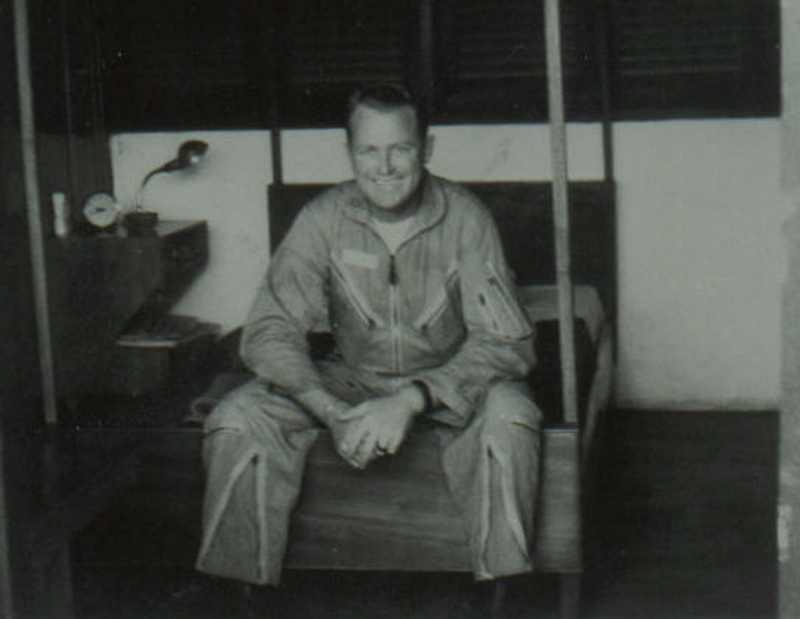
’til next time…


Standard

“Night Owls”, or “In The Tube In Low Earth Orbit”

Hey folks,

Buckle your seatbelts…here we go.

In my “First Post”, I failed to mention the fact that I was previously “employed” by a dear friend of mine to write about my flying experiences on his website. Sadly, his site closed a few years ago, and it left me with lots of “old” tales collecting virtual dust on the ol’ hard drive…some written up to ten years in the past. After wrestling with what piece to start this literary journey with, I settled on this one. It was written shortly after returning “to the line” after being grounded for almost a year back in 2000. I “re-published” it a few years later…hence the intro.

I hope you enjoy it.


“Night owls”

December 16, 2002, at 01:28

Good evening folks,

It’s long past midnight and sleep fails me. Don’t ask why; seems the brain just refuses to slide into neutral. OK, it was probably that grande, low-fat latte that I slammed down at 7 o’clock last night….but sometimes you just gotta do whatever gets you through the day, right? Well, it seems I’m paying for it now.

By nature, I’m a night person; probably a by-product of being a newspaper delivery boy throughout my high school years. Every morning for five long years, at 0400 hrs., I’d find myself walking (later biking and even later driving) my paper route observing yet another beautiful Texas sunrise. Darkness was an early companion in my work life, and it has carried over into my world of flying machines. My early days in aviation (post and occasionally during my college days) were spent hauling freight in the ink blackness of the night over north Texas and New Mexico. Currently, when I have an early morning departure, I spend most of the previous night waking up, glancing at the clock (“oh, it’s an hour past the last time I checked…lovely.”), and going back to sleep. True REM sleep never happens, and it makes for a very long day. So if a choice between a dawn-patrol launch and an “all-nighter” is offered on my monthly schedule, I’ll take the night flight 100% of the time. Generally speaking, I prefer flying at night more than during daylight hours for many reasons; the weather is usually far more benign, the air is smoother, the incessant chatter across the ATC radio channels has been put to bed, the flow of air traffic itself is far better, and when it’s a clear, star-filled night…well you REALLY can see forever.

That brings me to this column. I was paging back through some old stuff I had written, and I came upon this ramble about such flights. I penned it about a year and a half ago, shortly after I had returned to the line. I had been grounded for almost a year regarding some medical stuff, and I guess I had forgotten the “joys” of flying the all-nighters. I absolutely love my job, but like other humans, I can be prone to bitch a little when I’m tired.

Here it is…


“In The Tube In Low Earth Orbit”

Flying Mr. Boeing’s incredible model 757 entitles one to a huge number of thrills and perks. You get to see the closest thing to a perfect match of an airfoil to an engine, (and 21st-century technology to hard iron) that the commercial aircraft industry has to offer. One can strap a rump in every seat, fill the cargo holds to the brim, pump on five hours of petrol, launch from just over 4500′ feet of pavement, and climb unrestricted to almost eight miles above mother Earth…. try doing that in a tired old 727 (lovely machine for its day, but most assuredly NOT a 757). The downside, however, is that the “suits” in the airline ivory towers know all that, and they tend to put their star players in where the others can’t do the job…which means the middle of the night. Communities don’t enjoy the roar of older Pratt and Whitney JT8s over their roofs at midnight, and I can’t blame them for that (lol, Eastern Airlines used to call their 727s “WhisperJets”). So the end result is that we in the 757 community enjoy a bit of the “vampire” lifestyle…we sleep during the day, and fly at night.

air_534a_002

(On the ramp in Saipan looking back at the sleek lines of the Boeing 757.)

As I was stepping into the hotel elevator late last night in LAX, on my way to a midnight departure for Detroit, a woman got on and (obviously noticing my uniform) stated, “You sure have an interesting job.” I, a bit glibly, stated, “Yeah, I get to go to work at midnight a lot.” What a jack-ass I was! Thinking back on it now, she (and my profession) deserved a much nicer, much more humble response. My only excuse is that I was off on yet another “all-nighter”, and was not very pleased about it. Before the night was over, I was to regret those words tenfold.

We were scheduled to launch from Los Angeles just before midnight, with an ETA of 0553 into KDTW (Detroit’s Metropolitan Airport). After a 3 hour nap in the middle of the day (THANK YOU “Lord of the Motel Maids” for keeping them away from my door!), I felt physically pretty damn good about the coming nocturnal journey. We had a total count of 170 SOBs (not, as we say in Texas, “sumbitches”…but “souls on board”), which consisted of myself, the First Officer, four of my line’s cabin attendants, and 164 customers. Fate would bind us together for the next several hours, whether we liked it or not.

We pushed back from gate 24 on time, taxied expeditiously to runway 24L, launched, and settled down at our cruise altitude of 37000’, all without the slightest bit of hassle from ATC (again, a huge benefit associated with flying late at night). The weather was the picture of a calm, stable air mass (read smooth) for the first couple of hours; the cabin crew did their beverage service, and most everyone on board began their slides toward slumber. As we passed the front range of the Rockie Mountains at Denver, the stable air mass was to change, morphing into anything but. Several hours earlier in the hotel room in LAX, I had pulled up the “Radar Summary” page from the airline Dispatch site on my trusty laptop, and it showed that South Dakota, Nebraska, Kansas, and Iowa were forecast to be pummeled by marauding hordes of giant thunderstorms this night. Somewhere over the dark plains of Middle America, some little person was climbing into Mommy and Daddy’s bed to escape the terror of the booming onslaught. We had no such refuge, for we were destined to meet and do battle with these monsters. One hundred miles east of Denver we began to see lightning on the distant horizon, the rhythmic flashes were a prelude to what was awaiting us. No problem, we were riding the best mount that those amazing people at Boeing could offer, and both the dispatcher and I had planned the route to take us around the northern edge of the line. This promised to be a no-brainer, but as in life, almost nothing is assured.

If you’ve never seen a roiling, boiling mass of Mother Nature’s hell from 37000’ in the middle of a gorgeous moonlit night, then (my friend) you’ve never lived. I’m the world’s biggest fan of flying AROUND thunderstorms, I only start to get a bit verklempt when someone asks me to fly THROUGH them…as my man (the “elder” President George Bush) said, “ain’t gonna do it, wouldn’t be prudent at this juncture.” We altered our course a few degrees to port and informed the cabin crew to stow the beverage carts and pack away the galleys (most of the customers were deep into the REM thing about now). We sat up straight, gulped down the last of the latest cup of airline “joe”, got our “radar fingers” all nimbled up, and pressed on around the northern edge of the combat. It was a glorious sight to behold. The moon shining on the towering cumulus clouds, and the lightning flashing violently as it played tag in the buildups. It would occasionally strike toward the ground and send a menacing finger into space looking for a random victim. We kept our distance (1 nm for every knot of wind at our altitude is our airline’s mantra…and ALWAYS upwind…my mantra), and the green, yellow and red of the weather radar, the glow of the cockpit lights, and the low hum of the jet was our entire world for the next many minutes. Around it all, we flew on a (mostly) smooth course peering like two silent voyeurs. I fought the urge to get on the P.A. and announce, “Wake up you sleepy-heads and look out the window! You may not get a chance to see something like this again in three lifetimes!” Needless to say, I left them to their oblivious slumber. It was a magnificent hour spent watching this incredible display, and when we passed the moving mass of terror just north of Sioux Falls, South Dakota, I was a bit sad it was over.

radar 1

(View of an area of thunderstorms as it’s depicted in the cockpit.)

The air mass ahead of the front was smooth and uncharacteristically clear. The visibility from our lofty perch was many hundreds of miles, and the lights of sleeping America stretched out before us. With the lower screen on the 757 instrument panel, one can easily see not only the planned course but also (with the push of a button) the towns and cities (these are represented by blue circles showing airports with a runway greater than 5000′). It now became a matter of matching the group of lights seen out of the windshield to the airports depicted on the navigation CRT. I could tell by our route that we were to pass just south of my home of Minneapolis/St. Paul and I knew that I would be peering down on my own sleeping family of wife and three beautiful children. All the little group of lights meant so much more now. They represented real people, with real lives, and they were all loved by someone, somewhere on this big blue ball in space. Their stories were now indelibly mixed with my own.

air_534a_001

(A view of the 757 cockpit from just behind my seat. On this flight, we were bound for Minneapolis/St. Paul from Anchorage.)

It is said that on every passenger machine, 10 % of the people are traveling to attend some joyous function, 10 % are en route to some painfully sad reunion, and the other 80 % fall somewhere in the middle. As I pondered this, I began to wonder about the 160 plus “stories” sitting behind my cockpit door. How many were still awake (at 0330 local time) flush with the anticipation of meeting a family member/loved one at the other end…their excitement must be great indeed. And how many were suffering insomnia due to worry, grief, and other things not very pleasant to think about? Their sadness and sense of loss I’ve felt far too many times in my own life; it’s not a pleasant emotional journey. As I glanced out the left window, I could see we were passing directly overhead Rochester, Minnesota. My thoughts began to drift back a scant six months to my own life-changing experiences. I could plainly see the group of lights that were my loved ones in the Twin Cities, and I could barely make out the ribbon of pavement we call State Highway 52. I had traveled that stretch each day for six weeks to receive my radiation and chemotherapy treatments at the Mayo Clinic. Driving down that long stretch of highway, I had oceans of time to wonder if fate was to someday return me to a cockpit. It quite obviously had.

I often can’t help but wonder: is my journey down that road mostly over? I honestly don’t know. I offer myself to the Minneapolis doctors the day after this trip ends for my semi-annual CT scan. After that, I’ll once again head down that highway with films and reports in hand to the 12th floor of the Mayo Building. I’ll walk past the chemotherapy cubicles where I had logged many an hour last winter, and again find myself in a consultation room waiting to hear if my own private hell has returned. Quite frankly, I’ll take a dozen trips through the line of thunderstorms we had just passed, rather than the one I’ll be taking down to the Mayo Clinic in the coming weeks. Am I afraid of what their news might be? Consider this for my answer; not a day goes by that I don’t think about it and what it could mean for my wonderful family and myself. Yes, I’m scared…give me wind shear or thunderstorms any day.

air_534a_003

(Another incredible sunrise. One of the thousands I’ve had the pleasure to witness from my lofty perch.)

Approaching Lake Michigan, the horizon that was just beginning to glow faintly over Minnesota has now turned an incredible shade of yellows and reds. “Red sky in the morning, sailor take warning”, I think as we cross over the lake, but this morning all is well in my little world, and we begin our gradual descent into Motown. The ATC system has been quiet and very accommodating after our encounter with the storms, and thankfully this was not to change. We were not subjected to any of the turns, descents, or airspeed changes that are the norm for daylight flying through the busy ARTCCs (air route traffic control centers) of Minneapolis, Chicago, and finally Cleveland Centers. During a typical afternoon, that last 500 miles would’ve been flush with ATC chatter, radio frequency changes, clearances, and the like, all leading to a VERY busy (read blood pressure elevated) atmosphere. But not this morning…lots of silence and smooth air.

The weather was clear this dawn in Detroit…albeit a bit chilly at 45 degrees Fahrenheit. We were cleared for the visual approach to runway 3L, and after a left-hand circling approach, I managed to make a very nice “roll on” landing (God knows how after being up all night). Upon clearing the runway we were told by the DTW tower controller, “Northwest 324, turn right at Kilo 15 and taxi to the gate with me.” The terminal was jammed with all the overnight NWA “Red Tails” getting ready to do their version of the Dawn Patrol, but not us. We smoothly glided N5518US into gate Foxtrot 9 with nary a hassle. We shut down the two massive engines, did our securing checklists, packed up the tools of our trade, and headed for the hotel and another attempt at a daytime nap (please, “Lord of the Motel Maids”, be kind once more).

It had been a bit of a long night, but a good one. We had seen the best of the best from the Boeing Aircraft Company and had seen some of the worst that Mother Nature can conjure up. We had witnessed a spectacular sunrise and delivered our 170-something SOBs to their collective fates. Oh, and one more thing…a certain Captain was “delivered” also. For he was shown again just how special his job of driving around in “low Earth orbit” can be…

The next time I get a statement like the one from the woman in the elevator, my response will be on the order of:

“You’re right Mam, I have THE best-dammed job you can have on the entire planet.”

(a postscript….again, this was penned in August of 2001, and after many CT scans, my tumor has shown no interest in returning. The Dr.s at Mayo are happy, and I echo their thoughts…well, maybe with a bit more emotion and enthusiasm.)

’till next time…

Standard

First post…

Hey folks!

How did you like THAT for a “first post” title? Unbelievably imaginative…right?

Although I’ve been attempting to put pen to paper (see how an old guy talks?) for years, this is my first journey into that funny netherworld known as a “Blog”. So the question arises…”What amazingly cool, heart-wrenching, gut-busting funny piece do I lead off with?” This is almost like getting ready for a dreaded first date, and thinking, “Do I wear the yellow pants with the green shirt? Or the green pants with the yellow shirt (and pink tie)? What will her parents think of me? Strong handshake with the “old man” and softer, more delicate with the Mom? Does the salad fork go on the left or the right?” Crap…maybe I’ll just use a tried and true scientific method. I’ll spread a ton of my literary pieces on the floor and see which one the dog urinates on…that’ll be the one!

As you may have gleaned from my profile (or maybe not), I drive big airplanes for a living. I grew up in the family of an aviator (a few yarns about that later) and began my flying career before the end of high school. After graduation, I attended an aviation college, and have been drawing a pay-check by moving literally thousands of people from point A to B for the last 35 years. To say that it’s been an amazing journey would be like saying that Picasso could paint, or that Mozart did OK with a keyboard (or Jenny Craig could lose weight). Words don’t do it justice, but (hopefully) some of my musings will shed a bit of light on what it’s been like to spend a life in the clouds.

Stay tuned…first actual yarn coming soon.

-BBall

Standard