
It was quiet, a deathly, eerie, uncomfortable kind of quiet that leaves you feeling that you’re not alone; yet you are, utterly alone. Save for the gentle breeze blowing through the Pisonia Grandis trees, the only sound was the crunch of white coral rocks beneath my tennis shoes. The date was Friday, November 7th, 2008. I had parked the rented moped scooter and was slowly walking the mile-and-a-half-long stretch of the sun-bleached gravel of Runway “Able.” I was just shy of 7000 miles from hearth and home; nearly at the exact opposite side of the planet. I knew my loved ones might be in the midst of an early winter “snow event,” but the puffy white clouds above me were dancing in an 86-degree tropical breeze, and the sticky 80% humidity had me rhythmically wiping sweat from my brow as I trekked toward the far end of the runway.
I might as well have been on the moon, for I was alone on the northern tip of a (nearly) deserted island in the middle of the Central Pacific. Every sense in my body told me I was not alone; that I was surrounded by a legion of long-past spirits. On the precise spot where I was standing, sixty-three years in the past, the mission that would change humanity forever began from this runway. The entire world would be changed by the very ghosts that would be my afternoon companions, and I knew what they did on that steamy night those many years ago (they lifted off at precisely 0245) was both mind-boggling and unspeakably terrifying. Before the sun would set on that fateful day, nearly 100,000 people would not be alive to see the next sunrise. Through the lens of history, I felt the troubling weight of their epic flight deep in my soul.
Three weeks earlier, as I digested the results of my November schedule bid, I was excited and (I will admit) a bit anxious to see the trip I had been awarded. I had flown to (and within) the Far East for several years as a Boeing 747 Flight Engineer, but that was two decades prior, and this 11-day trip would be radically different. On this journey, I would not be the “third in charge” of the three-person cockpit crew; I would be THE person in charge. I would be the Commander of the machine (the Boeing 757), tasked with conducting nearly two weeks of safe flights across Asia to dozens of destinations whose names had graced the pages of many of my most prized history books.
Tokyo, Saipan, Guam, Manila, Palau, Hong Kong, Singapore, Seoul, Osaka, and Nagoya; they were a roll call of destinations that sparked fascination and curiosity within the recesses of my brain. As a child, I had seen a few of the WWII battlefields of Europe, but these would be from the “other” theater of that horrendous conflict. The stories of these hallowed fields had occupied my library for years, and I would now have the opportunity to walk where the men and women of those tales walked. I hoped to gain maybe a modicum of understanding of the world they lived in, the world they fought in, and the world in which many thousands of them died. The amateur historian within me felt the excited anticipation of a child awaiting Christmas morning.
After a 12-hour deadhead to Tokyo (actually, to the modest town of Narita that lies 30 miles east; the location of the massive international airport), I logged a restless night anticipating the next day’s flight. It was the by-product of being an excited traveler, and (a very big and) the international pilot’s ever-present, ugly comrade…jet lag and/or sleep deprivation. Flying from New York to Los Angeles can test even the stoutest of flyers, but add 8 more hours and the crossing from “today” into “tomorrow,” at the same time you are still living your “today,” and every sense, every bodily function, every mental process can become severely bruised. Saying that it takes a hefty toll on one’s physical well-being is an understatement of gross proportions.
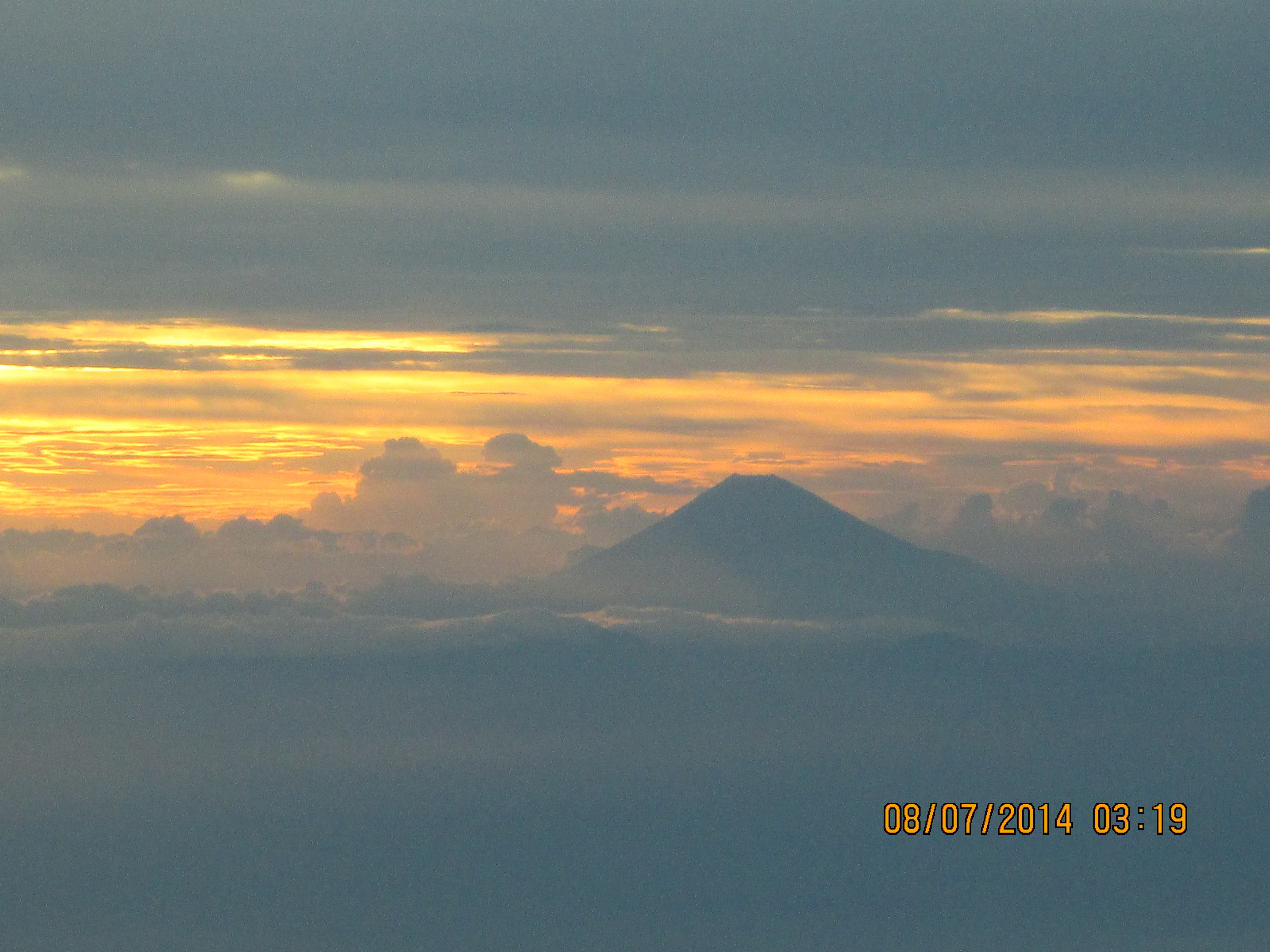
(The most photographed place on the planet… Mt. Fuji. I snapped this on a return flight into Tokyo from Guam.)
I managed a few hours of restless slumber and greeted dawn with a cup of (typically) strong Japanese coffee in hand. My brain was brimming with excited thoughts and questions. The first destination in this new chapter of my flying career on the opposite side of the planet was an island whose name would, indeed, live in infamy (sadly, Asia hosts many of those). This small island, lying within the Mariana Islands archipelago, had me conjuring images of a horrific, bloody conflict that raged for weeks in the summer of 1944. It would claim thousands of American, Japanese, and civilian lives, and history would paint it as one of the seminal turning points of the war in the Pacific. I knew much about the battle for the island of Saipan, but almost nothing about the island itself.
Later in my Pacific flying, our cockpit crews (Captain and First Officer) stayed together for the entire two-week trip, but in the early 2000’s, when I began flying in Asia on the 757, that was not the case. I had my First Officer’s name on the crew orders, and I knew he would be flying in from Nagoya and continuing south with me to Saipan, but that was all I knew. He was roughly halfway through his 12-day trip and would depart Saipan the next morning, while I would remain there for an additional day, joining my next F/O on day 3, shortly before we departed for our return to Narita. Why Northwest Airlines played this game of “Where’s Waldo?” with the flight crews is anyone’s guess; but knowing that management, I would guess a “bean counter” convinced someone it would save money. Maybe it did, who knows? Those decisions came from the rarified air of a Minneapolis boardroom far above my pay grade.
Throughout the day (we were scheduled for a 9 p.m. launch that evening), I logged a few hours reviewing tons of training material concerning “all things Asia flying,” and even attempted a nap (unsuccessfully). A long walk was just what the doctor ordered, and it was actually very nice to find myself back in the world of our Japanese cousins. It had been several decades since I last spent time in this wonderful world, and, as in the last 1000 years, it was comforting to see that the rhythm of this mystical world of smiling, bowing, friendly people seemed unchanged. One still walked on the left, smiled a lot, bowed at every opportunity, and, for heaven’s sake, when crossing the street, looked for traffic in the opposite direction from what we do here in America. They drive on the “wrong side” of the road, and more than one crew member has been rudely reminded of this (sadly, we had a few fatalities as a result). Within a short time, the shock of being in a world so foreign to my “American psyche” vanished, and I was once again in a land that I would grow to respect and love.
A few hours after sunset, I boarded the hotel bus (with the crews bound for Taipei, Bangkok, and Manila) and, after being deposited at the South Wing terminal curb (having no idea where our Northwest Airlines Pilot Planning room might be located), I adopted a “follow the herd” mentality and took up a spot in the parade. After an elevator ride, several long, winding hallways and coded doors (and one very lonely checkpoint manned by the Japanese security version of the “Maytag repair man”), we finally arrived at this mythical room. Fortunately for me, this herd of pilots readily accepted this “noob” and even pointed out several landmarks en route to the office that would become as familiar to me over the next decade as my own residence.
Meeting up with my F/O John R., he (patiently) took this new Asia Captain under his wing and walked me through the many steps required to get the big Boeing (N5641US) out of the gate and 1500 miles south to the largest island in the Northern Mariana chain. I was not new to the jet (having transitioned from the 727 eleven years earlier), but the differences between flying from Minneapolis to Orlando and from Tokyo to Saipan would be monumental.
Things like navigation, ATC communications, FAA (or in this case, JAA) rules and regulations, weather issues, and dozens of other items that every domestic pilot knows cold would all be radically different. Couple that with the inevitable contrast between how the book teaches it and how it’s “actually done on the line”, and those first several trips to an international destination could leave you with a little of the “taking a sip from a fire hydrant” feeling.
Two final items to mention here. One is the seriously important issue of taking a two-engine flying machine over a vast expanse of ocean and suffering an engine failure, thus leaving one with the exact number of engines that Orville and Wilbur employed. The second is the ability to communicate with the various air traffic control facilities.
The first is more of a planning issue (in case of the very serious issue of losing ½ of your thrust); it’s called an ETP (equal time point…in the movie “The High and the Mighty” they refer to it as “the point of no return” lol), whereby, if the worst occurs, it would take less time to fly straight ahead to your destination (or ETP alternate airport), then to turn around and return to your point of departure (or ETP alternate airport). We routinely used a very small island, which lies roughly halfway along this route, as an alternate; more on that later. Still, even though it was the only airport along this route (literally), it came with its own set of issues. The Japanese military operated it, and you needed prior notice (read: permission) before landing. During the next decade, IIRC, we had but one aircraft divert to this airport; (thankfully) it was during daylight hours, and the story had a happy ending.
Finally, as mentioned in one of my prior pieces, our “line of sight” communications radios were useless over the ocean, so vitally important information like traffic separation and weather avoidance clearances became, at the very least, far more complicated, and at the extreme, nearly impossible (in later years, we would adopt a datalink satellite system that worked well, but that was years in the future). At this point, we used a system of HF (high-frequency) radios that were finicky and susceptible to factors such as sunspots, time of day, lightning strikes, and other atmospheric anomalies. We would be provided with a list of HF frequencies that the NWA Dispatch Office predicted would be usable on that route (at that time of day …or night), and crossed our fingers.
I found out early in my “Asia career” that using these radios was far more art than science, and the NWA provided list of frequencies was often useless. Fortunately, our manuals offered more options, and we spent many nights head down in the manual, tuning the next frequency and hoping for the best. I always envisioned the old black-and-white movies: the disheveled DC-4 radio operator, one hand pressed to an earpiece, frantically trying to contact a ground station with the plea, “Rangoon, Rangoon… come in Rangoon…do you read me Rangoon?” A simple ATC position report would (at times) be like pulling a tooth. In the end, we would “shake and bake,” and when the San Francisco dude could hear us but the Guam guy couldn’t, we would give our report to a bloke 2500 miles away and have him forward it to the guy just a few hundred miles in front of us. Again, “science” in the form of art.
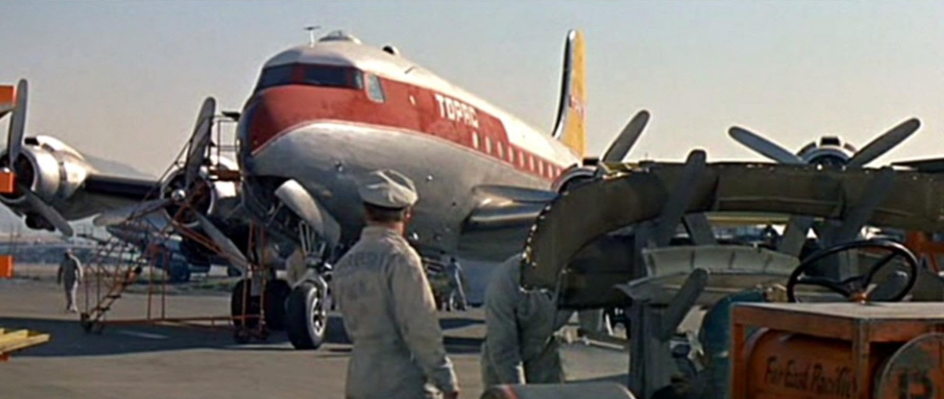
(The beautiful lines of the Douglas DC-4 are timeless.)
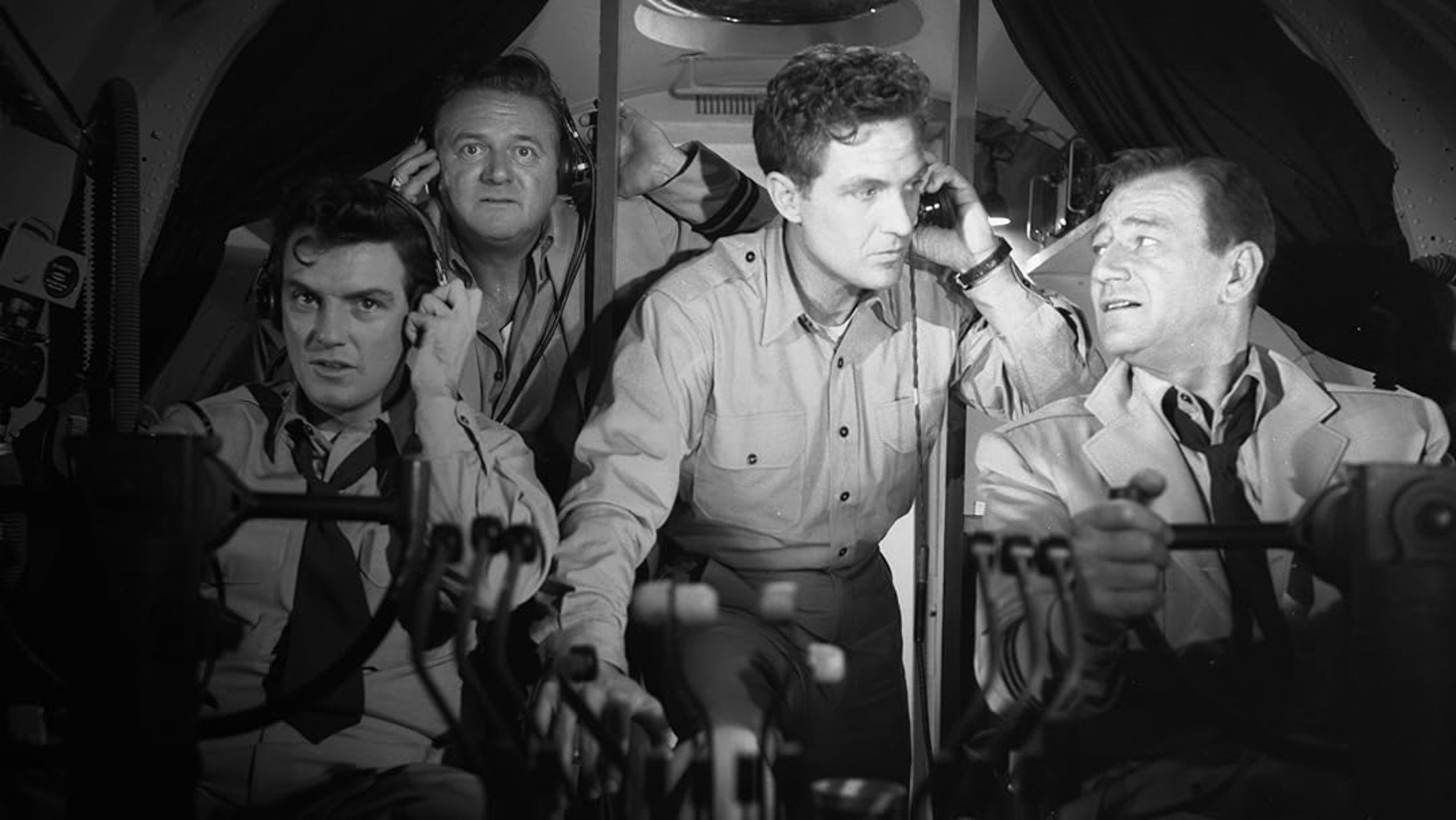
(I’m hoping that when I was a lowly Flight Engineer on the Boeing 747, I never looked quite as “bug-eyed” as the dude on the back left.)
With all that said, we launched shortly after 9:00 p.m., and within the hour we had flown out of any radar and ATC coverage. I had opted to be the “PF” (pilot flying) for the leg and give John the “joy” of working the radios. Roughly an hour and a half into the flight, I noticed a blue circle on our Navigation CRT (denoting an airfield with a runway length of at least 5000’). It was an island whose name was etched into the pantheon of warfare as the bloodiest battle of the Pacific War. It was a tiny island (roughly 5 miles in length, 2.5 miles in width) that would have the distinction of claiming more American lives than Japanese. A total of 26000 American casualties versus approximately 18000 Japanese would be killed, wounded, or missing before the 36-day battle was over. On day four of the battle, a photographer from the Associated Press would snap the most iconic picture of the Pacific conflict, earning him a Pulitzer Prize. His name was Joe Rosenthal, and the island was Iwo Jima.
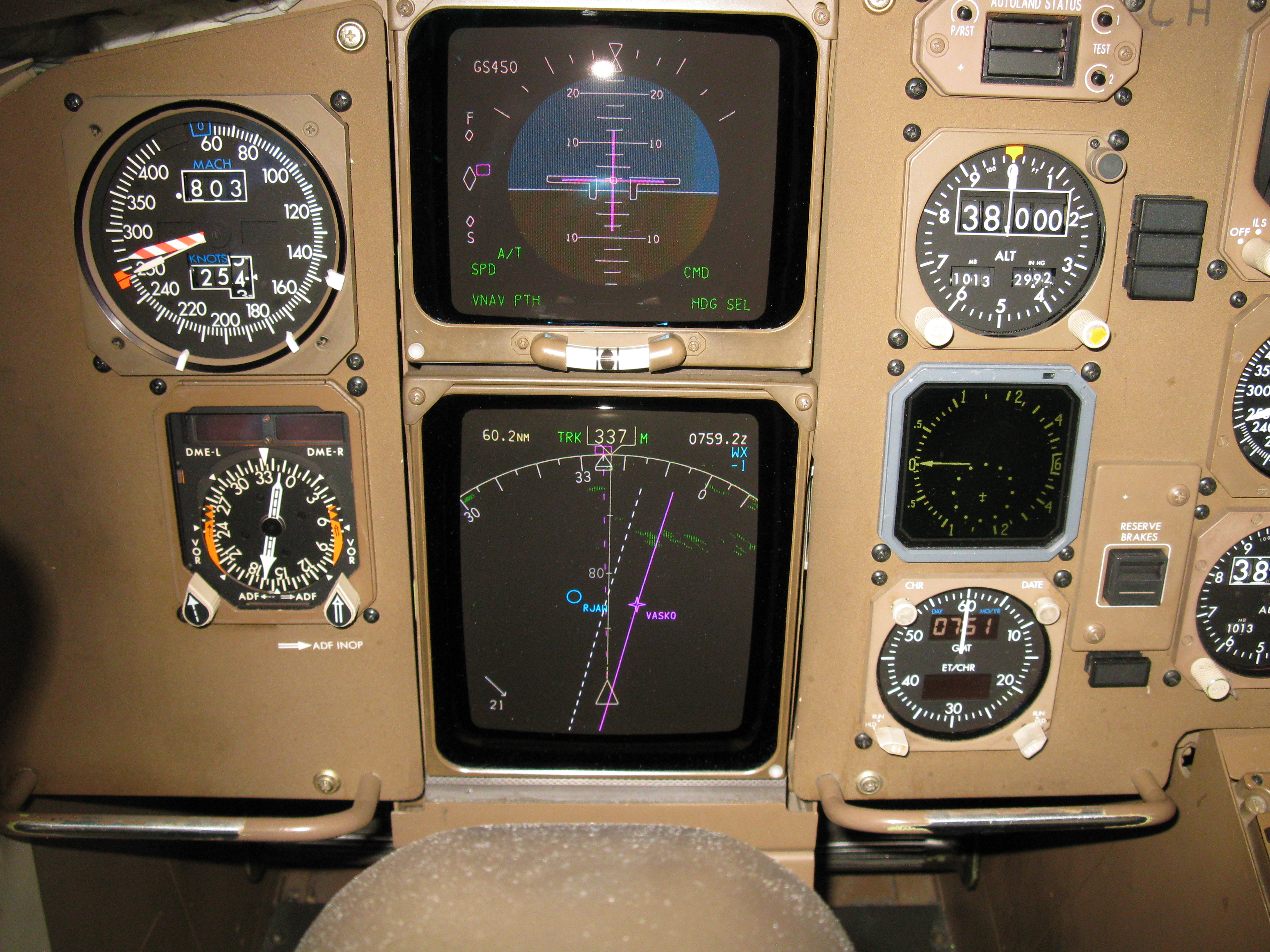
(The display on our lower CRT depicting the island of Iwo Jima. This was snapped on 09 October, 2011 as we were heading northbound at 38,000’ [or as we say “Flight Level 380”]. The little triangle [representing our aircraft] can be seen turning northwest from the airway as we begin to navigate around the storms depicted along the airway north of the “VASKO” intersection (the green blobs superimposed from our weather radar).
Naturally, because of the darkness, I had to wait until a daylight return to Japan to glimpse this hallowed island, and over the next several years, I flew past many times in both directions. Each time, I tried to snap a picture with my (ever-present) compact camera. More importantly, I would offer a silent prayer for all the young men (American and Japanese) whose last glimpse of this world was the volcanic rock of the isle I was gazing upon. Twenty-seven Congressional Medals of Honor were awarded following the battle, fourteen of them posthumously; prompting Admiral Chester Nimitz to utter his famous epitaph regarding the fighting, “On Iwo Island, uncommon valor was a common virtue.” I never flew past with nonchalance, but always with an overwhelming feeling of reverence.
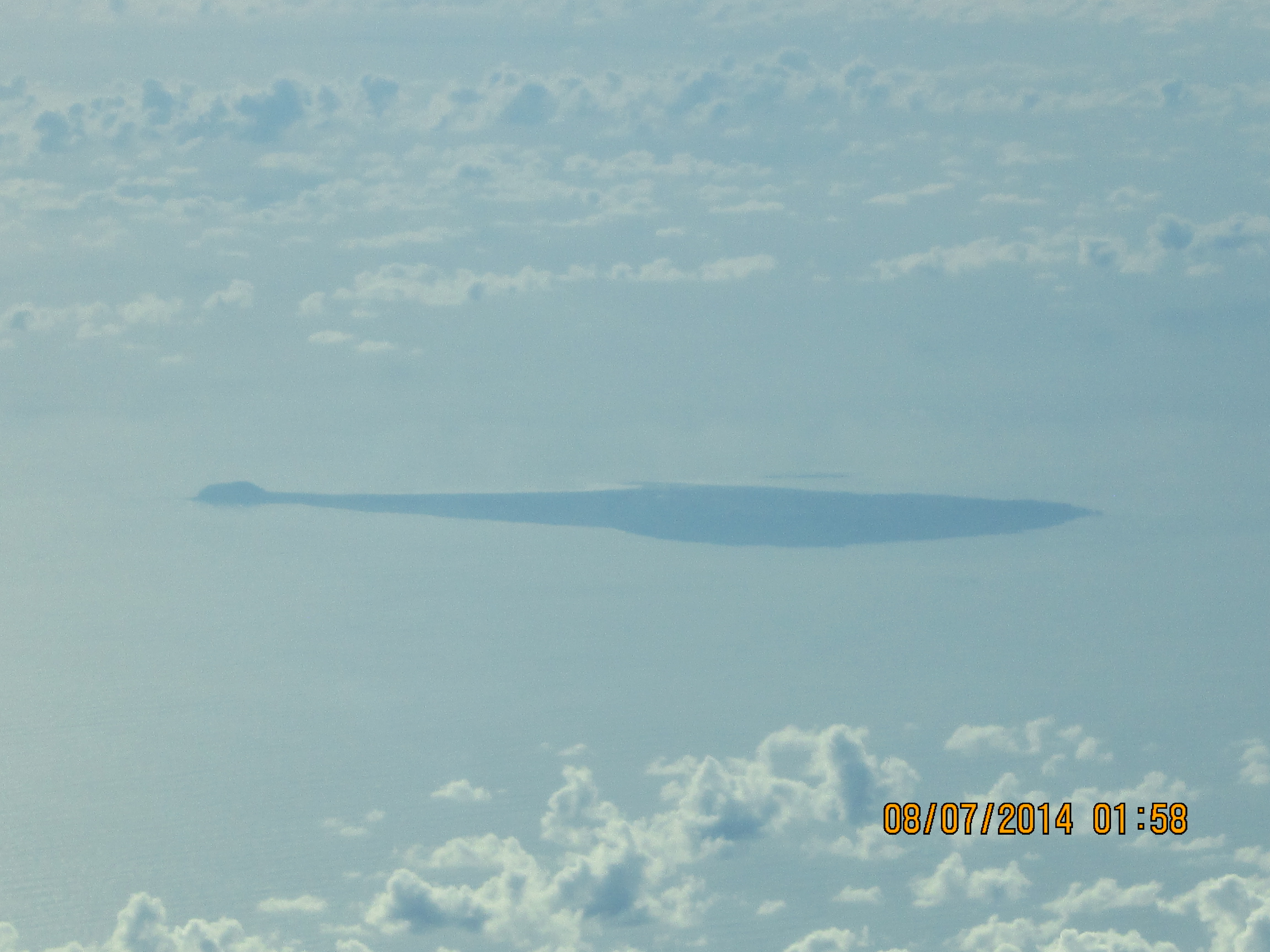
(Iwo Jima. Passing northbound on the same route as mentioned in the previous picture. Mount Suribachi is visible on the left at the island’s southern tip.)
A few hours later, I was landing on Saipan, again, another of the infamous islands that had been bathed in blood and misery roughly a year before the battle for Iwo Jima. Slightly over a week after the Allies’ D-Day landings in Normandy, Marines (and Army units a few days later) landed on the island, and [as mentioned earlier] it would prove to be a seminal event in the war in the Pacific. I plan to pen a piece soon detailing my time spent exploring that infamous island.
After another restless night working through the jet lag of a fourteen-hour time zone change, I rented a moped scooter and drove to the General Aviation terminal at the airport. There, I inquired about how I could catch a flight to the island of Tinian. It lies just a few miles southwest of where I was standing, but in the summer of 1945, it was THE busiest airspace in the world, and (arguably) one of the more important locations on the planet.
Fortune smiled my way, and after I asked about available flights (and showed the ticket agent my NWA company I.D. badge), she said the Piper Cherokee leaving in ten minutes was bound that way and that I could sign up for the “jumpseat” if I wished. I readily accepted her offer for a free ride, and roughly 30 minutes later I was stepping off the wing and onto the ramp of the small airport on the southern corner of the island. I rented another scooter and headed north on “Broadway Boulevard” (after the island was taken from the Japanese, the “Construction Battalions”, or CBs….or the more popular colloquial term; “SeeBees”… went to work constructing roads along with improving the runways at the North Field Airbase. They named the avenues after famous roadways in America.)
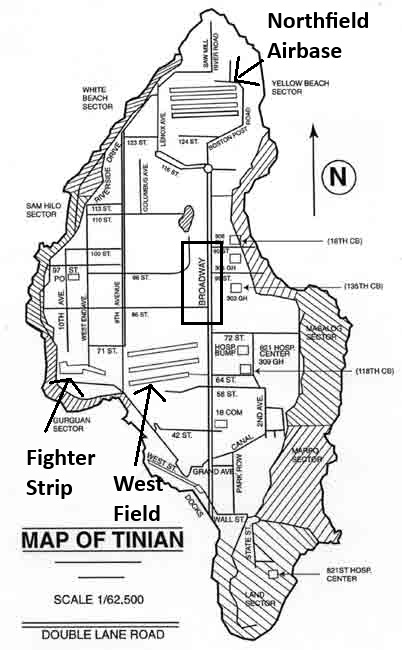
(The small commercial airport where the Piper landed lies approximately where the “West Field” was located. You can see a few of the other famous road names: Wall St., 42nd St., Columbus Ave., Canal St., etc. “Broadway” was the main thoroughfare leading toward the massive North Field Airbase.)
My destination was a place that few have heard of, and fewer still have visited. Regardless, this location was as significant to the history of America (and the world) as Plymouth Rock, Valley Forge, Gettysburg, or Tranquility Base. The men and women who occupied the northern tip of this desolate island would change mankind forever.
The farther north I rode, the more isolated I became from other humans, and I saw only two other vehicles: both small cars headed in the opposite direction. When I reached the North Field Base, I could instantly tell it didn’t resemble the pictures I had seen of the gigantic B-29 bomber base circa the summer of 1945. The two southern runways (named Runway C for “Charlie” and Runway D for “Dog”) were completely overgrown with a dense jungle of thousands of the dark-green, smallish trees. The two northern strips of crushed coral (Runways A for “Able” and B for “Baker”) were visible but (again) didn’t much resemble the old photos. Time heals all wounds; it also inevitably leaves wounds of its own.
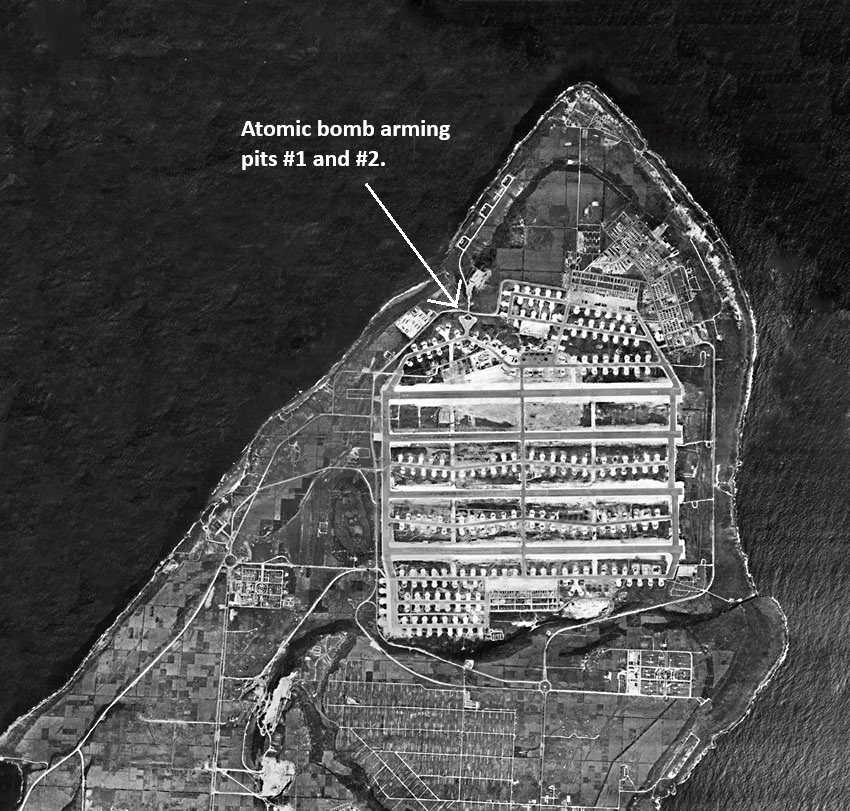
(Satellite view of the massive North Field Airbase. When the Marines captured the airfield, there was but a single runway: the north one, and it was roughly 1/2 the length you see here).
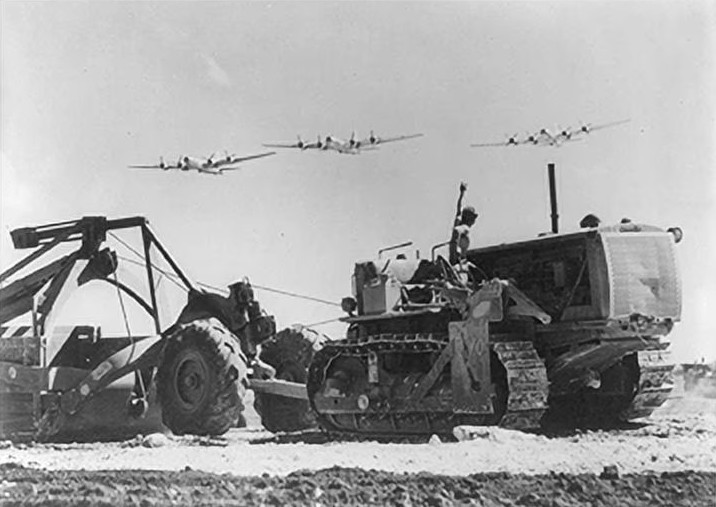
(It took roughly 45 days for the “SeeBees” to complete the runways, and during many of those days they were under enemy fire.)
I spent the next few hours riding, walking, and reading the few plaques left by those who knew that I (and those like me) would someday need to see their words. Mostly, though, I spent those hours sitting in the soft breeze, lost in thoughts of the gravity of where I was. Much like when I gazed at the multitude of white crosses on a bluff overlooking a beach called Omaha, or the ovens I stood next to (unable to comprehend what I was seeing) as a 10-year-old in town by the name of Dachau…my thoughts, my feelings, and the ghosts that sat with me on that morning were overwhelming.
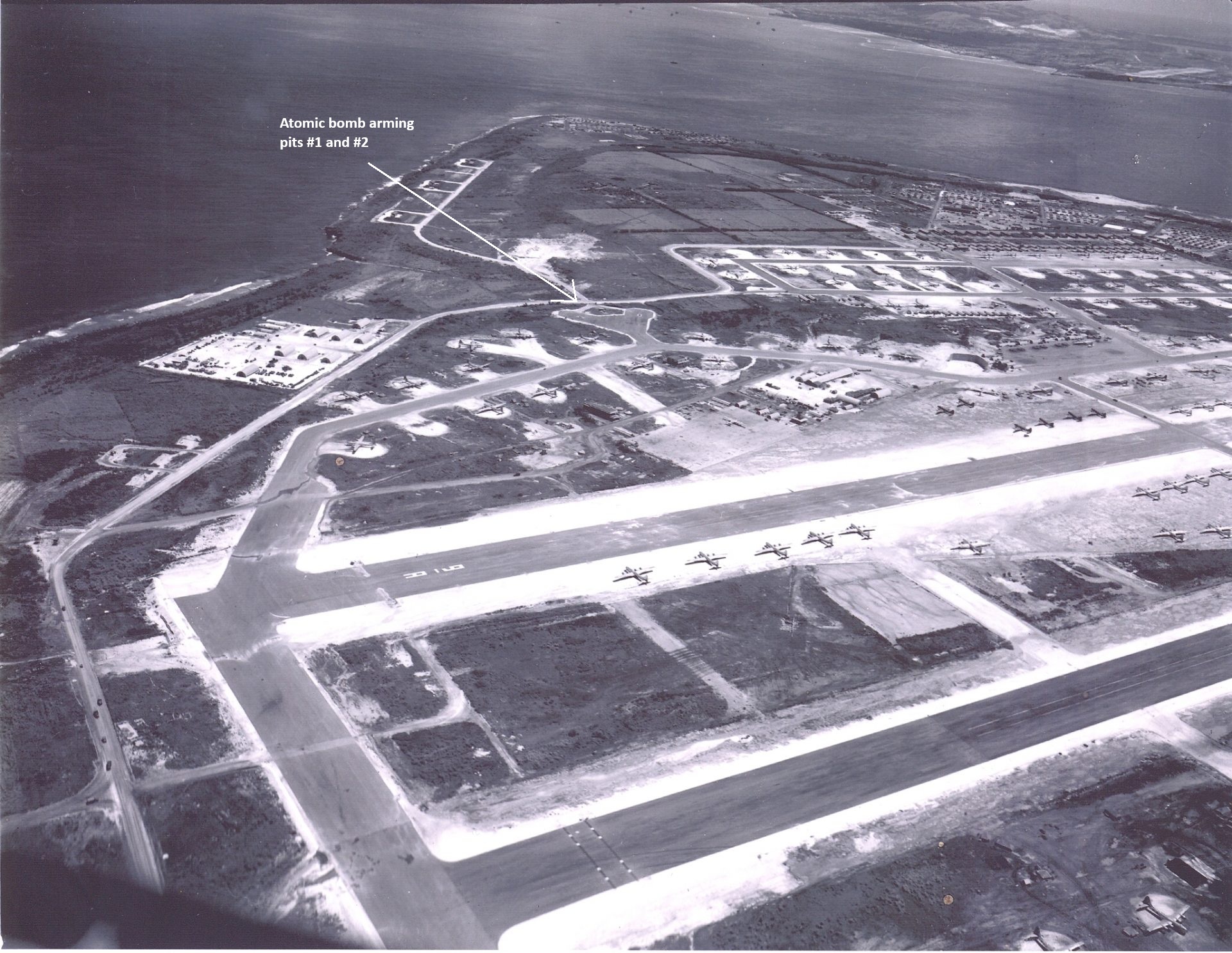
(During its heyday, the North Field Airbase was home to almost 300 of the massive B-29 Superfortresses. As I stood next to the arming pits, I was lost in a feeling that I was standing on hallowed ground.)
The thousands of sorties that lifted from these runways during the months of 1945, flown by men barely old enough to shave, have mostly been forgotten; overshadowed by the two missions that left in the middle of two steamy August nights. Hours after they took off, they would light up the morning skies over Hiroshima and Nagasaki with weapons so terrifying that words are wholly inadequate. Through the prism of time, I felt what those men did not/could not, for they had no way of knowing what history would ask of them. Through THEIR prism of time, however, they would learn what I knew; they would learn of the consequences of those flights. Some would see their graves as men filled with shame and regret; others would face their final hours feeling they were a catalyst to ending the pain and suffering of an already severely injured world. I refuse to judge; I leave that to the grace of God.
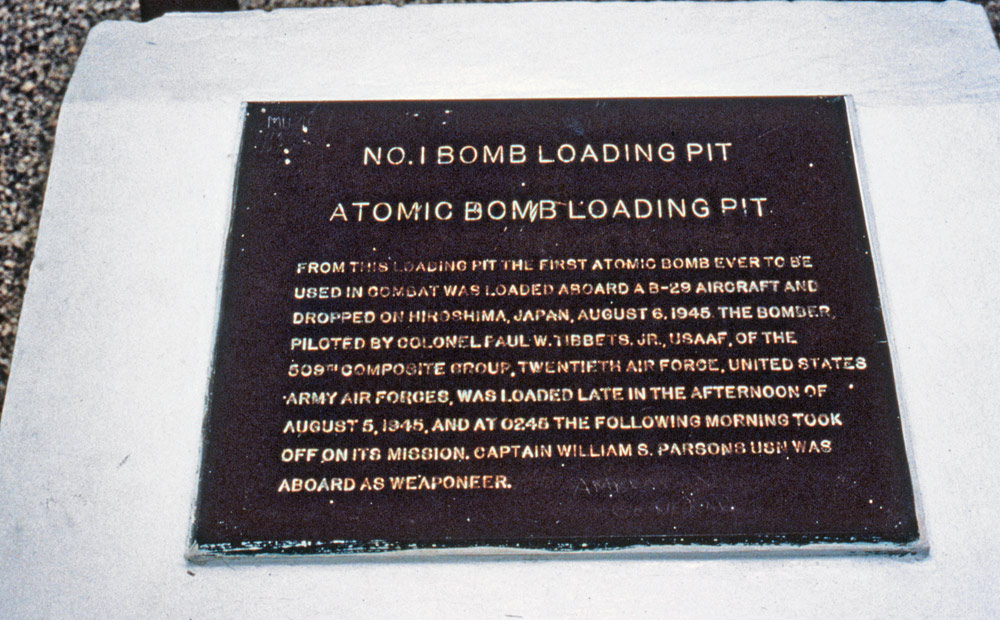
One thing is clear: on a peaceful November morning 18 years ago, I sat by a glass-enclosed “arming pit” on the tip of a small, isolated island in the Central Pacific. The plaque on the stone pillar was titled, “No 1 Bomb Loading Pit – Atomic Bomb Loading Pit”, and the next seventy-six words read like an ad in the classifieds. Matter-of-fact statements, devoid of opinion, empty of any hint of emotion. I was dumbstruck as I read the words; they mentioned nothing of the pain, the untold horror, or the suffering. It left me numb, then it dawned on me: it must be written that way; the plaque was there to refer simply to the mission, not the obvious ramifications. Was it moral to kill thousands so that millions may live, destroy a city so the rebuilding of the world could begin, make horrific war so there could be heavenly peace? Again, in my opinion, only the infinite wisdom of the good Lord can answer such a question.
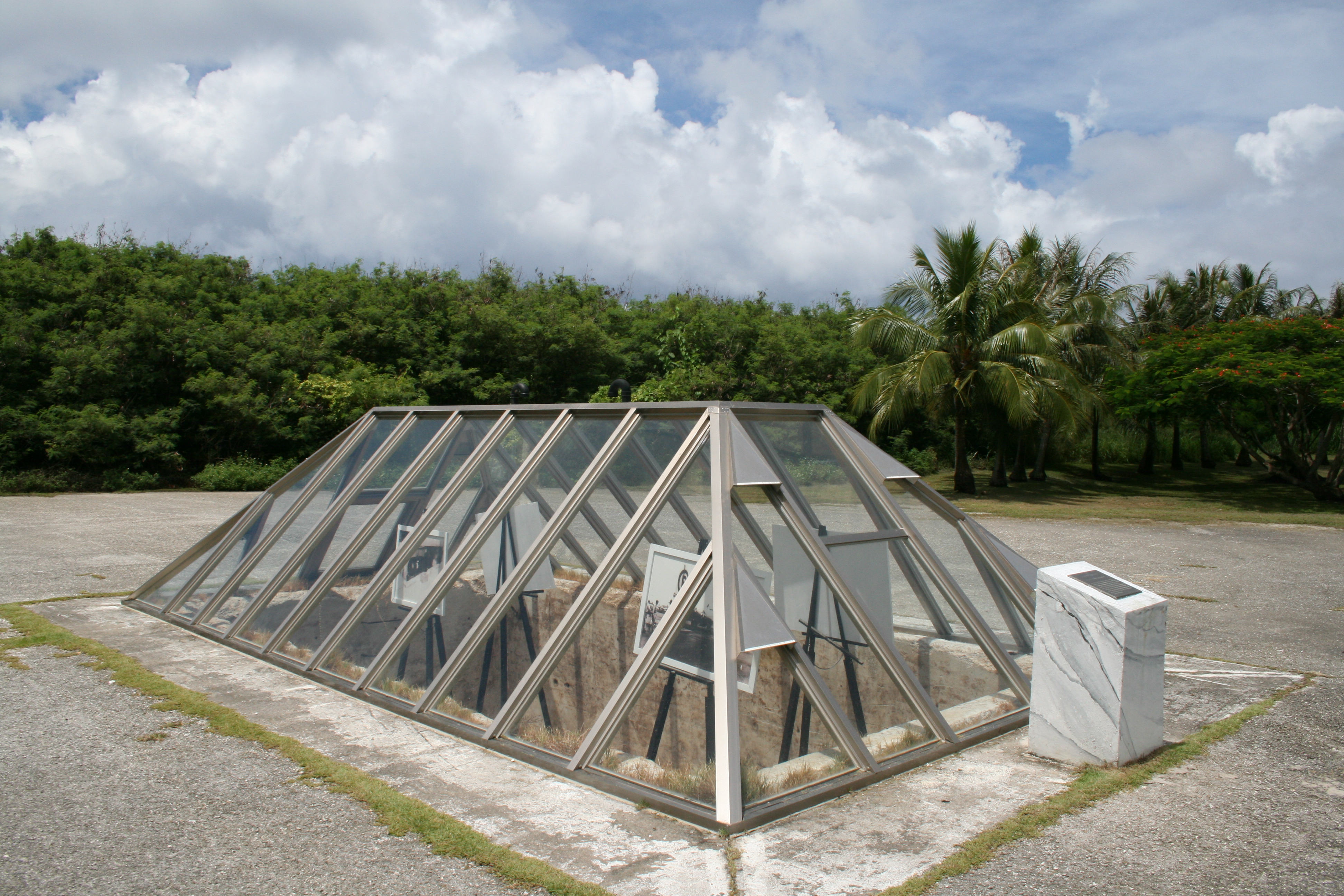
(One of the arming pits as it looks today.)
I sat for a long time. Eyes closed, “listening” to the sounds…not the soft breeze in the trees, but the sounds of the world’s busiest airbase in the summer of 1945. I heard the drumbeat of untold jeeps and trucks of all shapes and sizes; all going about the business of a huge military airfield at war. I listened to the paradox of the joyful laughter of men and women too young to know much about life, and the strained tones of the worry and anxiety of what lay ahead of them. Some would die; many would live. The ebb and flow of noise on an island [roughly the size of Lakeland, Florida] suddenly inhabited by roughly 50,000 people.
And then there were the roars. The unmistakable, throaty roars of hundreds of huge Wright-Cyclone R3350 engines straining to convince the world’s biggest, most deadly flying machine to defy gravity. One by one, they taxied past me in an extended “conga-line” of winged silver machines toward the long white runways.
On board, each of the 11-man crew sat alone with his thoughts. Squadron and Flight commanders wishing the Briefing Officer’s cryptic quips of “unknown” to the questions of flak and fighters would cease playing in their ears. In the cockpits, pilots concentrated to stay in an orderly, sequenced line and keep the brakes from becoming red-hot from overuse. Behind them, Flight Engineers frantically worked the cowl flaps and intercoolers to keep the big engines from overheating in the sweltering, heavy Pacific air. The Navigators and Bombardiers sat chain-smoking at their small desks, checking and rechecking their calculations. Farther back through the pressurized tunnel, the half a dozen gunners silently prepared their tools of war. The long, slow march continued, and every man in every machine (unsuccessfully) tried not to remember the aircraft that crashed on takeoff two nights ago, killing all onboard. It was not the only one to crash…just the latest.
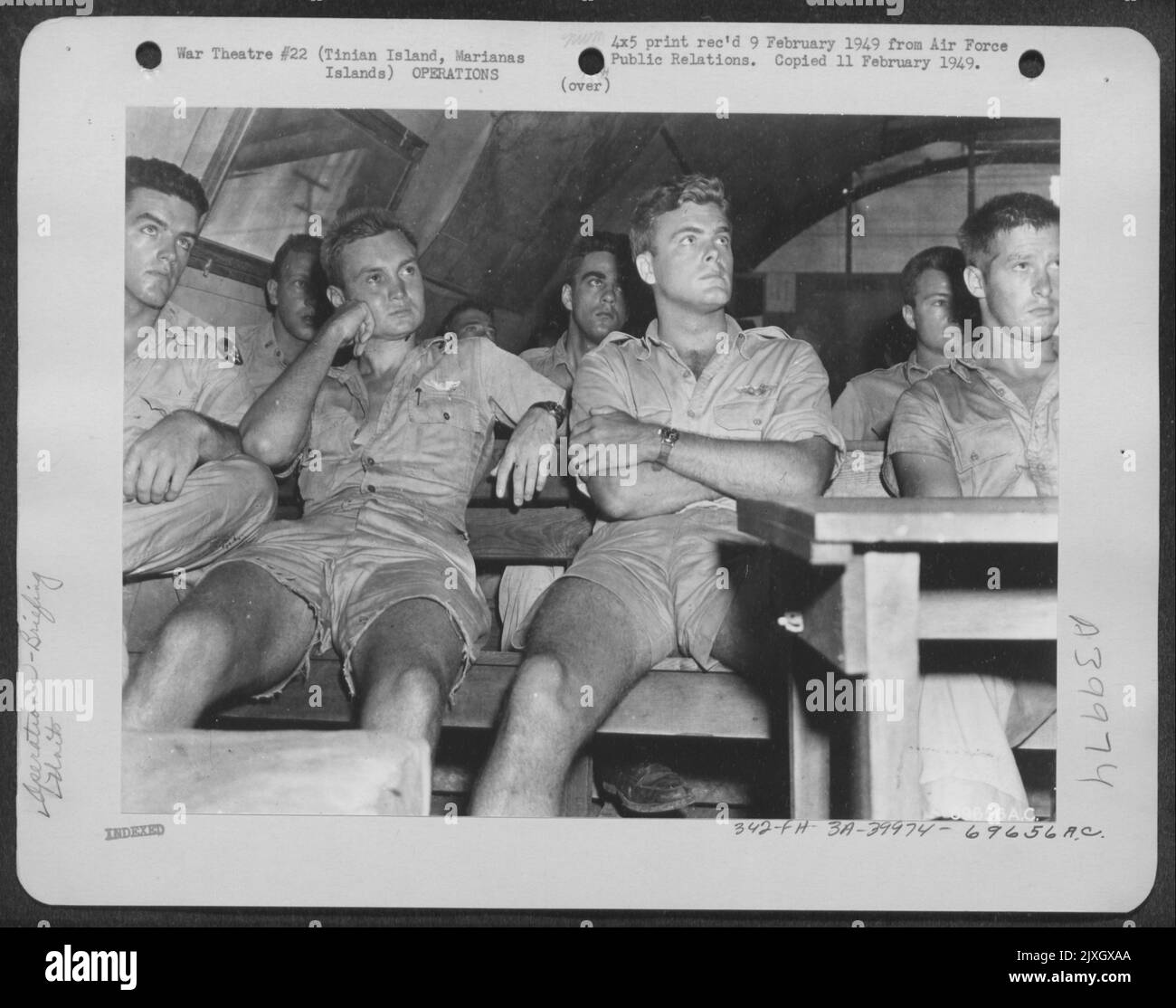
(If it looks like they were very young, it is because they were. I’ve asked it many times before, “Could the twenty-somethings of today do what these young men and women were asked to do?” I pray they will never have to find out.)
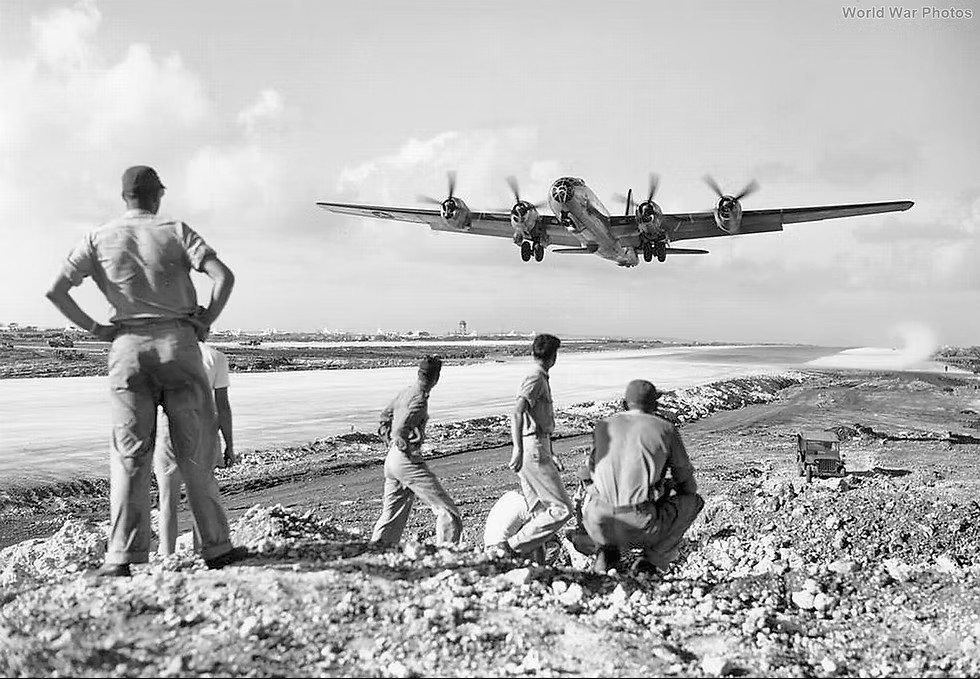
I “listened” as the huge, silver machines rumbled by in a seemingly endless line toward the four runways. Reaching the end, they turned onto the long, coral-paved strip, and 30 seconds apart, they roared to life, slowly picking up speed and lifting into a darkening crimson sunset. After the landing gear and flaps were retracted, they would slowly, gingerly turn the heavy bombers north toward Japan and their fate. Soft prayers from the ground crews followed those young men in the big silver birds, and I said one silently for their lives of service and sacrifice.
(The SeeBees paused only to watch the giant machines roar by.)
Slowly, I opened my eyes and was, once again, utterly alone. The legion of ghosts who silently walked, and sat with me, were my bridge to the past on that day. They were young, and I was not, and I wished that I knew their names. They (and the millions of others who saved the world back then) had drifted into the bin of history; a destination we all will inevitably share. They were ordinary young men and women living during extraordinary times, and writing the epic pages of history with each tick of the clock. On this day, for a precious few tics of that clock, they allowed me into their world, and I was in a time and a place that would change mankind forever. I obviously never knew them in this life, but on that November morning I was allowed a glimpse into the lives they led during that summer, on that small island in the Central Pacific. During my hours with them, they were companions of the highest order, and I was honored to be there with them.
What they did altered history for all eternity, and a small part of me envied them. All of me, however, sat in reverence for them.
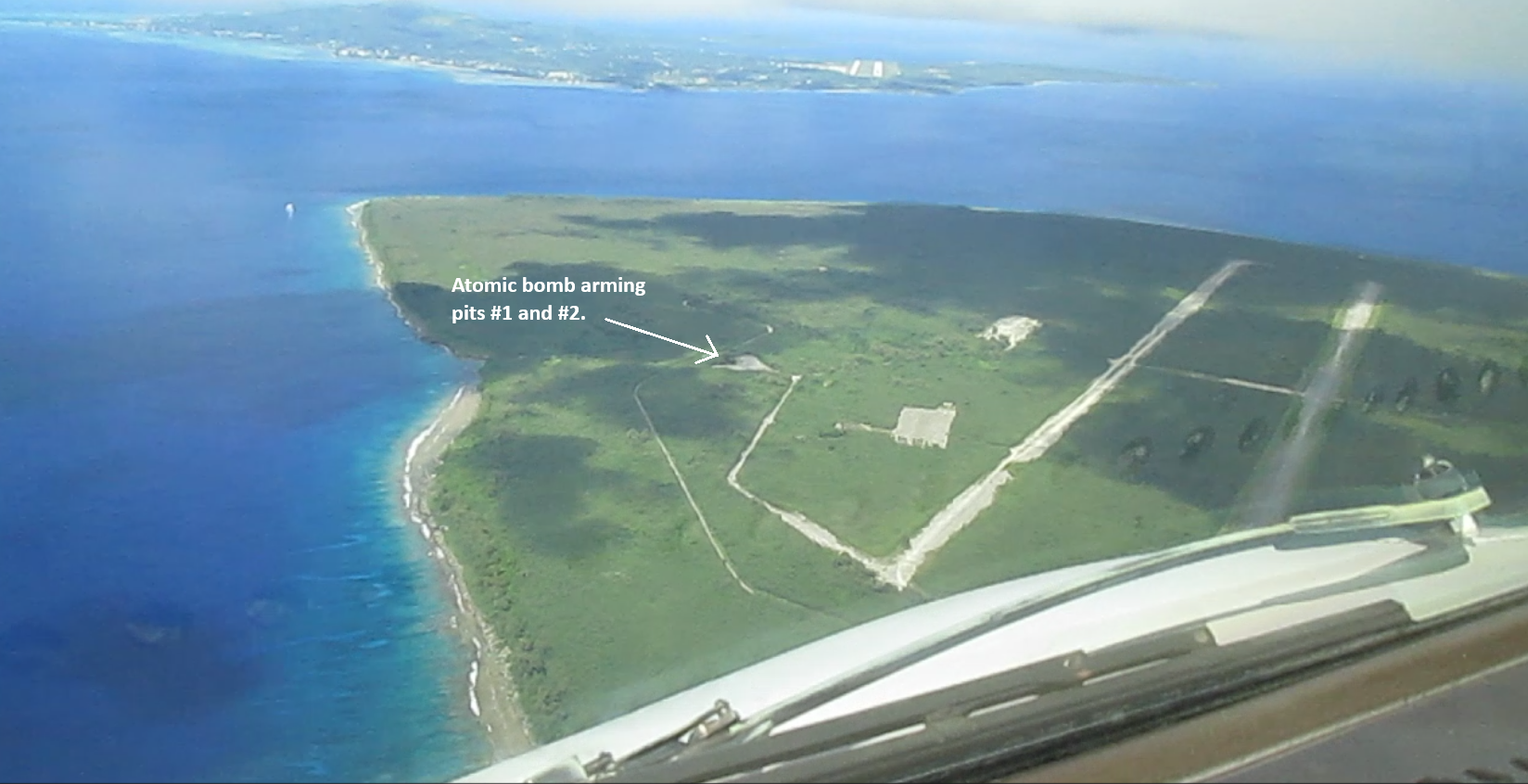
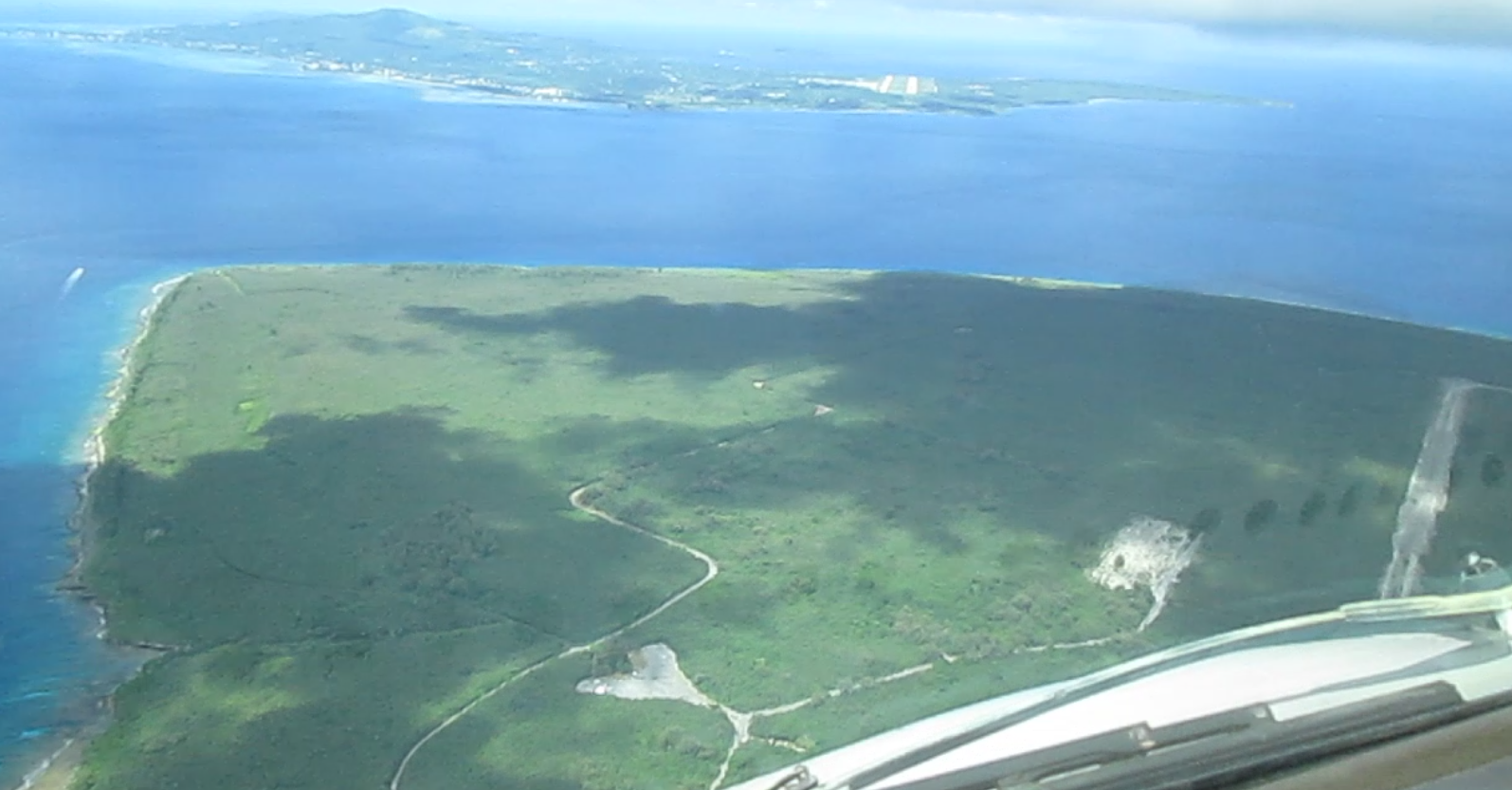
(Two shots on approach to Runway 07 on Saipan.)
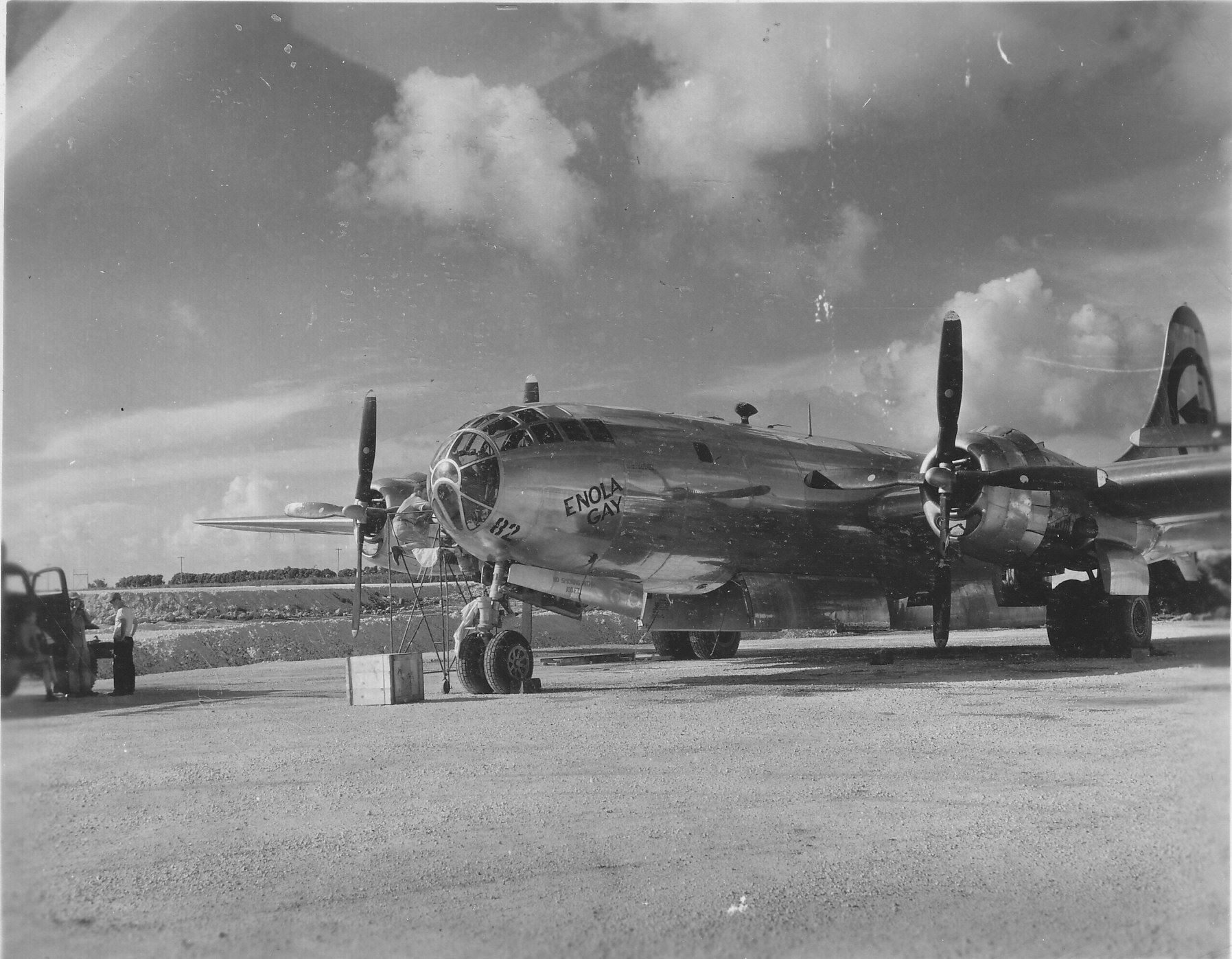
It was a morning and afternoon that I shall never forget.
God bless the young men and women of a generation that gave of themselves to save the world.
I pray we never forget them.
‘till next time,
BBall

